

Planning your next RV trip? Whether you’re a seasoned road tripper or prepping for your first weekend getaway in a camper, having a comprehensive camper packing list is key to ensuring comfort, convenience, and safety. Unlike tent camping, RV travel offers the luxury of a mobile home—but even with that advantage, missing a few essential items can disrupt your experience.
This ultimate camper checklist has been carefully curated to cover everything from gear to gadgets, kitchen to comfort, and activities to essentials—filling in the gaps left by most packing guides. I’ve also included expert tips, optional add-ons, and overlooked necessities to help you stay organized before and during your adventure.
Contents
- 1 General Essentials for Your RV Trip
- 2 Safety, First Aid & Emergency Gear
- 3 Essential Personal Items for Comfort and Hygiene
- 4 RV Kitchen Essentials: Meal Prep on the Road
- 5 Tools, Safety Gear, and Emergency Essentials
- 6 Pets, Kids, and Outdoor Extras
- 7 Important Documents and Travel Planning Must-Haves
- 8 Cleaning Supplies and RV Interior Must-Haves
- 9 Final Thoughts + Printable Master Checklist
- 10 Ready, Set, Roll!
General Essentials for Your RV Trip
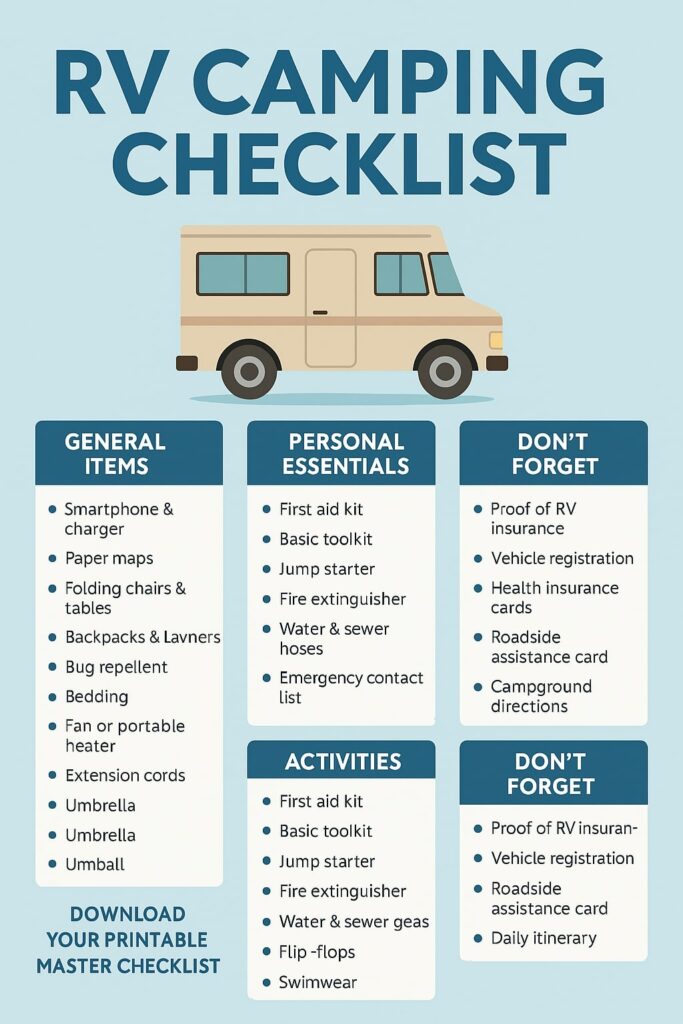
Before diving into itemized lists, let’s go over some key terms:
- Dry Camping (Boondocking): Camping without hookups (water, sewer, or electric). Requires more self-sufficiency.
- Shore Power: External electrical power source used to run your RV.
- Hookups: Connections to water, electricity, and sewage at campgrounds.
Below is a categorized breakdown of general gear and utilities often needed on an RV trip. These items aren’t just “nice to have”—they’re what keep your trip running smoothly.
Must-Have General Items
- Smartphone & Charger
- Bring multiple charging cables, a car/RV plug adapter, and a power bank. Download offline maps, campsite reservations, trail apps (like AllTrails), and entertainment.
- Paper Maps or Atlas
- Crucial for low-signal areas. Choose a waterproof version or a National Geographic Adventure Map if heading to remote regions.
- Folding Chairs & Tables
- Include both dining and prep surfaces. Don’t forget a durable, reusable tablecloth and clips to hold it in windy weather.
- Headlamps, Flashlights & Lanterns
- Include battery-operated and solar or USB-rechargeable options. Headlamps are hands-free and ideal for nighttime hookups or navigating trails.
- Backpacks & Daypacks
- Pack a hydration-compatible daypack for hikes. Include a dry sack for electronics and essentials in wet environments.
- Bug Repellent & Citronella Candles
- Bring both spray and natural alternatives (lemongrass, eucalyptus). Consider Thermacell devices for campsites.
- Camera & Accessories
- Don’t forget memory cards, waterproof pouches, tripods, and power cords.
- Bedding
- Bring sheets, comforters, throw blankets, and extra pillows. Memory foam mattress toppers can drastically improve RV mattresses.
- Fan or Portable Heater
- Depending on the season. Use compact, energy-efficient models compatible with RV wattage.
- Extension Cords & Surge Protectors
- A 30/50-amp extension cord and an RV surge protector are non-negotiable. Include adaptors for various hookup types.
- Umbrella & Rain Gear
- Pack lightweight ponchos and quick-dry rain jackets in addition to umbrellas.
Pro Tip: Store gear in labeled, stackable plastic bins. This not only saves space but also keeps things accessible.
Safety, First Aid & Emergency Gear
This is one of the most under-packed areas in many RVs, and yet one of the most important.
First Aid Kit Must-Haves
- Assorted bandages (blister, large gauze, waterproof)
- Tweezers, scissors, and antiseptic wipes
- Burn gel and sting relief
- Instant ice packs
- Fever reducers and allergy meds
- Motion sickness tabs (especially for winding roads)
Emergency and Repair Tools
- Basic Toolkit (screwdrivers, pliers, duct tape, utility knife)
- Spare Fuses and Bulbs
- Tire Pressure Gauge and Air Compressor
- Jump Starter Power Pack
- Roadside Emergency Kit (flares, reflective triangle, tow rope)
- Fire Extinguisher (ABC-rated for RVs)
- Water Hose & Sewer Hose
- Include hose supports, rubber gloves, and disinfectants.
Extra Tip: Ensure smoke detectors, CO detectors, and propane gas alarms are installed and tested before each trip.
Essential Personal Items for Comfort and Hygiene
Packing for comfort isn’t just about throwing in a change of clothes and a toothbrush. A smartly packed RV includes essentials tailored to the season, destination, and your family’s personal needs. Here’s a breakdown to ensure nothing gets overlooked.
Toiletries & Hygiene Items
- Toothbrushes, toothpaste, floss
- Shampoo, conditioner, soap (preferably biodegradable)
- Razor and shaving gel
- Deodorant
- Feminine hygiene products
- Contact lenses, solution, glasses
- Travel-sized first aid ointments
- Nail clippers and tweezers
- Hairbrush or comb
- Sunscreen (SPF 30+) and lip balm with SPF
- Aloe vera or after-sun lotion
Quick Tip: Create a hanging shower caddy that can move from RV to campground shower.
Towels and Linens
- Quick-dry towels (1 per person + extras for the beach or pool)
- Washcloths and face towels
- Kitchen towels
- Microfiber cloths (multi-purpose: cleaning, wiping spills, etc.)
- Dish towels and scrubbers
Pro Tip: Pack a pop-up laundry hamper and mesh bags for dirty/wet clothes.
Clothing Essentials
- Daywear: T-shirts, shorts, leggings, casual outfits
- Sleepwear: Consider lightweight options for warm nights and warmer sleepwear for cold mornings
- Layered Clothing: Fleece jackets, windbreakers, thermal layers
- Undergarments & Socks: Enough for each day + extras for kids
- Shoes: Comfortable walking shoes, water shoes, hiking boots, sandals
- Flip-flops: Perfect for campground showers
- Rain Gear: Poncho or lightweight rain jacket
- Swimwear: 2 swimsuits per person + cover-ups and swim goggles
- Sun Protection: Hats with brims, sunglasses with UV protection
Reminder: Wet socks and no backups = miserable hiking.
RV Kitchen Essentials: Meal Prep on the Road
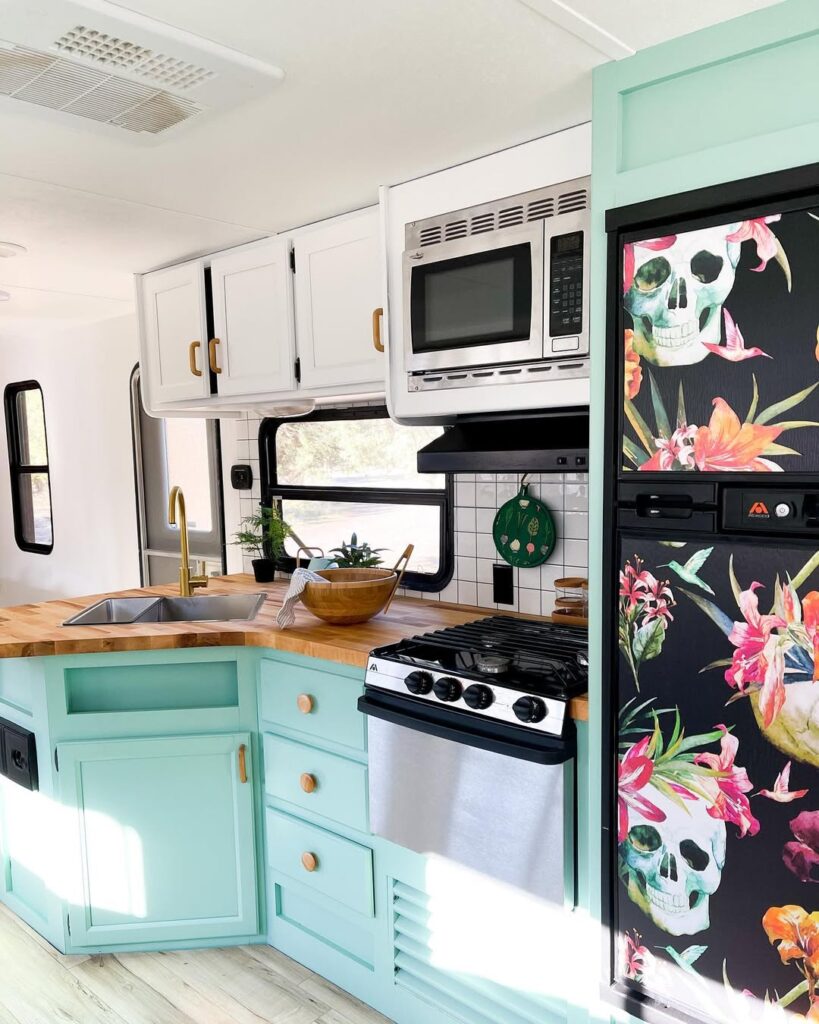
Photo Credit: @else.kerkmann
One of the perks of RV life is having a kitchen on wheels. But cooking in a camper requires smart planning and space-saving tools. The key is balancing basic functionality with compact storage.
Cooking Equipment
- Camping stove and fuel (bring extra canisters)
- Portable grill or griddle
- Instant pot or slow cooker (optional but helpful)
- Cast iron pan (multi-use and durable)
- Pots and pans with stackable lids
- Cooking utensils (spatula, ladle, whisk, tongs)
- Knives with blade covers
- Cutting board (foldable or thin)
- Mixing bowl (collapsible preferred)
Eating & Drinking
- Plates, bowls, and cups (melamine or enamel are RV-safe)
- Silverware and serving utensils
- Insulated mugs or travel thermoses
- Reusable straws
- Coffee maker (drip, French press, or single-serve pods)
- Coffee grounds/pods, filters, sugar, powdered creamer
Cleaning & Storage
- Dish soap and sponge
- Drying rack or microfiber dish towel
- Collapsible dishpan
- Paper towels and cloth rags
- Trash bags
- Zip-top bags, foil, plastic wrap
- Food containers (stackable, airtight)
Space Saver Tip: Use nesting bowls and stackable bins in the RV pantry.
Tools, Safety Gear, and Emergency Essentials

Photo Credit: @herbertmartindale
When you’re exploring remote areas or staying at unfamiliar campgrounds, preparation is everything. While RVs are designed for convenience, breakdowns and mishaps can still happen. Here’s a thorough list to keep you safe, secure, and stress-free.
Tools & Maintenance Supplies
- RV manual (store in a waterproof folder)
- Multi-tool or pocket knife
- Screwdriver set (Phillips and flathead)
- Duct tape and electrical tape
- Wrench and socket set
- Tire pressure gauge
- Work gloves
- Zip ties and bungee cords
- Leveling blocks
- Extra fuses and bulbs
- Spare batteries (AA, AAA, CR2032, etc.)
- Water hose (drinking water safe)
- Sewer hose and elbow fitting
- Water pressure regulator
- RV surge protector
- Extension cords and power adapters
Smart Tip: Store tools in a labeled plastic tote or toolbox to prevent clutter.
Safety & Emergency Essentials
- First aid kit (fully stocked with bandages, antiseptic, tweezers, gloves, etc.)
- Emergency roadside kit (jumper cables, reflectors, tire sealant, tow strap)
- Flashlights and headlamps (rechargeable if possible)
- Lantern (solar or battery-powered)
- Fire extinguisher (check expiration)
- Carbon monoxide and propane gas detector
- Emergency whistle
- Ice packs (reusable or instant)
- Extra fuel canister (approved container only)
- Copies of insurance, registration, and ID cards
- Emergency contact list (printed copy)
Always double-check that your fire extinguisher is rated for all types of fires: electrical, grease, and wood.
Weather & Climate Adaptability
Whether you’re camping in the mountains, near a lake, or in a desert, weather preparedness is vital.
- Umbrella and rain poncho
- Windbreaker or shell jacket
- Sunblock and bug repellent
- Thermal blankets
- Extra sleeping bag or wool blanket
- Hand warmers or rechargeable heat packs
Pack for extremes: Nights can get cold even in summer, especially in higher elevations.
Pets, Kids, and Outdoor Extras
If your adventure includes furry friends or energetic children, make sure their needs are met just like yours. Plus, packing a few smart extras can turn any trip from good to great.
Pet Essentials
- Food and water bowls
- Travel-sized pet food containers
- Leash and harness
- Waste bags and scoop
- Pet bed or crate
- Favorite toys
- Medications or supplements
- Tick and flea repellent
- Pet first aid supplies
Pro Tip: Freeze a few treats in a silicone mold for hot days to keep your pup cool and entertained.
Kid-Friendly Packing
- Travel games and activity books
- Headphones for audiobooks or tablets
- Binoculars for nature watching
- Scooters or bikes (plus helmets)
- Portable booster seats
- White noise machine (for noisy campgrounds)
- Favorite stuffed animals or comfort items
RV Parenting Tip: Create a “quiet time” bin filled with books, puzzles, or sensory toys.
Outdoor Living Add-Ons
- Camp rug or outdoor mat (keeps dirt out of the RV)
- Folding chairs and a collapsible table
- Pop-up tent or shade shelter
- String lights or fairy lights (battery or solar)
- Outdoor games: frisbee, cornhole, ladder toss
- Hammock with straps
- Portable fire pit (if permitted at campsite)
- S’mores kit (graham crackers, marshmallows, chocolate bars)
- Citronella candles or mosquito coils
Camp Hack: Use a lidded bin to create a firewood box that doubles as extra seating.
Important Documents and Travel Planning Must-Haves

Photo Credit: @steubertravelgroup
It’s easy to get caught up in the fun side of RV prep and forget about the practical paperwork. But these travel documents and plans are absolutely essential for a smooth and stress-free trip—especially if you’re heading off-grid or traveling long distances.
Must-Have Documents
- Driver’s license (for all legal drivers)
- Proof of RV insurance (keep a printed and digital copy)
- Vehicle registration papers
- Health insurance cards
- Pet vaccination records (especially important if crossing state lines or staying in pet-friendly campgrounds)
- Passport (if traveling internationally, including Canada or Mexico)
- Roadside assistance membership card (like AAA, Good Sam, or Coach-Net)
- Emergency contact list
Pro Tip: Store copies in a waterproof folder inside the RV, and email scans to yourself in case of loss.
Navigation & Communication Backup
- Printed campground reservation confirmations
- Screen-shotted directions and GPS coordinates
- List of emergency contacts and RV tech support hotlines
- Walkie-talkies for traveling in a group or caravan
- Compass and physical maps (Rand McNally or AAA road atlas)
GPS Safety Tip: Not all mapping apps recognize RV-safe routes. Use a dedicated RV GPS app (like RV LIFE or CoPilot RV).
Travel Planning Tips
- Daily itinerary: Include expected drive times, planned fuel stops, and scenic routes
- Meal planning sheet: Helps minimize waste and avoid overpacking perishable food
- Campground research: Print out campground rules, check-in times, pet policies, and hook-up availability
- Packing checklist: Laminate a basic list you can reuse every trip
- Weather forecast: Check and screenshot weather outlook for your trip duration
- Activity list: Nearby attractions, hikes, swimming holes, fishing spots, markets
RV Efficiency Tip: Plan travel days to include long breaks at rest areas or interesting roadside stops—especially helpful for families.
Cleaning Supplies and RV Interior Must-Haves
A clean camper is a happy camper. Keeping your space tidy on the road can feel like a challenge, but with a little foresight and the right supplies, it’s totally manageable.
Cleaning Essentials
- All-purpose cleaner (non-toxic or RV-safe)
- Disinfectant wipes or spray
- Broom and dustpan (collapsible if possible)
- Compact vacuum or handheld vac
- Microfiber cloths
- Toilet bowl brush
- Toilet chemicals (formaledehyde-free)
- Paper towels and cleaning rags
- Garbage bags (assorted sizes)
- Rubber gloves
- Air freshener or room spray
- Laundry detergent (pods or strips are space-savers)
RV Tip: Use vinegar and baking soda for a safe, eco-friendly cleaning combo.
Organization Helpers
- Over-the-door organizers
- Storage bins and dividers
- Collapsible laundry baskets
- Command hooks and adhesive strips
- Shoe racks (hung inside closet doors)
- Drawer organizers
- Zip pouches for small items (chargers, batteries, keys)
Shower Tip: Use mesh baskets in the bathroom to keep things dry and mildew-free.
Final Thoughts + Printable Master Checklist
Packing for an RV trip doesn’t have to be stressful or overwhelming. With the right system in place, you’ll spend less time worrying about forgotten items and more time soaking up the joys of the open road. Whether you’re a weekend warrior or planning a cross-country journey, use this camper packing list as your go-to foundation.
Smart Tip: Print multiple copies of your checklist, laminate one, and keep it stored in your RV. Use a dry-erase marker to check off items before each trip.
✅ Download Your Printable Master Camper Packing Checklist
This printable checklist includes all categories covered in this article:
- ✔️ General Camping Gear
- ✔️ RV Kitchen Essentials
- ✔️ Toiletries & Personal Items
- ✔️ Clothing & Weather Prep
- ✔️ Emergency & Repair Kit
- ✔️ Important Documents
- ✔️ Pet & Kid Must-Haves
- ✔️ Cleaning Supplies & Organization
- ✔️ Outdoor Living & Recreation
CLICK HERE TO DOWNLOAD THE FREE MASTER CAMPER PACKING CHECKLIST (PDF)
Bonus: Quick Packing Timeline
| Time Before Departure | What to Do |
|---|---|
| 1 Week Before | Review destination rules, double-check reservations, prep any repairs or maintenance |
| 3–5 Days Before | Begin packing pantry staples, clean RV interior, do a walkthrough |
| 2 Days Before | Grocery shopping, meal prep, check propane and fuel levels |
| Night Before | Final clothing, toiletries, pet prep, confirm maps and directions |
| Day of Departure | Fill water tank, secure all loose items, plug in electronics, take one final walkthrough |
Ready, Set, Roll!
Now that your camper is packed with everything from bug spray to backup batteries, you’re ready for adventure. Don’t forget to pack your sense of humor and your love for nature—those are the only things you can’t buy or list.
Whether you’re headed to a quiet forest retreat or a beachside RV park, having a fully prepped camper makes all the difference. Bookmark this guide, print your checklist, and revisit it before every journey to ensure smooth sailing (or driving!).
Did we miss anything? Feel free to customize your checklist and make it your own. Every camping style is unique!