

Cookbooks are more than just sources of delicious recipes—they’re beautiful, nostalgic, and deeply personal. Whether you’re a serious home chef or simply love collecting culinary classics, displaying your cookbooks can be both a decorative and functional upgrade to your kitchen.
In this guide, I’ll walk you through not just creative ways to showcase your cookbooks, but also smart placement strategies, storage tips, and styling secrets that your average roundup article completely overlooks.
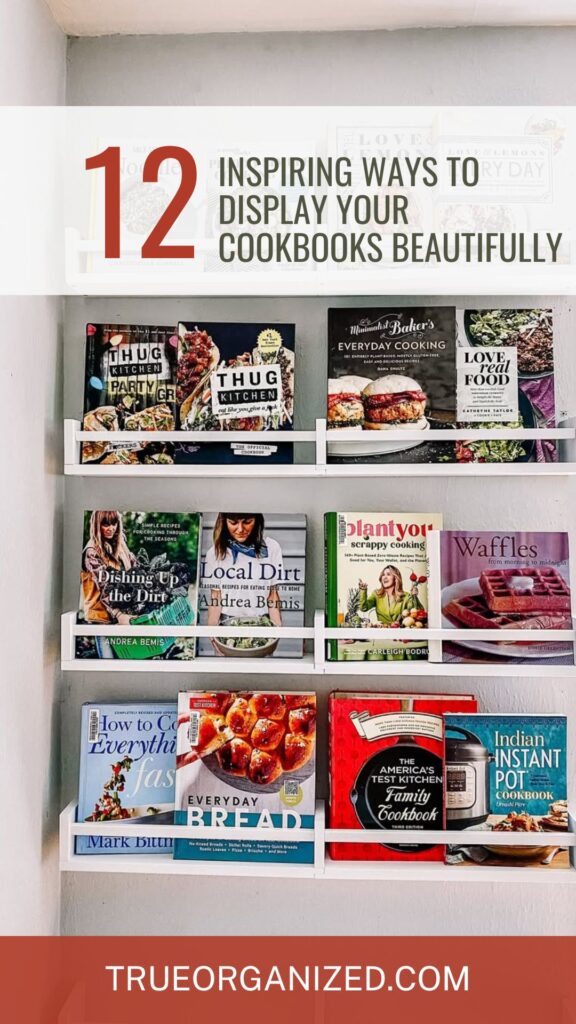
Contents
- 1 Why Display Cookbooks in Your Kitchen?
- 2 What to Consider Before Choosing a Display Method
- 3 Design Styles That Influence Cookbook Displays
- 4 1. Built-In Shelves: Timeless, Practical, and Elegant
- 5 2. Countertop Displays That Combine Style and Utility
- 6 3. Floating Shelves: Vertical Space, Maximized
- 7 4. Cabinet Conversions: Hidden Storage Made Useful
- 8 5. Repurposed Furniture: Function Meets Creativity
- 9 6. Cookbook Ledges: Minimalist and Gallery-Worthy
- 10 7. Trays and Tiers: Small Collection Solutions
- 11 8. Cookbook Storage in Kitchen Islands
- 12 9. Cookbook Displays with Dual Purpose
- 13 10. Child-Friendly Cookbook Displays
- 14 11. Seasonal & Thematic Rotations
- 15 12. Maintenance and Care Tips for Your Cookbook Collection
- 16 Summary: Craft Your Perfect Cookbook Display
Why Display Cookbooks in Your Kitchen?
Displaying cookbooks isn’t just about showing off a colorful collection—it’s about blending beauty with purpose. Here’s what makes a well-placed cookbook display worth your time:
Accessibility: Keep your go-to recipes close at hand so you’re not constantly digging through drawers or shelves.
Personality: A thoughtfully styled cookbook corner reflects your taste—not just in food but also in design.
Kitchen Flow: Organizing cookbooks where you need them—like near your prep area or island—improves cooking efficiency.
Mood Boost: Seeing beautiful books can elevate your cooking experience and even inspire new dishes.
What to Consider Before Choosing a Display Method
Before you decide where and how to showcase your cookbooks, ask yourself the following:
- How often do I use them?
Daily-use books need to be more accessible than display-only ones. - How many books do I own?
A few books may work in a tray, but a larger collection might require wall-mounted shelving or cabinet storage. - What’s my kitchen’s layout?
Maximize unused vertical or corner space without interfering with prep zones. - Do I want them decorative, functional—or both?
Answering this determines whether you go for a minimalist ledge or a vintage hutch.
Design Styles That Influence Cookbook Displays
Match your cookbook display to your kitchen’s vibe for a cohesive, intentional look:
Modern Minimalist: Floating acrylic shelves, sleek metal brackets, and neutral palettes.
Rustic Farmhouse: Crates, wooden spice racks, antique step stools, and repurposed dish drying racks.
Industrial: Black iron pipe shelving, wire baskets, and exposed beams.
Boho/Maximalist: Layered textures, colorful stacks, and accessories like plants or candles.
Traditional: Built-in shelves in kitchen islands, glass-front cabinets, or wooden ledges.
1. Built-In Shelves: Timeless, Practical, and Elegant
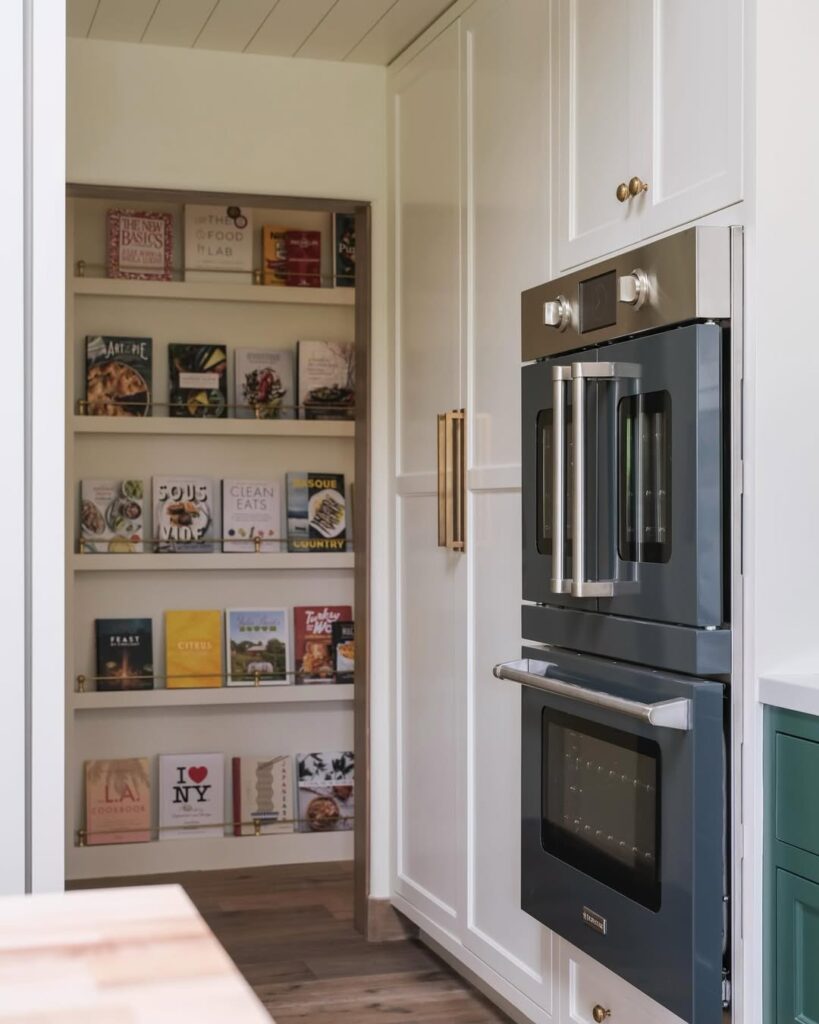
Photo Credit: @mckeeandcompany
Built-in shelving—especially at the end of your island or under your countertop—offers a permanent, practical solution that feels custom-designed.
Key Benefits:
- Keeps cookbooks off busy counters
- Easy to access while cooking
- Looks intentional and high-end
Tips:
- Paint the inside of the shelves a contrasting color for visual depth.
- Add under-shelf lighting for a warm glow.
- Use bookends or baskets to prevent slippage if shelves are open on the side.
Best for: Everyday cooks with a mid-to-large collection of frequently used books.
2. Countertop Displays That Combine Style and Utility
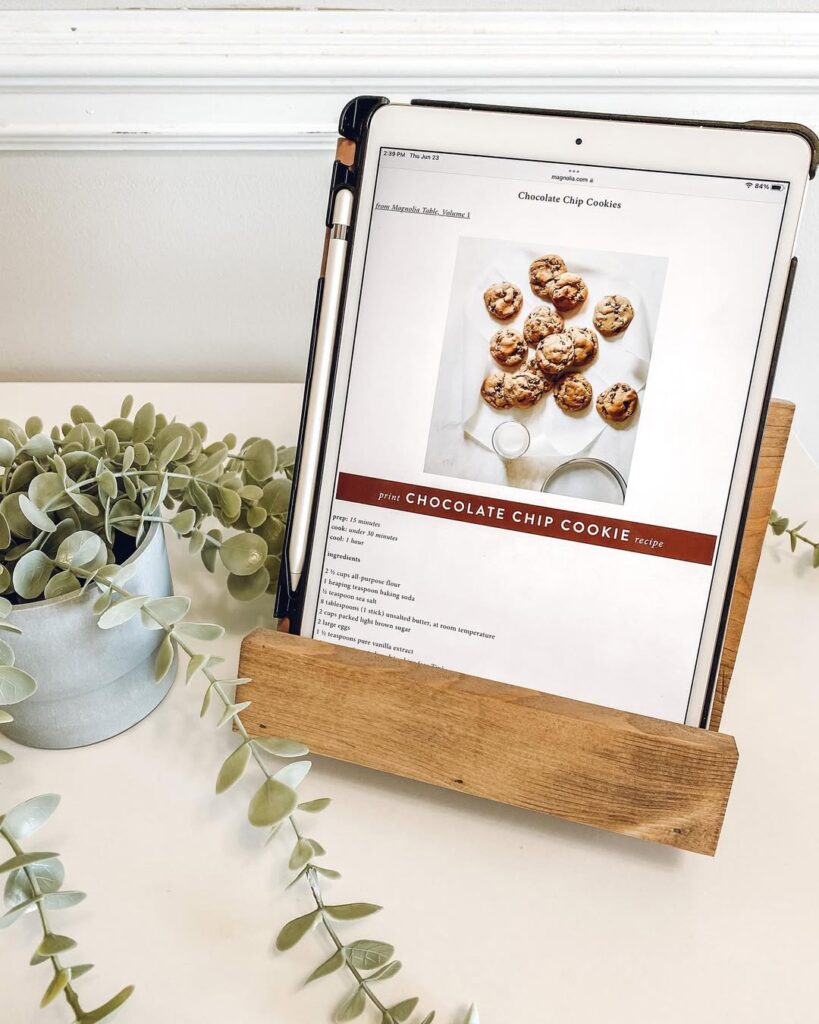
Photo Credit: @fourelevenwoodworks
Don’t underestimate the power of a well-styled stack of cookbooks on your counter. Just a few select titles, paired with a plant or utensil crock, can elevate your space without overcrowding it.
Display Ideas:
- Use a cookbook easel to hold the current book you’re using.
- Stack 3–5 books with spines aligned and top it with a candle or small bowl.
- Pair your books with a mini cutting board or salt cellar for added kitchen charm.
Pro Tip:
Stick to odd numbers in your stack (3 or 5) to create visual balance. Rotate the top book weekly to keep things fresh and inspiring.
Best for: Small kitchens or those who want a low-effort yet impactful display.
Great! Here’s Chunk 2 of your SEO-optimized article in markdown format.
3. Floating Shelves: Vertical Space, Maximized
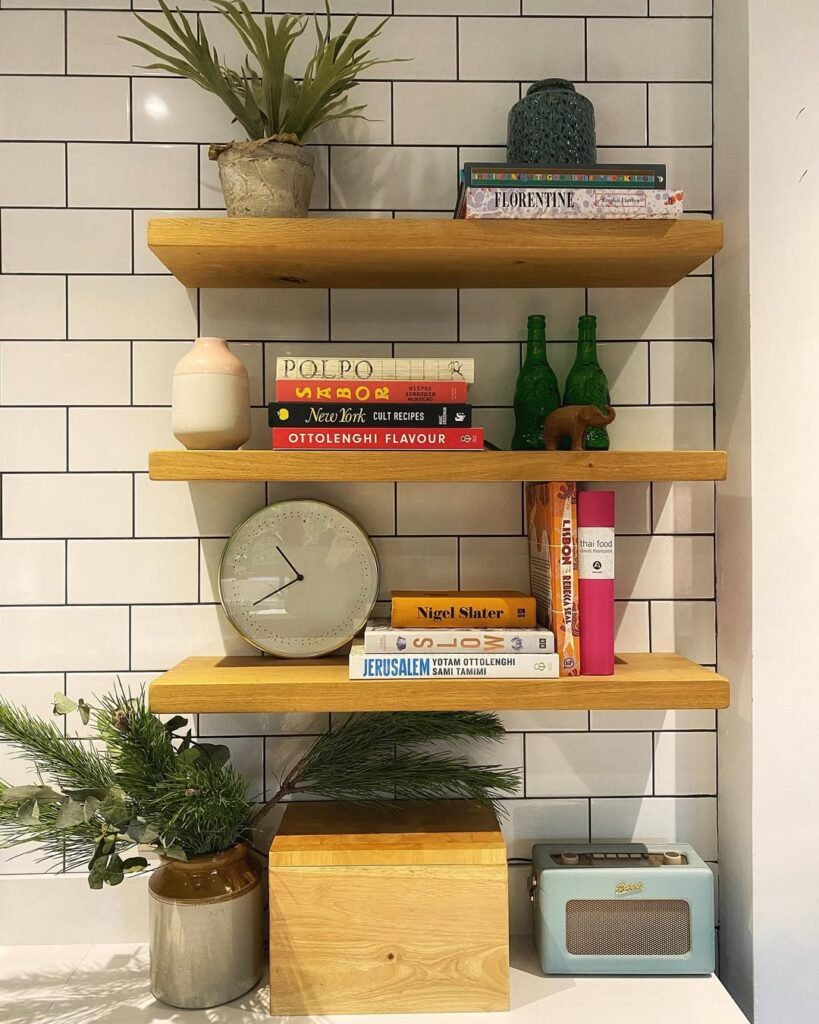
Photo Credit: @the_bramhall_bungalow
Floating shelves are one of the most versatile and space-saving ways to display cookbooks. They work well in kitchens of all sizes—especially those with limited counter space.
Advantages:
- Makes use of underutilized wall areas
- Can be placed near prep zones for easy reach
- Allows creative styling with other decor pieces
Styling Suggestions:
- Arrange books by color or size for a cohesive look
- Alternate stacks of horizontal and vertical books for visual interest
- Add greenery, framed recipe cards, or ceramic jars between books
Installation Tip:
Make sure your shelves are deep enough (10–12 inches) to accommodate larger cookbooks without overhang.
Best for: Homeowners who want a design-forward, flexible display option.
4. Cabinet Conversions: Hidden Storage Made Useful
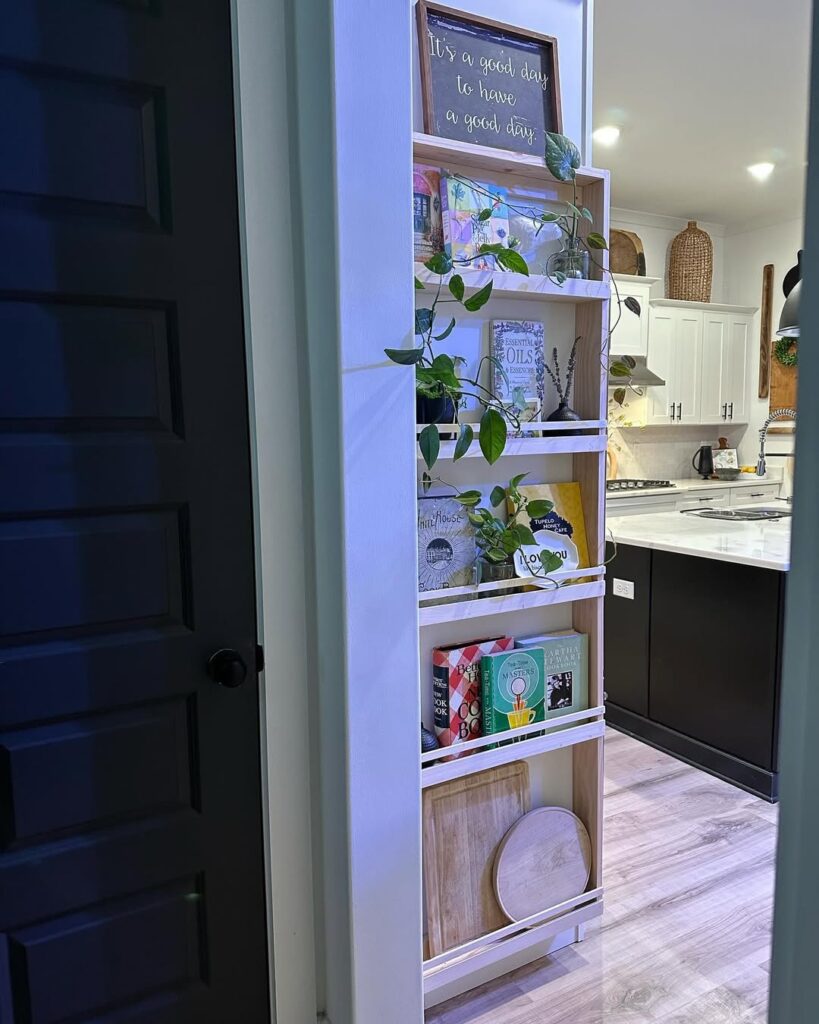
Photo Credit: @debohoyt
Transforming existing cabinetry into a mini-library is a clever way to store and display cookbooks—especially if you’re short on wall or counter space.
Conversion Ideas:
- Remove cabinet doors to create open shelving
- Replace solid doors with glass inserts for visibility
- Wallpaper or paint the cabinet interior for a decorative touch
Smart Details:
- Line the shelf with non-slip liner to keep books in place
- Install small puck lights or LED strips for visibility
- Use shelf risers to create levels for easier access
Common Locations:
- Above coffee bars
- Near breakfast nooks
- Inside walk-in pantries
Best for: Renovators or renters looking for a display that doesn’t require new furniture.
5. Repurposed Furniture: Function Meets Creativity
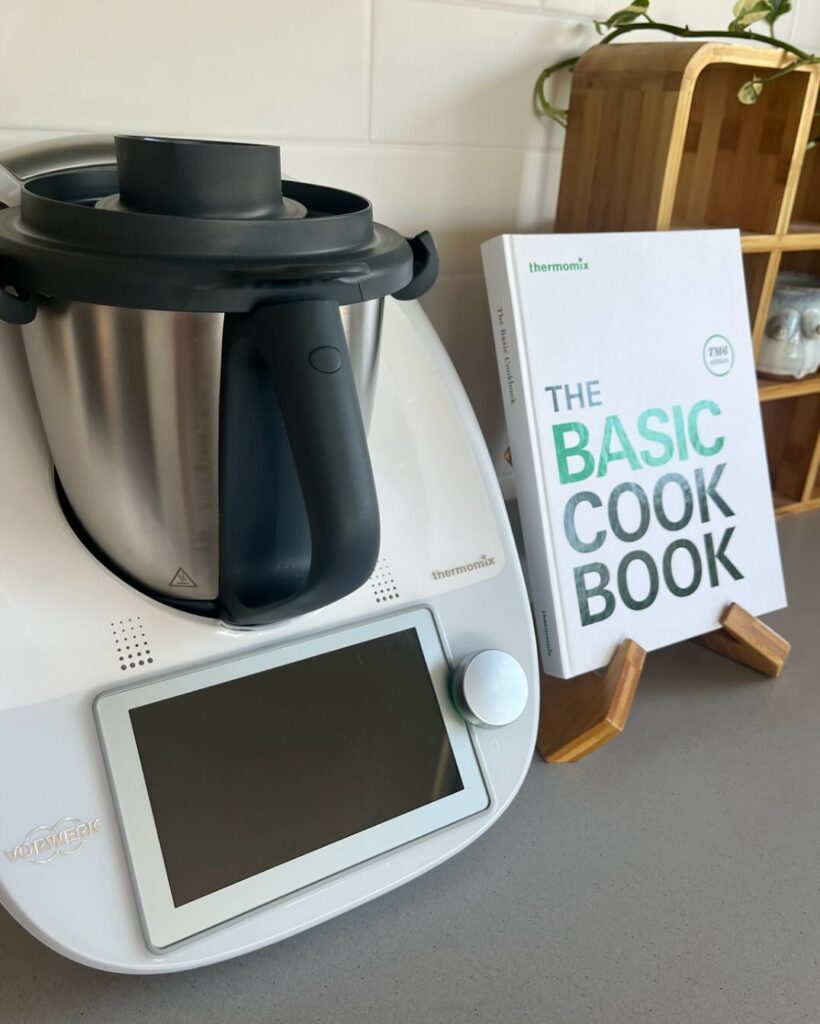
Photo Credit: @life_with_the_cowlings
Repurposing old or thrifted furniture pieces can give your cookbook display personality and a story. Think outside the bookshelf.
Popular Options:
- Vintage dish racks
- Farm crates
- Step stools
- Small dressers or nightstands
- Old bar carts
What to Look For:
- Solid shelves that can hold weight
- A design style that matches or contrasts your kitchen
- Opportunities for customization (paint, hardware, casters)
Creative Touch:
Add hooks to the side for measuring spoons or hang a clipboard with a handwritten recipe.
Best for: Vintage lovers, farmhouse kitchens, or anyone with a creative eye for decor.
Here’s Chunk 3 of your article in markdown format.
6. Cookbook Ledges: Minimalist and Gallery-Worthy

Photo Credit: @whitneydurhaminteriors
A cookbook ledge is a shallow shelf (usually 2–3 inches deep) designed to display books with their covers facing outward. Think of it as a gallery wall for your favorite recipes.
Why It Works:
- Turns books into artwork
- Makes titles easy to identify at a glance
- Easy to swap out books seasonally or by theme
Where to Install:
- Along an empty kitchen wall
- Underneath upper cabinets
- On the side of a pantry or island
Bonus:
Combine with kids’ cookbooks in a lower row to encourage young chefs to get involved.
Best for: Modern, small-space kitchens or those who love rotating seasonal decor.
7. Trays and Tiers: Small Collection Solutions
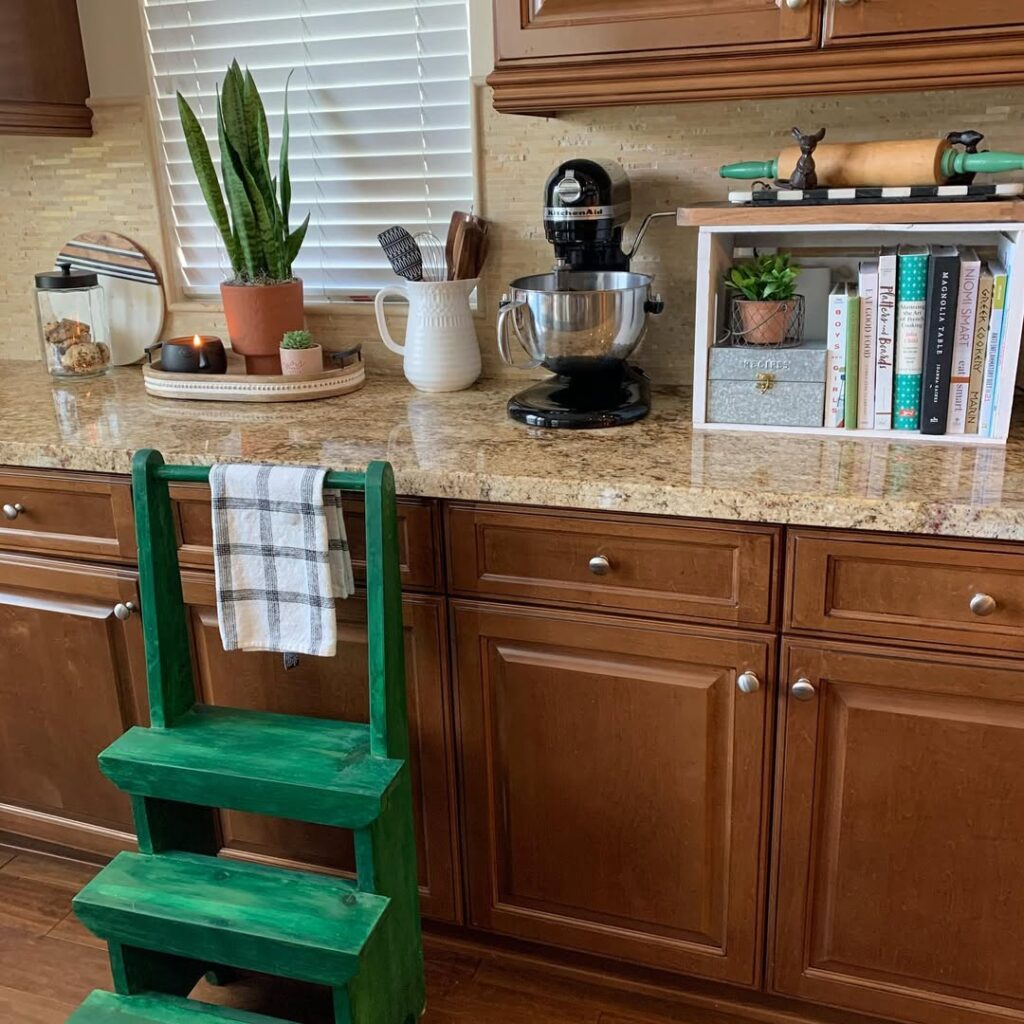
Photo Credit: @anniesue_interiors
If you only own a handful of cookbooks or want to keep a rotating group close by, trays, risers, or tiered stands can create elegant mini-displays on your countertop, sideboard, or kitchen island.
Display Combos:
- Stack 2–3 books inside a decorative tray with a mini plant and salt & pepper mills
- Use a cake stand or lazy Susan for vertical height and movement
- Mix in a ceramic utensil jar or rolling pin for kitchen charm
Where to Place:
- Beside your stove for easy access
- On a bar cart or side console
- Next to a coffee machine with breakfast cookbooks
Best for: Apartment kitchens or coffee bar areas with limited surface space.
8. Cookbook Storage in Kitchen Islands

Photo Credit: @alisonkandler_interiordesign
Have an island with dead space on the ends or underneath? This often-overlooked area is prime real estate for custom cookbook storage.
Island Storage Options:
- Built-in cubbies with horizontal slots
- Open shelves with bookends or baskets
- Pull-out drawers with dividers for less-used cookbooks
Pro Tips:
- Keep the spines visible for easy selection
- Don’t overcrowd—use negative space to let each book breathe
- Add small drawer labels or spine tags if the books aren’t immediately visible
Best for: Large families or active cooks who want both storage and style.
Here’s Chunk 4 of your article in markdown format.
9. Cookbook Displays with Dual Purpose
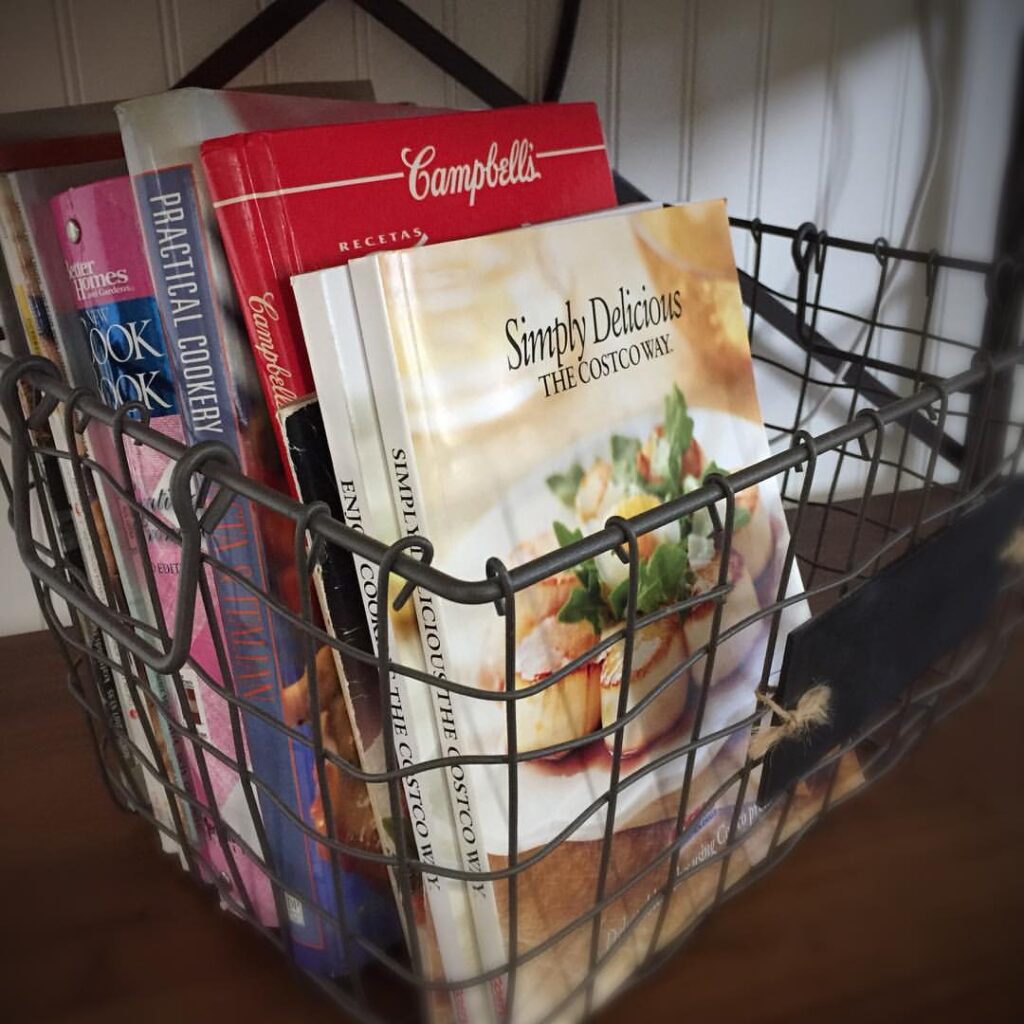
Photo Credit: @themonarchnest
One of the best ways to blend form and function in a kitchen is by integrating cookbook displays into items that serve multiple purposes.
Creative Ideas:
- Wall-mounted baskets: Use deep wire baskets or magazine racks turned sideways to hold cookbooks. They double as rustic wall decor.
- Easels with page protectors: Display a cookbook open to a recipe while protecting it from splashes during meal prep.
- Bar carts: Add a row of cookbooks alongside your cocktail gear—perfect for entertainers who love hosting dinner parties.
Functional Add-ons:
- Clip-on LED lights for low-light reading
- Small trays or catch-alls nearby for bookmarks, notecards, or recipe clippings
Best for: Multi-use spaces and creative types who love kitchen decor that earns its keep.
10. Child-Friendly Cookbook Displays

Photo Credit: @cindyirene1970
Cookbooks aren’t just for adults—kids love colorful, illustrated recipe books too. Creating a dedicated display for your little chef encourages culinary curiosity.
Tips for Kid-Inclusive Displays:
- Use low, reachable shelves or ledges
- Choose titles with bold covers and simple recipes
- Add a stool or small table for reading and flipping pages
- Label the area “Chef’s Corner” or use chalkboard paint for fun doodles
Safety Note:
Avoid placing books near the stove or sharp objects. Stick to prep or breakfast zones.
Best for: Families and parents who want to get kids involved in the kitchen from an early age.
11. Seasonal & Thematic Rotations
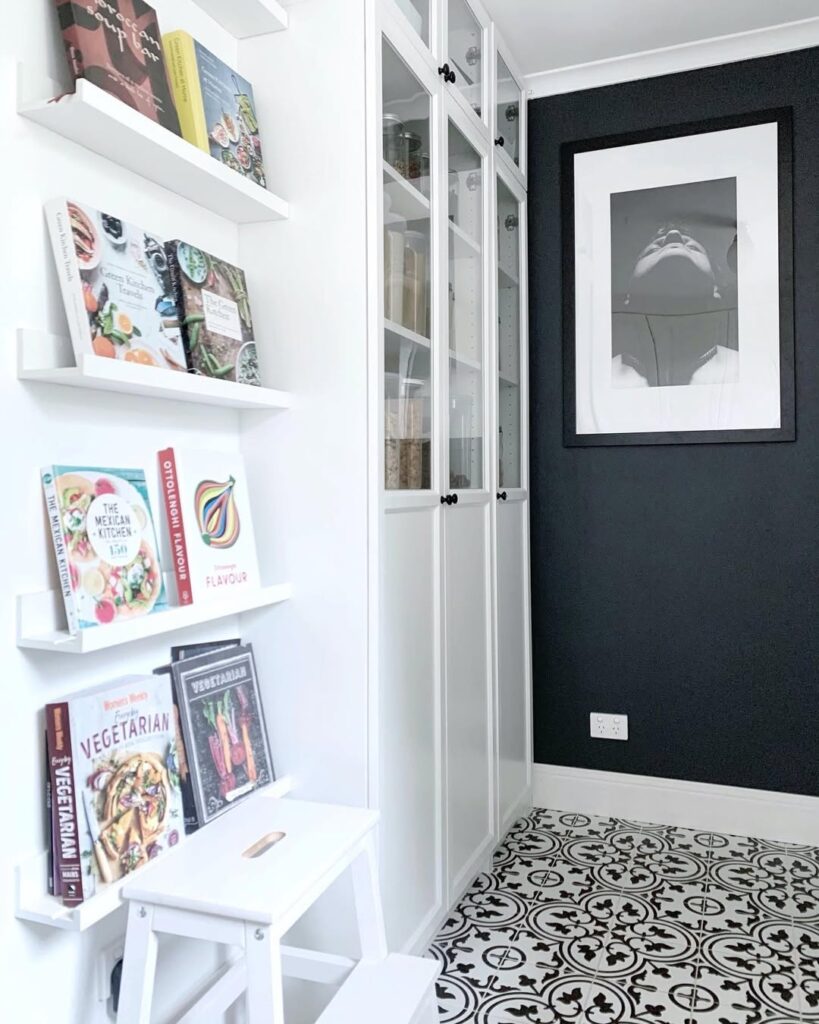
Photo Credit: @marikaknowsthings
Cookbook displays don’t need to be static. Rotating books based on the season or your current cooking mood can make the display feel new all year round.
Rotation Ideas:
- Fall: Pumpkin recipes, Thanksgiving meal prep, baking books
- Winter: Comfort food, holiday meals, soups & stews
- Spring: Brunch ideas, fresh produce recipes
- Summer: Grilling, smoothies, picnic-friendly meals
How to Manage It:
- Store out-of-season books in labeled bins or baskets nearby
- Create a small “feature” section with your current favorite on a stand or ledge
- Use a digital catalog or app to track what’s stored where
Best for: Avid home cooks and decorators who love changing things up with the seasons.
Here’s the final Chunk 5 of your article in markdown format.
12. Maintenance and Care Tips for Your Cookbook Collection
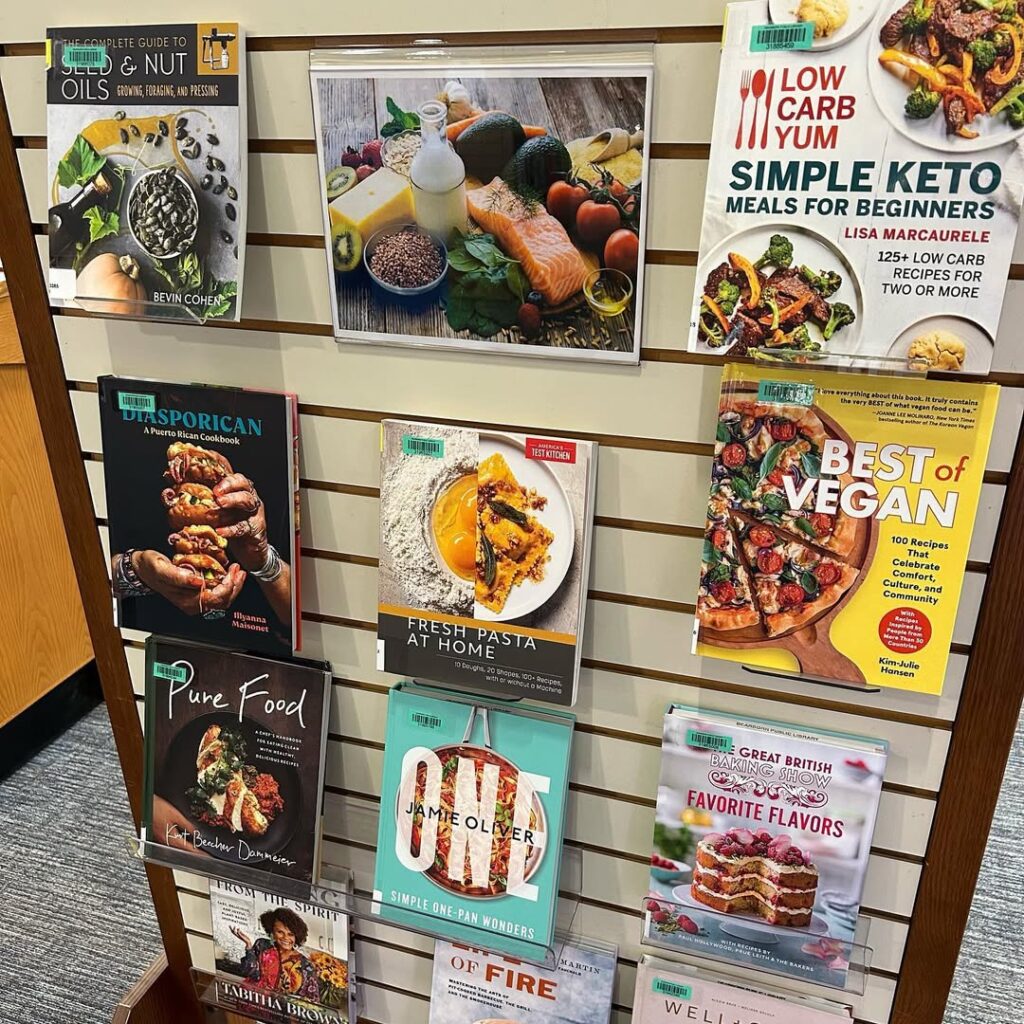
Photo Credit: @dearbornlibrary
Displaying cookbooks beautifully also means keeping them in good shape. Proper care will preserve your books’ longevity and appearance.
Cookbook Care Checklist:
- Keep cookbooks away from direct sunlight to prevent fading.
- Avoid placing books near heat sources like ovens or stoves.
- Clean shelves and ledges regularly to prevent dust buildup.
- Use bookends to prevent books from leaning and warping.
- Protect frequently used books with plastic sleeves or page protectors, especially for messy recipes.
- Consider digital backups of your favorites to preserve original copies.
Summary: Craft Your Perfect Cookbook Display
Your cookbook collection is an extension of your kitchen’s heart and soul. Whether you have a handful of cherished volumes or an extensive library, the right display can transform your kitchen into a more inspiring, organized, and inviting space.
Quick Recap:
- Assess your collection size and usage frequency.
- Choose a display style that complements your kitchen design.
- Optimize accessibility with smart placement near prep areas.
- Mix function with aesthetics—don’t be afraid to add plants, lighting, or decorative objects.
- Rotate displays seasonally for freshness and inspiration.
- Maintain your books with simple care routines.
With these thoughtful tips and creative ideas, your cookbooks will not only be at your fingertips but also become a stylish centerpiece in your kitchen.