

RV closets present unique challenges that standard home organization tips simply can’t solve. With limited space, constant movement, and weight restrictions, you need specialized strategies to create functional storage that works on the road.
This guide covers proven techniques used by full-time RVers and organizing professionals to transform cramped closets into efficient storage systems. Whether you’re a weekend warrior or living full-time in your RV, these methods will help you maximize space while keeping belongings secure during travel.
Contents
- 1 Understanding RV Closet Constraints
- 2 Core Principles for RV Closet Success
- 3 Strategic Storage Zones
- 4 Essential RV Closet Organization Tools
- 5 Clothing-Specific Strategies
- 6 Special Considerations for Different RV Types
- 7 Weight Distribution and Safety
- 8 Maintenance and Long-Term Success
- 9 Troubleshooting Common Problems
- 10 Creating Your Custom System
Understanding RV Closet Constraints
RV closets operate under different rules than home closets. The average RV closet measures 24-36 inches wide and 18-24 inches deep—roughly half the size of a standard bedroom closet. Yet these compact spaces must store everything from daily clothing to seasonal gear and travel essentials.
Key Limitations:
- Limited dimensions force creative use of vertical space
- Constant movement requires secure storage solutions
- Weight restrictions demand lightweight organizing materials
- Multipurpose needs mean storing diverse items in one space
The most successful RV storage systems work with these constraints rather than fighting them. Instead of cramming traditional organizing methods into inadequate space, effective solutions embrace the unique requirements of mobile living.
Core Principles for RV Closet Success
Vertical Optimization
RV closets typically offer more height than width. Use this vertical space with stackable containers, hanging organizers that extend from ceiling to floor, and over-door storage systems.


Multipurpose Solutions
Every organizational tool should serve multiple functions. Choose hanging organizers with various pocket sizes, containers that stack and nest, and storage systems that adapt to different items.

Lightweight Materials
Fabric and mesh organizers weigh significantly less than plastic or metal alternatives while providing similar functionality. Canvas and nylon options offer durability without excessive weight.
Secure Storage
Items must stay in place during travel. Use compression systems, securing straps, and organizers with sealed bottoms to prevent spillage during sudden stops or sharp turns.

Adaptability
Your storage needs change with seasons, destinations, and lifestyle shifts. Modular systems with removable dividers and adjustable components accommodate these changes without requiring complete reorganization.
Strategic Storage Zones
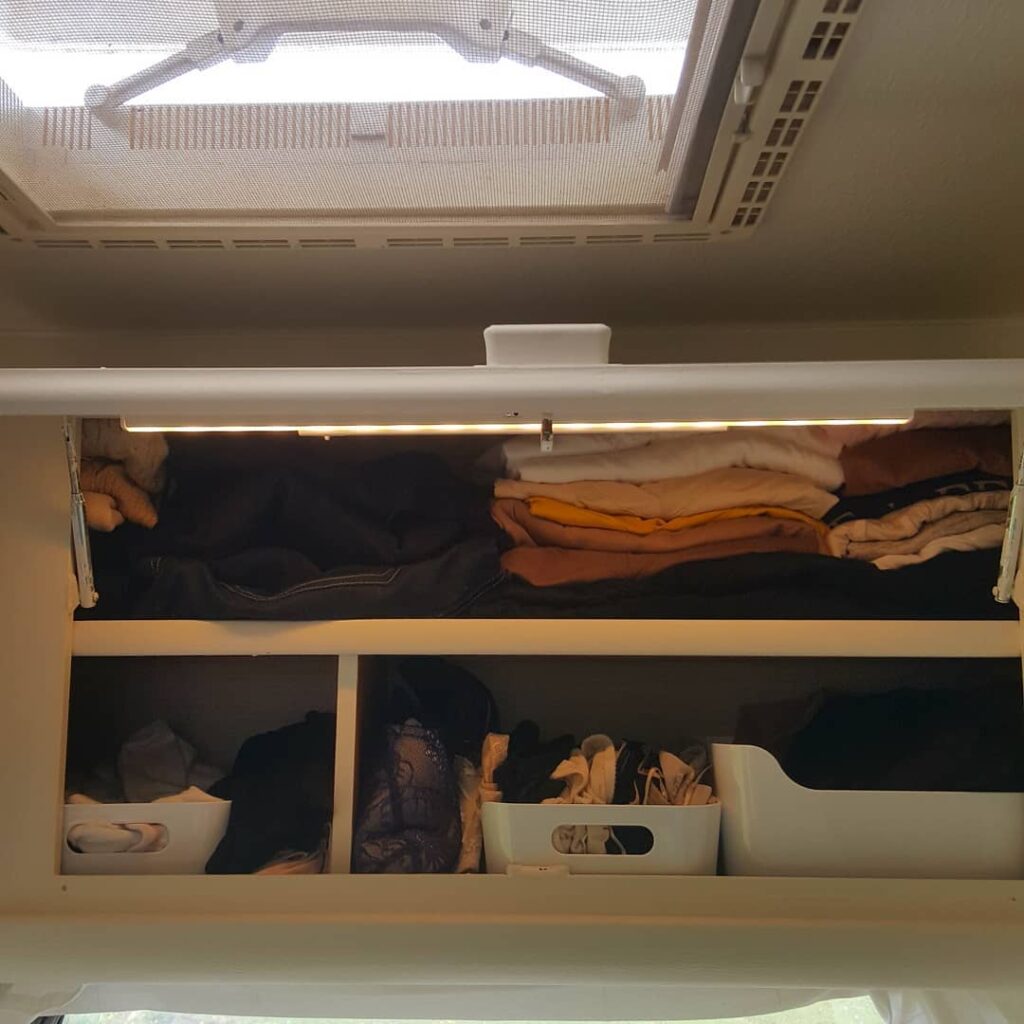
Photo Credit: @carola_liden
Divide your RV closet into functional zones based on accessibility and item frequency:
Top Zone (Ceiling Area)
Store seasonal items, rarely used gear, and lightweight bulky items like sleeping bags or extra pillows. Use compression bags and lightweight containers with handles for easy retrieval.
Eye Level Zone (Prime Real Estate)
Keep daily essentials, frequently worn clothing, and travel documents. Install adjustable shelving or hanging organizers with clear pockets for maximum visibility and access.
Lower Zone (Floor Level)
Store heavier items, shoes, and cleaning supplies. Use sliding drawers or bins with wheels to access items without crawling into the closet.
This zoning approach prevents the common mistake of storing heavy items overhead or burying daily essentials behind rarely used gear.
Essential RV Closet Organization Tools
Hanging Organizers
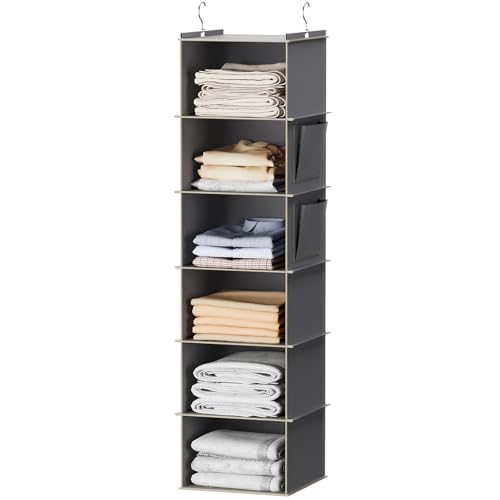
Multi-pocket hanging organizers maximize vertical space while keeping items visible and accessible. Look for models with reinforced stitching and sturdy hooks that won’t bend under weight during travel. Choose organizers with a mix of pocket sizes to accommodate everything from toiletries to electronics.
Compression Storage Bags

These space-saving solutions reduce bulky items like comforters and seasonal clothing by up to 75%. Vacuum-seal bags work best for long-term storage, while roll-up compression bags offer easier access for items you rotate seasonally.
Stackable Containers with Locking Lids

Clear, lightweight containers with secure locking mechanisms prevent contents from spilling during travel. Look for containers that nest inside each other when empty to save storage space when not in use.
Over-Door Storage Systems

Door space often goes unused in RVs, yet it provides valuable real estate for frequently accessed items. Over-door shoe organizers work perfectly for toiletries, cleaning supplies, or small tools.
Adjustable Shelving Units

Tension-rod shelving systems or adjustable wire shelving maximizes space without permanent installation. These systems adapt to different closet heights and can be reconfigured as storage needs change.
Clothing-Specific Strategies
The Capsule Wardrobe Approach
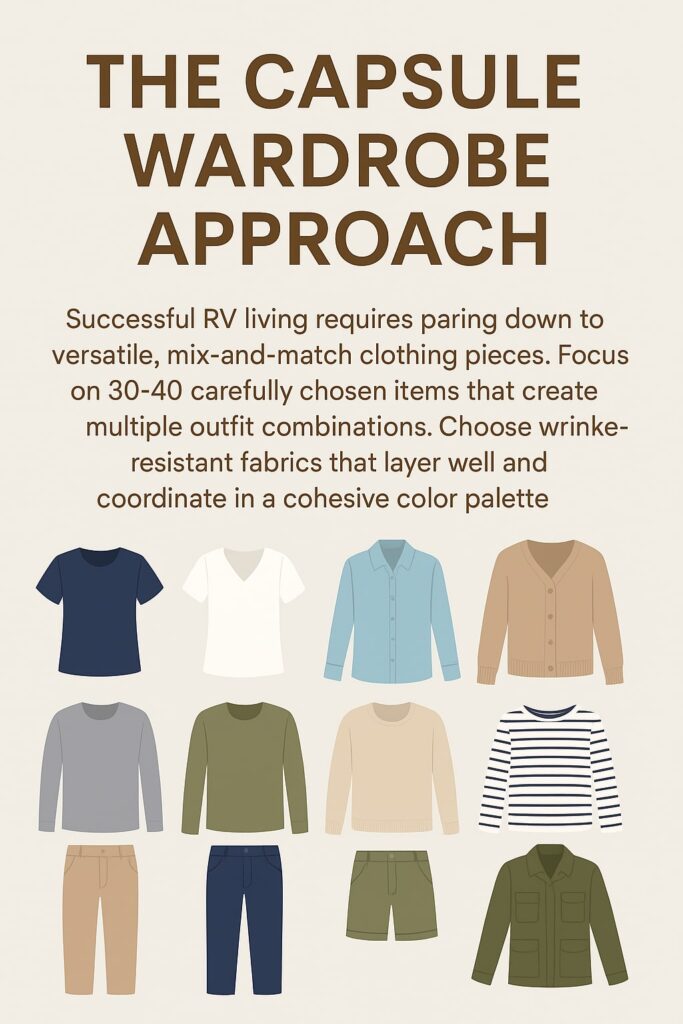
Successful RV living requires paring down to versatile, mix-and-match clothing pieces. Focus on 30-40 carefully chosen items that create multiple outfit combinations. Choose wrinkle-resistant fabrics that layer well and coordinate in a cohesive color palette.
Related: 20 Smart RV Clothes Storage Solutions for Tiny Living
Efficient Folding Techniques
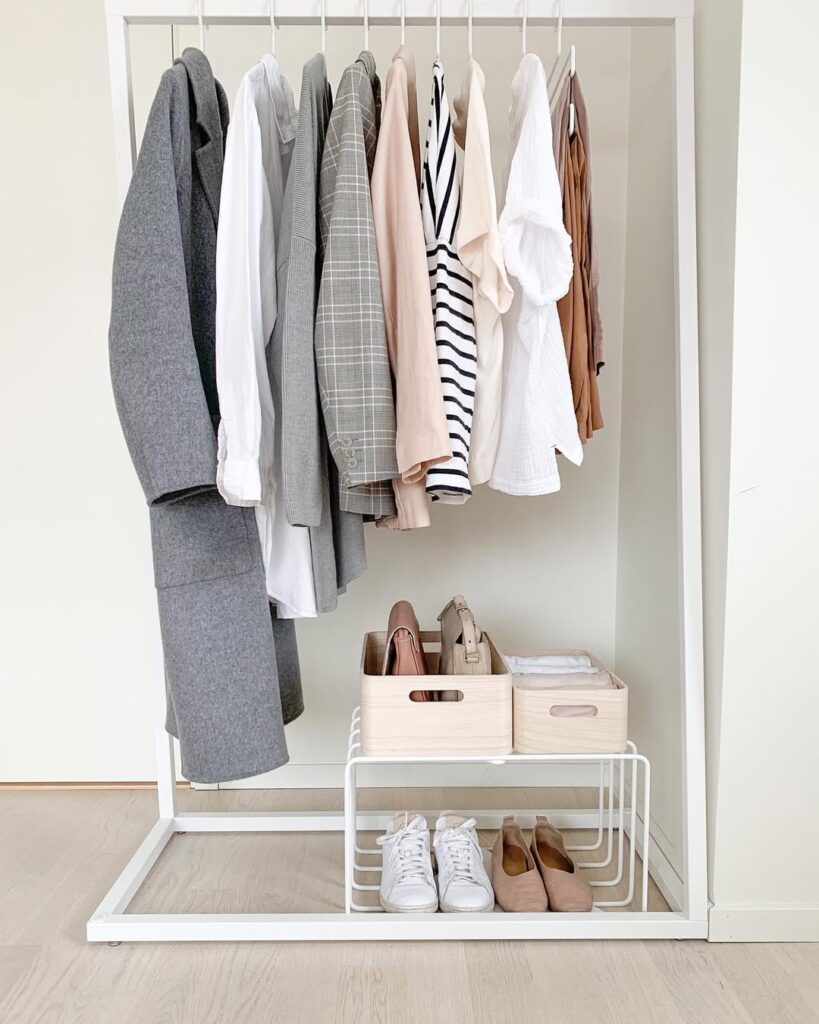
Photo Credit: @theminimalistwardrobe
Master space-saving folding methods like the KonMari technique or military rolling. These methods reduce clothing volume by 30-40% compared to traditional folding while making items easier to identify and access.
Hanging System Optimization
Use slim velvet hangers that take up 50% less space than traditional plastic hangers. Install a second hanging rod at half-height to double hanging capacity for shorter items like shirts and pants.

Seasonal Rotation System
Store off-season clothing in compression bags at the top of the closet. Rotate seasonal items every 3-4 months, keeping only current-season essentials in prime storage zones.
Special Considerations for Different RV Types
Class A Motorhomes
Larger RVs often have walk-in closets with more traditional layouts. Focus on maximizing floor space with rolling storage carts and utilizing the full height with ceiling-mounted storage solutions.
Travel Trailers and Fifth Wheels
These RVs typically have smaller, more numerous closets. Create consistency across multiple spaces by using the same organizational systems and color-coding different family members’ belongings.
Class B and C Motorhomes
Compact RVs require the most creative solutions. Consider convertible furniture with built-in storage and under-bed organization systems that extend your closet space.
Weight Distribution and Safety
Proper weight distribution prevents handling problems and potential safety hazards. Store heavy items low and toward the center of the RV. Use a luggage scale to weigh loaded storage containers and distribute weight evenly between the left and right sides of your RV.
Never exceed your RV’s cargo carrying capacity, typically 1,000-3,000 pounds depending on your RV type. Keep a running inventory of stored items and their approximate weights to stay within safe limits.
Maintenance and Long-Term Success
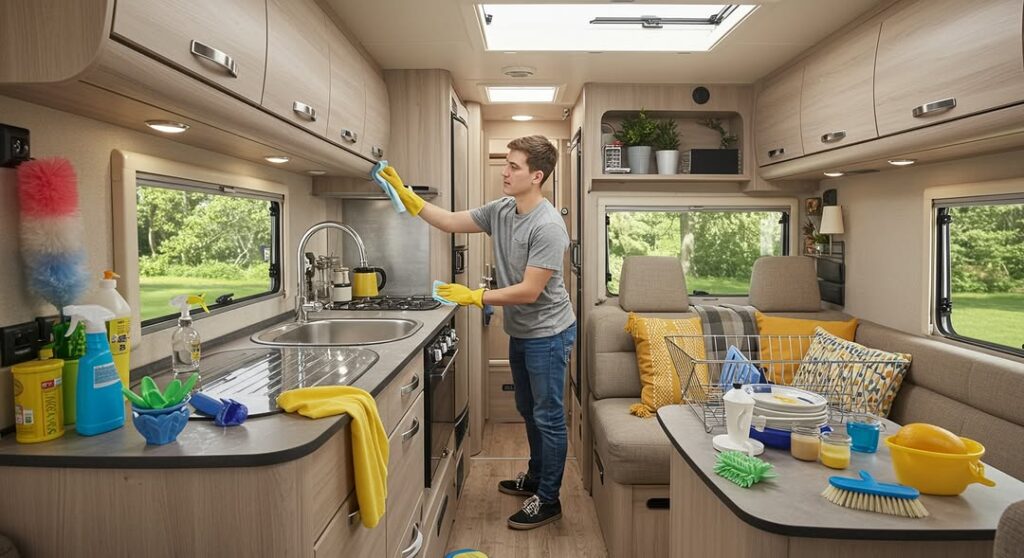
Photo Credit: @rvcare
Regular Decluttering Schedule
Establish a monthly review system to remove items you haven’t used and add new necessities. The confined space of RV living makes it impossible to ignore accumulating clutter.
Cleaning and Ventilation
RV closets are prone to moisture buildup and musty odors. Use moisture absorbers, ensure adequate ventilation, and clean storage containers regularly. Cedar blocks or lavender sachets provide natural freshening without chemical odors.
System Adaptation
Your organizational system should evolve with your travel style and experiences. What works for weekend camping may not suit full-time living, and coastal travel requires different preparation than mountain adventures.
Troubleshooting Common Problems
Photo Credit: @steadfastrvservice
Items Shifting During Travel
Secure loose items with bungee cords, install cabinet latches on storage containers, and use non-slip mats on shelving. Fill empty spaces with soft items like towels or clothing to prevent shifting.
Overcrowding and Inaccessibility
If you can’t easily access items or if containers are overpacked, you have too much stuff. Apply the “one in, one out” rule and be ruthless about keeping only essentials.
Odor and Moisture Issues
Improve air circulation with battery-powered fans, use moisture absorbers religiously, and avoid storing damp items. Consider upgrading to moisture-wicking storage materials for problematic areas.
Creating Your Custom System
Start with a complete inventory of items you need to store, then measure your available closet space precisely. Sketch a simple layout showing your proposed zones and storage solutions before purchasing organizing materials.
Begin with one closet as a test case, implementing the zone system and trying different organizational tools. Once you perfect the system, replicate successful elements in other storage areas throughout your RV.
Remember that the best RV closet organization system is one you’ll actually maintain. Choose solutions that make sense for your lifestyle, travel frequency, and personal preferences. A simple system you use consistently beats a complex system you abandon after the first month on the road.
The key to RV closet success lies in working with your space’s limitations while maximizing its potential. With the right approach, even the smallest RV closet can provide organized, accessible storage that makes life on the road more enjoyable and stress-free.