

Keeping your bottled water—whether reusable or single-use—organized is one of those small but impactful steps in maintaining a tidy and efficient home. Between the wide variety of bottle shapes, sizes, lids, and accessories, water bottles can quickly take over cabinets, drawers, countertops, and even your car. If you’re tired of digging through a cluttered cabinet to find your favorite bottle, you’re not alone.
In this comprehensive guide, I’m diving deep beyond the usual tips to share practical, creative, and space-saving bottled water storage ideas that truly work—whether you’re dealing with a tiny kitchen, a busy family home, or even a high-traffic area like a gym or office. I’ll walk you through smart ways to declutter, along with clever product recommendations that are not only functional but also stylish.
Contents
- 1 Why Is Water Bottle Storage So Challenging?
- 2 Start With a Water Bottle Inventory & Decluttering
- 3 Evaluate Your Space and Storage Needs
- 4 Smart Storage Solutions for Every Type of Bottle
- 5 Creative Water Bottle Storage for Tight Spaces
- 6 How to Store Water Bottle Accessories and Specialized Bottles
- 7 Final Thoughts: Keep Your System Working for You
Why Is Water Bottle Storage So Challenging?
Water bottles often pose a unique organizational challenge because of their:
Inconsistent Shapes and Sizes
Standard kitchen organizers rarely accommodate the varied diameters and heights of reusable bottles.
Daily Use and Cycling
Unlike seasonal or occasional kitchen items, water bottles are used, washed, and reused constantly—making upkeep difficult.
Extra Accessories
Lids, straws, handles, and even built-in filters make water bottles more complex to store than they appear.
Volume of Inventory
Between kids’ bottles, travel mugs, and gym tumblers, most families own more bottles than they truly need.
Start With a Water Bottle Inventory & Decluttering
Before you even think about storage solutions, it’s essential to know what you’re working with. This step helps eliminate unused, broken, or duplicate bottles and makes organizing what’s left so much easier.
Steps to Declutter Your Water Bottles:
Gather All Bottles in One Spot
Check every possible hiding place—kitchen cabinets, backpacks, gym bags, cars, office desks, even bathroom counters.
Sort into Clear Piles:
- Keep – Functional bottles that you love and regularly use.
- Donate – Bottles in good shape but no longer used.
- Recycle/Trash – Damaged, cracked, or outdated plastic bottles.
Categorize What You’re Keeping
Group bottles by type for easier organizing:
- Kids’ bottles
- Bottles with straws
- Wide-mouth bottles
- Travel mugs
- Large-capacity bottles
- Kids’ bottles
Pro Tip: Keep only what you can reasonably store without overcrowding your space.
Evaluate Your Space and Storage Needs
The best water bottle storage solution depends not just on the bottles, but on where and how you plan to store them.
Questions to Ask Before Choosing a Storage Option:
- Where do you naturally reach for water bottles?
Near the fridge, sink, or pantry? - Do you prefer open storage (easy access) or concealed (clutter-free) solutions?
- Are you dealing with a small kitchen or do you have extra pantry or utility room space?
- Do you need separate zones for kids or guests?
Understanding your needs will help you pick a method that is functional, sustainable, and easy to maintain—because even the smartest system won’t work if it’s not convenient.
Smart Storage Solutions for Every Type of Bottle

Photo Credit: @typealifestyleco
Once you’ve decluttered your collection and evaluated your available storage space, the next step is to find smart, functional ways to keep your bottles organized. Whether you’re in a studio apartment or managing a bustling family kitchen, these creative storage ideas offer practical solutions for every kind of bottle—without compromising on style or efficiency.
1. Dedicated Water Bottle Organizers
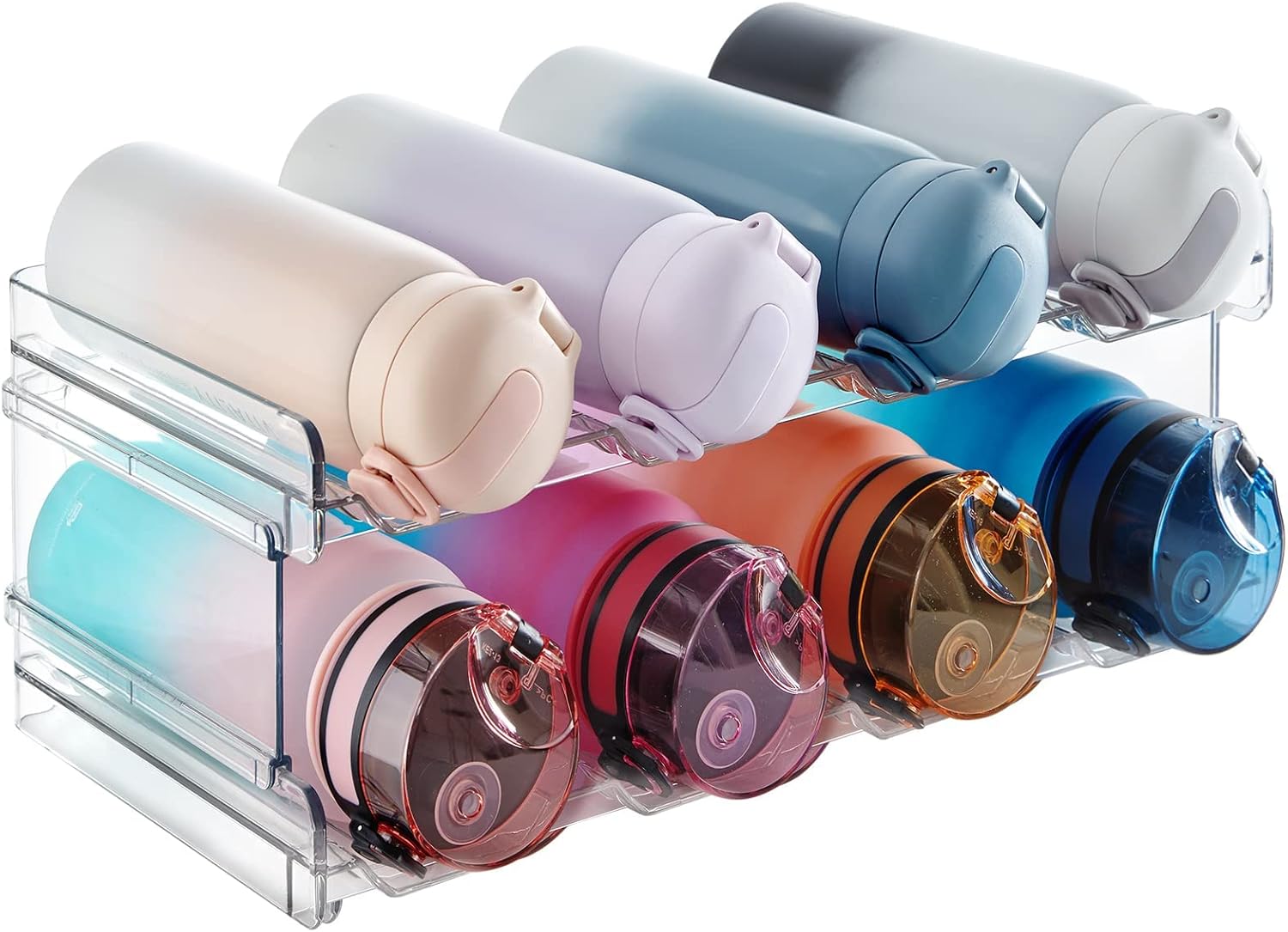
Investing in purpose-built water bottle racks can instantly transform your cabinet or pantry. These organizers are specifically designed to hold bottles either vertically or horizontally, keeping them from rolling or tipping over. Many come in stackable or expandable formats and are made from materials like BPA-free plastic or eco-friendly bamboo. Some even include capacity labels or a modular layout, making them ideal for families who rotate through multiple bottles a day. For tight spaces, vertical styles can maximize your cabinet height and double your usable space.

2. Repurpose Wine Racks for Chunky Bottles
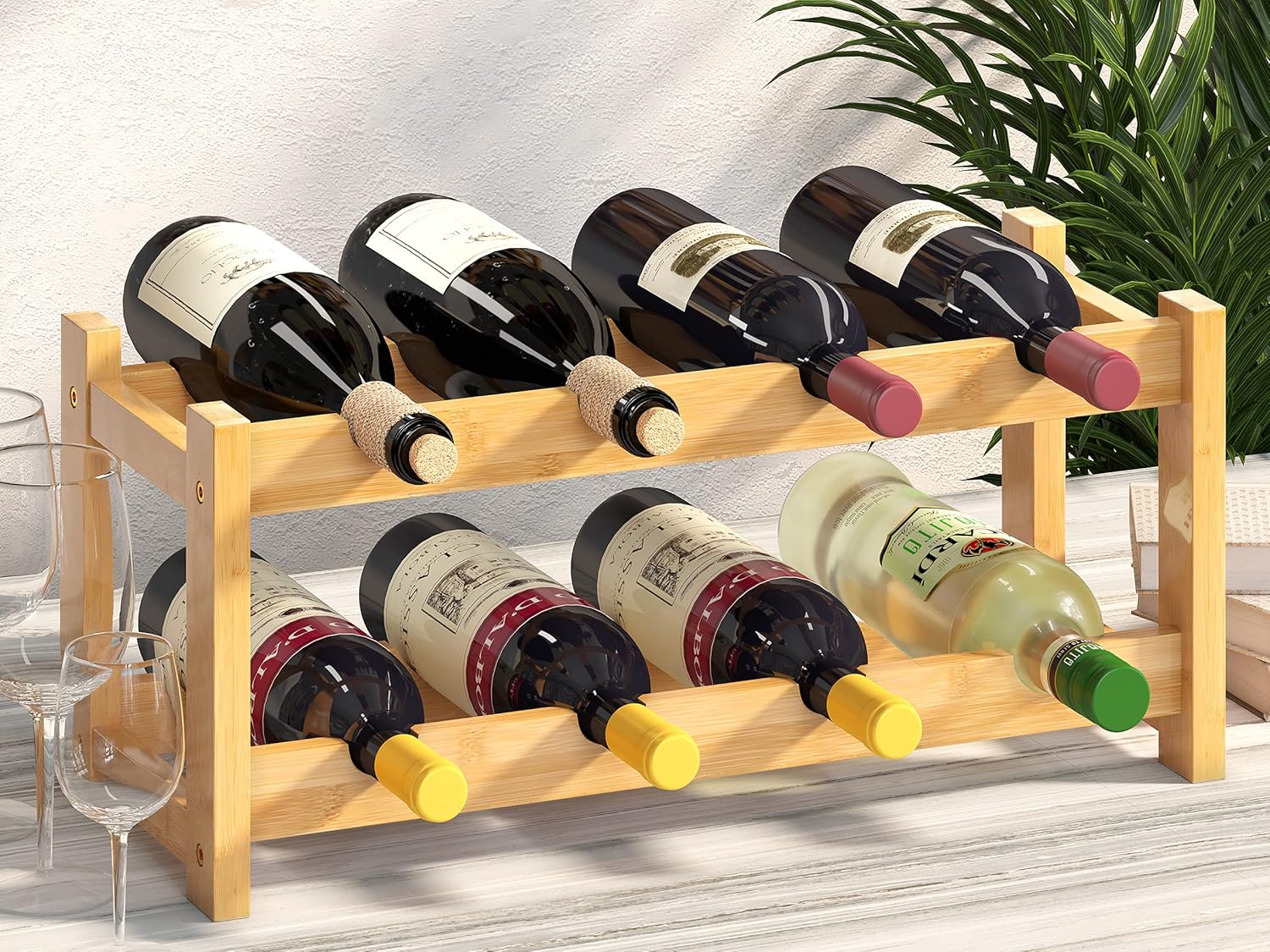
Don’t overlook wine racks as a clever storage alternative. Their curved slots are perfect for round bottles, especially bulky insulated tumblers like Hydro Flasks or Yetis. Plus, wine racks often fit seamlessly into open shelving or countertop spaces. For a custom look, spray paint a thrifted rack to match your kitchen decor and create a cohesive storage solution with a touch of flair.
3. Use Clear Magazine Holders in Drawers or Shelves
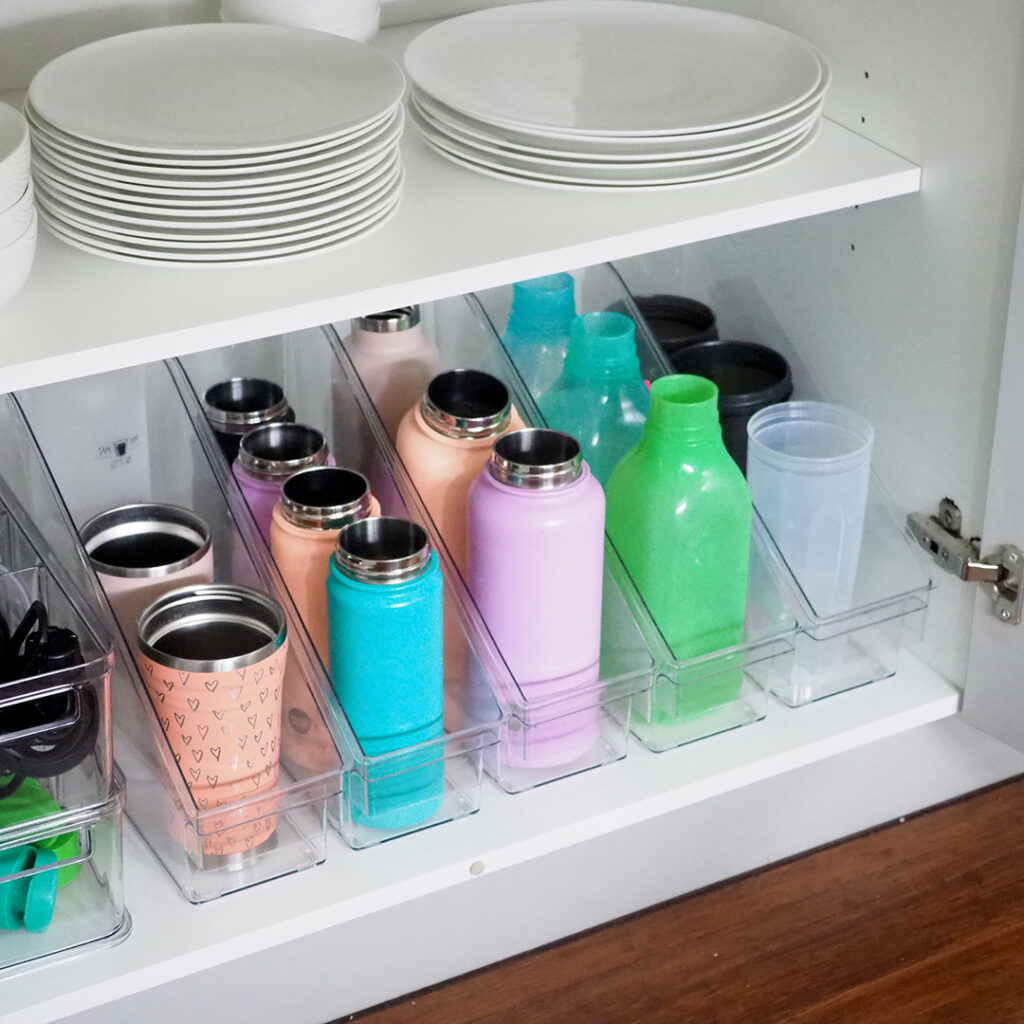
Photo Credit: @organisedhq
Clear plastic or acrylic magazine holders can be turned sideways to cradle water bottles horizontally. This budget-friendly hack works well for small households, renters, or anyone looking for a low-commitment solution. Slide a couple into a drawer or line them up on a shelf to keep bottles tidy and accessible. You can even personalize each holder with labels—one for the gym, one for the kids, and another for mom or dad.
4. Drawer Dividers for Deep Cabinets
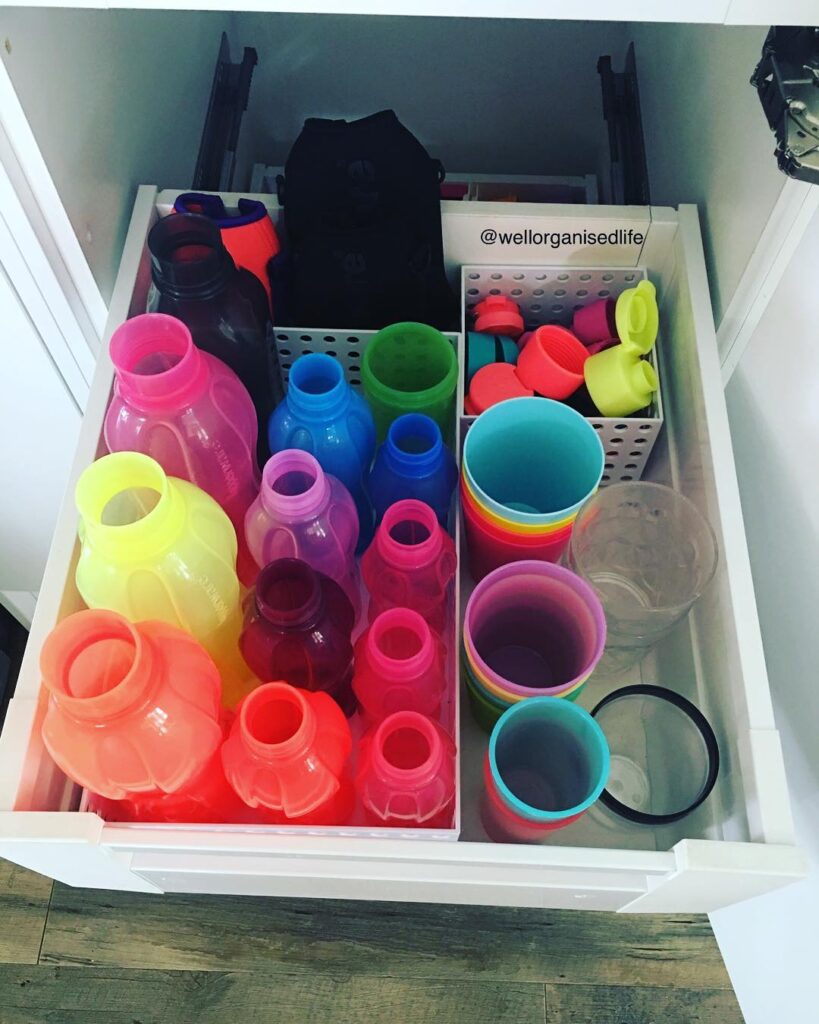
Photo Credit: @wellorganisedlife
If you have deep pull-out drawers, use adjustable or spring-loaded dividers to create upright storage zones for bottles. This approach keeps bottles from toppling over when you open the drawer and makes everything easy to grab. To enhance the look, line the drawer with bamboo inserts or non-slip mats. This solution is particularly effective in modern kitchens where deep drawers are more common than upper cabinetry.
5. Open-Top Storage Bins for Grab-and-Go Convenience
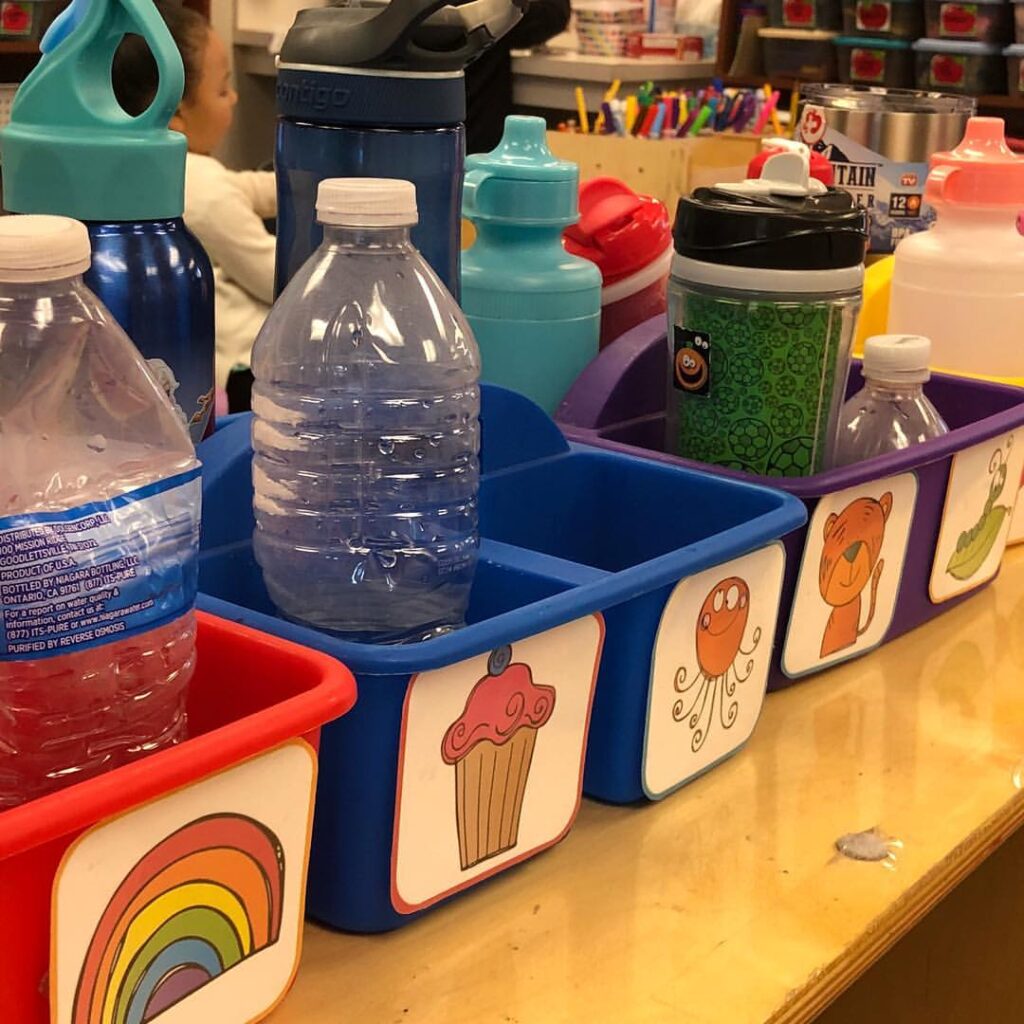
Photo Credit: @theresourcefulapple
Simple open bins—whether wire or plastic—are great for high-traffic households. They make it easy to toss in bottles and retrieve them on the fly. Place a few bins inside a pantry, drawer, or cabinet and consider sorting them by bottle type or user. For example, one bin can be for school water bottles, another for gym use, and a third for sports practices. Using clear bins adds visibility, making it easier to see what’s available at a glance.
Creative Water Bottle Storage for Tight Spaces
Not everyone has the luxury of extra shelves or spacious drawers. If you’re working with a small kitchen, shared space, or even an RV, these compact ideas will help you maximize every inch.
6. Back-of-the-Door Racks
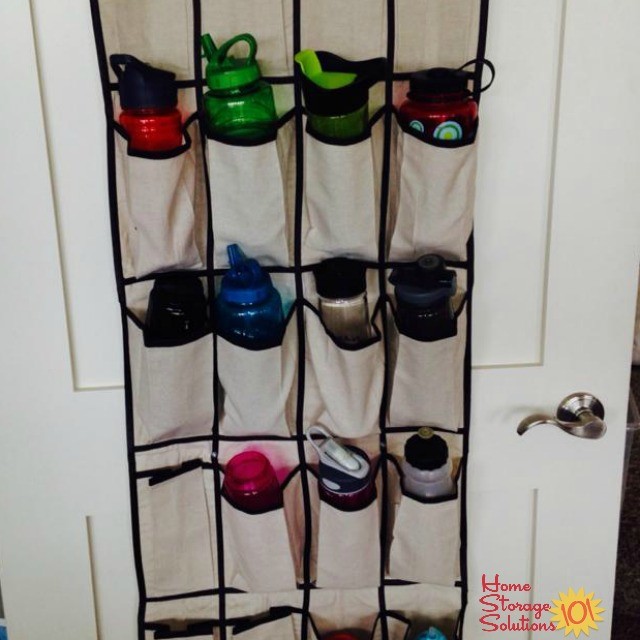
Photo Credit: @taylorflanery
Make use of your vertical storage potential with over-the-door organizers. These hang on the inside of cabinet or pantry doors and come with pockets, baskets, or hooks that are ideal for holding water bottles. Clear shoe organizers with deep pockets work particularly well, as do metal basket systems and adjustable rails. Transparent pockets make it easy to identify each bottle or lid without digging around.
7. Lazy Susans for Corner Storage
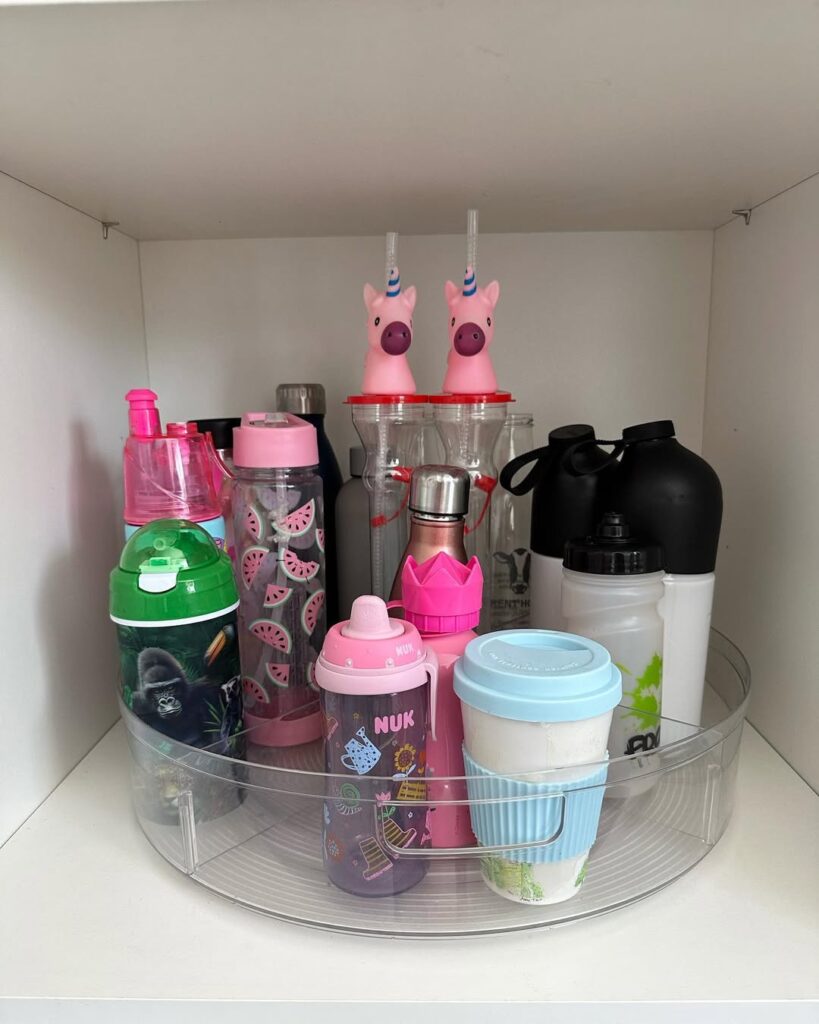
Photo Credit: @theorganisedqueens
A rotating turntable, or Lazy Susan, can make deep or awkward cabinet corners functional again. Their circular design accommodates round bottles nicely, and you’ll never need to reach to the back again. For best results, use turntables with high sides to keep bottles from tipping. Stick with short or wide-based bottles to prevent spills during rotation.
8. Rolling Carts for Mobile Storage
If you’re tight on space but still need flexibility, a tiered rolling cart offers mobile storage that you can tuck away when not in use. It’s especially useful in dorms, offices, or multi-purpose homes. Assign each tier to a category—daily bottles on top, accessories in the middle, and cleaning tools or extra lids on the bottom.

9. Under-Shelf Baskets to Reclaim Vertical Space
Clip-on under-shelf baskets can turn unused air space into useful storage. Slide them under pantry or cabinet shelves and use them to store horizontally stacked bottles or small accessories like lids and straws. For added stability, place a piece of rubber matting inside to keep bottles from rolling.
10. Wall-Mounted or Pegboard Setups
Pegboards and wall-mounted systems offer a stylish and practical solution, especially for utility areas or garages. Customize your pegboard with hooks, baskets, or mini shelves to suit your collection. You can even create a full “hydration station” with hooks for each family member’s bottle, a small shelf for extras, and labeled bins for straws or lids. Paint the board to match your decor and you’ll have a storage setup that’s both functional and eye-catching.
How to Store Water Bottle Accessories and Specialized Bottles
Reusable bottles often come with plenty of extras—lids, straws, infusers, and brushes—that can quickly turn into clutter. Having a plan for accessory storage keeps things tidy and ensures your bottles are always ready for use.
11. Keeping Accessories Neat and Accessible
The key to avoiding missing pieces is grouping accessories by type. Use clear drawer inserts to separate straws, tops, and gaskets. Small bins—ideally labeled—can hold lids and infusers. Snack containers with compartments are surprisingly effective for housing smaller parts. For a sleek and integrated look, repurpose a spice drawer insert or flatware tray.
12. Where to Store Cleaning Tools
Bottle brushes and narrow scrubbers need their own home too. Attach a magnetic strip inside a cabinet to hold metal-handled tools or use adhesive hooks to hang brushes near the sink. If you prefer countertop access, a small jar or caddy works well for tools that are drying.
13. Travel and Sports Bottles
Bottles used less frequently—like travel-friendly or collapsible ones—can be stored out of the way. Try placing them on a top pantry shelf or inside a labeled travel bin. A hanging pocket organizer in a hallway closet also works well. For frequent flyers, keeping a pre-packed travel bin with TSA-approved bottles and hydration gear will save time before trips.
14. Storage for Kids’ Bottles
Make hydration easier for kids by placing their bottles within reach. Use low baskets they can access independently and assign each child a color-coded bottle and bin. Labels with names or photos are great for younger kids who can’t yet read. When it’s easy, kids are more likely to stay hydrated and help keep the space organized.
15. Seasonal or Backup Bottles
For families who rotate bottles seasonally—like using insulated ones in winter and collapsible ones in summer—seasonal storage is essential. Tuck backup bottles into labeled bins in a closet or garage. Vacuum-sealed bags work well for collapsible models. Stackable plastic drawers labeled by use (like “Hiking,” “Beach,” “Guest”) help you stay organized without overcrowding your kitchen.
Key Tips for Organized Bottle Storage
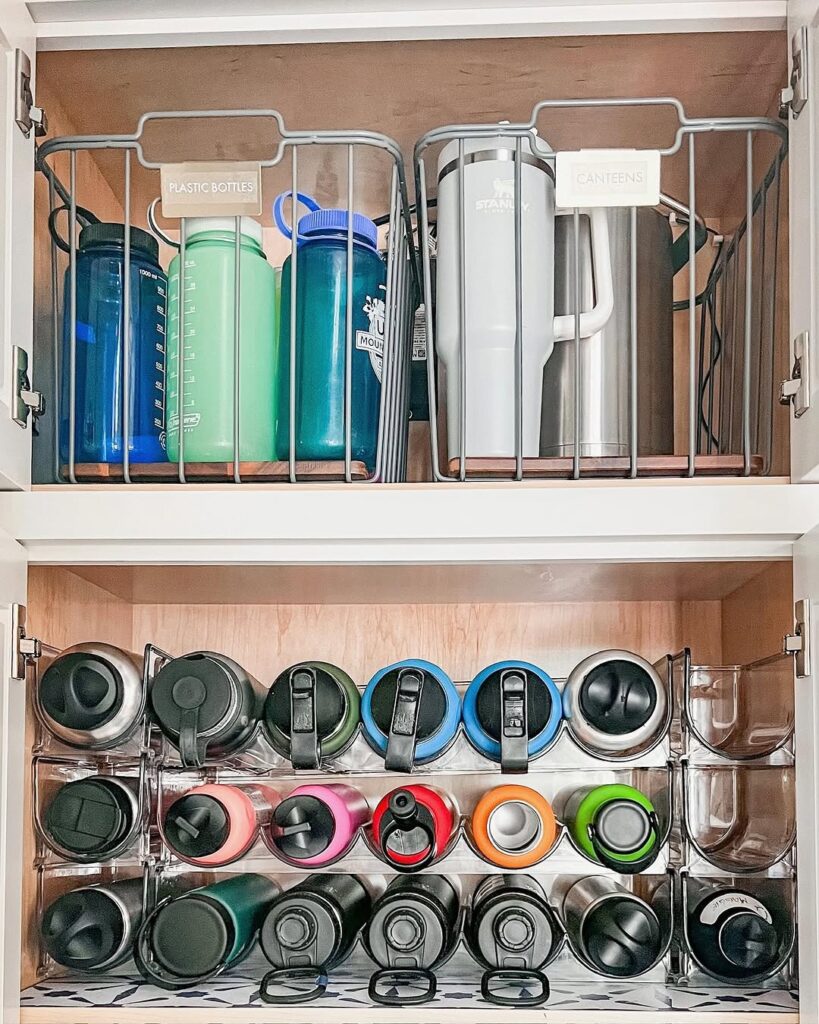
Photo Credit: @typealifestyleco
- Start by decluttering and keeping only what you regularly use
- Choose storage based on available space and your daily routines
- Organize accessories with labeled bins, drawer inserts, or mounted options
- Make storage accessible for kids with lower shelves or color-coding
- Store backups or seasonal bottles in bins or labeled drawers to reduce clutter
By approaching water bottle storage intentionally, you’ll create a kitchen or pantry that’s not only tidy—but truly functional for every member of the household.
Final Tip: Regularly check your storage system for any bottles that may no longer be in use or need cleaning and maintenance. A little effort every few months will prevent your bottle collection from becoming overwhelming again.
Final Thoughts: Keep Your System Working for You
Creating an organized system for water bottle storage goes beyond just finding a place to put things—it’s about setting up a flow that works for your lifestyle. Whether you implement a few quick DIY hacks or invest in more permanent solutions, the key is consistency and personalization.
Make time every few months to review your setup. Check for unused or worn-out bottles, clean out any neglected accessories, and reassess your family’s needs. Involving everyone in the household helps keep the system running smoothly and encourages responsibility.