
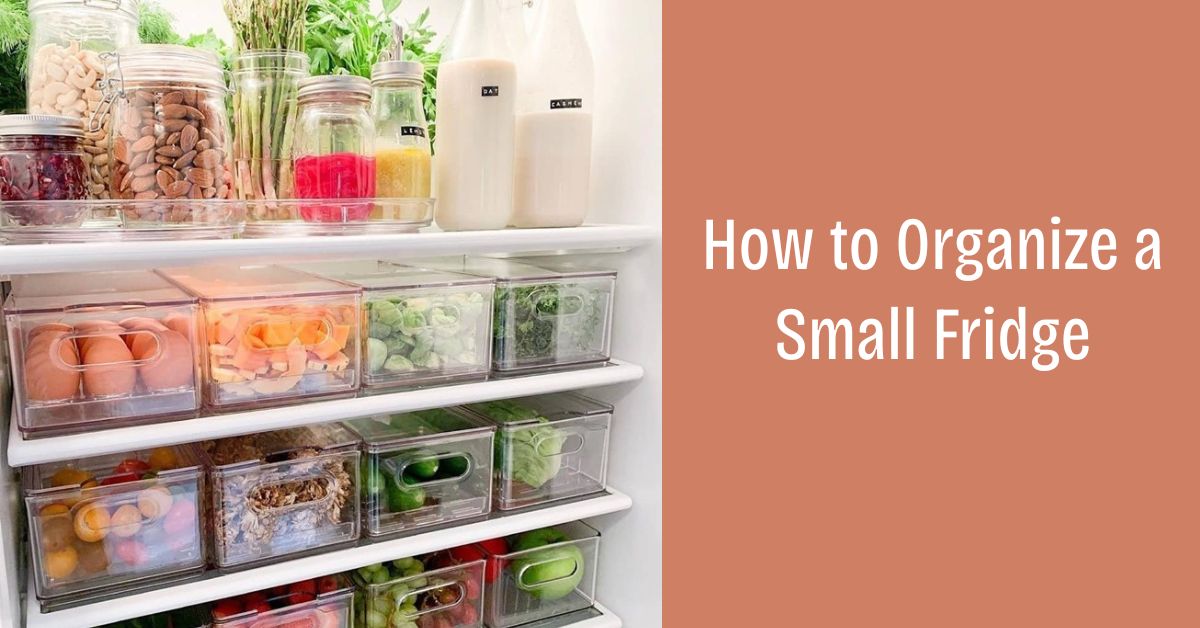
A small fridge can feel like a nightmare when you’re feeding a big family. Between meal prep, leftovers, and kids constantly reaching for snacks, it’s easy for chaos to take over. But with the right strategies, you can maximize space, reduce food waste, and keep everything neatly organized—even in a tight fridge!
Here’s how to make every inch count:
Contents
- 1 1. Create Smart Storage Zones Based on Usage
- 2 2. Use Clear Plastic Bins for Easy Access
- 3 3. Utilize Vertical Space to the Fullest
- 4 4. Choose the Right Storage Containers
- 5 5. Optimize the Door Storage
- 6 6. Rethink Your Freezer Organization
- 7 10. Use Magnetic Storage for Small Items
- 8 11. Invest in Drawer Organizers
- 9 12. Use Shelf Risers to Maximize Height
- 10 13. Organize Drinks in a Beverage Station
- 11 14. Use Tension Rods for Storing Cutting Boards and Baking Sheets
- 12 15. Use Over-the-Shelf Hooks for Extra Storage
- 13 16. Use Fridge Drawer Organizers for Produce
- 14 17. Keep a Fridge Inventory List
- 15 18. Use a Lazy Susan for Condiments
- 16 19. Create “Use First” Zones
- 17 20. Invest in Adjustable Shelf Dividers
1. Create Smart Storage Zones Based on Usage

Photo Credit: @brightside.official
Instead of placing items randomly, designate zones based on frequency of use and food safety. Here’s how:
Top Shelf (Least Cold): Store items that don’t need extreme cold, like leftovers, snacks, and prepped meals. Keeping leftovers at eye level makes them more likely to be eaten.
Middle Shelves: Ideal for daily essentials such as dairy, beverages, and packaged foods. Consider lazy Susans to easily access small items like yogurt cups.
Bottom Shelf (Coldest Zone): Perfect for raw meats and seafood, preventing contamination of ready-to-eat food. Store them in sealed, leak-proof containers.
Door Shelves (Warmest Zone): Use for condiments, butter, and drinks, but NOT for milk or eggs, which spoil faster in fluctuating temperatures.
Crisper Drawers: Adjust humidity levels based on your produce:
- High humidity → Leafy greens, carrots, peppers
- Low humidity → Fruits like apples, grapes, and citrus
Kid-Friendly Snack Bin: If you have little ones, place a labeled bin on a lower shelf with easy-to-grab snacks like cheese sticks, fruit, and yogurt pouches.
Pro Tip: Use clear stackable storage bins to separate categories and maximize depth without losing sight of items in the back.
2. Use Clear Plastic Bins for Easy Access
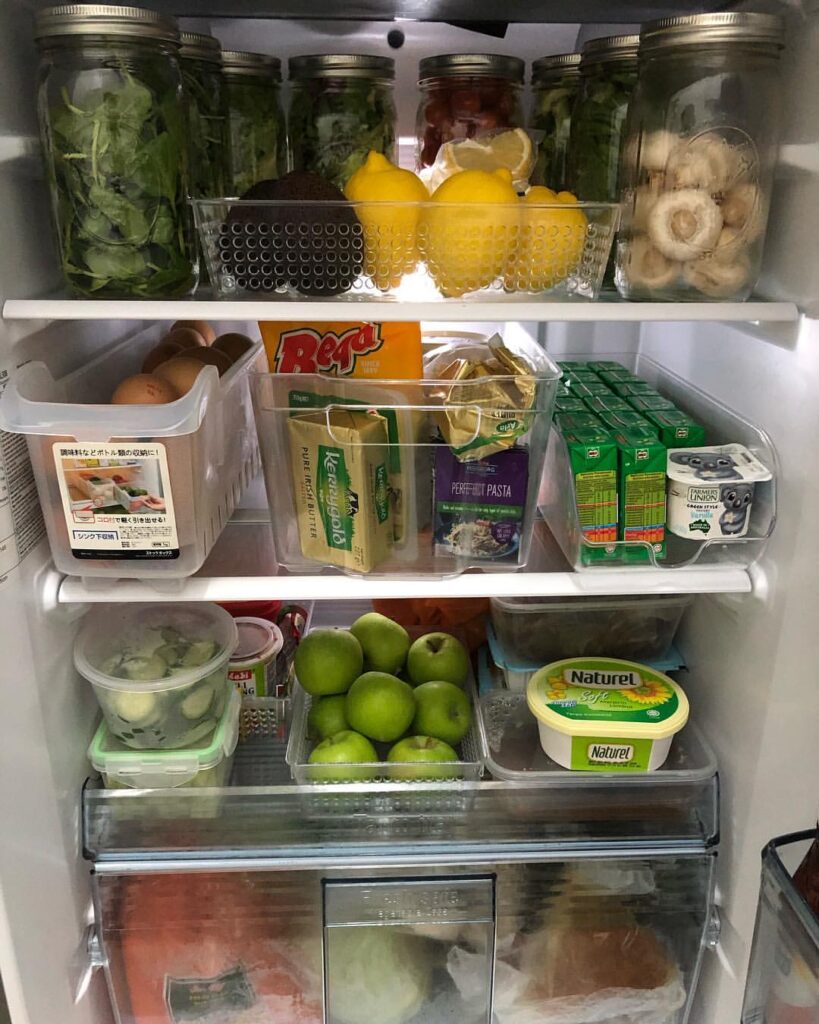
Photo Credit: @ikonpaleo
A small fridge can easily become a black hole, where food gets lost in the back and forgotten. The solution? Clear, stackable plastic bins.
Why Bins Are a Game-Changer:
Maximize depth – Easily slide out bins to grab what you need without rearranging everything.
Prevent spills – Any leaks from sauces, yogurts, or raw meat stay contained in the bin.
Encourage organization – Each bin holds a specific category (e.g., dairy, condiments, or meal-prep ingredients).
How to Use Them Effectively:
- Label each bin so family members know exactly where things belong.
- Create a “Use First” bin for items close to expiring—this reduces food waste!
- Keep kids’ snacks in a dedicated bin on a lower shelf, so they can grab what they need without making a mess.
- Use open-top bins for grab-and-go foods like cheese sticks, cut veggies, or deli meats.
Pro Tip: Want to make mornings smoother? Pre-pack lunchbox items in a designated bin so everything is ready to grab and pack!
3. Utilize Vertical Space to the Fullest
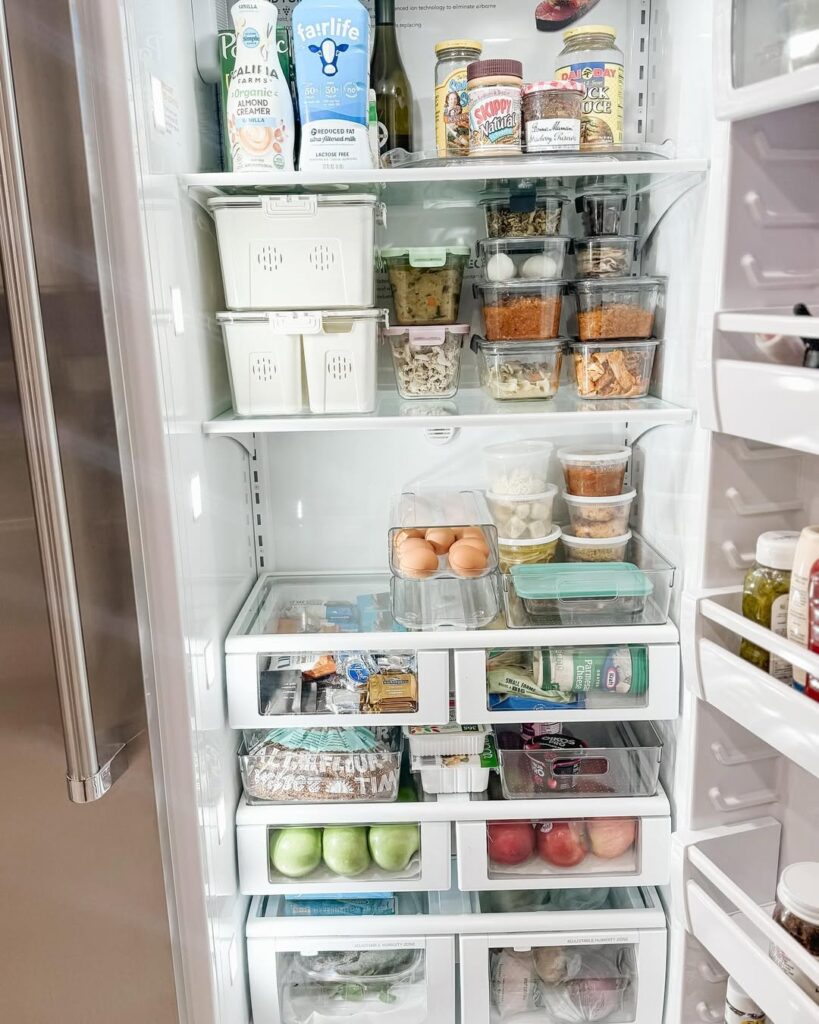
Photo Credit: @mjhealthandhome
When fridge space is limited, going vertical is a must. Many fridges have underutilized air space between shelves, but with a few smart tools, you can double your storage capacity.
Best Ways to Optimize Vertical Space:
Stackable Containers – Use uniform, stackable food storage containers for leftovers and meal preps.
Shelf Risers – Add extra shelving inside your fridge to separate items and avoid wasted space.
Magnetic or Clip-On Storage – Attach small magnetic racks to the sides of the fridge interior for extra storage.
Egg Storage Containers – Instead of bulky cartons, switch to slim, stackable egg trays.
Under-Shelf Bins – Hanging bins clip onto existing shelves to hold snacks, deli meats, or small produce items.
How This Helps Big Families:
- Prevents food from getting buried – No more losing small items in the back.
- Easier to see everything at a glance – Reduces food waste from forgotten items.
- Customizable storage – Adjust and rearrange as your grocery needs change.
Pro Tip: If your fridge allows, adjust the shelf heights to better fit your containers and maximize every inch!
4. Choose the Right Storage Containers
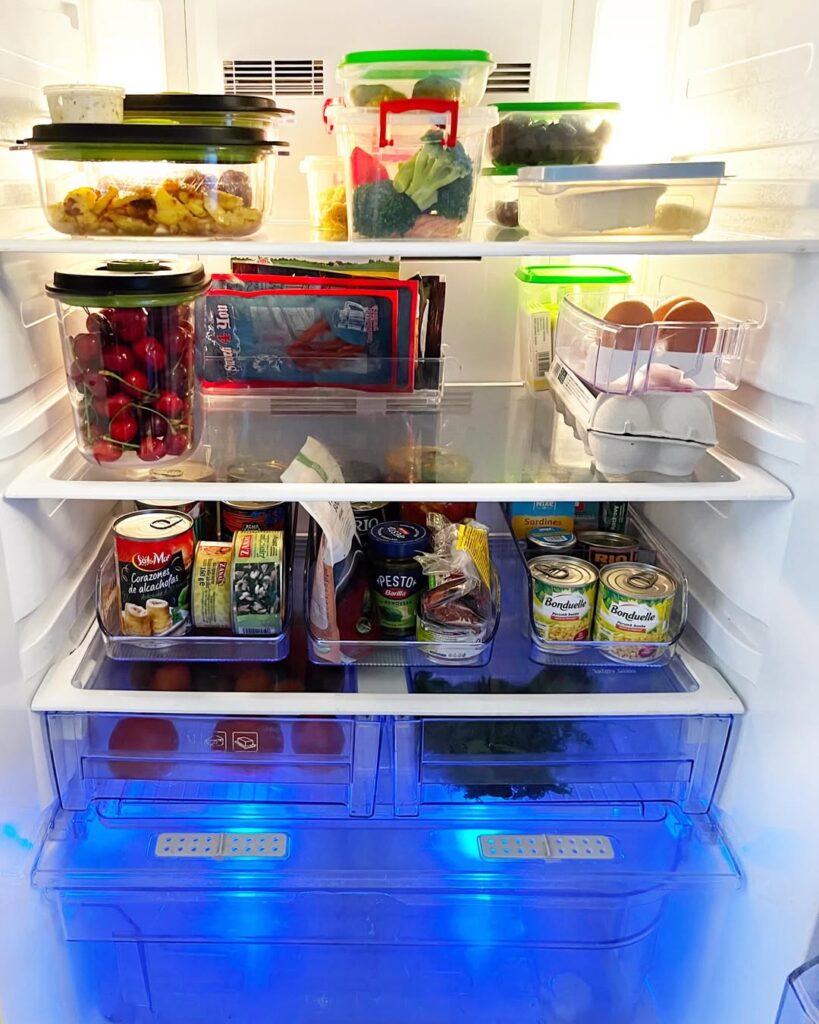
Photo Credit: @madalinapreda.ro
Not all food storage containers are created equal—especially when space is tight! The right choices can maximize every inch of your fridge while keeping food fresh and organized.
Best Storage Container Choices for Small Fridges:
Rectangular & Square Containers – These fit neatly together and eliminate wasted space from round containers.
Stackable Containers – Saves vertical space and allows for easy stacking of leftovers, prepped meals, and snacks.
Slim, Airtight Produce Bins – Extend the life of fruits and vegetables while keeping them organized.
Collapsible Containers – Great for when you need extra space but want compact storage when not in use.
Glass Containers for Leftovers – Keeps food visible and fresher longer compared to plastic.
Why This Matters for Big Families:
- Maximizes storage capacity – Every inch counts when feeding multiple people.
- Easier access & visibility – No more digging through piles of mismatched containers.
- Reduces food waste – Clear containers make it easier to see what’s inside and eat food before it spoils.
Pro Tip: Label containers with the date food was stored to keep track of freshness!
5. Optimize the Door Storage
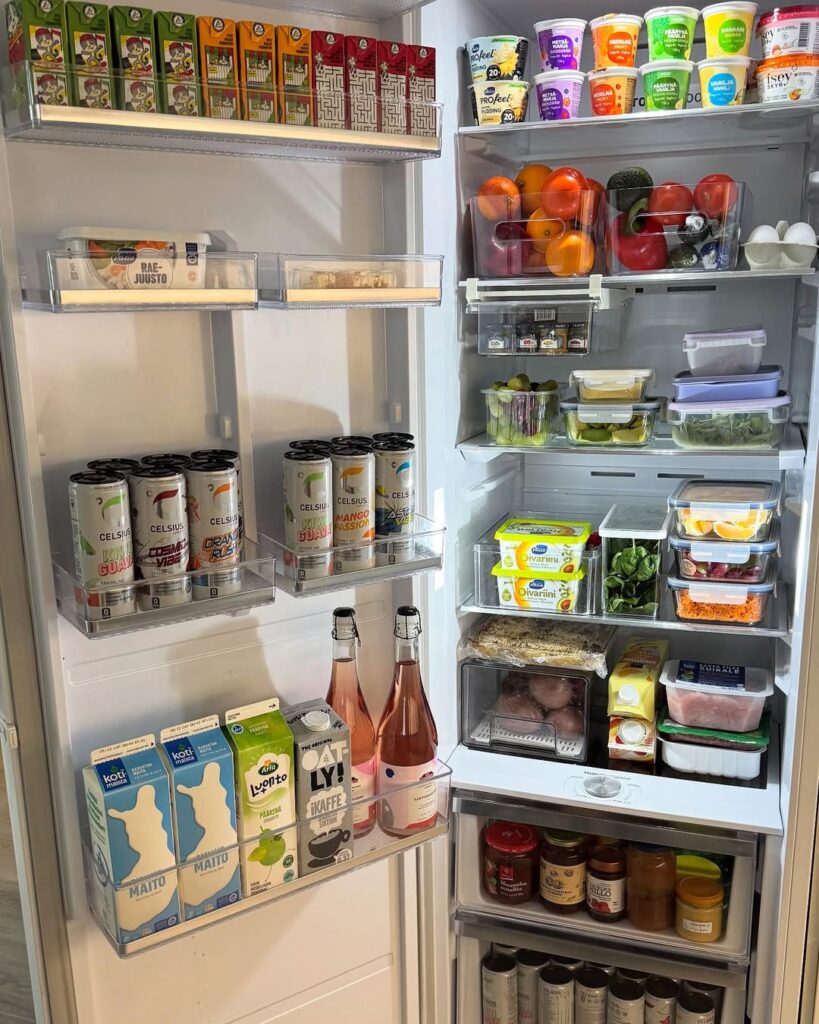
Photo Credit: @iloajarjestyksesta
The refrigerator door is often an overlooked space, but for a big family with a small fridge, every inch counts. Instead of letting it become a chaotic mix of condiments, strategically organize it to maximize efficiency.
What to Store in the Fridge Door:
Condiments & Sauces – Keep frequently used items like ketchup, mustard, and salad dressings grouped together.
Butter & Soft Cheese – The slightly warmer temperature in the door is perfect for spreadable dairy products.
Juice & Milk (If Space Allows) – If your fridge door has deep, sturdy shelves, use them for half-gallon cartons.
What NOT to Store in the Door:
Eggs & Dairy – The temperature fluctuates too much, which can cause spoilage. Keep these on a middle shelf instead.
Raw Meat & Seafood – These should always be stored on the bottom shelf to prevent cross-contamination.
Pro Tip: Use lazy Susans or stackable shelves on deeper fridge doors to avoid lost or forgotten items!
6. Rethink Your Freezer Organization
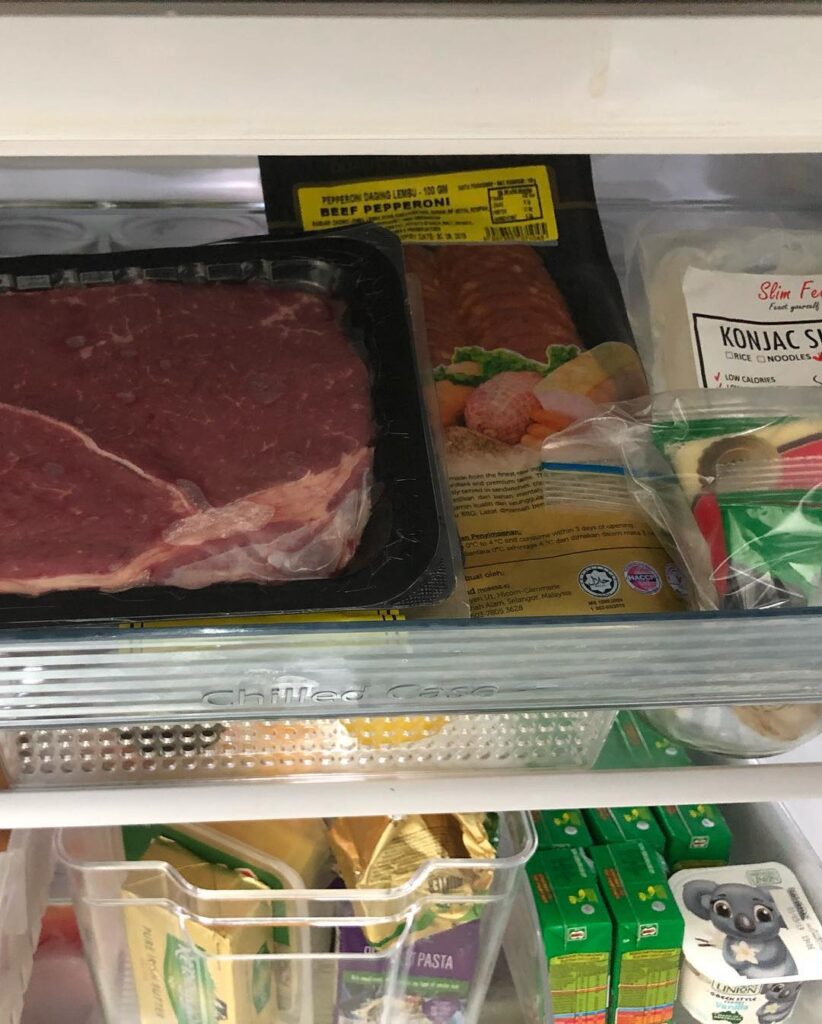
Photo Credit: @ikonpaleo
When working with a small fridge, you can’t neglect the freezer. It’s an essential part of storage, especially for a big family. Organizing your freezer can help reduce waste, ensure you have backup meals, and keep frozen goods easily accessible.
How to Organize Your Freezer:
Use Bins and Baskets – Bins can be a lifesaver, particularly when they are clear. Label them so you know what’s inside. For instance, one for frozen vegetables, another for frozen meats, and one for ice cream and treats.
Stack Items Vertically – Maximize vertical space in your freezer by stacking bags of frozen veggies or meats vertically rather than lying them flat. This gives you more room for other items.
Use Freezer-Safe Containers – Invest in containers that are specifically made for the freezer, as they prevent freezer burn and help organize smaller portions of food.
Roll and Fold Bags – Instead of stuffing frozen food bags into the freezer, neatly roll them up to save space. Use twist ties or clips to secure the bags.
Tips for Freezer Efficiency:
Double-Batch Meals – If you’re cooking for a large family, always double or triple recipes. Freeze extra servings for later. It’s a great way to save time and space!
FIFO (First In, First Out) – Make sure older items are moved to the front and used first. It’s a simple yet effective way to reduce food waste.
10. Use Magnetic Storage for Small Items
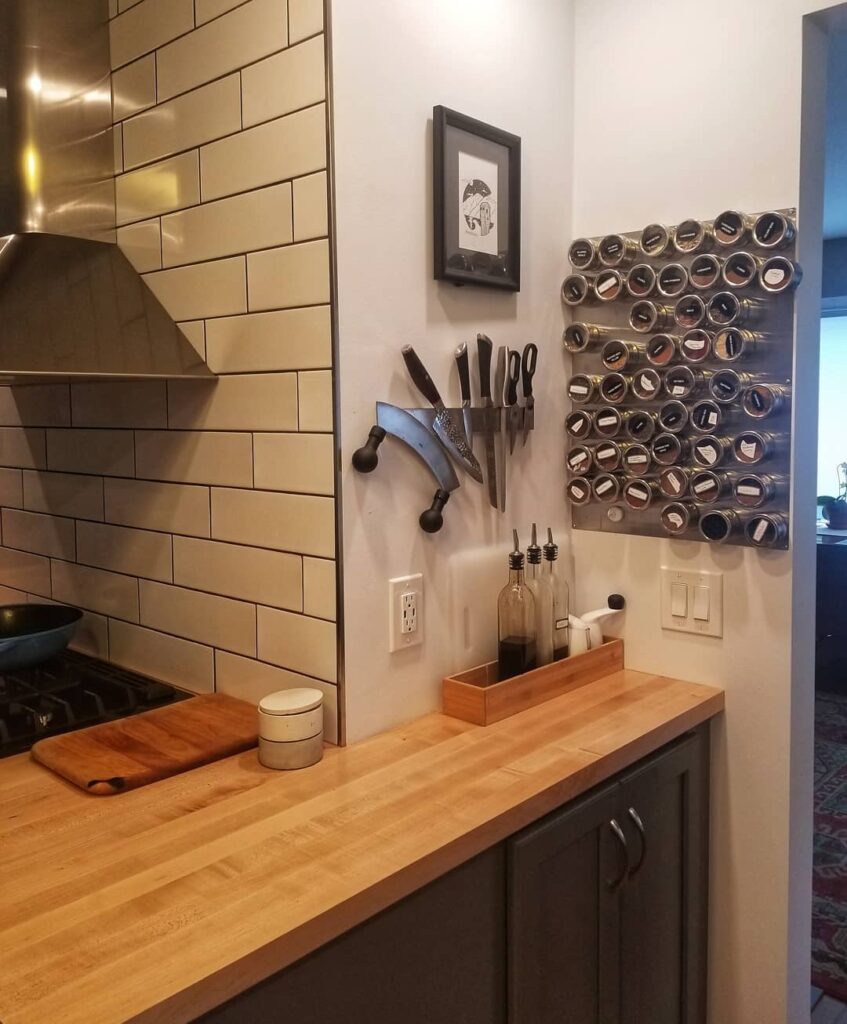
Photo Credit: @epichadventures
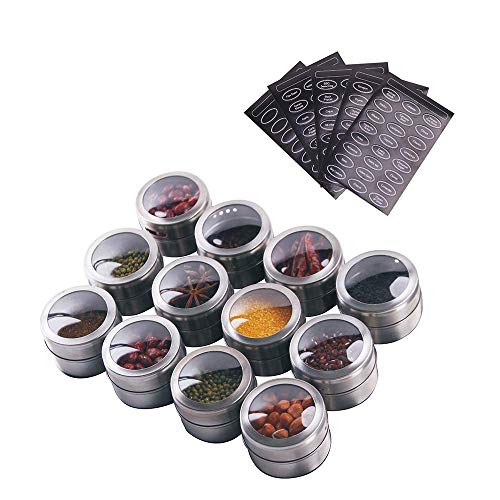
Maximize your fridge door and the sides of your fridge by utilizing magnetic storage options. Magnetic spice racks, small trays, or even hooks can hold items like condiments, small jars, or bagged herbs. It frees up space in your fridge for larger items and makes these frequently used items easily accessible.
Shop Related Products

11. Invest in Drawer Organizers
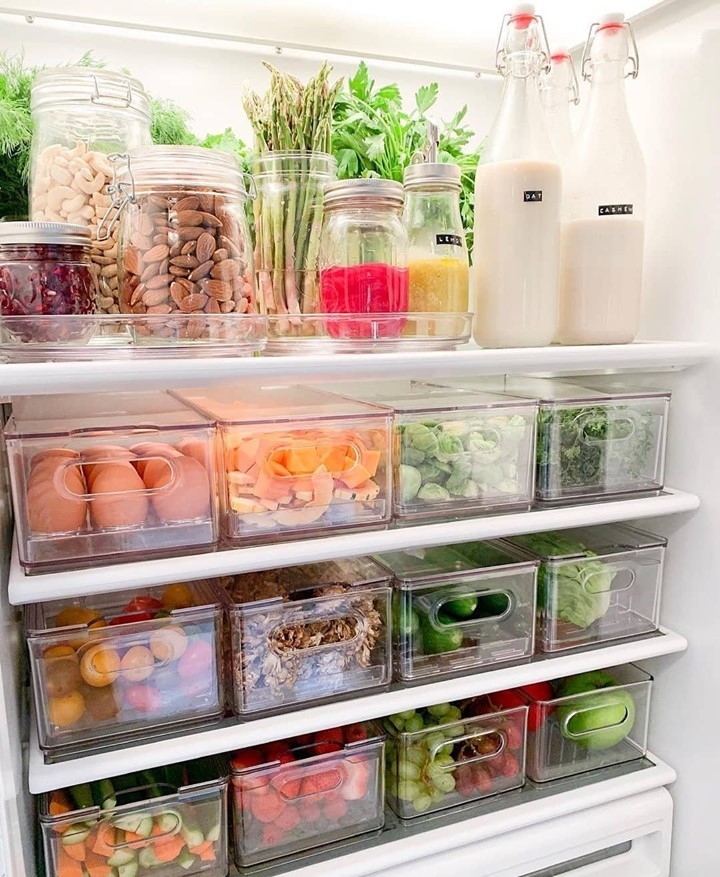
Photo Credit: @grovecollaborative
Fridges often come with built-in drawers, but they’re not always used efficiently. Invest in clear, adjustable drawer organizers to separate different types of produce, deli meats, or snacks. Organizers help keep smaller items neatly in place, preventing them from getting jumbled together.
12. Use Shelf Risers to Maximize Height
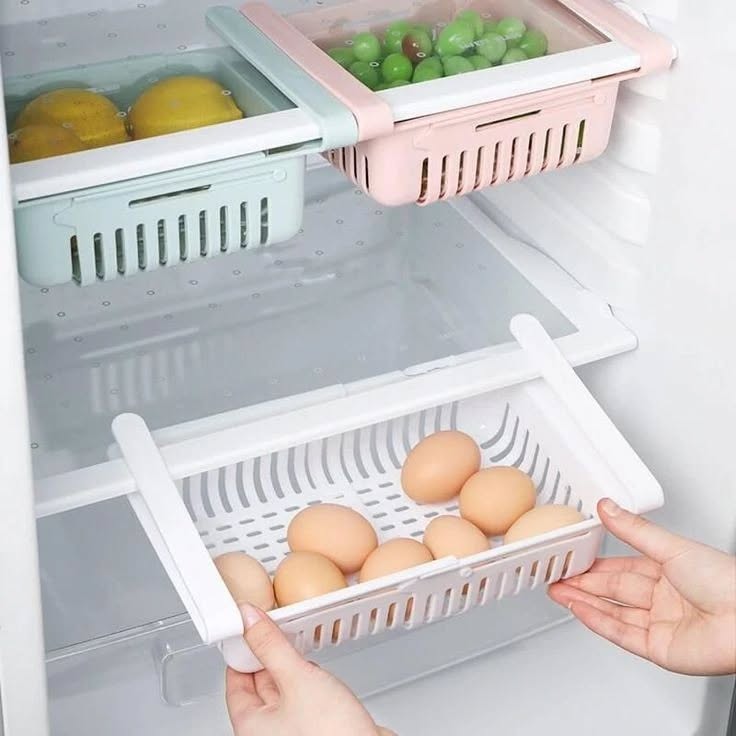
Photo Credit: @kamrankidukanofficial
If your fridge has multiple shelves, consider adding shelf risers to create more levels within your shelves. This is especially useful for cans, jars, or bottles. By raising one shelf, you can increase the usable height and store more items without overcrowding.

13. Organize Drinks in a Beverage Station
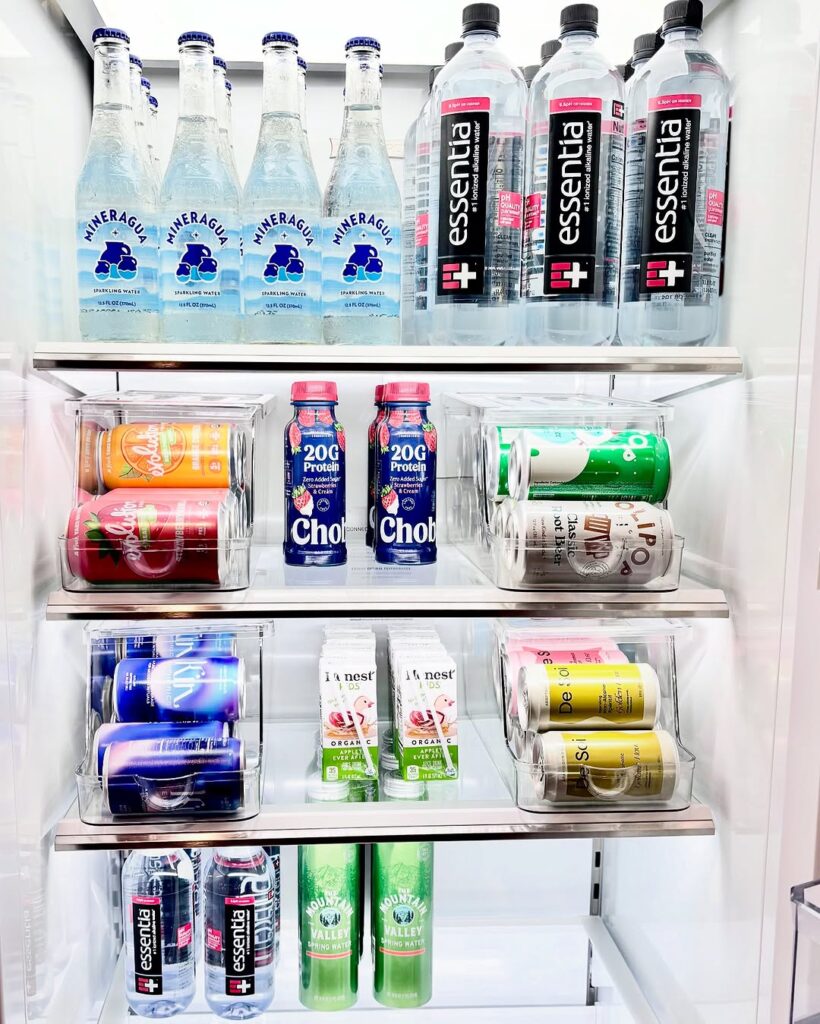
Photo Credit: @simplicityandstylehome
If you have a lot of drinks, whether they’re sodas, juice boxes, or water bottles, dedicate a specific area of your fridge to drinks. Use a beverage station on a designated shelf or in a drawer. This helps avoid taking up random spaces for drinks, leaving you with more room for fresh food.
14. Use Tension Rods for Storing Cutting Boards and Baking Sheets

Photo Credit: @amandaleigh.athome
Tension rods aren’t just for closets! They can be a handy tool for storing cutting boards, baking sheets, or trays vertically inside your fridge. This keeps them organized and prevents them from taking up valuable shelf space.
15. Use Over-the-Shelf Hooks for Extra Storage
Add small hooks or pegs to the underside of your fridge shelves to hang lightweight items like bags of herbs, small kitchen tools, or even snack-sized zip-lock bags. These hooks can create extra space without taking up shelf area, making it easier to keep everything in its place and accessible.
16. Use Fridge Drawer Organizers for Produce
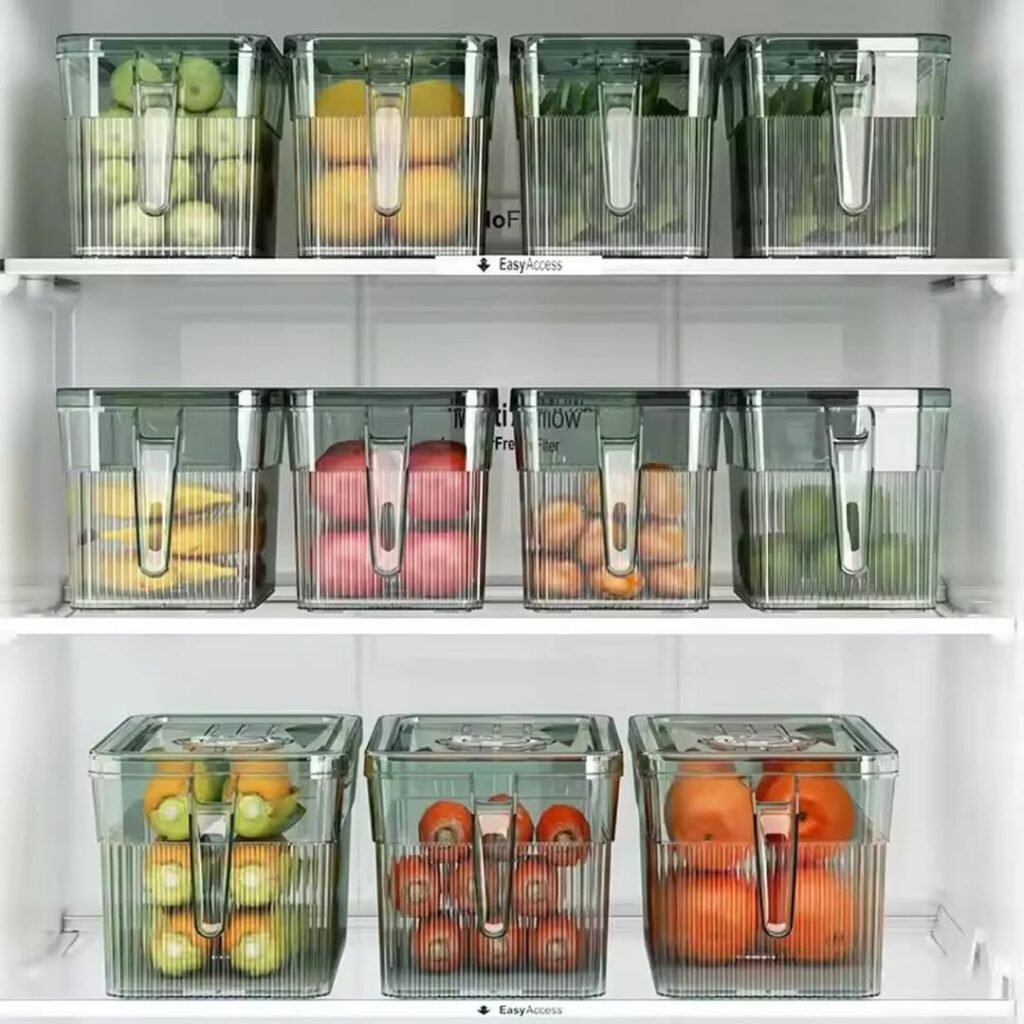
Photo Credit: @allthingspretty.ng
Invest in stackable produce bins or drawer organizers specifically designed for fruits and vegetables. These bins allow you to store different types of produce separately, preventing bruising and keeping everything visible. You can also use bins with adjustable dividers to accommodate different sizes of produce and keep them from rolling around.
17. Keep a Fridge Inventory List
Maintain a list of what’s in your fridge, especially for perishables like leftovers, fresh produce, or dairy. This will help you avoid over-purchasing, reduce food waste, and make sure everything gets used in time. Keep it on the fridge door or digitally on your phone for quick access!
18. Use a Lazy Susan for Condiments
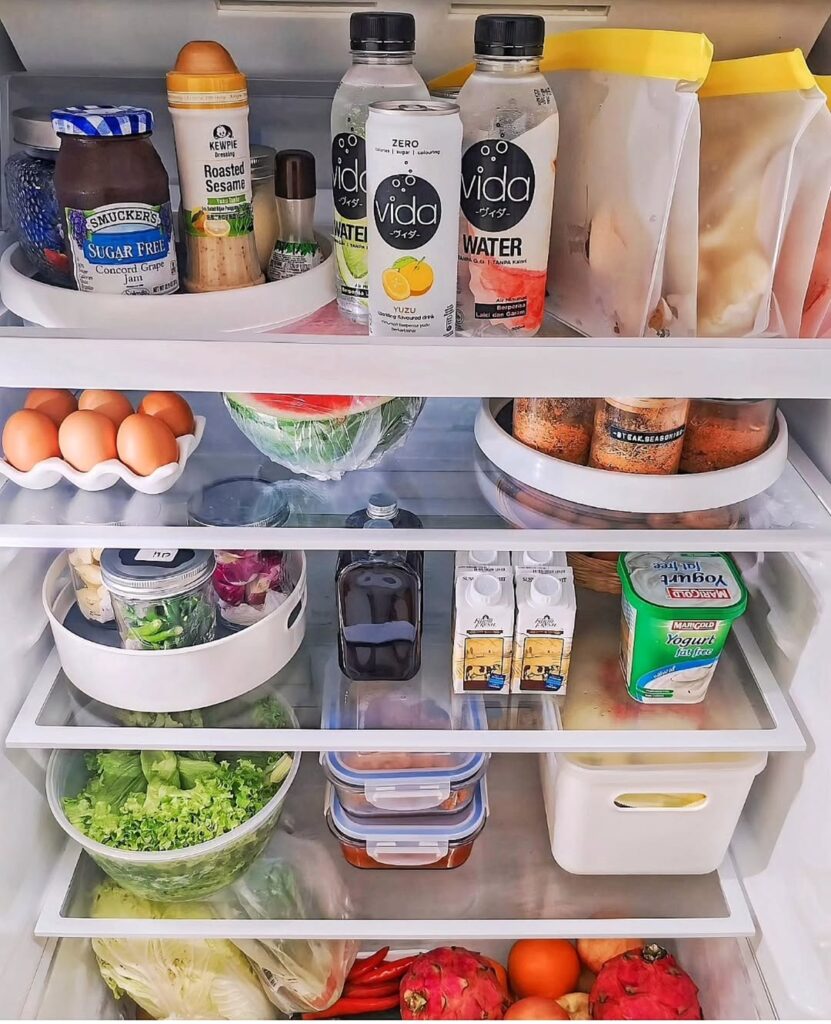
Photo Credit: @aisyah_hanzalah
Condiments, sauces, and jars can easily get lost at the back of your fridge. A lazy Susan is a perfect solution, as it allows you to rotate the contents and easily access whatever you need without digging through the clutter. It works well for smaller shelves, too!
19. Create “Use First” Zones
Designate a shelf or area of your fridge for items that need to be used up soon, such as leftovers or items nearing their expiration date. This “use first” zone acts as a reminder to eat what you have before buying more and helps prevent food from being forgotten in the back of the fridge.
20. Invest in Adjustable Shelf Dividers
If your fridge shelves are not adjustable, consider adding adjustable dividers or organizers that fit within the space. These dividers can create custom-sized sections, making it easier to store things like bottles, jars, or containers without them toppling over or mixing with other items.

Conclusion
Organizing a small fridge for a large family can feel like a daunting task, but with the right strategies in place, it’s entirely possible to make the most of every inch of available space. By creating zones, using clear bins, maximizing vertical space, and utilizing uniform containers, you can transform your fridge into an efficient, clutter-free zone. Additional hacks like labeling, removing unnecessary packaging, and maintaining a regular cleaning routine will ensure that your fridge stays organized in the long term.
Remember, the key to successful fridge organization is consistency. As long as you stick to your system and make thoughtful decisions when it comes to grocery shopping and storage, you’ll find that even a small fridge can handle the demands of a big family without sacrificing convenience or efficiency.
With these organization tips, your fridge will not only be a more functional space but will also help you reduce waste, save time, and keep everyone in the family on track with meals and snacks. Happy organizing!