
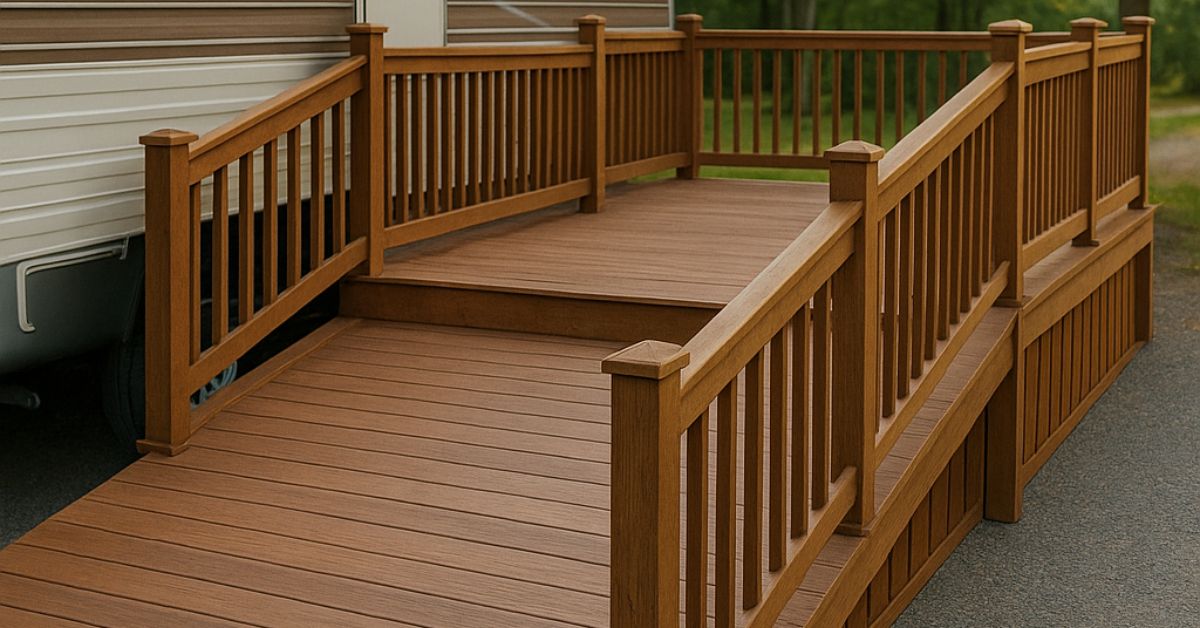
Creating an outdoor living space for your RV can dramatically enhance your camping experience. Whether you have a seasonal site or a permanent location, adding a deck to your RV offers numerous benefits—from expanding your living area to providing a comfortable space for entertaining guests. In this comprehensive guide, I’ll explore 15 innovative RV deck ideas that range from budget-friendly DIY projects to luxurious permanent installations.
RV decks serve multiple purposes beyond simple aesthetics. They can provide structural stability for your RV, protect your RV’s entrance from dirt and debris, create dedicated outdoor dining areas, and significantly increase your usable living space. With thoughtful planning and design, an RV deck can become the centerpiece of your camping experience.
Contents
Key Considerations Before Building Your RV Deck
Before diving into specific deck designs, it’s important to consider several factors that will influence your choice:
1. Site Requirements and Regulations
- Campground Rules: Many campgrounds have specific regulations regarding permanent or semi-permanent structures. Always check with management before beginning construction.
- Building Permits: For permanent installations, you may need building permits depending on your location.
- Environmental Considerations: Some areas have restrictions to protect natural resources or wildlife.
2. Mobility Needs
- Permanent Installation: If you rarely move your RV, you can consider more substantial, fixed deck options.
- Seasonal Use: For seasonal campers, modular designs that can be disassembled are ideal.
- Frequent Travelers: Those who travel often should consider portable, lightweight deck solutions.
Related Read: Full-Time Camper Living Hacks: The Complete Lifestyle Manual
3. Budget Considerations
- Materials: Wood, composite, plastic, and aluminum each have different price points and maintenance requirements.
- DIY vs. Professional Installation: Building yourself can save money but requires tools and skills.
- Long-term Maintenance: Factor in ongoing costs for staining, sealing, or replacing damaged sections.
4. Weather Resistance
- Local Climate: Consider exposure to sun, rain, snow, and temperature fluctuations.
- Drainage: Proper water drainage is essential to prevent pooling and damage.
- Wind Resistance: In windy areas, ensure your deck is properly anchored.
Related Read: How to Keep Your RV Cool: 25 Expert Tricks for Summer Comfort
Let’s explore 20 inspiring RV deck ideas that can transform your camping experience.
20 Inspiring RV Deck Ideas
1. Multi-Level Modular Deck System
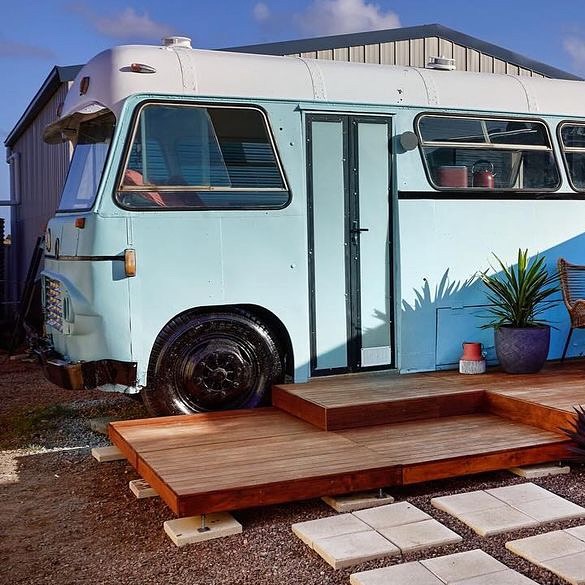
Photo Credit: @goodtimesdecking
A multi-level deck provides distinct spaces for different activities while adding visual interest to your campsite.
Key Features:
- Upper level aligned with RV entrance eliminates the need for RV steps
- Lower level creates a perfect lounging or dining area
- Modular construction allows for customization and future expansion
- Can be designed with removable sections for RV mobility
Pro Tip: Use pressure-treated lumber for the frame and cedar or composite materials for the deck surface to maximize weather resistance while minimizing maintenance.
2. Wraparound Deck with Integrated Storage
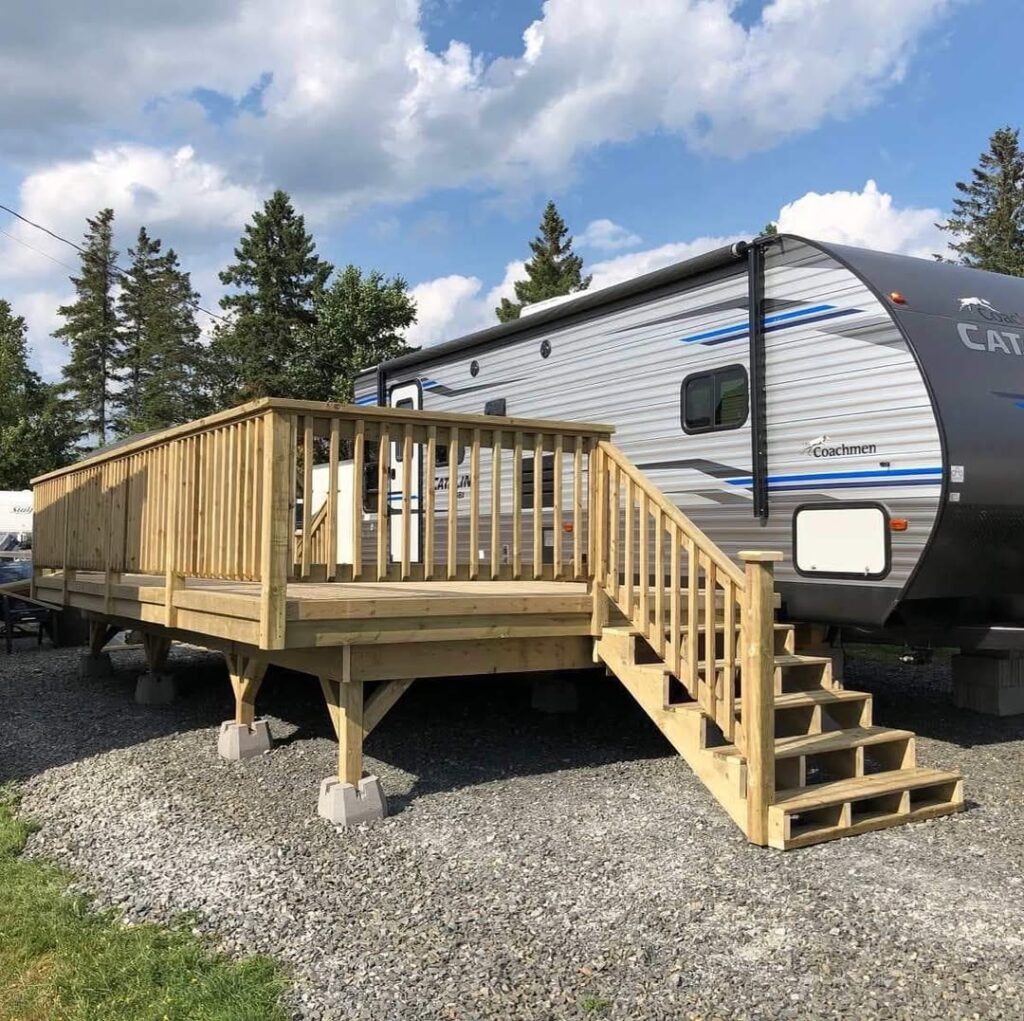
Photo Credit: @paulas_place__
Maximize your outdoor space with a wraparound deck that follows the contour of your RV.
Key Features:
- Provides access to multiple RV doors
- Built-in benches with hinged tops double as storage compartments
- Corner sections can accommodate planters or outdoor kitchen components
- Reduces the need for additional outdoor storage solutions
Installation Consideration: Design the deck with expansion gaps to accommodate RV movement and temperature fluctuations.
3. Portable Interlocking Deck Tiles
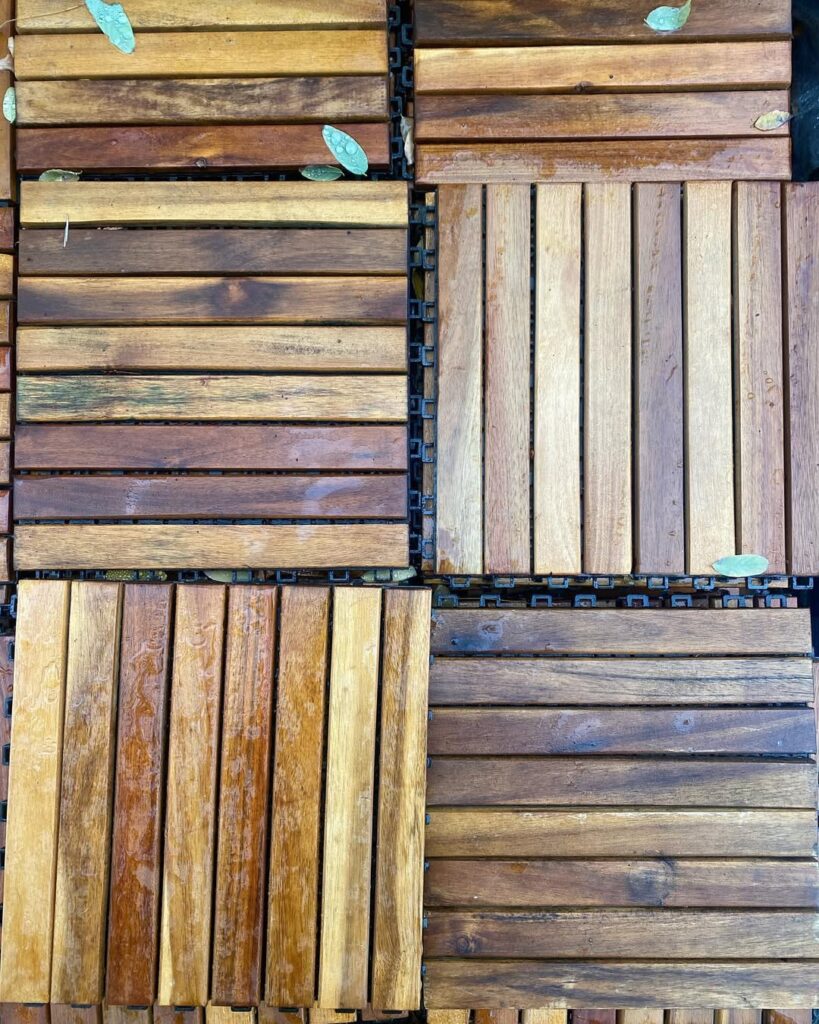
Photo Credit: @ballard_reuse
Perfect for frequent travelers, these lightweight deck tiles can transform any campsite in minutes.
Key Features:
- Quick installation without tools
- Available in various materials including wood, composite, and plastic
- Can be arranged in different patterns to suit your space
- Easily stored in RV basement or tow vehicle during travel
Material Options:
| Material | Weight | Durability | Maintenance | Cost |
| Wood | Medium | Good | Moderate | $$ |
| Composite | Medium-Heavy | Excellent | Low | $$$ |
| Plastic | Light | Good | Very Low | $ |
| Rubber | Medium | Excellent | Low | $$ |
4. Covered Deck with All-Weather Protection
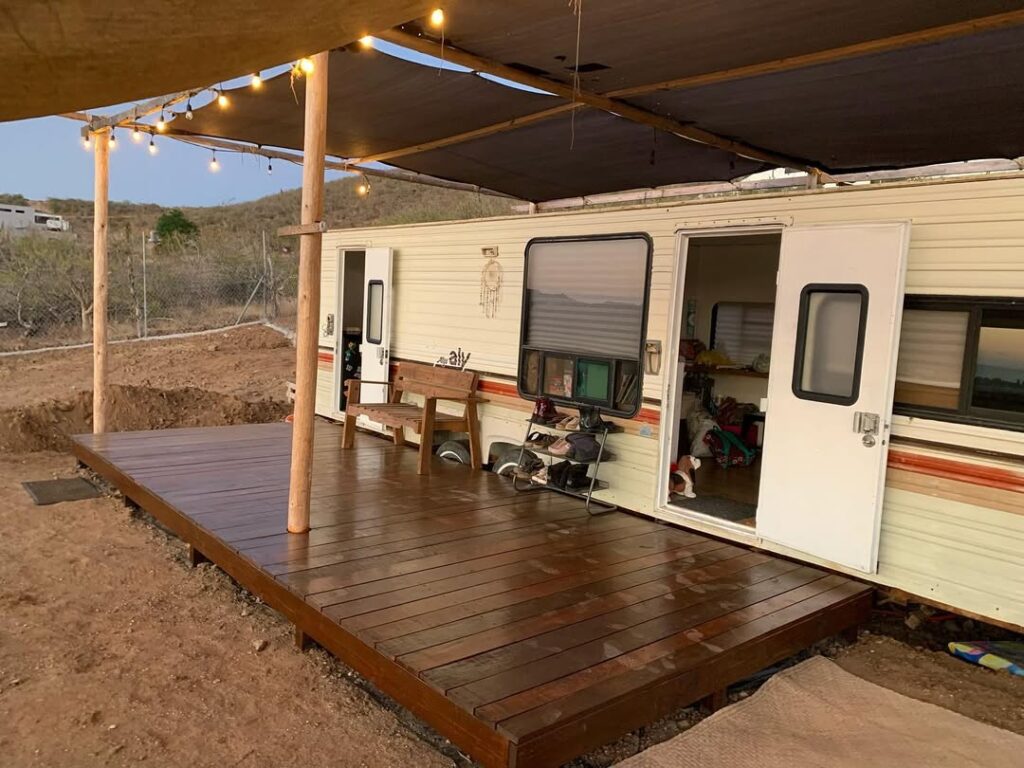
Photo Credit: @dp.casitas_project
A covered deck extends your RV’s usable space regardless of weather conditions.
Key Features:
- Metal or polycarbonate roof provides protection from sun and rain
- Optional removable side panels for wind and rain protection
- Integrated gutter system to control water runoff
- Potential for solar panel installation on the roof
Structural Consideration: Ensure roof supports can handle snow loads if you camp in winter conditions.
5. Space-Saving Fold-Down Deck
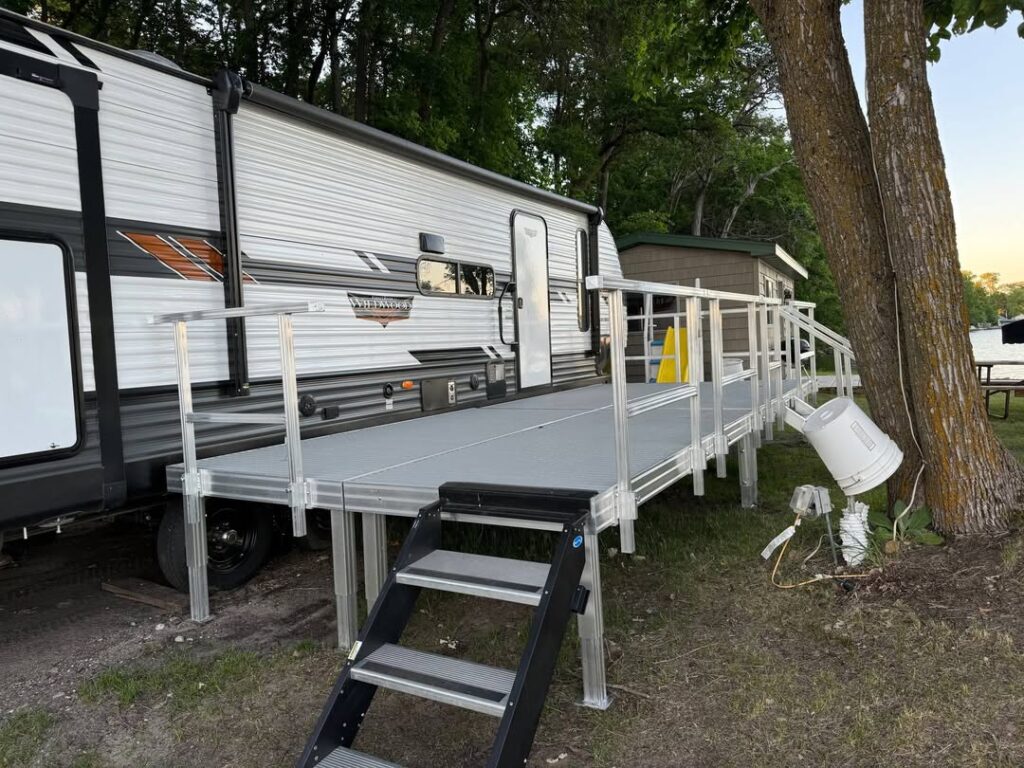
Photo Credit: @371_outdoors
When space is limited, a hinged deck that folds against your RV when not in use is an innovative solution.
Key Features:
- Attaches directly to RV frame with heavy-duty hinges
- Supported by fold-down legs when extended
- Can be secured with lockable latches when stowed
- Ideal for occasional use or tight campsites
Safety Tip: Always ensure the fold-down deck is properly secured in both extended and stowed positions to prevent accidents.
6. Elevated Deck with Underdeck Storage
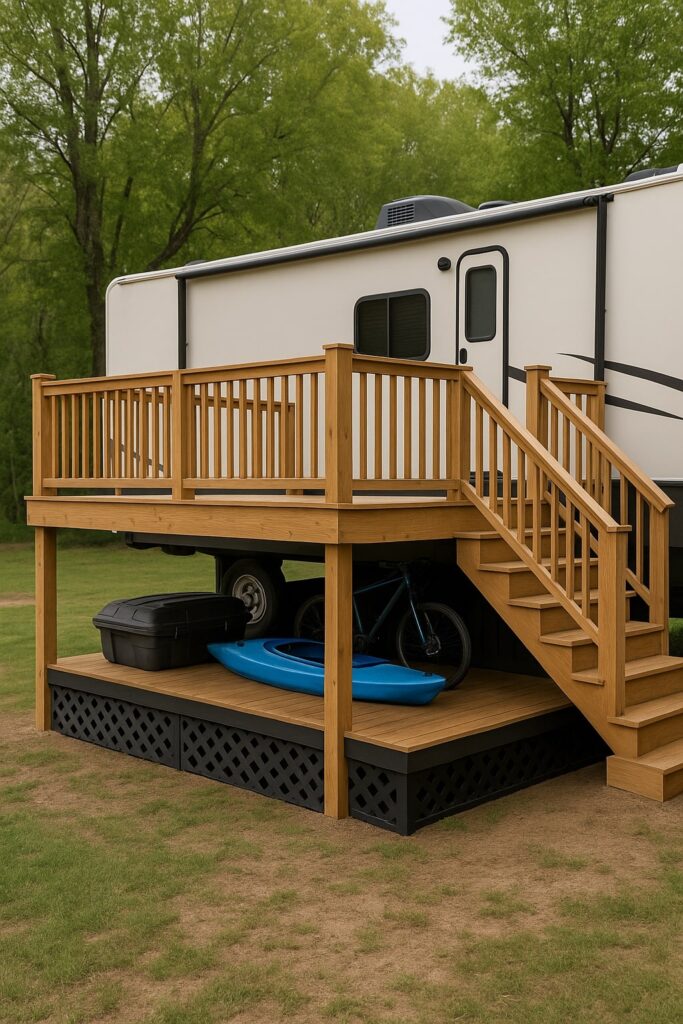
Maximize your campsite’s functionality with an elevated deck that creates usable storage space underneath.
Key Features:
- Raised platform aligns with RV door for easy access
- Underdeck area can store bikes, kayaks, camping gear, or provide a sheltered pet area
- Integrated stairs with optional railing for safety
- Skirting can be added to conceal storage area and improve aesthetics
Design Consideration: Ensure sufficient height clearance underneath for your intended storage items, typically 3-4 feet minimum for most gear.
7. Eco-Friendly Pallet Deck
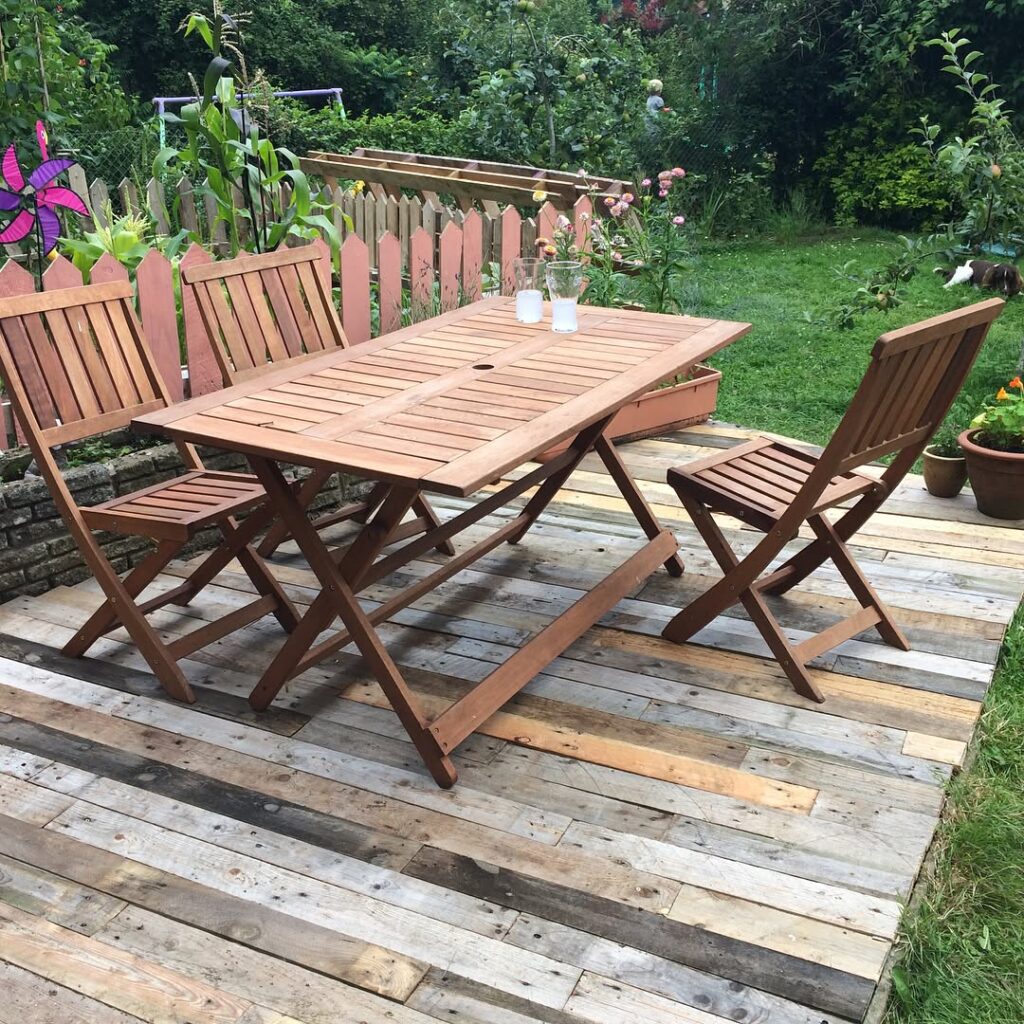
Photo Credit: @wellies_over_heels
Repurpose shipping pallets into an affordable, environmentally conscious deck solution.
Key Features:
- Utilizes readily available materials that might otherwise end up in landfills
- Can be acquired for free or minimal cost from local businesses
- Modular design allows for easy reconfiguration
- Can be enhanced with paint or stain for better durability and appearance
Safety Note: Ensure pallets are heat-treated (marked with “HT”) rather than chemically treated to avoid exposure to harmful substances. Sand all surfaces thoroughly to prevent splinters.
8. Floating Deck Sections with Strategic Lighting

Create a visually stunning outdoor space with separate deck “islands” connected by pathways and enhanced with strategic lighting.
Key Features:
- Multiple deck sections can serve different purposes (dining, relaxation, fire pit area)
- Solar-powered or low-voltage LED lighting along pathways and deck perimeters
- Easier to level individual smaller sections on uneven terrain
- Can be moved or reconfigured based on changing needs
Lighting Options:
- Recessed deck lights for subtle illumination
- Solar post cap lights for boundary definition
- String lights or globe lights for ambient overhead lighting
- Motion-sensor security lights for safety
9. Deck with Integrated Outdoor Kitchen
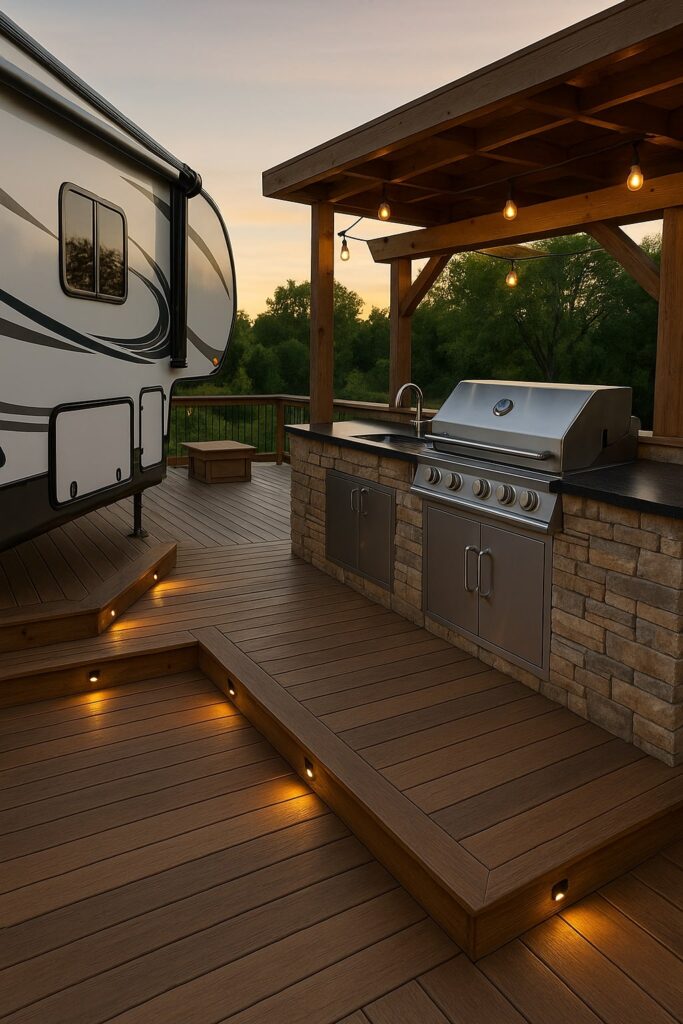
Take outdoor cooking to the next level with a deck designed specifically to incorporate cooking facilities.
Key Features:
- Dedicated areas for grill, prep station, and serving
- Built-in countertops with weather-resistant materials
- Storage for outdoor cooking equipment
- Optional sink with gray water collection system
Safety Consideration: Ensure proper clearance between cooking areas and combustible materials, including your RV. Consider heat-resistant materials for areas near cooking equipment.
10. Accessibility-Focused Deck with Ramp

Create an inclusive outdoor space that accommodates mobility challenges.
Key Features:
- Gently sloped ramp (1:12 ratio recommended) instead of or in addition to stairs
- Wider pathways (minimum 36 inches) to accommodate wheelchairs
- Smooth transitions between surfaces
- Sturdy railings on both ramp and deck perimeter
Design Tip: Consider non-slip surfacing for added safety in wet conditions, and ensure the deck is strong enough to support mobility devices plus users.
11. Smart Tech-Integrated Deck
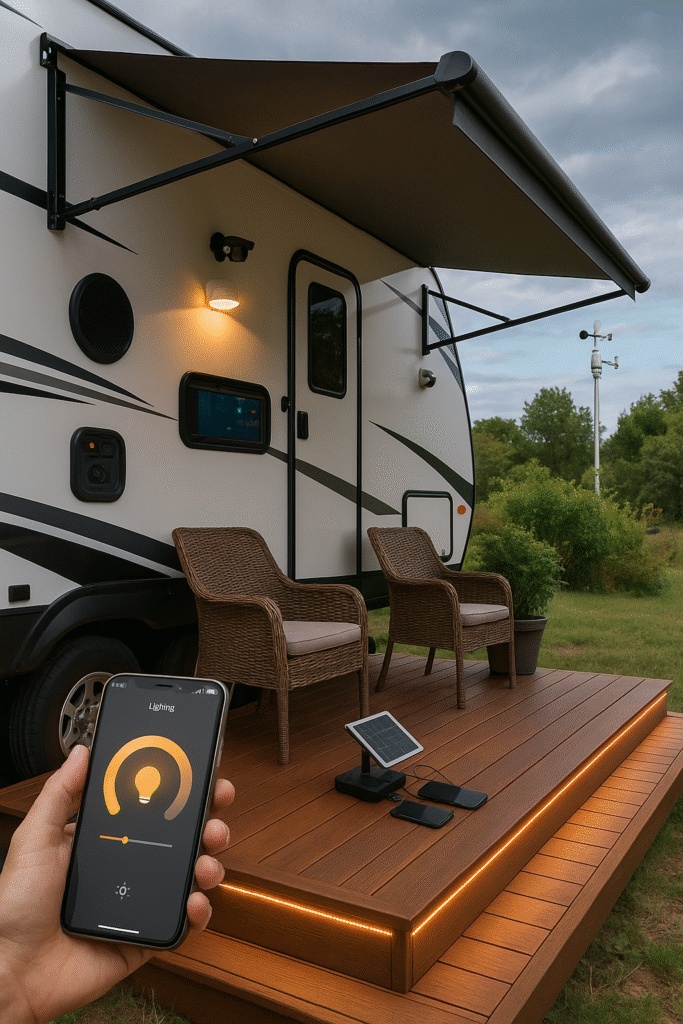
Bring modern convenience to your outdoor space with technology designed for comfort and efficiency.
Key Features:
- Integrated Bluetooth speakers for outdoor entertainment
- Smart lighting controllable via smartphone app
- Weather-resistant electrical outlets for powering devices
- Optional automated awning or pergola with rain and wind sensors
Tech Enhancement Options:
- Weather station to monitor local conditions
- Security cameras for campsite monitoring while away
- Solar-powered charging stations for devices
- Programmable LED lighting for ambiance control
12. Deck with Convertible Features
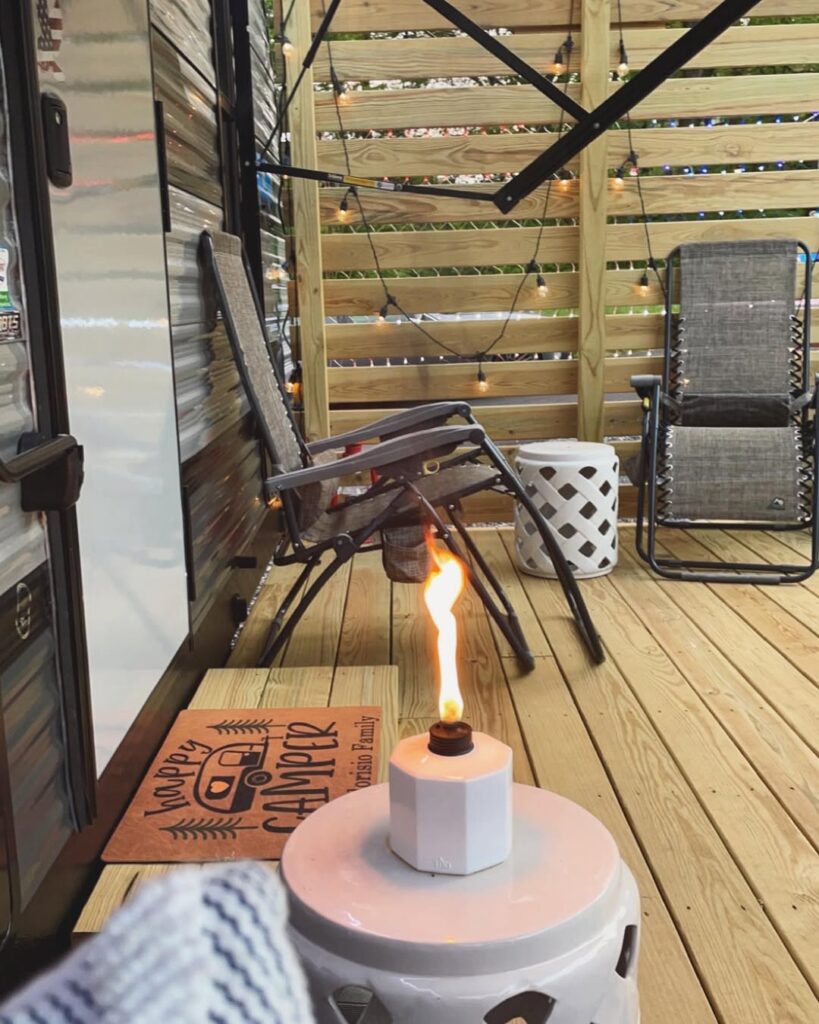
Photo Credit: @freedomtherv
Maximize versatility with deck elements that can transform to serve multiple purposes.
Key Features:
- Benches that convert to tables or loungers
- Modular furniture that can be rearranged for different gatherings
- Fold-away privacy screens that double as shade elements
- Adjustable height sections for varied uses
Space-Saving Tip: Look for commercial products designed specifically for small spaces or create custom solutions with hinged components and secure locking mechanisms.
13. Winter-Ready Insulated Deck Enclosure
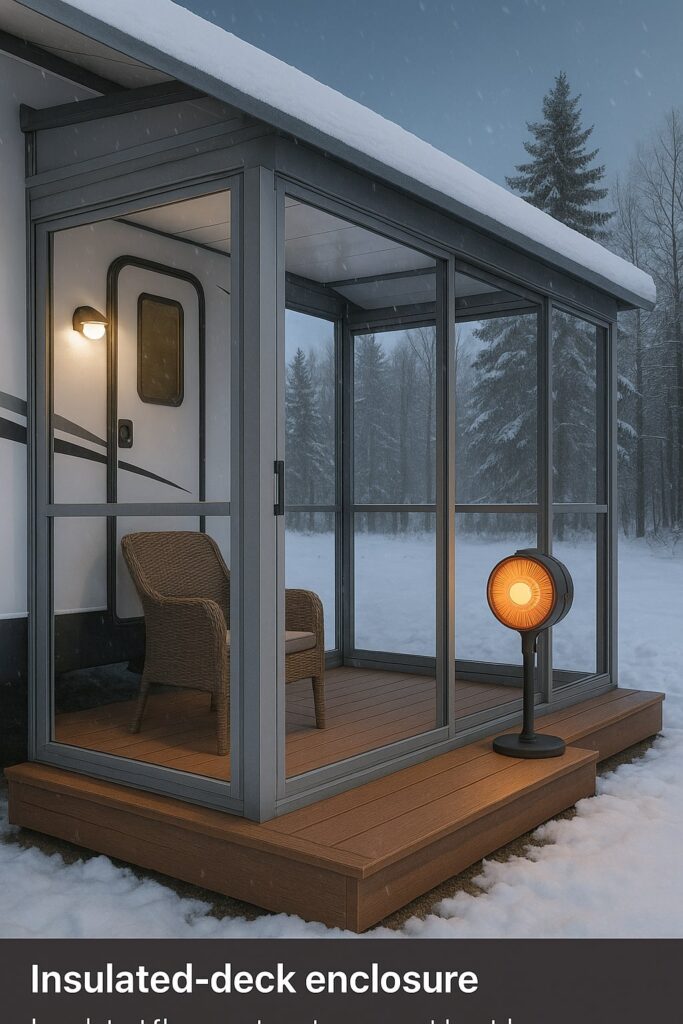
Extend your camping season with a deck designed for comfortable use in colder months.
Key Features:
- Insulated floor system to prevent heat loss
- Clear vinyl or polycarbonate panels for weather protection while maintaining views
- Portable heater mounts or connections
- Weather stripping and draft protection around access points
Material Recommendation:
| Component | Recommended Material | Benefits |
| Flooring | Composite with air gap beneath | Insulation and moisture resistance |
| Wall panels | Double-wall polycarbonate | Superior insulation with light transmission |
| Roof | Insulated metal panels | Snow load capacity and heat retention |
| Connectors | Marine-grade stainless steel | Corrosion resistance in humid conditions |
14. Split-Level Entertaining Deck
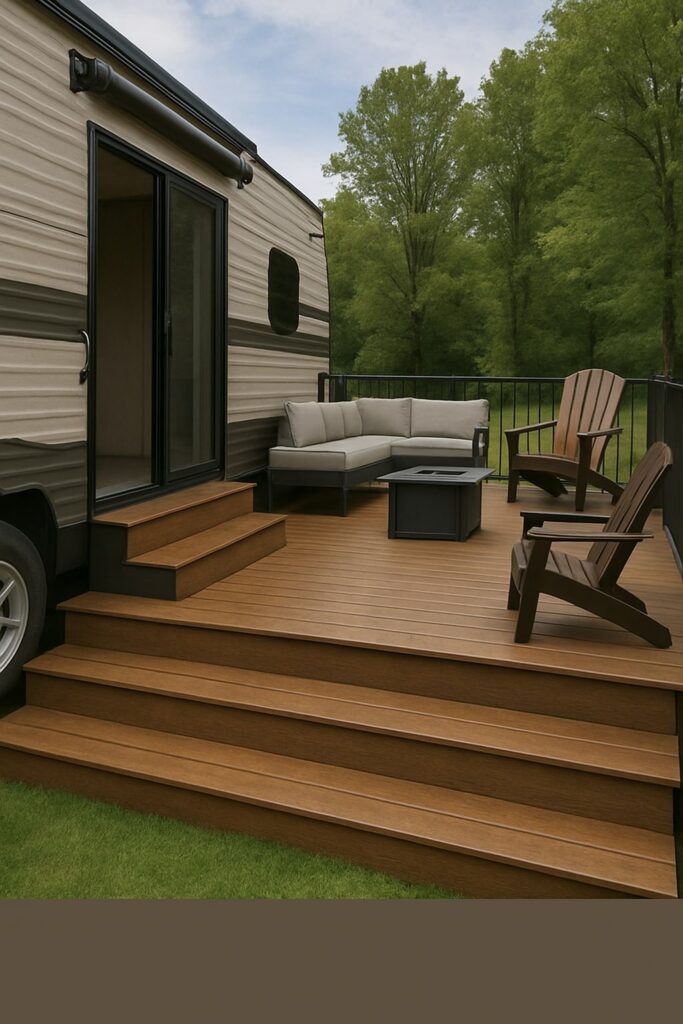
Create defined spaces for different activities while maintaining an open, flowing design.
Key Features:
- Upper level typically aligned with RV entrance
- Lower level designed for gathering spaces
- Optional middle tier for transitional spaces
- Wide steps that double as casual seating
Design Consideration: Ensure each level has sufficient space for its intended purpose—typically at least 8′ x 8′ for dining areas and 6′ x 6′ for sitting areas.
15. Sustainable Living Deck with Integrated Gardening
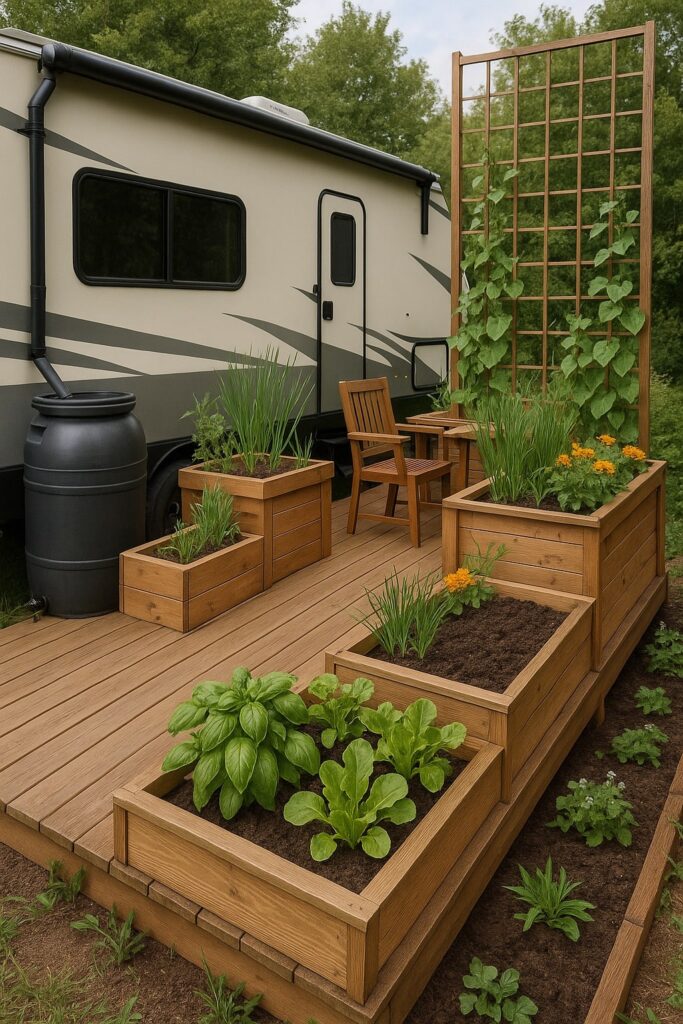
Combine your outdoor living space with productive gardening areas for fresh herbs and vegetables.
Key Features:
- Built-in planters at varying heights
- Rainwater collection system for irrigation
- Composting area for food scraps
- Trellises or vertical garden systems to maximize growing space
Plant Selection Tips: Choose compact varieties suited for container growing. Herbs like rosemary, thyme, and mint are excellent choices, as are determinate tomatoes, peppers, and leafy greens.
16. Pergola-Covered Lounge Deck
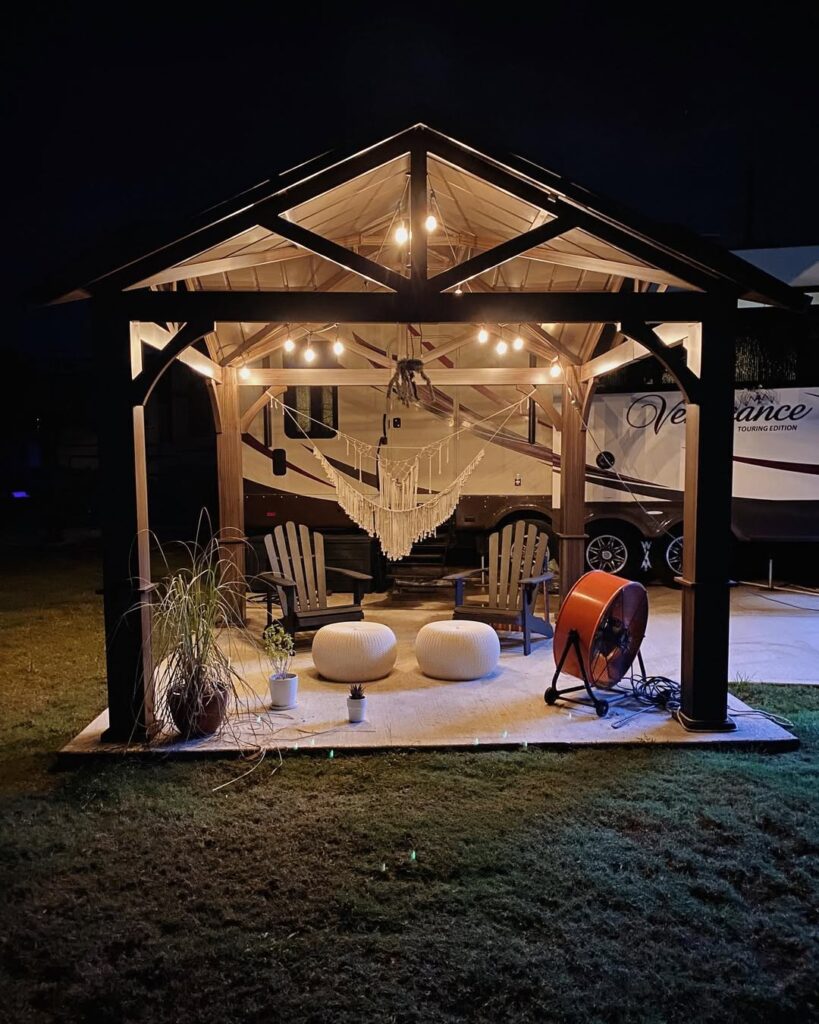
Photo Credit: @the_portkey_rv
Add style and shade with a pergola built into your RV deck design.
Key Features:
- Provides partial sun protection while maintaining airflow
- Ideal for hanging lights, curtains, or plants
- Can be made with wood, aluminum, or vinyl for various aesthetics
- Enhances the visual appeal and usability of your space
Pro Tip: Add retractable canopies or shade sails for adjustable coverage.
17. Deck with Built-In Fire Pit Area
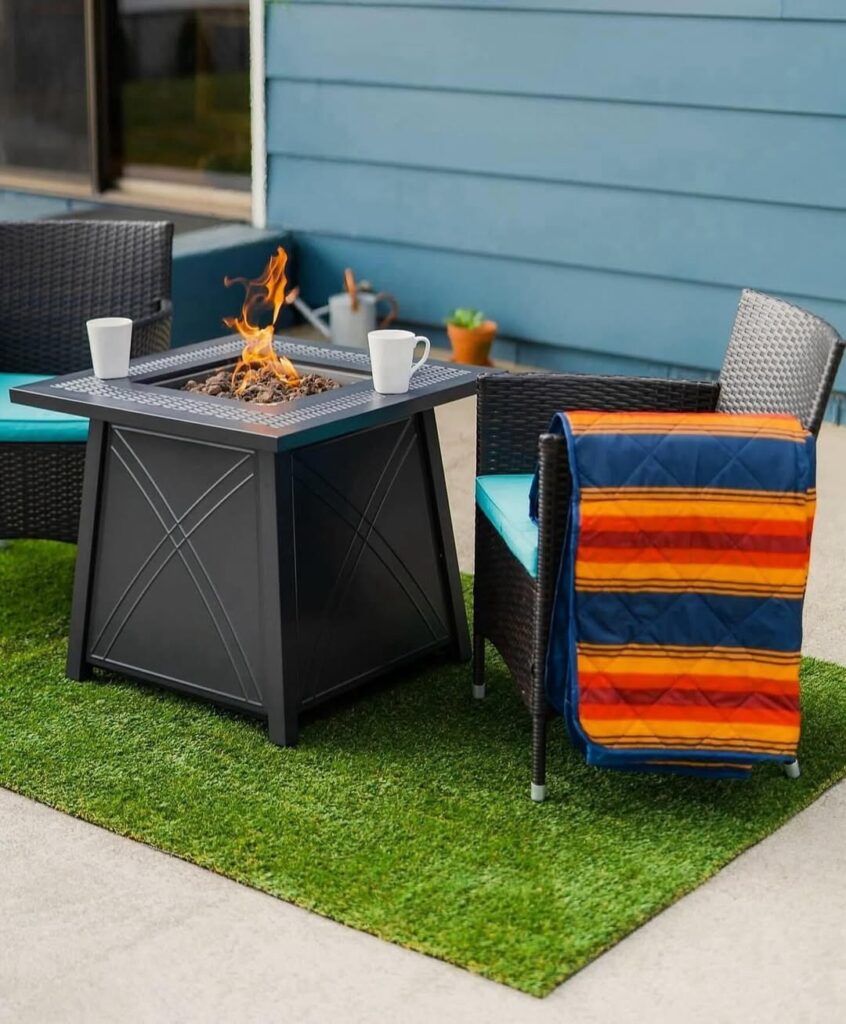
Photo Credit: @synlawn_okanagan
Create a cozy gathering space by integrating a designated fire pit zone into your RV deck.
Key Features:
- Recessed or freestanding fire pit with a heat-resistant base
- Surround seating with built-in benches or movable chairs
- Fire-resistant decking materials for safety
- Ideal for evening relaxation or roasting marshmallows
Safety Note: Always follow campground fire regulations and keep a fire extinguisher nearby.
18. Pet-Friendly Deck Design
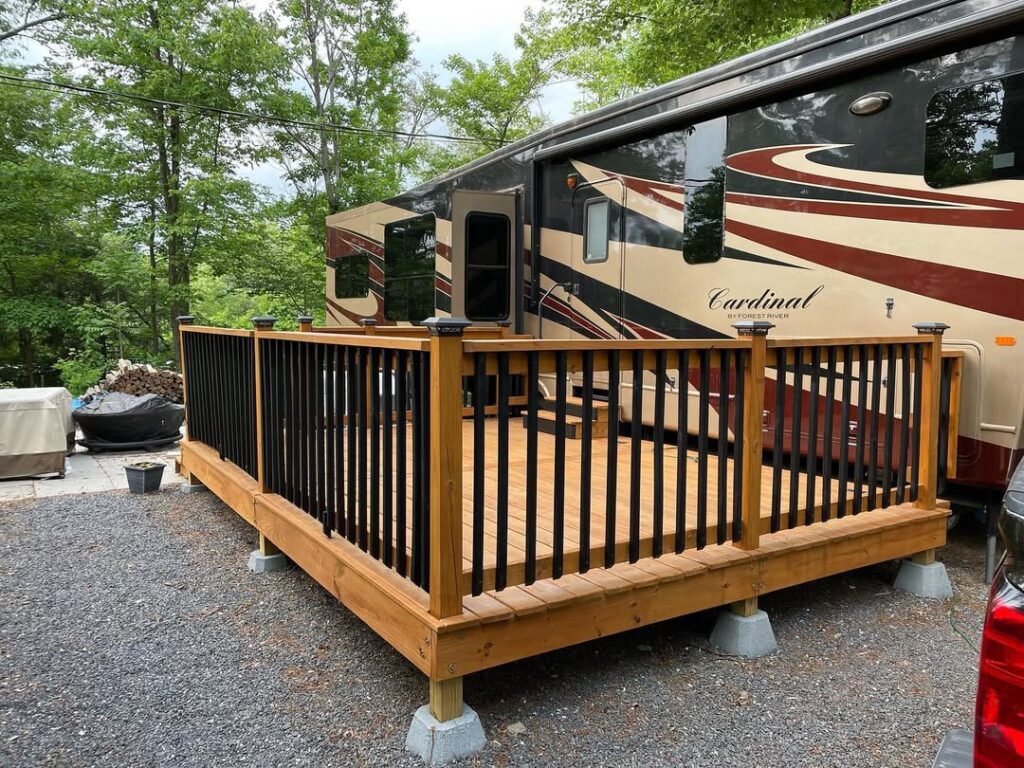
Photo Credit: @geidner_construction
Make your deck a haven for furry companions with pet-specific features.
Key Features:
- Gated deck entrance to prevent wandering
- Pet ramp or steps for easy access
- Shaded area with a raised pet bed
- Built-in feeding station or storage for pet supplies
Design Tip: Use durable, easy-to-clean materials like composite or sealed wood.
19. Hammock-Ready Chill Deck
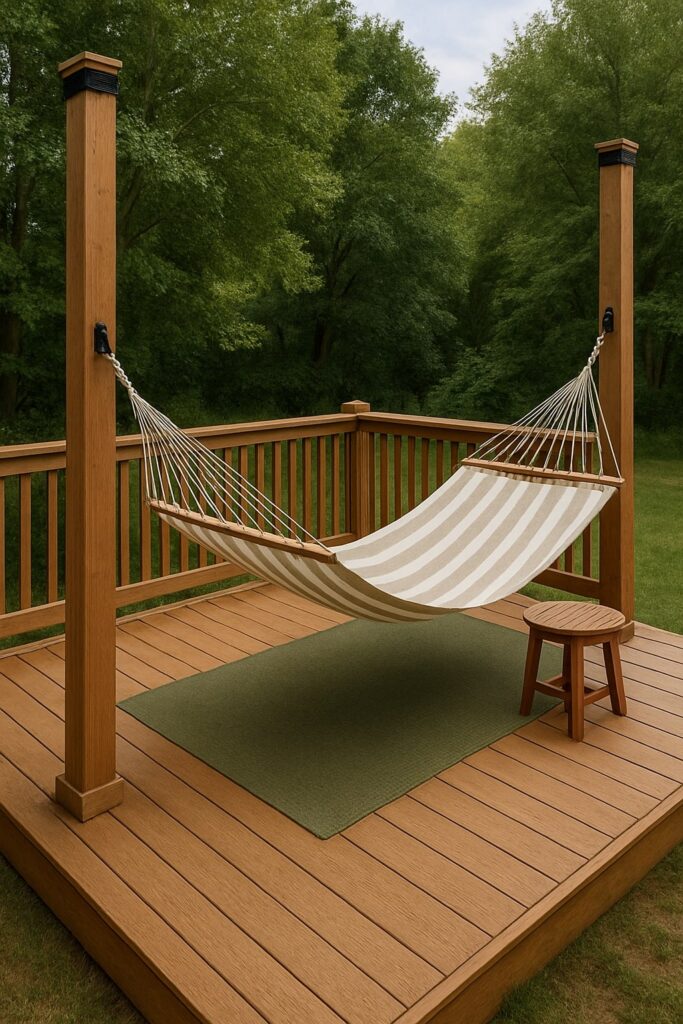
Transform your deck into a true relaxation zone with integrated hammock supports.
Key Features:
- Posts or reinforced corners designed to hold a hammock
- Optional dual-post hammock stands for flexibility
- Soft ground covering like outdoor rugs or turf beneath the hammock area
- Ideal for reading, napping, or stargazing
Pro Tip: Add side tables or drink holders near the hammock for ultimate comfort.
20. Artistic Deck with Custom Murals or Inlays
Photo Credit: @billholmes1971
Infuse personality into your outdoor space through artistic design elements.
Key Features:
- Painted or stained murals inspired by nature, camping, or travel themes
- Wood or tile inlays forming patterns or compass designs
- Carved or engraved railings for a unique, handcrafted touch
- LED accent lighting to highlight artistic features at night
Creative Idea: Invite local artists to collaborate or make it a DIY family project.
Practical Tips for RV Deck Construction
Materials Comparison Guide
Choosing the right materials is crucial for durability, maintenance, and overall satisfaction with your RV deck.
| Material | Pros | Cons | Approximate Cost | Lifespan |
| Pressure-Treated Lumber | Affordable, readily available, easy to work with | Requires regular maintenance, can warp or crack | $2-$5 per sq. ft. | 15-25 years with maintenance |
| Cedar/Redwood | Naturally resistant to rot and insects, attractive appearance | Higher cost, still requires some maintenance | $6-$12 per sq. ft. | 20-30 years |
| Composite Decking | Low maintenance, won’t splinter, resistant to fading | Higher upfront cost, can get hot in direct sun | $10-$20 per sq. ft. | 25-30+ years |
| Aluminum | Lightweight, won’t rot or rust, fire-resistant | Expensive, can be noisy in rain | $15-$25 per sq. ft. | 30+ years |
| Interlocking Deck Tiles | Easy installation, portable, no tools required | Limited design options, less stable than permanent decks | $5-$15 per sq. ft. | 5-15 years depending on material |
Foundation Options for Different Terrains
Proper foundation is essential for a stable, long-lasting deck.
For Level Ground:
- Concrete deck blocks placed directly on compacted gravel
- Precast concrete piers
- Ground contact-rated lumber on gravel beds
For Sloped Terrain:
- Adjustable deck supports
- Stepped concrete footings
- Post and beam construction with varying post heights
For Soft or Unstable Ground:
- Wide base plates to distribute weight
- Helical piers that screw into the ground
- Reinforced concrete footings below frost line (for permanent installations)
DIY vs. Professional Installation
| Aspect | DIY | Professional |
| Cost | Lower materials cost, no labor expense | Higher total cost including labor |
| Time | Longer completion time, done on your schedule | Faster completion, set timeline |
| Tools | Must own or rent necessary tools | No tool investment needed |
| Expertise | Learning curve, potential for mistakes | Guaranteed quality and proper construction |
| Permits | Must research and obtain yourself | Often handled by contractor |
Maintenance and Care for Your RV Deck
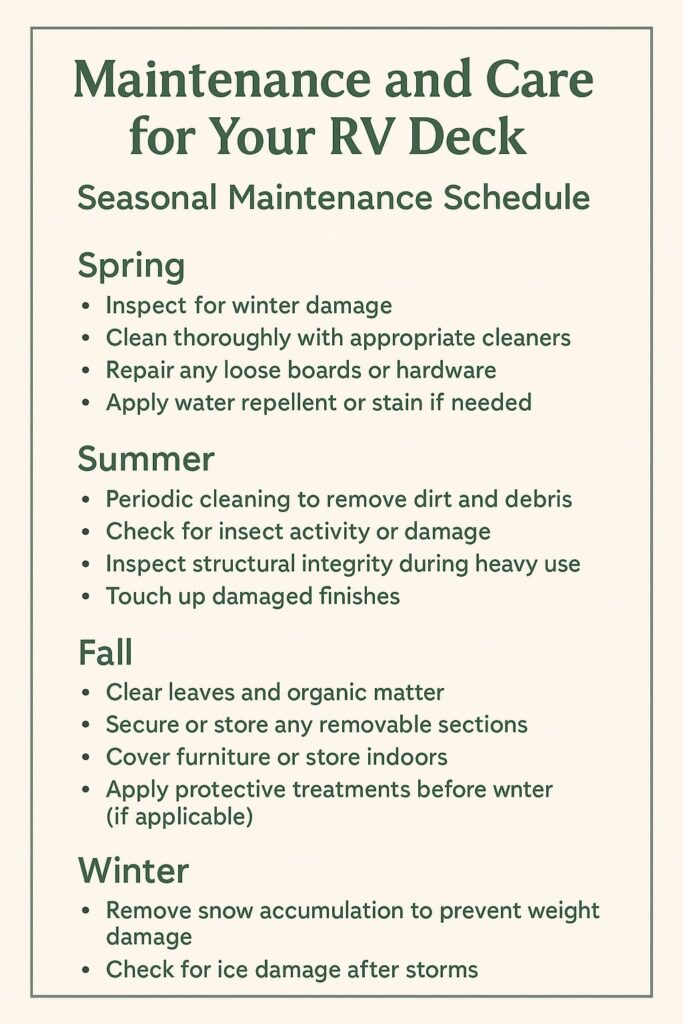
Seasonal Maintenance Schedule
Spring:
- Inspect for winter damage
- Clean thoroughly with appropriate cleaners
- Repair any loose boards or hardware
- Apply water repellent or stain if needed
Summer:
- Periodic cleaning to remove dirt and debris
- Check for insect activity or damage
- Inspect structural integrity during heavy use
- Touch up damaged finishes
Fall:
- Clear leaves and organic matter
- Secure or store any removable sections
- Cover furniture or store indoors
- Apply protective treatments before winter (if applicable)
Winter:
- Remove snow accumulation to prevent weight damage
- Check for ice damage after storms
- Ensure proper drainage is maintained
- Inspect covered areas for mold or mildew
Conclusion
An RV deck is more than just an addition to your camping setup—it’s an investment in your outdoor lifestyle. Whether you choose a simple portable solution or commit to a permanent structure, the right deck can transform your camping experience by creating an inviting outdoor living space that connects you with nature while providing the comfort and functionality you desire.
By carefully considering your specific needs, budget, and camping style, you can select or design an RV deck that perfectly complements your adventures. From material selection to design features, each choice you make contributes to creating a personalized outdoor space that enhances your RV lifestyle for years to come.
Remember that the best RV deck is one that suits your unique camping style—whether that means prioritizing portability for frequent travelers, durability for seasonal campers, or comfort and luxury for permanent sites. With thoughtful planning and the ideas presented in this guide, you’re well on your way to creating the perfect outdoor oasis for your RV adventures.