
An RV gives you the freedom to travel with many of the comforts of home, but it also comes with risks that are easy to overlook. Your RV can be vulnerable to theft when it is parked, while everyday hazards such as loose equipment, tire problems, fires, carbon monoxide, bad weather, and slippery steps can turn a relaxing trip into an emergency.
The good news is that better RV security and safety usually does not require complicated equipment. A few thoughtful habits, the right safety gear, and a simple plan for emergencies can make a significant difference.
This guide covers practical RV security and RV safety tips for before you leave home, while traveling, at the campground, and when your RV is left unattended. The goal is not to make your RV impossible to break into or eliminate every possible risk. Instead, these measures can help reduce preventable problems and give you more time to react when something goes wrong.
Start With an RV Safety and Security Check
Before thinking about individual locks or gadgets, walk around your RV and look at it as if you were seeing it for the first time. Check anything that could become a security weakness or a safety problem.
Look for these potential trouble spots:
- Entry points: Check exterior doors, storage compartments, windows, and other accessible openings to make sure they close and lock properly.
- Exterior equipment: Look for loose propane cylinders, batteries, tools, bicycles, chairs, and other items that could be removed easily.
- Tires and wheels: Inspect the tires for visible damage and check their pressure before driving.
- Hitch and connections: Make sure the trailer is properly connected and that safety equipment is secured before departure.
- Steps and walkways: Remove clutter and make sure steps provide stable footing.
- Emergency equipment: Confirm that your fire extinguisher, smoke alarm, carbon monoxide alarm, and first aid supplies are present and ready to use.
- Interior storage: Secure heavy or breakable items so they cannot become dangerous projectiles while the RV is moving.
A short inspection can uncover problems before they become expensive repairs or dangerous situations.
1. Make Your RV Look Occupied When You Leave
An unattended RV can become an easier target if it clearly looks empty. You do not need to create an elaborate security system. The basic idea is to avoid advertising that nobody is inside.
Before leaving your campsite for several hours, close curtains appropriately, lock every exterior door and storage compartment, and avoid leaving valuable items visible through the windows.
If your RV has security lights or a camera system, position them so they cover useful areas such as the main entrance, outdoor storage compartments, or the area immediately around the vehicle.
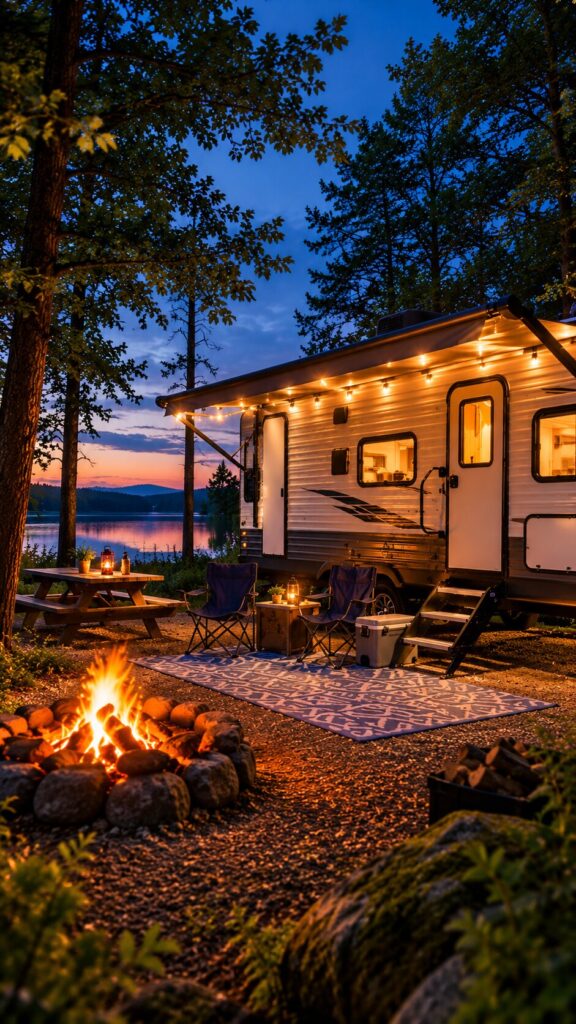
Get a Useful Security Light for your RV
A few simple habits can help:
- Keep expensive electronics and other valuables out of sight.
- Do not leave keys in obvious locations.
- Lock exterior storage doors even when you are only stepping away briefly.
- Avoid posting real-time travel updates that reveal your RV is unattended.
- Keep the campsite reasonably tidy rather than leaving expensive equipment scattered outside.
Security works best in layers. A locked door is useful, but combining locks with visibility, lighting, sensible habits, and awareness can make your RV less attractive to an opportunistic thief.
2. Secure the RV’s Exterior Storage Areas
RV owners often concentrate on the main entrance while forgetting the storage compartments underneath or around the RV. These compartments may contain tools, outdoor equipment, electrical accessories, hoses, and other valuable gear.
Check every compartment before leaving your RV unattended. Make sure the doors latch completely and that their locks are functioning properly.
For higher-value equipment, consider adding an additional layer of protection where appropriate. You can also keep an inventory of important gear and record serial numbers or photographs. If something is stolen, having identifying information can make a report and insurance claim easier.
Security tip: Do not assume something is safe simply because it is stored inside an exterior compartment. If the compartment itself is easy to open, the contents may still be vulnerable.
3. Keep Your RV Keys and Access Codes Secure
Your RV’s physical keys, spare keys, and electronic access devices should be treated as security equipment.
Avoid hiding a spare key in an obvious location outside the RV. If someone can easily guess where the spare is stored, the lock itself provides little protection.
If your RV uses a keypad or electronic locking system, protect the access code and change it when necessary. Do not share the code casually with people you do not trust.
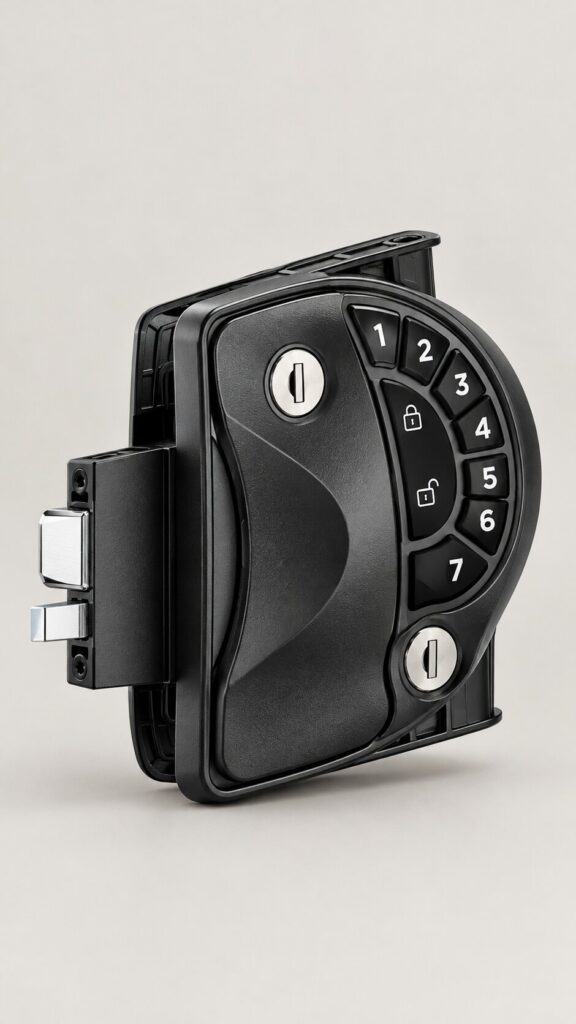
See the Latest Price on Amazon
If I wanted an easier and more convenient way to secure my RV, the RVLock V4 would be high on my list. I love the idea of keyless entry, a backlit keypad, and a durable metal design for added peace of mind while traveling.
For family trips, make sure everyone who may need to access the RV understands the basic locking procedure. A sophisticated lock is not much help if the door is regularly left unsecured.
4. Create a Simple Departure Checklist
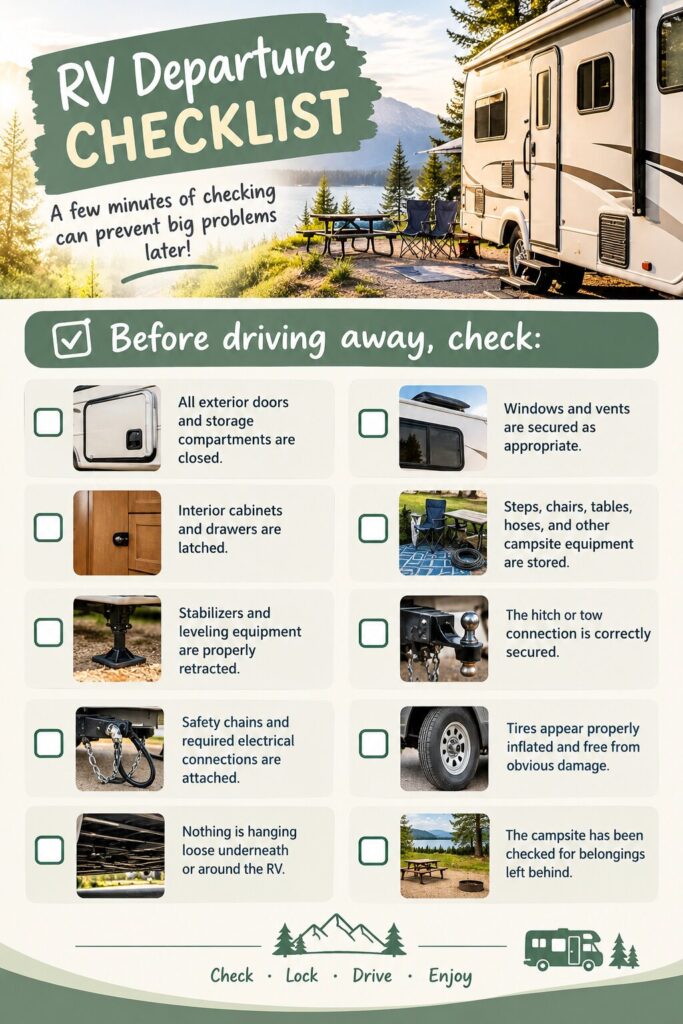
One of the most effective RV safety tools costs nothing: a checklist.
Rushing away from a campsite can lead to forgotten jacks, open compartments, disconnected equipment, unsecured cabinets, or improperly connected towing equipment. A written checklist gives you a repeatable process instead of relying entirely on memory.
Before driving away, check:
- All exterior doors and storage compartments are closed.
- Windows and vents are secured as appropriate.
- Interior cabinets and drawers are latched.
- Steps, chairs, tables, hoses, and other campsite equipment are stored.
- Stabilizers and leveling equipment are properly retracted.
- The hitch or tow connection is correctly secured.
- Safety chains and required electrical connections are attached.
- Tires appear properly inflated and free from obvious damage.
- Nothing is hanging loose underneath or around the RV.
- The campsite has been checked for belongings left behind.
A checklist becomes especially valuable when you are tired, distracted, or leaving in a hurry.
5. Use a Quality Hitch or Coupler Lock
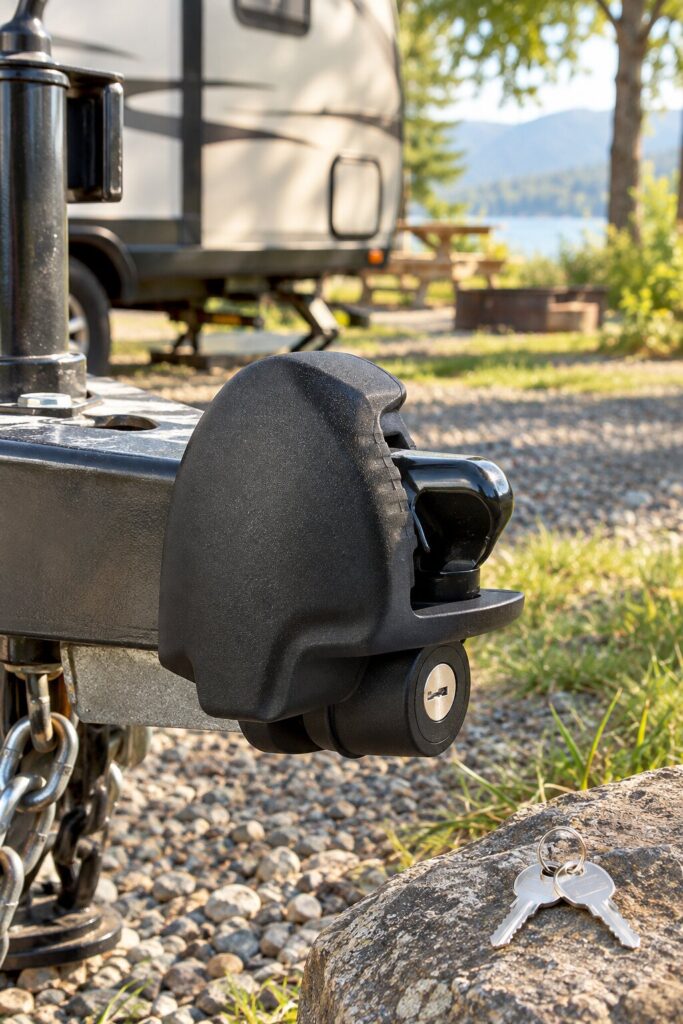
See the Latest Price on Amazon
If you tow a travel trailer, securing the trailer when it is disconnected from the tow vehicle should be part of your security routine.
A hitch or coupler lock is designed to prevent an unauthorized vehicle from simply connecting to the trailer and towing it away. It does not make a trailer impossible to steal, but it adds another obstacle for someone attempting a quick theft.
Choose a lock that is compatible with your particular coupler and use it whenever the trailer is detached.
For additional protection, think beyond the hitch itself. Wheel security, sensible parking, lighting, and campground awareness can create multiple layers of deterrence.
6. Consider Wheel Locks or Other Anti-Theft Devices
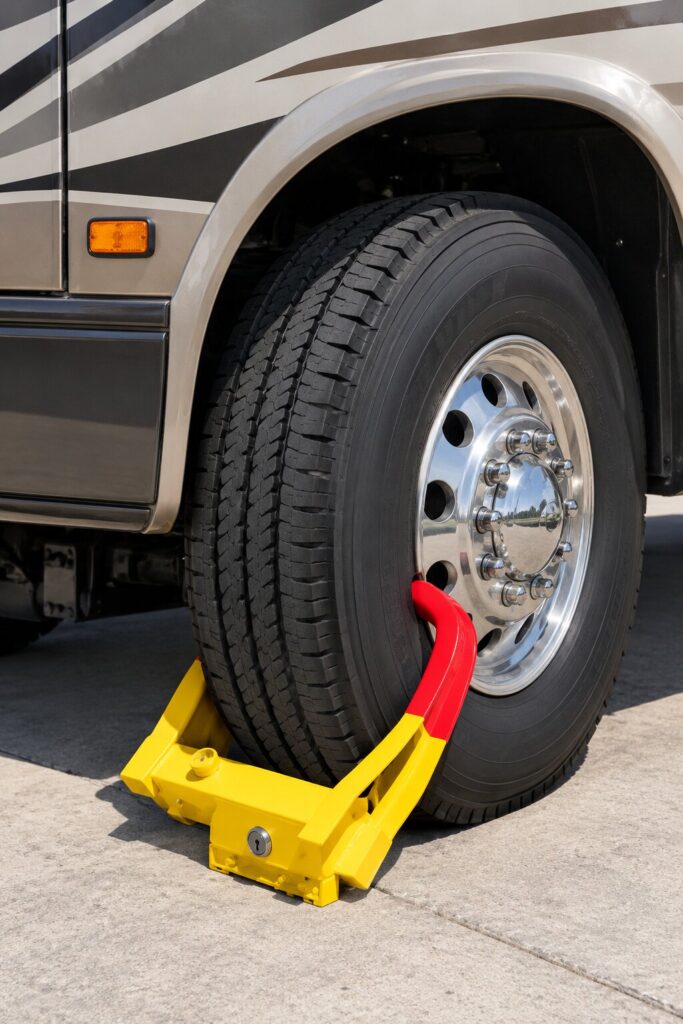
A wheel clamp or tire boot physically interferes with the wheel and can make moving a parked RV or trailer considerably more difficult.
These devices can be particularly useful when a trailer will remain parked for an extended period. They can also serve as a visible deterrent because a potential thief can see that the vehicle has additional protection.
When selecting one, make sure it fits your wheel and tire configuration and that you understand how to install and remove it correctly.
Important: Never drive with a wheel lock still attached. Treat its removal as part of your pre-departure checklist.
7. Protect Propane Cylinders, Batteries, and Other Removable Equipment
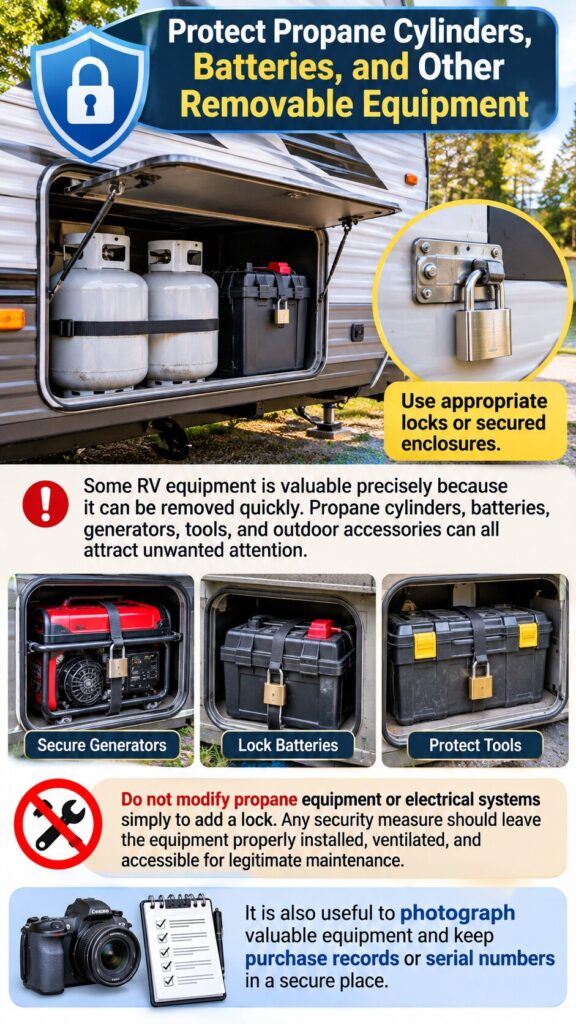
Some RV equipment is valuable precisely because it can be removed quickly. Propane cylinders, batteries, generators, tools, and outdoor accessories can all attract unwanted attention.
Where compatible with your RV, use appropriate locks or secured enclosures for removable equipment.
Do not modify propane equipment or electrical systems simply to add a lock. Any security measure should leave the equipment properly installed, ventilated, and accessible for legitimate maintenance.
It is also useful to photograph valuable equipment and keep purchase records or serial numbers in a secure place.
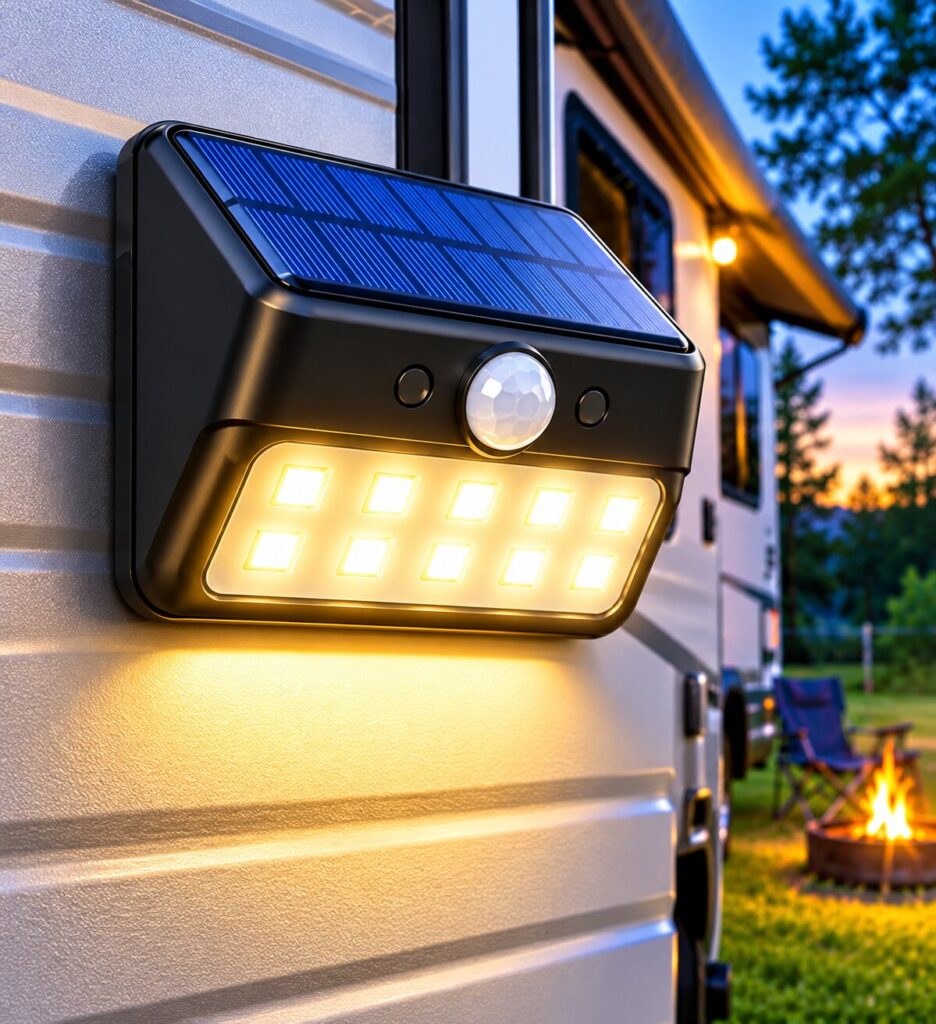
8. Add Motion-Activated Lighting
Click Here to See Reviews on Amazon
Dark areas around an RV can make it easier for someone to approach unnoticed. Motion-activated lighting can improve visibility and may discourage someone from lingering around the vehicle.
Consider placing lighting near:
- The main entrance
- Exterior storage compartments
- The hitch area
- Frequently used pathways
- Areas where bicycles or other equipment are stored
Avoid positioning bright lights so they unnecessarily disturb neighboring campers. Good campsite security should not create a new problem for everyone around you.
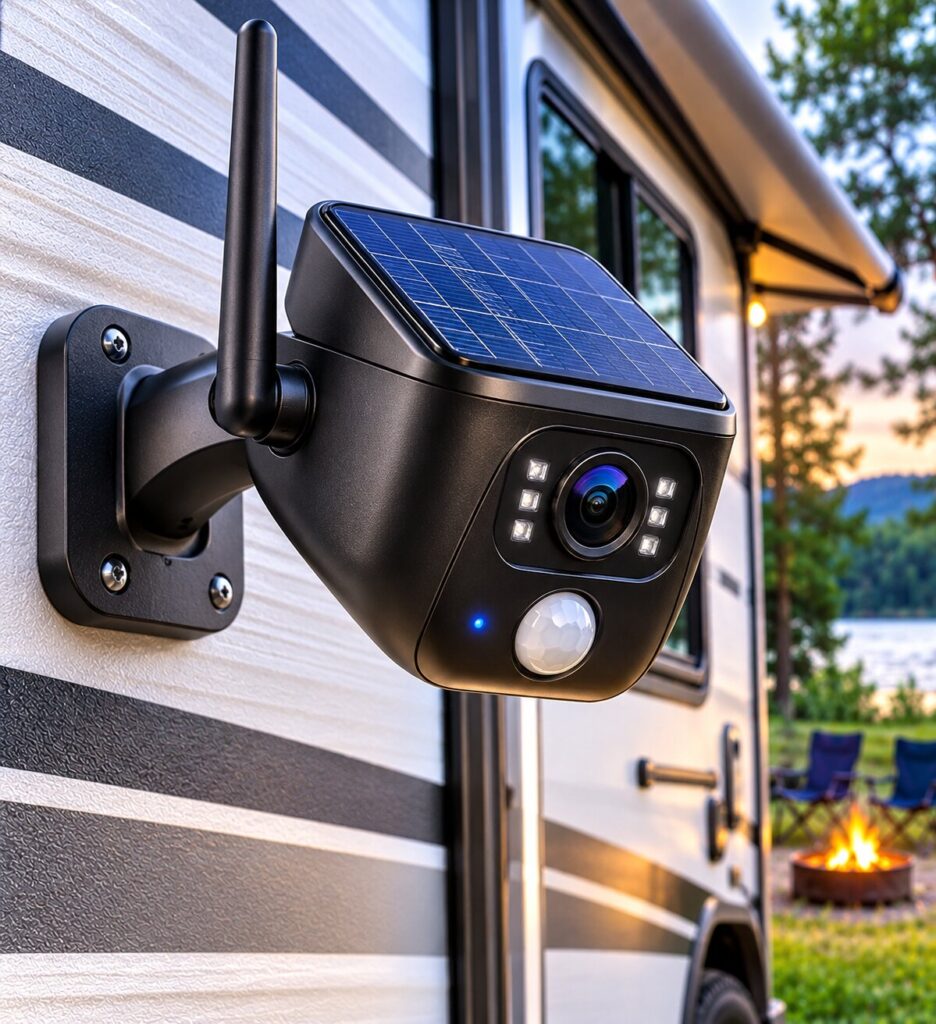
9. Consider an RV Security Camera
See the Latest Price on Amazon
A camera cannot physically stop a theft, but it can improve awareness and may provide useful evidence after an incident.
Depending on the system, cameras can monitor entrances, exterior storage areas, or the space immediately surrounding the RV. Some systems can also provide alerts when motion is detected.
Before installing a camera, consider:
- Its viewing angle
- Night visibility
- Power requirements
- Weather resistance
- Storage of recordings
- Internet or cellular requirements
- Privacy considerations at campgrounds
Avoid pointing cameras unnecessarily toward neighboring campsites. The goal is to protect your property without invading someone else’s privacy.
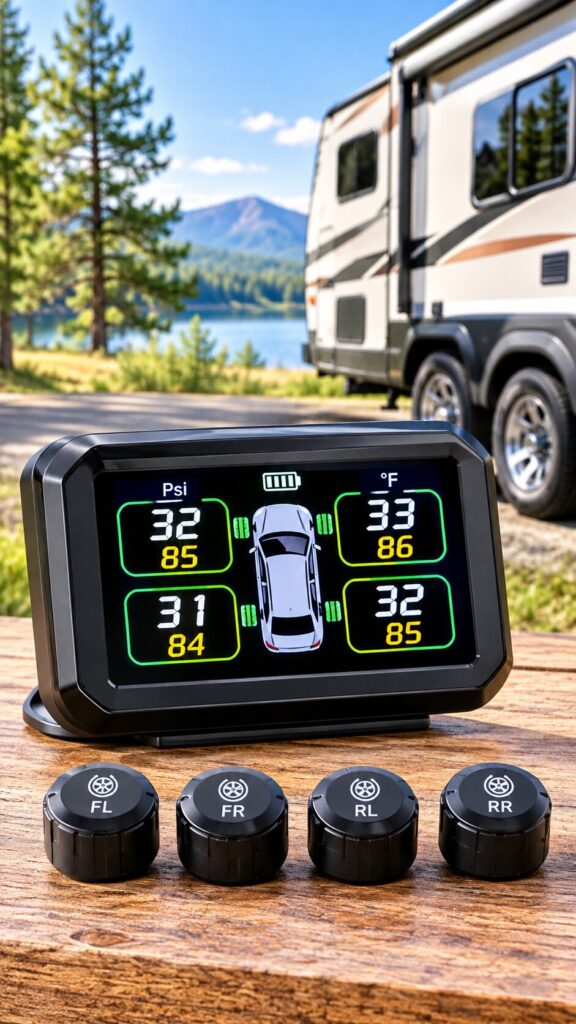
10. Monitor Tire Pressure and Temperature
Click Here to See Reviews on Amazon
Tire problems can become serious quickly, particularly on a heavily loaded RV or trailer.
A tire pressure monitoring system (TPMS) can provide information about tire pressure and, depending on the system, temperature while you travel. This can give you an earlier warning that something is changing.
A TPMS should complement—not replace—a physical tire inspection.
Before a trip, check the tires according to the vehicle or tire manufacturer’s recommendations. Look for cracks, bulges, uneven wear, foreign objects, or other visible damage.
Remember that an RV’s tires may age even when the vehicle is driven relatively little. Do not judge tire condition by tread depth alone.
11. Keep Fire Extinguishers Accessible
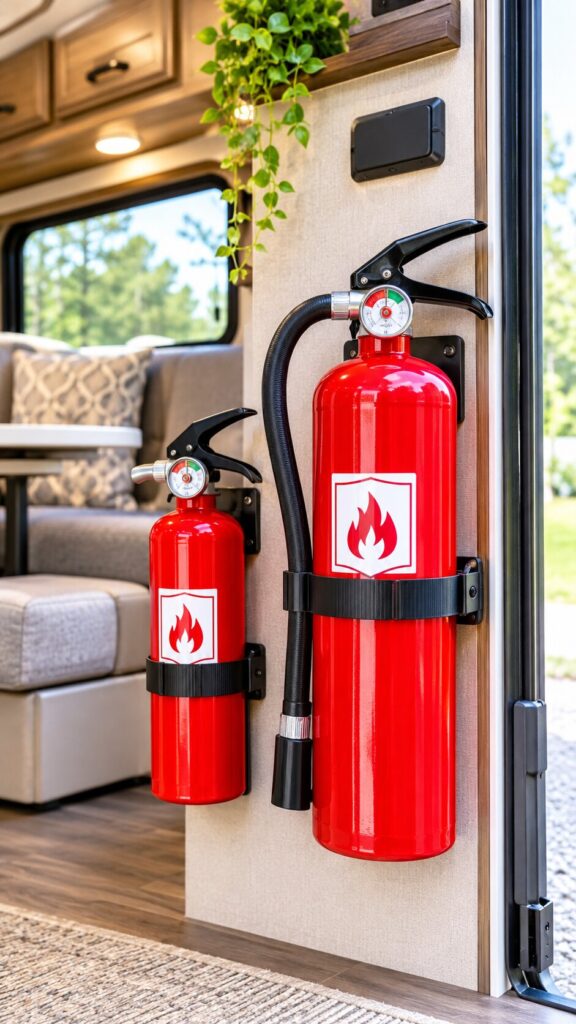
An RV contains several potential sources of heat and ignition, including cooking appliances, electrical equipment, engines, generators, and heating systems.
A suitable fire extinguisher should be readily accessible rather than buried in a storage compartment behind luggage.
Everyone traveling in the RV should know:
- Where the extinguisher is located.
- How to access it quickly.
- What the basic operating procedure is.
- When it is safer to evacuate rather than attempt to fight a fire.
A fire extinguisher is not a substitute for getting people out safely. If a fire is growing rapidly or producing heavy smoke, evacuation should take priority.
For additional guidance on RV fire prevention and suppression systems, explore this helpful resource from RVTechMag’s RV Fire Safety Guide
12. Install and Test Smoke and Carbon Monoxide Alarms
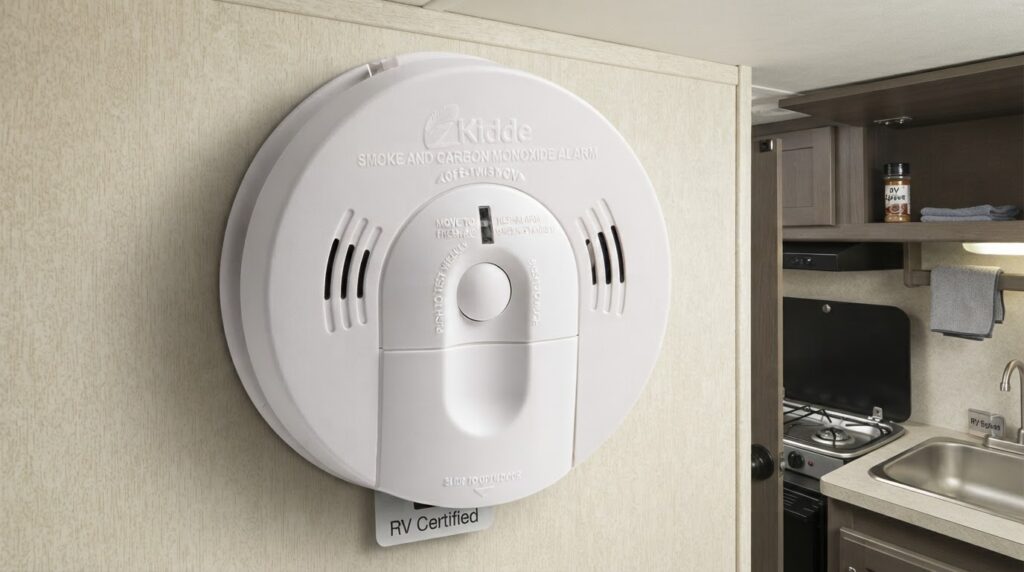
Smoke and carbon monoxide alarms are essential pieces of RV safety equipment.
Smoke alarm: Detects smoke associated with a fire and provides an early warning.
Carbon monoxide (CO) alarm: Detects a dangerous buildup of carbon monoxide, an odorless and potentially deadly gas.
Fuel-burning appliances, generators, engines, and other equipment can create carbon monoxide hazards when something goes wrong or when combustion gases enter an occupied area.
Test alarms regularly according to their manufacturer’s instructions and replace batteries or the entire alarm when required.
Never rely on smell to detect carbon monoxide. You cannot safely identify it by odor.
Option 3 – Natural and reader-friendly
Whether you’re camping in an RV or a tent, understanding carbon monoxide risks can help prevent dangerous situations. You can find more helpful safety information in the American Camp Association’s article, Protecting Campers from Carbon Monoxide Poisoning.
13. Know Two Ways Out of the RV
Everyone in the RV should know how to leave quickly if there is a fire or another emergency.
Do not wait until an emergency to discover that an exit window is difficult to operate or that someone does not know how it works.
Practice a basic escape plan:
- Identify the primary exit.
- Identify an alternative exit.
- Make sure everyone knows how to operate emergency windows or exits.
- Keep pathways clear.
- Decide where everyone should meet outside.
- Practice the plan occasionally.
Children and guests should receive simple instructions appropriate to their age and abilities.
The objective is not to create fear. It is to replace confusion with familiarity.
14. Make RV Steps Easier to See at Night
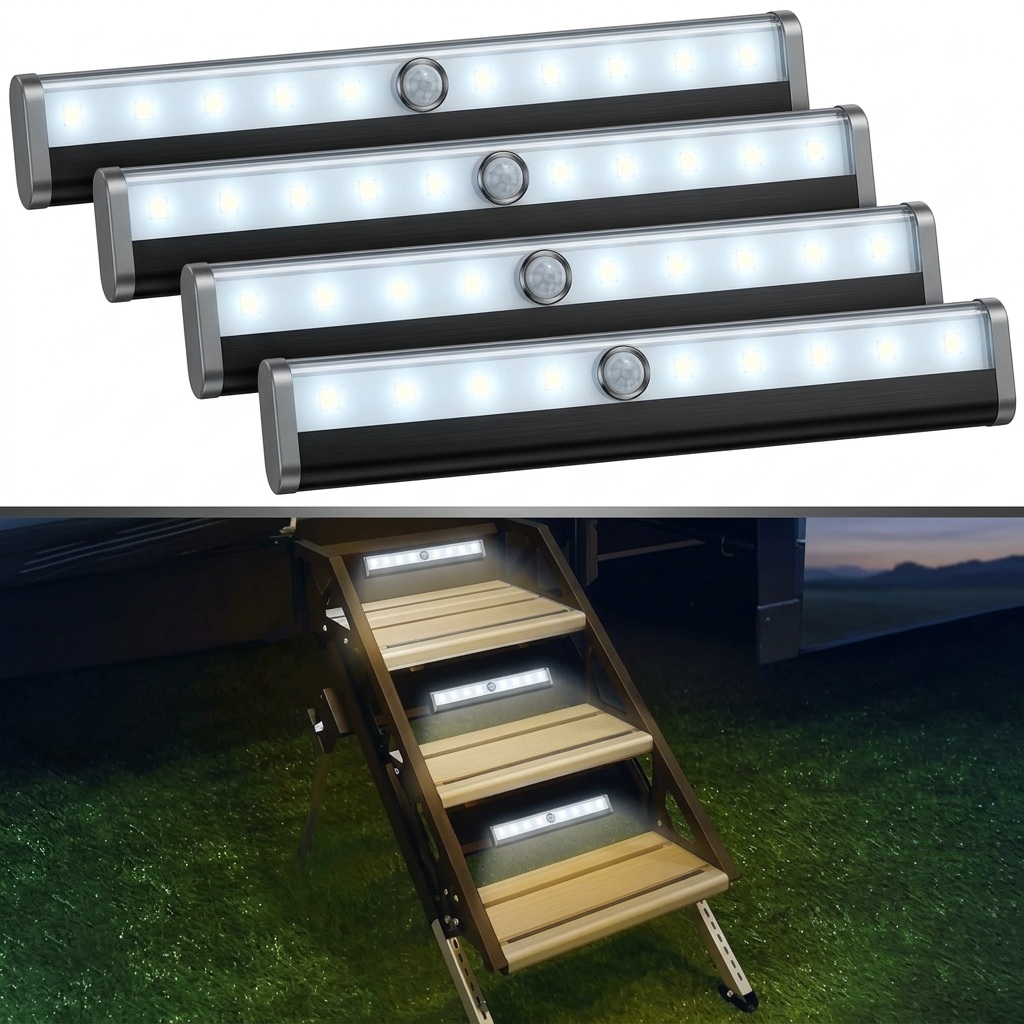
RV steps are easy to overlook after dark, particularly when you return to the campsite carrying bags or when the ground around the RV is uneven.
Reflective tape, step lighting, or other appropriate visibility aids can make the edge of each step easier to identify.
Keep the area around the steps free from bags, shoes, toys, cables, and other trip hazards.
A small improvement in visibility can be especially valuable when the campground is poorly lit.
15. Improve Traction on Wet or Slippery Steps
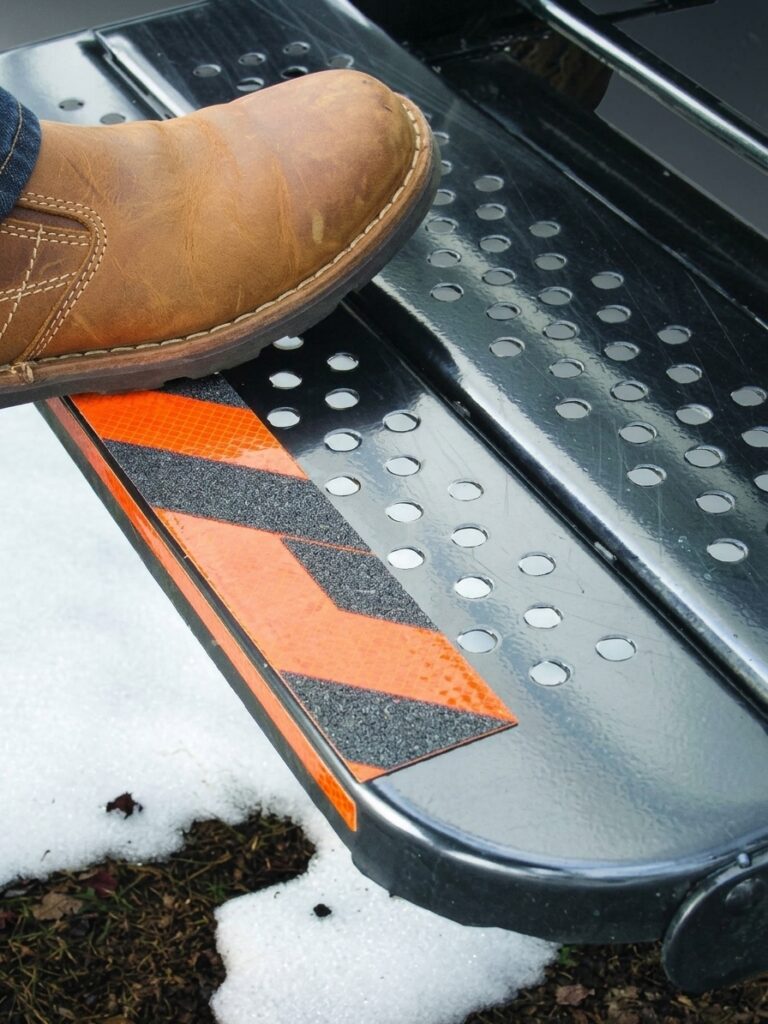
Visibility is only part of the problem. Rain, mud, frost, condensation, and worn step surfaces can make RV stairs slippery.
Use suitable non-slip material where appropriate and keep the steps reasonably clean.
When conditions are wet:
- Slow down when entering or exiting.
- Use handrails where available.
- Keep both hands free when practical.
- Do not carry more than you can safely manage.
- Check that footwear has adequate traction.
This is a simple example of why RV safety is not limited to expensive equipment.
16. Keep Food and Trash Away From Wildlife
Campground wildlife can create safety problems when animals learn that campsites provide easy access to food.
Do not leave food, pet food, cooking scraps, or garbage exposed unnecessarily. Follow the campground’s specific food-storage and wildlife rules, particularly in areas where bears or other large animals are present.
Clean cooking equipment after use and dispose of waste in the designated containers.
Wildlife safety is not just about protecting your food. It also helps prevent animals from becoming accustomed to people and campsites.
17. Keep Your Vehicle Key Fob Accessible
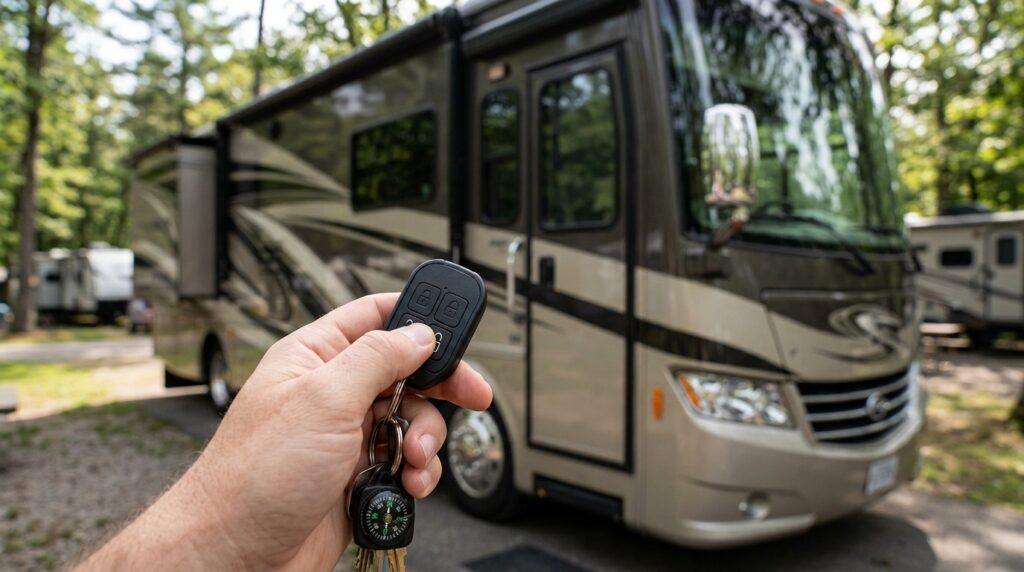
Your vehicle’s key fob can be useful during an emergency if it includes an alarm or panic function.
Keep it somewhere accessible enough that you can reach it quickly rather than burying it under luggage or leaving it far away.
A vehicle alarm may attract attention if you need help, but it should not be considered a substitute for calling emergency services when appropriate.
If you travel with family members, make sure everyone understands where emergency keys or access devices are kept.
18. Inspect the Trailer Connection Before Every Drive
A trailer connection deserves attention every time you move.
Do not assume that because everything was secure when you left home, it is still secure after several stops, rough roads, or adjustments at the campsite.
Before driving, inspect the connection and verify that required components are correctly attached.
Include these items in your towing check:
- Hitch or coupler connection
- Safety chains
- Electrical connector
- Trailer brakes or brake connection, where applicable
- Breakaway system, where applicable
- Hitch pin and retaining mechanism
- Trailer lights
- Stabilizers and leveling equipment
- Weight-distribution components, if equipped
Then perform the appropriate functional checks for your setup before entering traffic.
19. Do Not Ignore Weather Conditions
Weather can create hazards that have nothing to do with theft.
Strong wind, thunderstorms, flooding, extreme heat, snow, ice, and lightning can all affect RV safety.
Before traveling or setting up camp, pay attention to the forecast and campground alerts. If severe weather is approaching, secure loose outdoor equipment and follow local instructions.
Weather preparation may include:
- Bringing lightweight outdoor items inside.
- Securing awnings according to manufacturer guidance.
- Keeping emergency supplies accessible.
- Avoiding flood-prone locations.
- Knowing where the campground’s designated emergency shelter or safer area is.
- Keeping phones and essential communication devices charged.
Do not wait until severe weather arrives to decide what you will do.
20. Treat Electricity With Respect
RV electrical systems can be convenient but potentially dangerous when overloaded, damaged, improperly connected, or exposed to moisture.
Before plugging into campground power, inspect cords and connectors for visible damage. Use equipment that is appropriate for your RV and electrical setup.
Avoid improvising electrical repairs with unsuitable parts or overloaded extension arrangements.
If you notice repeated breaker trips, unusual heat, burning smells, sparks, damaged wiring, or other electrical problems, disconnect power when it is safe to do so and have the issue properly inspected.
Remember: A breaker repeatedly tripping is a warning, not an inconvenience to work around.
21. Use Propane Appliances and Generators Responsibly
Propane and generators provide valuable conveniences, but both require careful handling.
Follow the equipment manufacturer’s instructions and never use fuel-burning equipment in ways it was not designed for.
Keep generators and other combustion-producing equipment appropriately positioned and ventilated according to manufacturer instructions. Never bring a running generator, outdoor cooking appliance, or other combustion equipment into an enclosed living space.
Also inspect propane connections and equipment for signs of damage or problems. If you suspect a propane leak, avoid flames and ignition sources, move to a safe location, and follow the appropriate emergency procedure.
22. Keep a Well-Stocked RV Emergency Kit
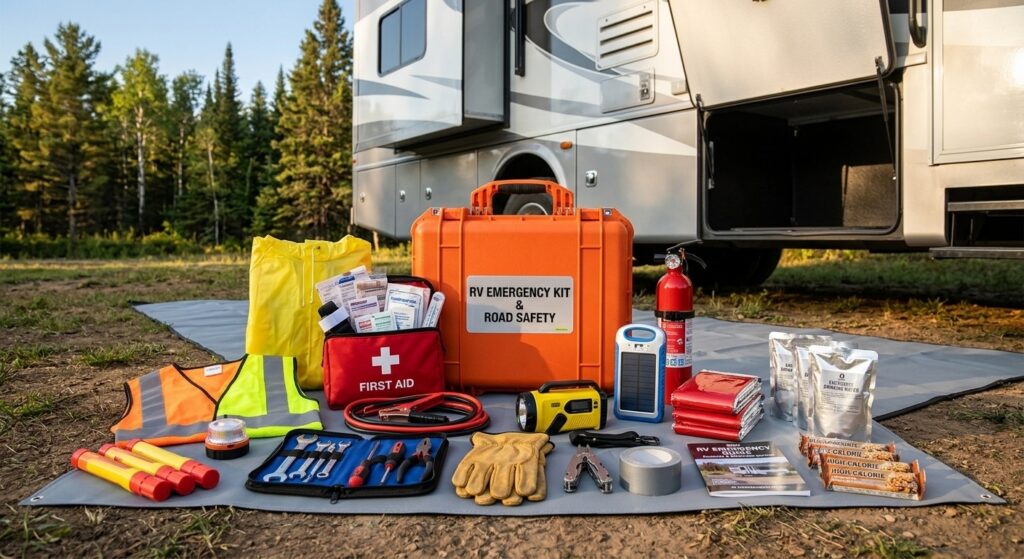
Get a Reliable Emergency Kit on Amazon
A first aid kit is useful, but a broader emergency kit can help with situations that are not medical.
Consider carrying supplies such as:
- First aid essentials
- Flashlights or headlamps
- Spare batteries
- Portable phone power
- Drinking water
- Basic tools
- Emergency blankets
- Work gloves
- Basic repair supplies
- Weather-appropriate clothing
- Copies of important emergency information
Your exact kit should reflect your destination, season, travel style, and how far you may be from assistance.
The best emergency kit is one you can locate quickly and actually know how to use.
23. Know Your Location Before an Emergency Happens
When something goes wrong, saying “we are at the campground” may not be enough information for someone trying to help you.
Before settling in, identify the campground name, site number, nearest road, and other useful location details. Know how to describe your location to emergency responders.
If traveling through remote areas, consider what communication options will be available if cellular coverage is weak or unavailable.
It is also wise to know where the nearest fuel, medical facility, and other essential services are before you need them.
24. Secure Your RV Before Going to Sleep
Nighttime security deserves its own check because many campers naturally become less alert once they are inside for the evening.
Before going to bed, make sure exterior doors are locked and that easily accessible windows are secured appropriately. Bring valuable outdoor equipment inside or secure it as needed.
Keep important items such as phones, keys, flashlights, and emergency equipment where you can reach them quickly.
Do not block emergency exits with luggage or other belongings.
A few minutes of preparation before bedtime can make an emergency much easier to manage.
25. Practice Your RV Emergency Plan
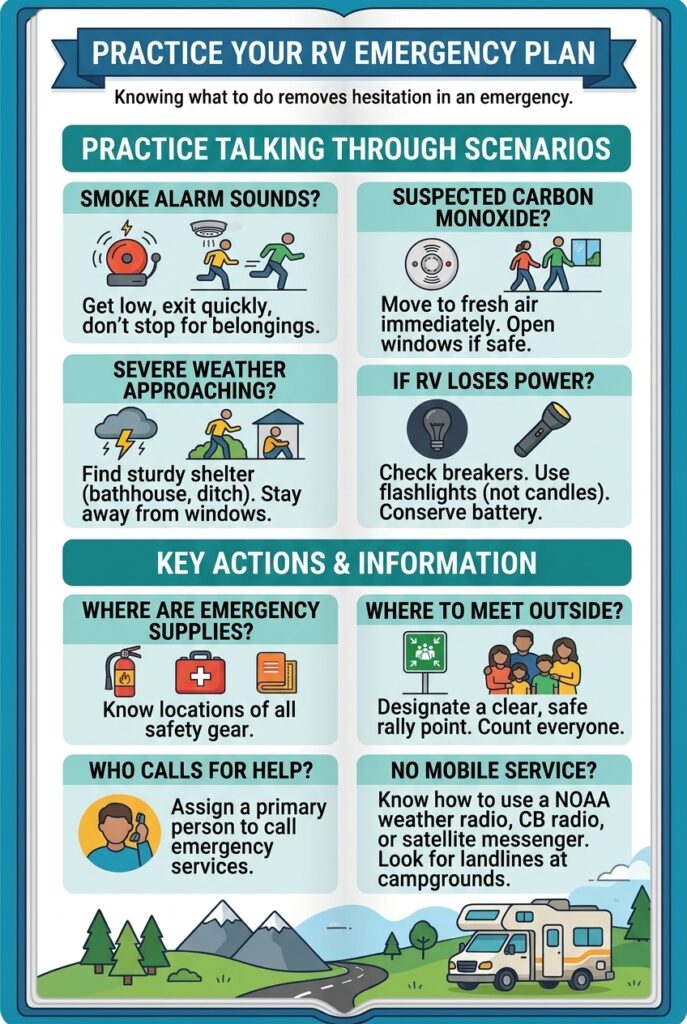
Buying safety equipment is only the beginning. The final step is knowing what you would actually do when something goes wrong.
Talk through several scenarios with everyone traveling in the RV:
- What would we do if the smoke alarm sounds?
- Where would we go if there were a fire?
- How would we respond to a suspected carbon monoxide problem?
- Where are the fire extinguisher and first aid kit?
- Who would call emergency services?
- Where would we meet outside?
- What happens if the RV loses power?
- What would we do if severe weather approaches?
- How would we contact help if mobile service is unavailable?
You do not need to rehearse every possible disaster. The purpose is simply to remove hesitation from the first few moments of an emergency.
Final Thoughts: Build Layers of RV Safety
The safest RV setup is rarely based on one expensive security product. A hitch lock cannot prevent every theft. A camera cannot stop a fire. A smoke alarm cannot prevent a tire blowout.
Instead, think in terms of layers.
Good RV security combines physical protection, awareness, sensible habits, and preparation. Good RV safety combines maintenance, emergency equipment, careful driving, fire and carbon monoxide protection, weather awareness, and a clear response plan.
You do not need to turn your RV into a fortress or carry every gadget available. Start with the fundamentals: lock what should be locked, inspect what can fail, secure what can move, monitor important systems, keep emergency equipment accessible, and make sure everyone traveling with you knows what to do when something goes wrong.
A few extra minutes spent preparing your RV can help you spend the rest of your trip enjoying the reason you bought it in the first place: getting out, exploring, and coming home safely.