
RV camping becomes much easier when you have the right accessories for your particular setup. From freshwater connections and sewer equipment to leveling blocks, safety gear, kitchen appliances, and campsite comforts, the right additions can solve many of the small problems that come with life on the road.
However, you don’t need to buy every RV accessory available. The best choices depend on your RV type, camping style, available storage space, and the problems you regularly encounter during your trips.
This guide covers popular RV accessories that can help with everything from campsite setup and maintenance to comfort and outdoor entertainment.
Contents
- 0.1 1. RV Freshwater Hose
- 0.2 2. RV Water Pressure Regulator
- 0.3 3. RV Water Filter
- 0.4 4. RV Water Hose Elbow
- 0.5 5. RV Sewer Hose and Sewer Hose Fittings
- 0.6 6. RV Sewer Hose Support
- 0.7 7. RV Sewer Hose Rinser
- 0.8 8. RV Refrigerator Bars and Braces
- 0.9 9. RV Door Holder
- 0.10 10. RV Screen Door Crossbar Handle
- 0.11 11. RV Backup Camera
- 0.12 12. RV Wheel Chocks
- 0.13 13. RV Leveling Blocks
- 0.14 14. Dual-Flush Valve for Cleaning RV Holding Tanks
- 0.15 15. RV Holding Tank Cleaning Wand
- 0.16 16. Portable RV Waste Tank
- 0.17 17. X-Chock RV Wheel Stabilizers
- 0.18 18. RV Step Brace
- 0.19 19. RV Wheel Covers
- 1 Miscellaneous RV Camping Accessories
- 1.1 20. Water-Resistant LED Flashlight
- 1.2 21. Survival and Bushcraft Book
- 1.3 22. RV Step Rug with Wraparound Design
- 1.4 23. Folding RV Stool With Adjustable Height
- 1.5 24. Surge Protector for RV Electrical Systems
- 1.6 25. Portable Propane Fire Pit
- 1.7 26. Portable Bluetooth Speaker
- 1.8 27. Portable Air Conditioner
- 1.9 28. Slim Single-Serve Coffee Maker
- 1.10 29. Electric Water Dispenser for a 5-Gallon Water Jug
- 2 How to Choose the Right RV Accessories
- 3 Match Accessories to Your Camping Style
- 4 Final Selection Considerations
1. RV Freshwater Hose
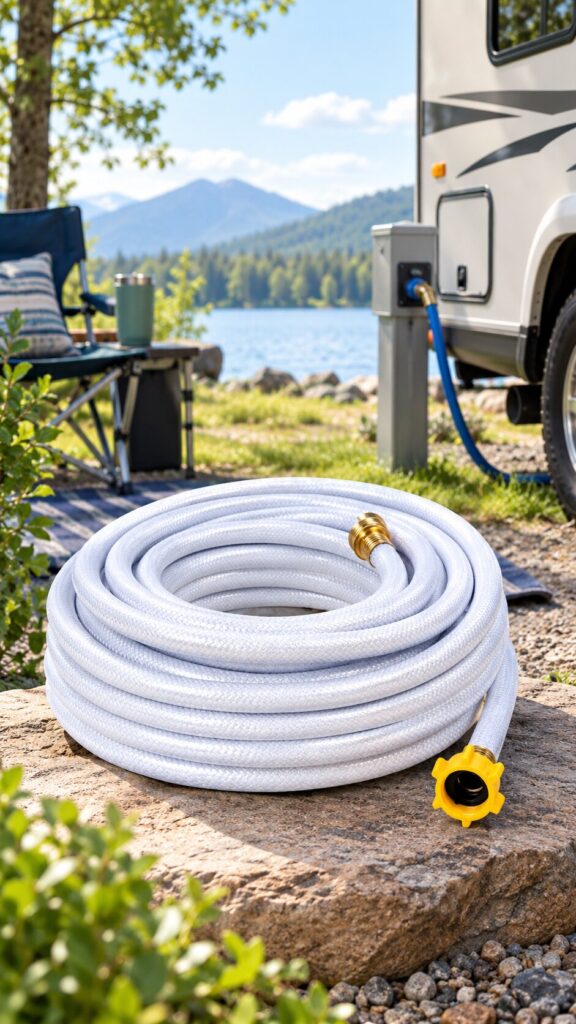
A dedicated RV freshwater hose is one of the basic accessories you’ll want when staying at campgrounds with water hookups.
Unlike an ordinary garden hose, an RV drinking-water hose is designed specifically for connecting your RV to a potable water supply. Having a dedicated hose also means you don’t have to use the same hose for drinking water and other campsite tasks.
When choosing a freshwater hose, consider its length, flexibility, connection quality, and storage requirements.
A longer hose gives you more flexibility when the campground water connection isn’t located directly beside your RV, but it also takes up more storage space.
Look for an appropriately rated hose and follow the manufacturer’s instructions for potable-water use.
A freshwater hose is particularly useful for:
- Connecting to campground water hookups.
- Filling or servicing the RV’s freshwater system.
- Having a dedicated potable-water connection.
- Making campsite setup easier.
If you’re building an RV accessory collection from scratch, a suitable freshwater hose is one of the practical items to consider early.
2. RV Water Pressure Regulator
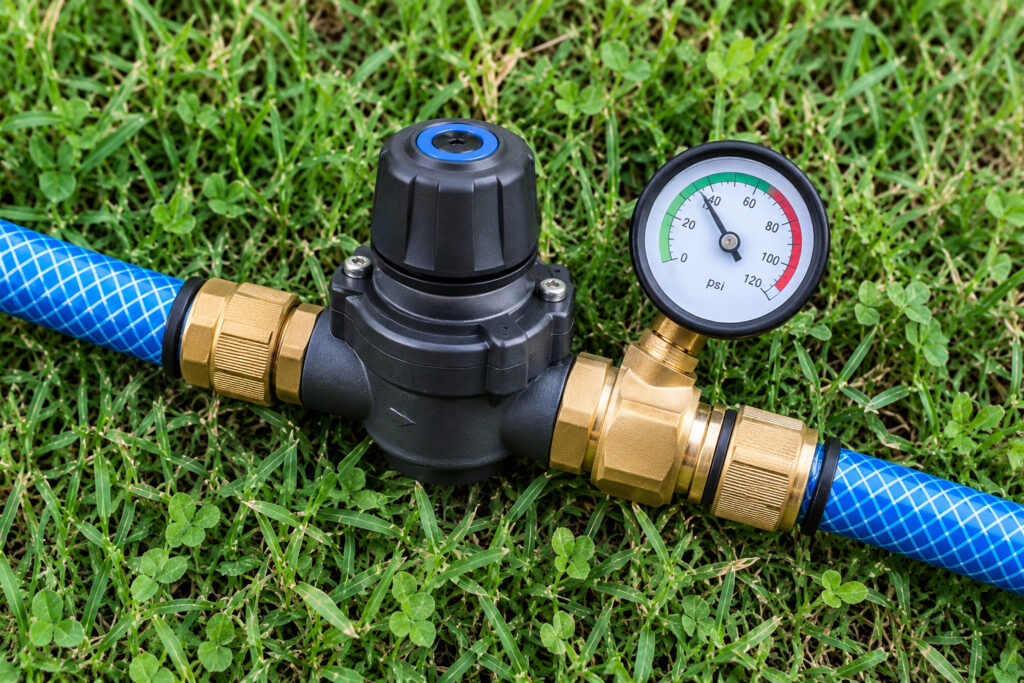
Campground water pressure can vary considerably from one location to another. That’s why many RV owners carry an RV water pressure regulator as part of their water hookup equipment.
The regulator connects between the campground’s water supply and your freshwater hose. Its purpose is to help control the water pressure entering the RV.
This can be especially useful when you’re staying at unfamiliar campgrounds where you don’t know the water pressure before connecting.
A regulator can help provide a more controlled water supply for your RV’s plumbing system.
When shopping for one, consider:
- The regulator’s pressure rating.
- Connection size.
- Construction quality.
- Whether it is adjustable.
- Whether it includes a pressure gauge.
A gauge can be particularly useful because it allows you to see the pressure rather than relying entirely on guesswork.
The exact setup you need depends on your RV and the manufacturer’s recommendations, so check your RV’s plumbing requirements before purchasing.
Camco Brass Water Pressure Regulator is a reliable brass water pressure regulator with an easy-read gauge to protect your RV plumbing and hoses from high city-water pressure. If you want to know more about this product, Click Here.
3. RV Water Filter
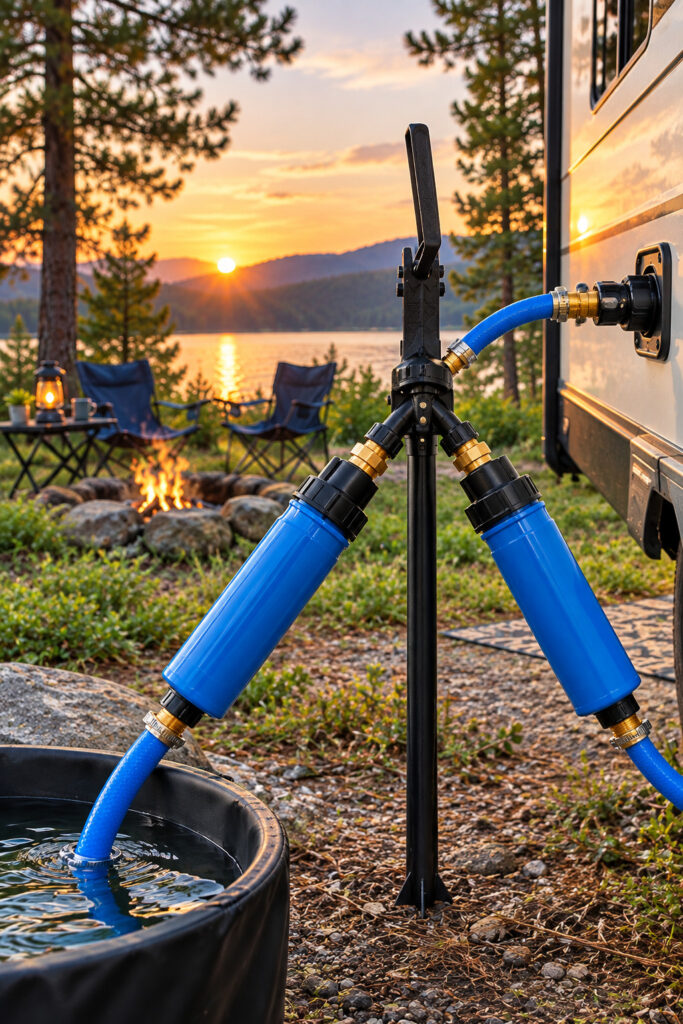
If you regularly connect your RV to campground water supplies, an RV water filter can be another useful addition to your hookup equipment.
Water quality can differ between locations, and a filter provides an additional stage between the campground supply and your RV’s freshwater system.
RV water filters are available in several configurations, including inline filters that connect directly to the freshwater hose.
The advantages of an inline design include relatively simple installation and compact storage.
When choosing a filter, pay attention to:
- Filter life.
- Flow rate.
- Connection type.
- Replacement requirements.
- Manufacturer specifications.
Remember that different filters are designed to address different water-quality concerns. Don’t assume every filter removes every type of contaminant.
If you use a filter, replace it according to the manufacturer’s recommendations rather than continuing to use an old filter indefinitely.
Enjoy cleaner, fresher-tasting water on the road with Camco TastePURE RV filters featuring 6-step filtration to reduce chlorine, odors, sediment, and unwanted tastes.
4. RV Water Hose Elbow
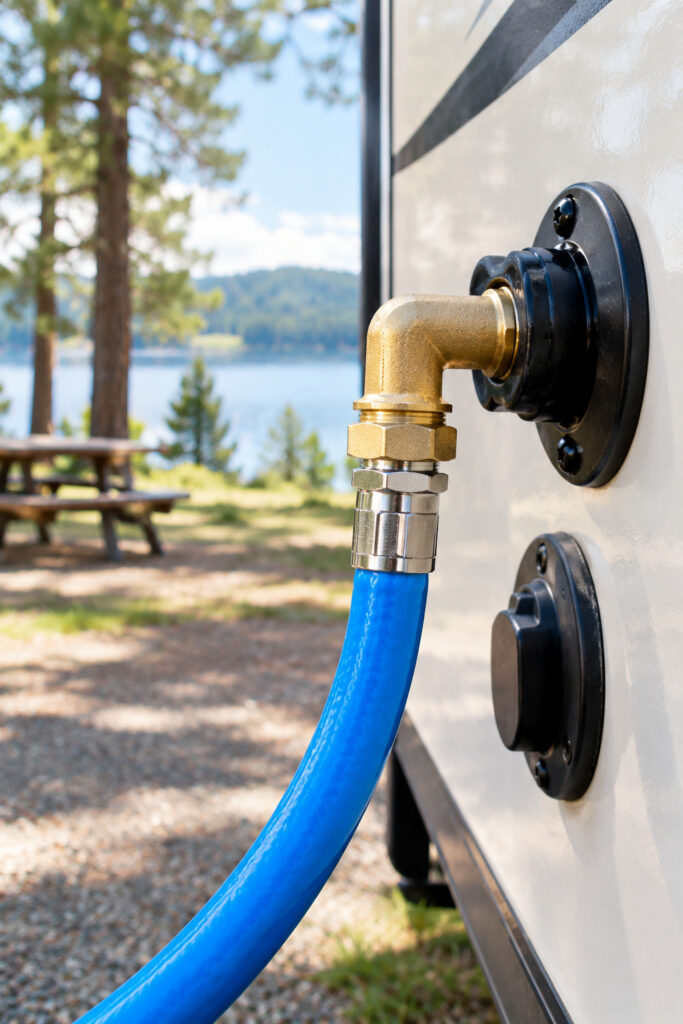
A small RV water hose elbow can solve an annoying problem at the campground water connection.
Instead of having the hose extend straight out from the RV’s water inlet, an elbow changes the direction of the connection.
This can reduce stress on the hose and make the connection easier to position, particularly when the campground hookup is located close to the side of the RV.
It’s a relatively inexpensive accessory, but small fittings like this can make campsite setup more convenient.
An elbow can also help keep the hose connection more organized instead of leaving the hose sticking directly away from the RV.
Before purchasing one, make sure the fitting size matches your RV’s freshwater connection and hose.
A Camco 90-Degree Hose Elbow can help make RV water hookups easier and more convenient.
Instead of putting extra strain on the hose at the RV connection, the 90-degree design changes the direction of the hose and helps reduce kinking and stress. The swiveling easy-grip connector also makes attaching and removing the hose simpler.
It’s a practical little accessory for RV water hookups and outdoor faucets, especially when space around the connection is limited.
5. RV Sewer Hose and Sewer Hose Fittings
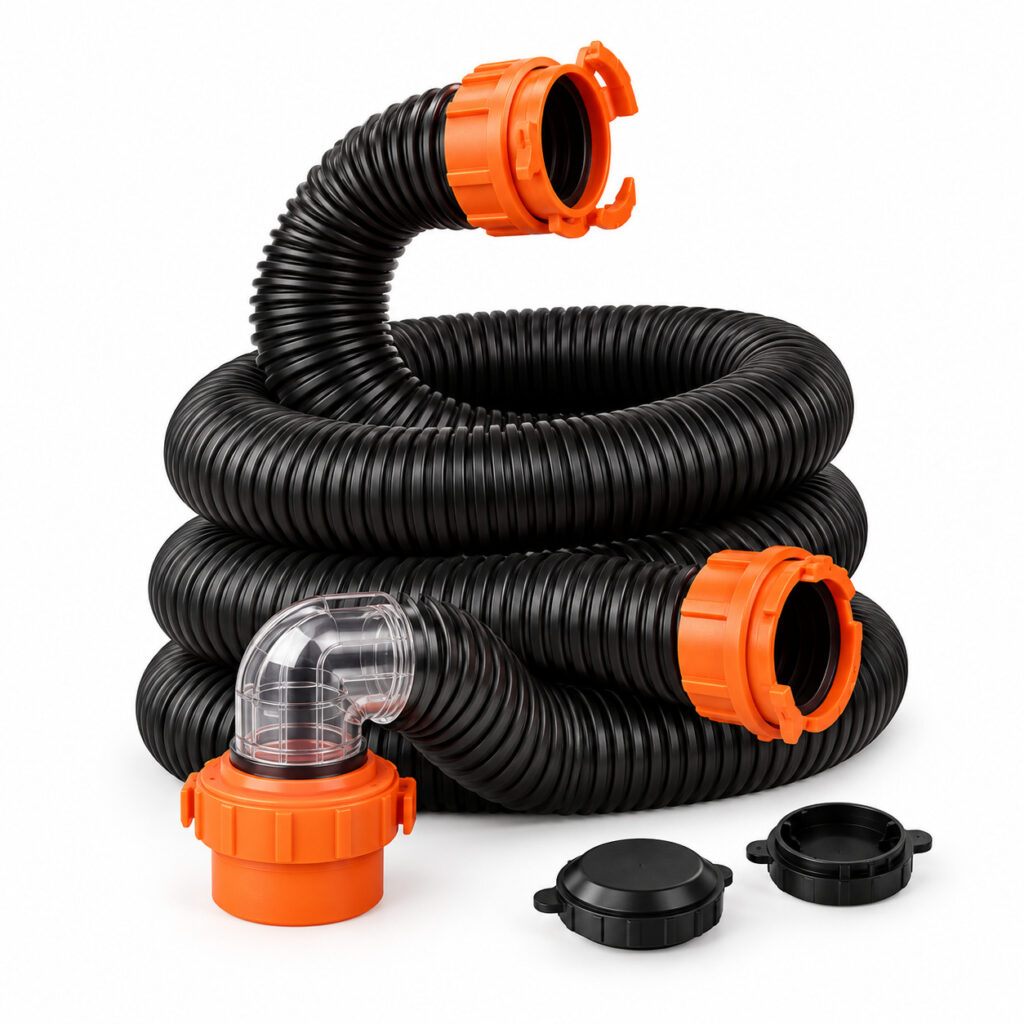
Wastewater management is one of the least glamorous parts of RV camping, but having the right equipment can make it much easier.
An RV sewer hose connects the RV’s waste outlet to the campground sewer connection. The hose needs to be flexible enough to position properly while also being durable enough for repeated use.
You’ll also need compatible sewer hose fittings to create secure connections.
Depending on your campsite and RV configuration, you may need different fittings or adapters.
When choosing sewer equipment, consider:
- Hose length.
- Collapsed storage size.
- Flexibility.
- Connection compatibility.
- Durability.
- Ease of cleaning.
It’s useful to check the campground’s sewer connection before finalizing your setup. Some locations may require a particular type of connection or additional adapter.
A good sewer hose setup should also be easy to store separately from clean water equipment.
Camco RhinoFLEX 15-Ft RV Sewer Hose Kit offers a convenient all-in-one setup for connecting your RV to campground sewer hookups. The flexible 23-mil hose includes swivel fittings and a clear elbow with a 4-in-1 adapter for easier connections and visibility during draining.
It compresses for storage and includes sewer caps to keep everything organized between uses. If you want a ready-to-use sewer setup without piecing together separate fittings, this kit is worth a closer look.
6. RV Sewer Hose Support
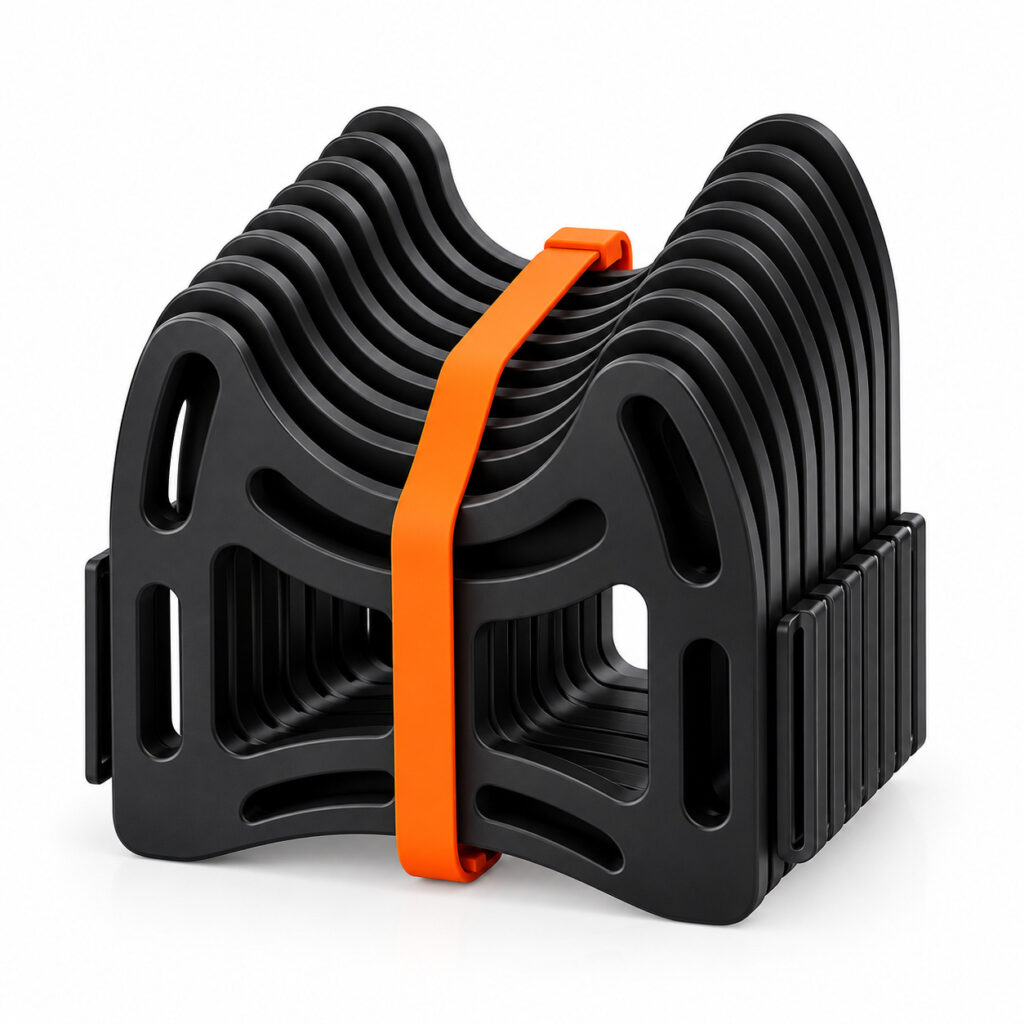
An RV sewer hose support can make the dumping process easier by keeping the hose elevated and helping create a gradual slope toward the campground sewer connection.
Without support, a long sewer hose can lie on the ground in several places. That can make it harder for wastewater to flow smoothly and may expose the hose to gravel, pavement, or other surfaces.
Accordion-style supports are popular because they can be expanded to different lengths and then compressed for storage.
When choosing a sewer hose support, consider:
- Maximum extended length.
- Collapsed size.
- Weight.
- Stability.
- Ability to handle turns.
- Compatibility with your sewer hose.
A support is particularly helpful when the campground sewer connection is some distance from the RV.
Camco Sidewinder 20-Ft RV Sewer Hose Support helps keep your sewer hose elevated and properly sloped for smoother drainage. Its deep cradles hold the hose securely without straps while the flexible design bends around obstacles.
It folds compactly for easy storage and includes a carry handle for convenient transport between campsites. For more details. Click Here.
7. RV Sewer Hose Rinser
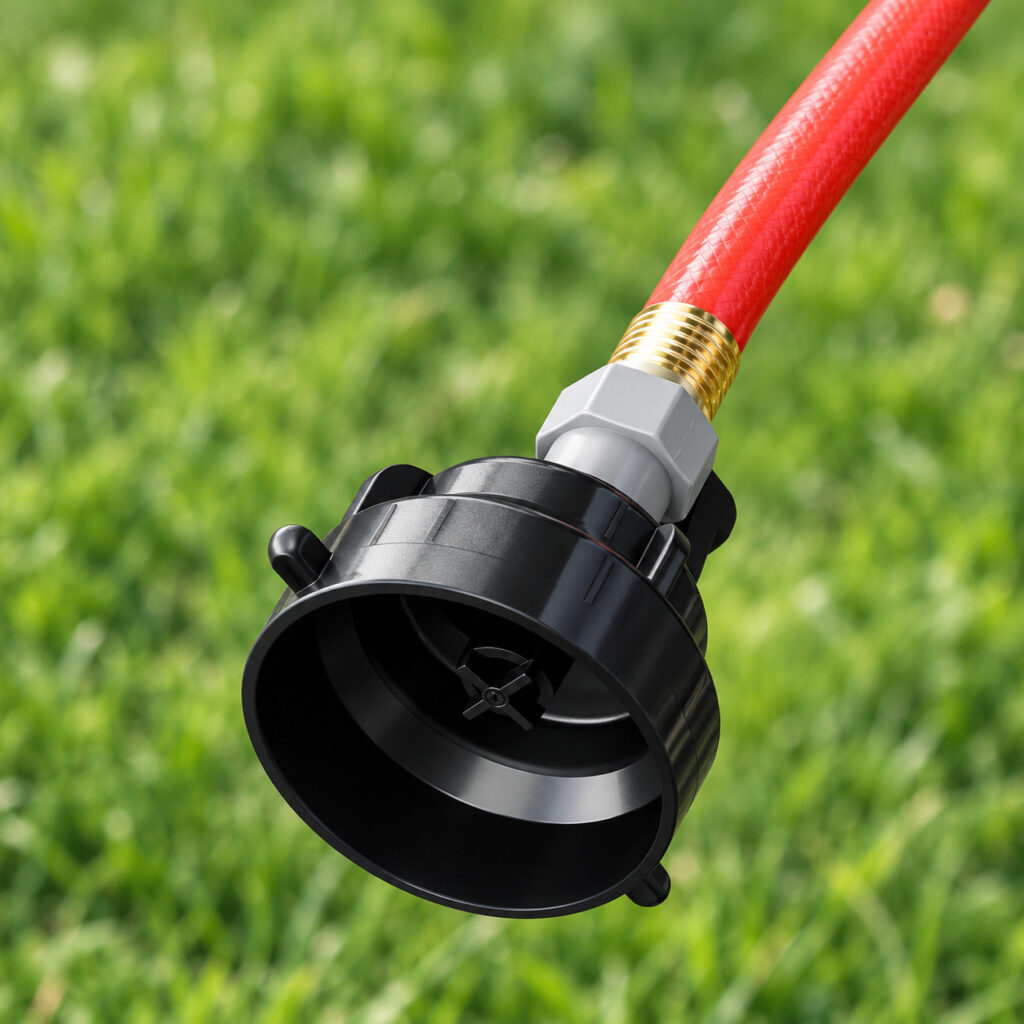
Cleaning your sewer hose after dumping is an important part of RV wastewater maintenance.
An RV sewer hose rinser can make that process easier by providing a way to flush water through the hose.
Some designs connect directly to the sewer system or hose setup and allow clean water to rinse away remaining residue.
A good rinsing process can help keep your sewer equipment cleaner between uses.
When using a rinser, make sure all connections are secure and follow the manufacturer’s instructions. Avoid creating a situation where contaminated water could flow backward into your freshwater equipment.
It’s also a good idea to keep sewer accessories physically separate from potable-water equipment.
If you want a cleaner, simpler way to prepare your sewer hose for storage, this small accessory is an easy addition to your RV setup. For product information, Click Here.
8. RV Refrigerator Bars and Braces
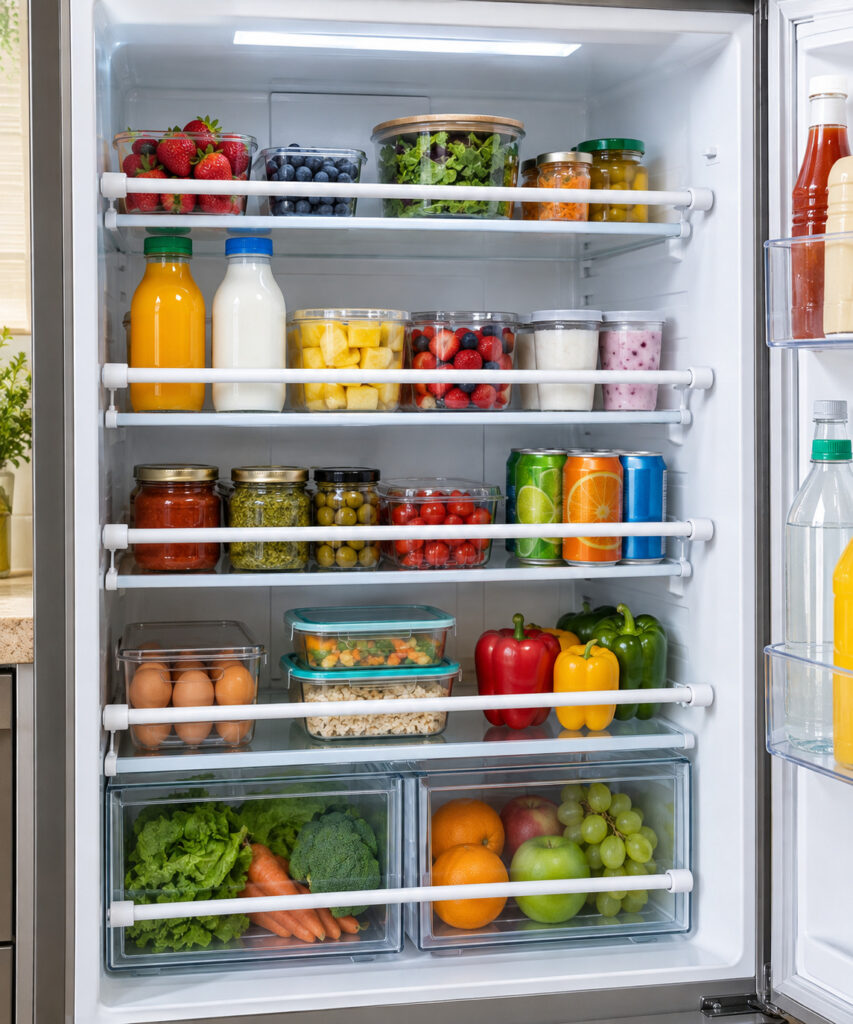
RV refrigerators can hold a surprising amount of food and drinks, but items may shift when the RV is moving.
RV refrigerator bars and braces are designed to help keep containers and other items in place.
They can be particularly useful for bottles, jars, cans, and other items that might otherwise move around when you’re driving.
The basic idea is simple: the bar creates a barrier that helps prevent items from sliding toward the refrigerator door.
When selecting refrigerator bars, consider the width of the refrigerator shelf and whether the product is adjustable.
A small accessory like this can save you from opening the refrigerator after a drive and discovering that everything has shifted.
9. RV Door Holder
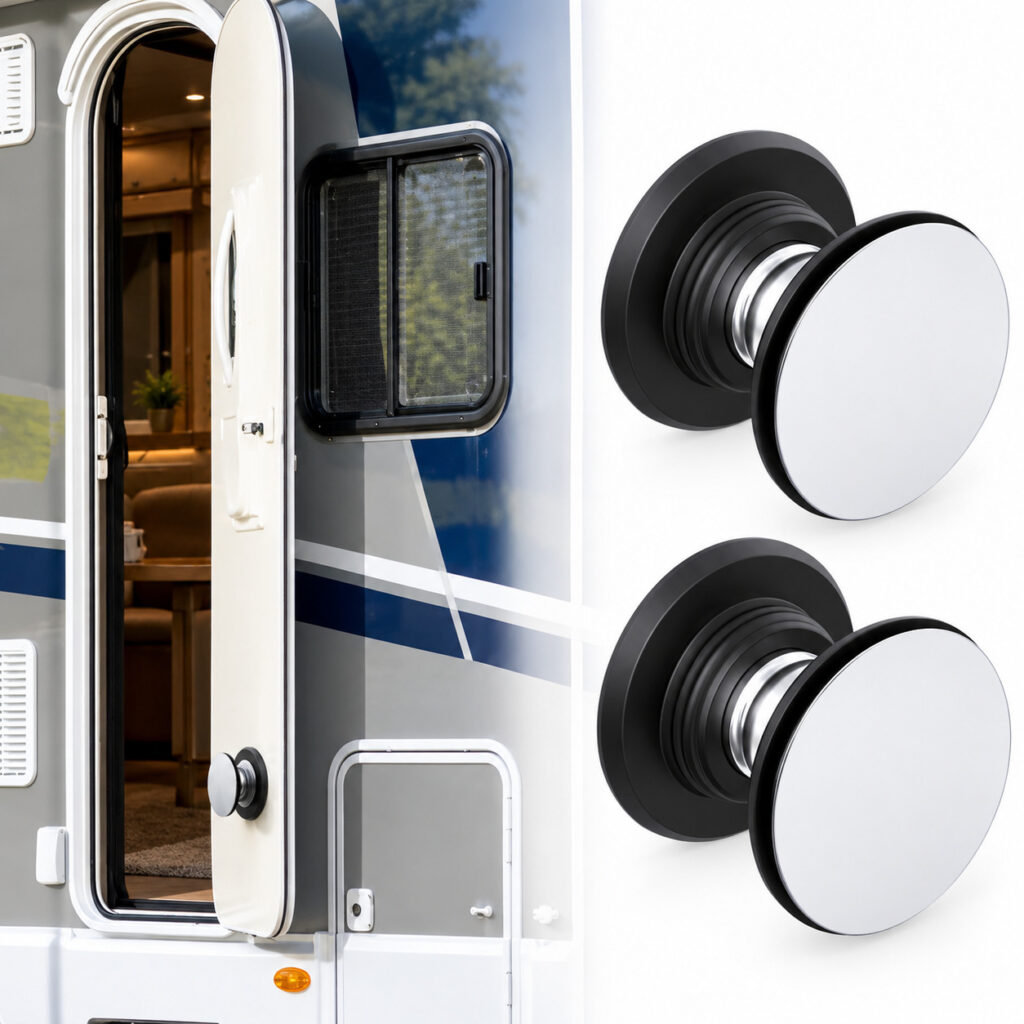
An RV door holder can make managing the RV entrance more convenient.
Depending on the design, a magnetic door holder can keep the door open when you’re moving between the RV and campsite.
This can be useful when carrying groceries, camping equipment, or other items through the doorway.
A secure door holder can also prevent the door from repeatedly moving in the wind.
Because RV doors vary in design, check the mounting arrangement and dimensions before purchasing one.
It’s another relatively small accessory that can solve a recurring campsite annoyance.
10. RV Screen Door Crossbar Handle
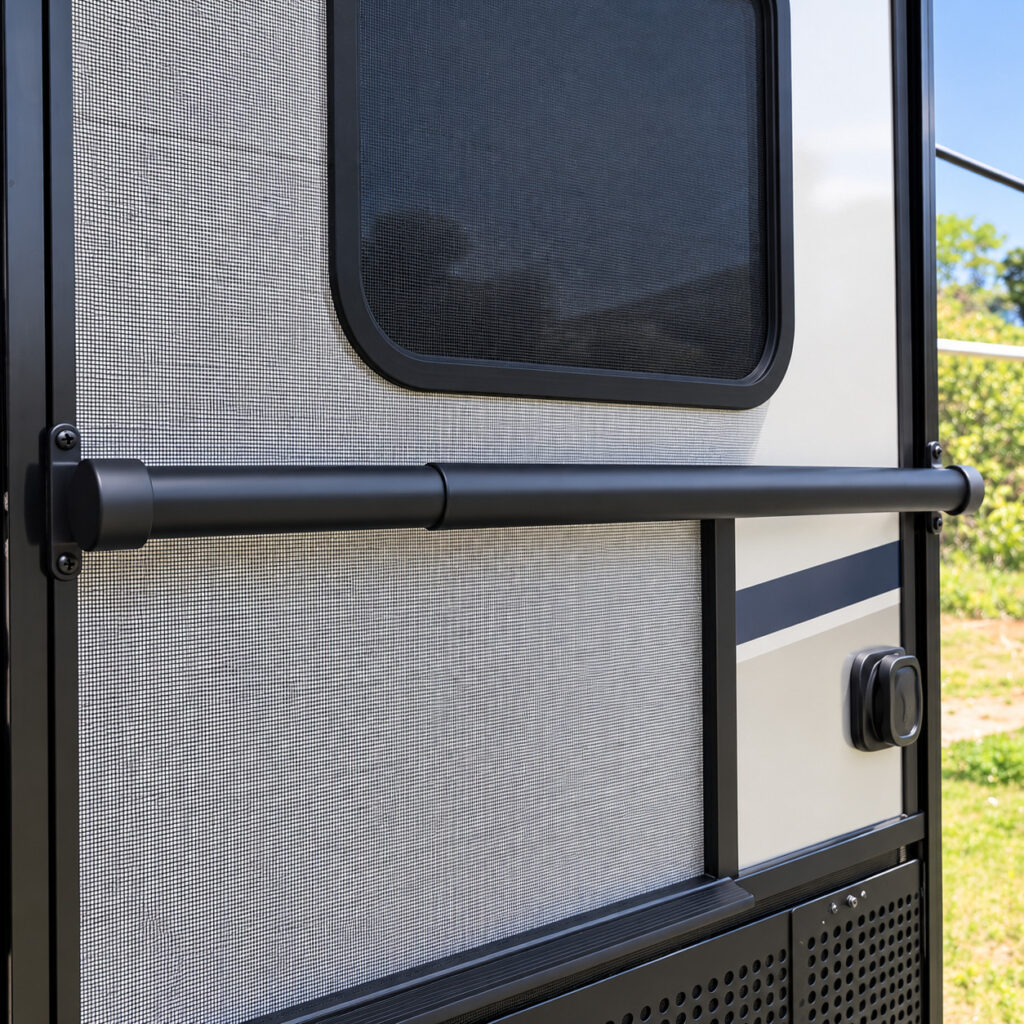
An RV screen door can sometimes be awkward to open and close, especially when the existing handle is positioned inconveniently.
A screen door crossbar handle provides a larger gripping area across the door.
This can make opening the screen door easier and can also give you something more substantial to hold when entering or leaving the RV.
The accessory is particularly useful for families because different people can use the crossbar rather than having to reach for a small handle.
Before installation, check that the handle is compatible with your RV screen-door configuration.
For more details, Click Here.
11. RV Backup Camera
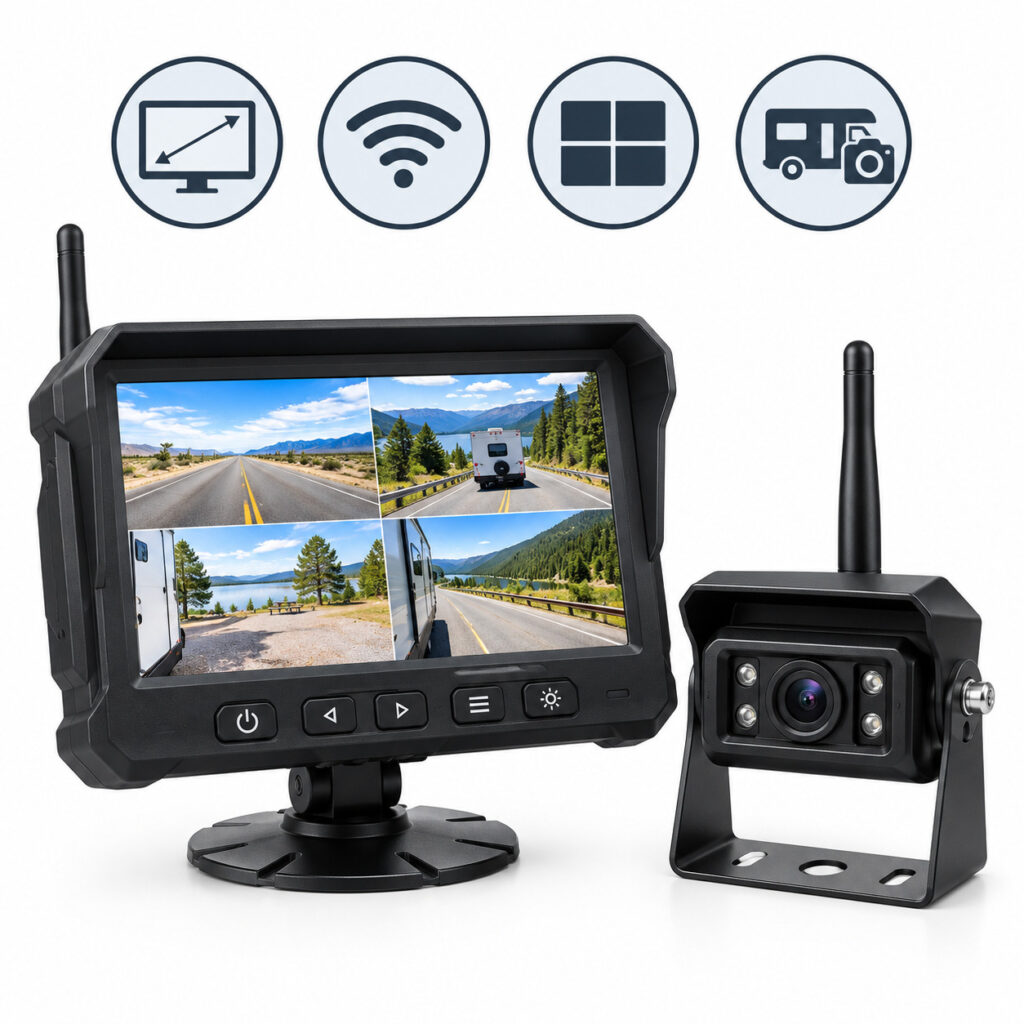
Backing up a large RV can be challenging, particularly when visibility behind the vehicle is limited.
An RV backup camera system can provide the driver with a clearer view of the area behind the RV while maneuvering.
This camera has wireless system with a 7-inch monitor and rear-mounted camera. Some RV camera systems also provide infrared night vision.
A backup camera can be helpful when:
- Backing into a campsite.
- Parking in a crowded campground.
- Maneuvering a long motorhome.
- Checking the area behind the vehicle.
- Driving or parking in low-light conditions.
A camera should be treated as an additional visibility tool rather than a replacement for careful observation. When possible, using a spotter can provide another layer of awareness.
When comparing systems, look at camera range, monitor size, mounting options, night vision, and compatibility with your RV.
Yakry Y27 RV Wireless Backup Camera System provides a clearer rear view with a 7-inch 1080P monitor and wide-angle camera. Its plug-and-play design with a Furrion bracket makes installation easier while night vision and waterproof construction add practical value for RV travel.
If limited rear visibility makes backing up or parking stressful, this system can give you a clearer view and more confidence behind the wheel.
12. RV Wheel Chocks
Wheel chocks are a basic part of many RV and trailer setups.
Once you’ve positioned the RV or trailer at your campsite, chocks are placed against the wheels to help prevent unwanted movement.
When choosing chocks, consider the weight of your RV or trailer and the surfaces where you’ll be camping.
For heavier trailers or particular campsite conditions, heavier-duty chocks may be more appropriate.
Wheel chocks are part of the overall stabilization process and should be used according to the equipment manufacturer’s instructions.
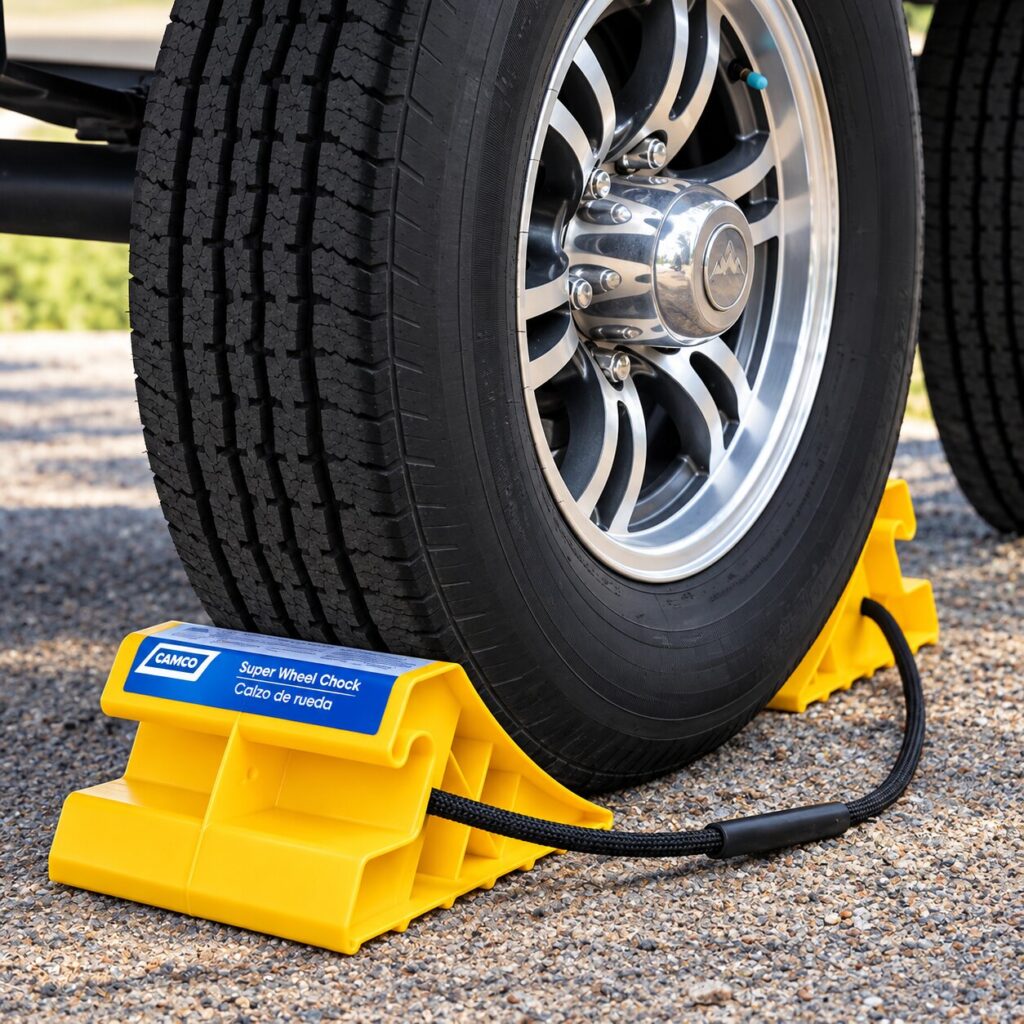
Camco RV Wheel Chocks 2-Pack helps keep your travel trailer securely in place when parked or preparing to hitch. The durable UV-resistant design fits tires up to 26 inches, while the attached ropes make removal quick and easy.
If you want a simple way to add stability to your trailer setup, these chocks are a practical camping essential.
13. RV Leveling Blocks
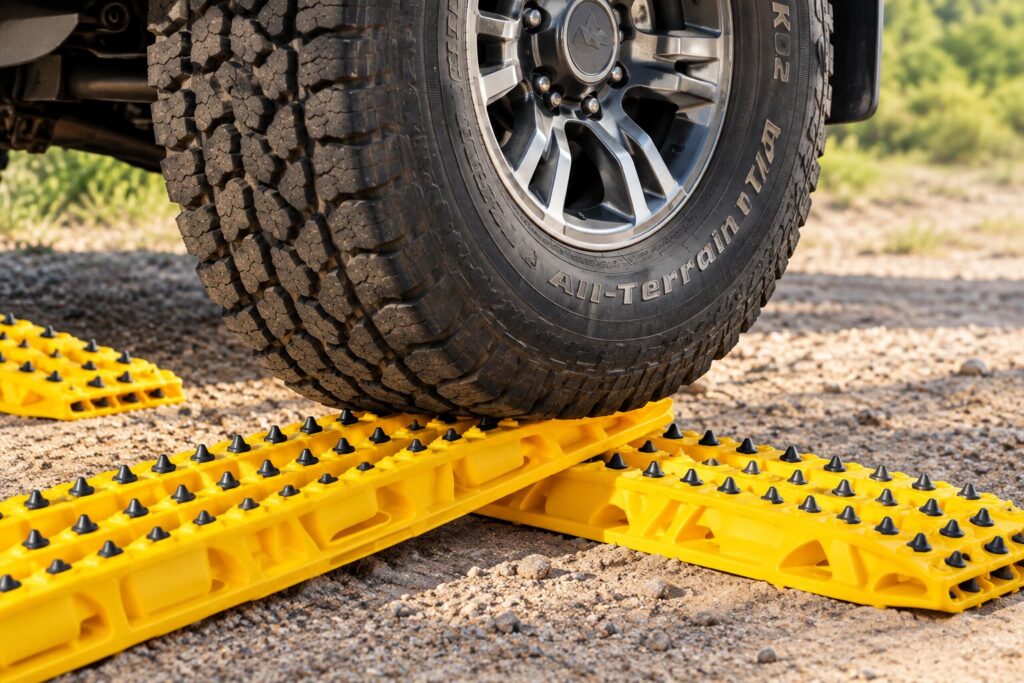
Campsites aren’t always perfectly level, which is why RV leveling blocks are useful equipment for many campers.
Interlocking plastic blocks can be positioned beneath the RV’s tires to raise one side or section of the vehicle as needed.
These blocks are often designed to stack or interlock, allowing you to adjust the amount of elevation.
When choosing leveling blocks, consider:
- Your RV’s weight.
- The amount of leveling normally required.
- Number of blocks included.
- Storage size.
- Durability.
- The type of campsite surface.
Always follow the manufacturer’s weight and stacking instructions.
Having leveling equipment available can make a major difference when you arrive at a campsite that isn’t naturally level.
Lynx Levelers 11-Pack makes leveling and stabilizing your RV, trailer, or motorhome easier with interlocking blocks that can be arranged to suit your setup. The included Lynx Cap Level Top and storage bag make the system convenient to use and store.
If you want a flexible leveling solution that packs away neatly for your travels, this kit is worth considering.
14. Dual-Flush Valve for Cleaning RV Holding Tanks
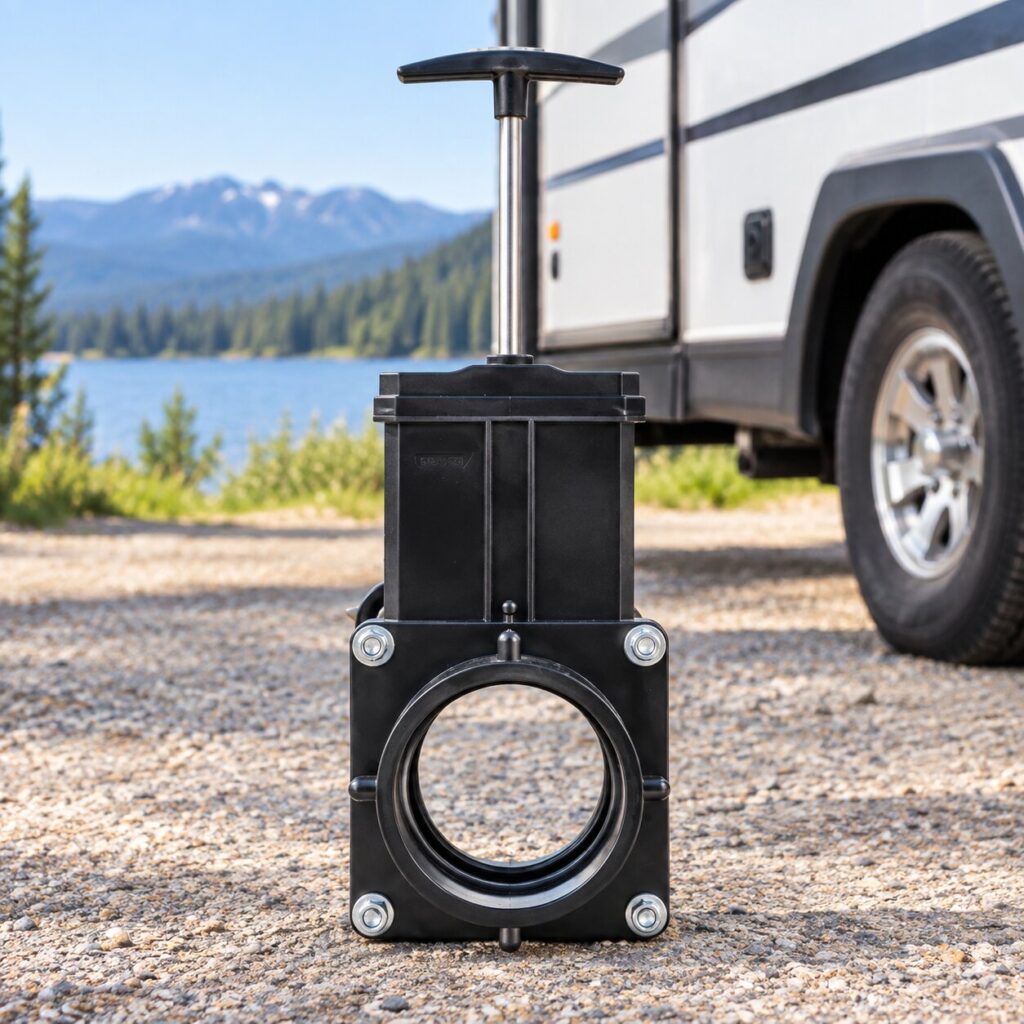
Cleaning your RV’s holding tanks is one of those jobs that becomes much easier when you have the right equipment.
A dual-flush valve can help simplify the process by allowing you to rinse the blackwater and graywater systems and then clean the sewer hose afterward.
The basic idea is straightforward. Water is directed into the RV’s holding-tank system so that buildup and residue can be rinsed away. After cleaning the tanks, the valve can be switched so the water is directed through the sewer hose instead.
That gives you two useful functions in one accessory:
- Flush the RV holding tanks.
- Rinse the sewer hose after dumping.
- Help remove residue and buildup from the waste system.
- Make the cleanup process more thorough.
This type of accessory can be particularly useful for RV owners who want to keep their wastewater system cleaner between trips.
When using a flushing system, follow the manufacturer’s instructions carefully and make sure the connections are secure before turning on the water.
Camco Dual Flush Pro RV Holding Tank Rinser makes tank and sewer hose cleaning easier with powerful reverse flushing and a clear adapter. I recommend this as a practical RV essential for easier waste-tank maintenance.
15. RV Holding Tank Cleaning Wand
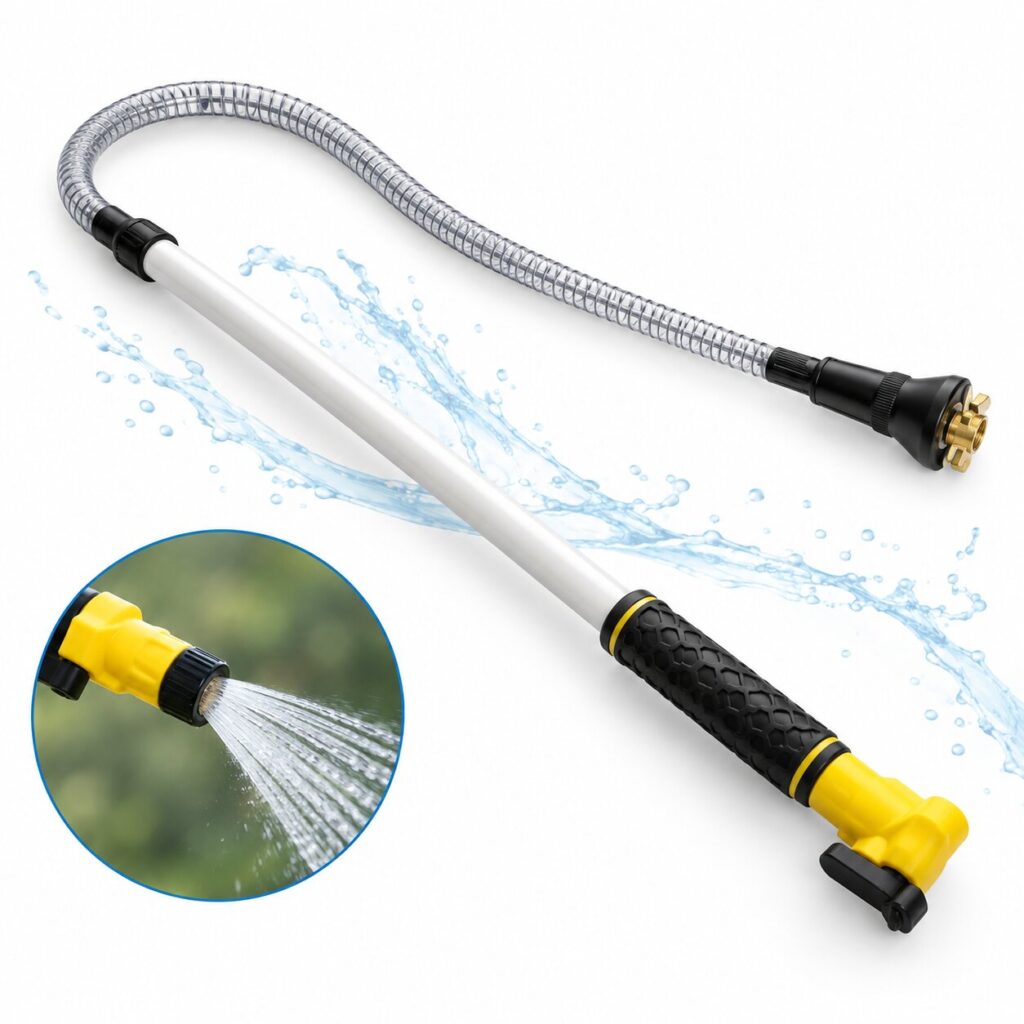
Some RVs already have built-in tank-flushing systems, but if yours doesn’t, a holding tank cleaning wand can provide another way to rinse the inside of the blackwater tank.
The wand connects to a garden hose. The end of the wand is then inserted through the RV toilet and into the holding tank. Once water is turned on, the nozzle sprays water inside the tank.
The purpose is to help loosen and rinse away debris and deposits that can remain on the inside walls of the tank.
This can be especially useful when you’re dealing with lingering buildup or odors. However, newer RVs may already have a built-in flushing system, so a separate wand may not be necessary for every camper.
You should also use care when operating a tank-cleaning wand. Avoid excessive water pressure and make sure the wand is appropriate for your particular RV setup.
If your blackwater tank isn’t positioned directly beneath the toilet, you may need a flexible-style wand that can reach an offset tank more effectively.
For persistent odors, some RV owners also use holding-tank deodorizing products designed specifically for wastewater tanks.
Still dealing with unpleasant RV tank odors? Try these Porta-Pak holding tank deodorizer pods to help keep your RV smelling fresher and more comfortable between trips.
16. Portable RV Waste Tank
Read Customer Reviews on Amazon
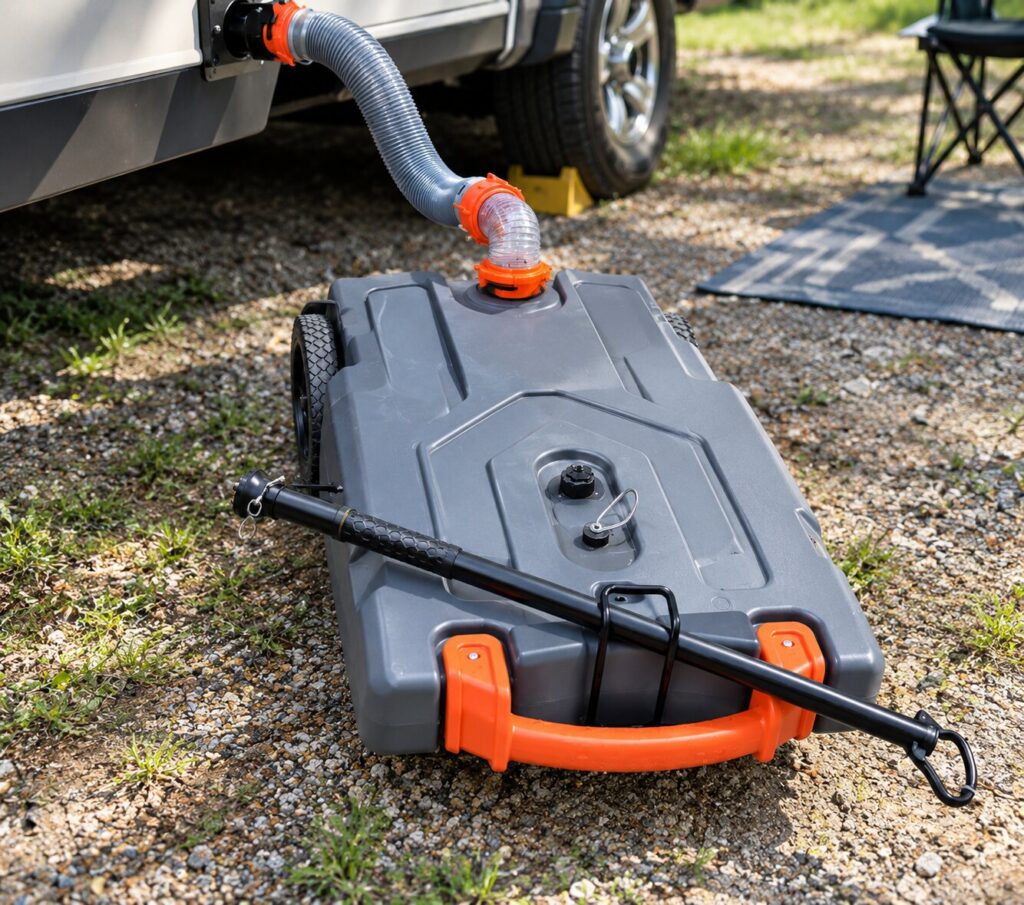
Sometimes you don’t want to disconnect your RV, pull in the slides, remove the leveling equipment, and drive the entire rig to the dump station simply because the holding tank needs to be emptied.
That’s where a portable RV waste tank, sometimes called a tote tank, can be useful.
The basic concept is to transfer wastewater from your RV’s holding tank into the portable tank. You can then move the smaller tank to the campground’s sani-dump rather than moving the entire RV.
Depending on the model and setup, the tank can be moved using a built-in handle or transported by attaching it to a tow vehicle.
This can be particularly convenient if you’re staying at a campsite for several days and don’t want to break down your entire campsite just to empty the tanks.
Before purchasing one, think about:
- Tank capacity.
- Weight when full.
- Wheel and handle design.
- Hose and connection compatibility.
- Storage space in your RV.
- How you’ll transport it to the dump station.
Remember that a portable waste tank becomes considerably heavier once it is filled, so its handling and transport system are important considerations.
Want more details about this handy RV accessory? You may find it at a local retailer, or Check it out on Amazon to see the latest price, product details, and customer reviews.
17. X-Chock RV Wheel Stabilizers
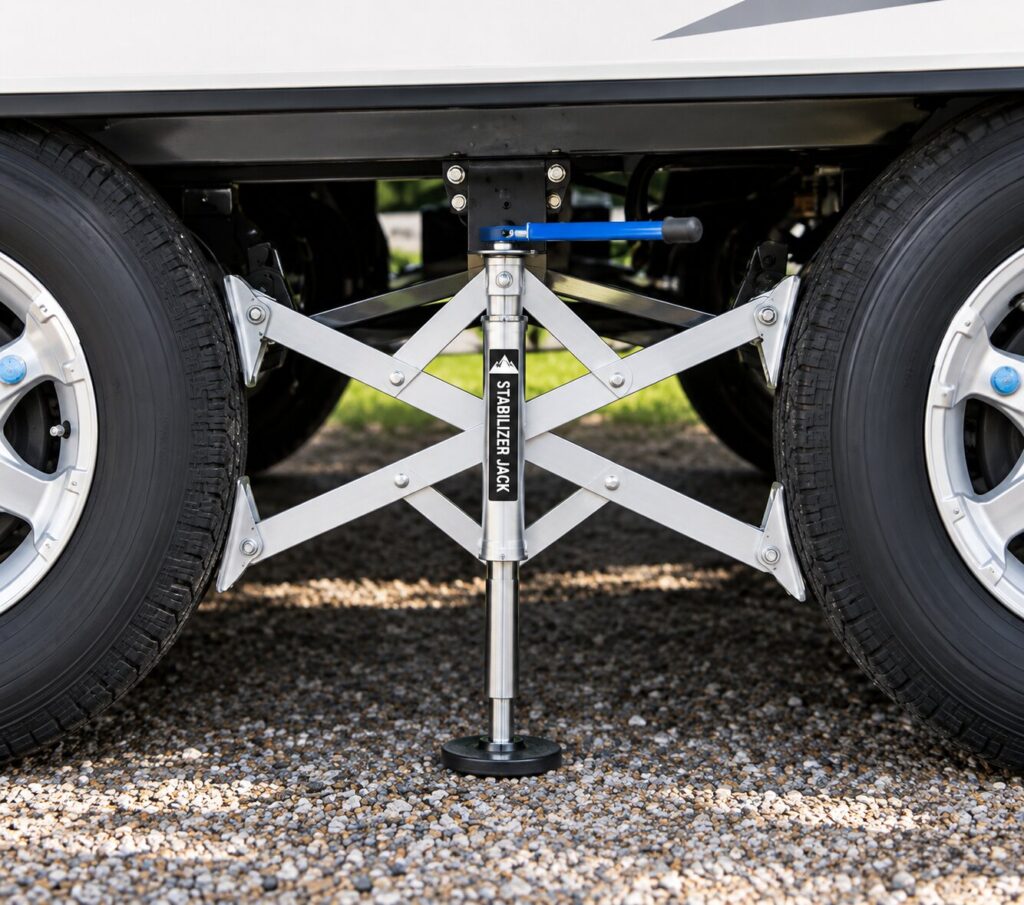
Wheel chocks and wheel stabilizers serve different purposes, and an X-Chock-style wheel stabilizer is designed to provide additional stability between the wheels of a travel trailer.
Once your trailer is positioned at the campsite, adding stabilizing equipment can help reduce movement inside the RV.
These devices have a distinctive appearance, so if you’ve never used one before, they may look unusual at first. Their purpose becomes clearer once you see how they fit between the trailer’s wheels.
As with any RV leveling or stabilizing equipment, it is important to use the product according to the manufacturer’s instructions and to select equipment appropriate for your trailer.
An X-Chock is not a substitute for the proper primary wheel chocks and other stabilization procedures. Instead, it can be considered an additional piece of equipment for travel trailers where it is compatible.
For more information, Click Here
If your RV still feels shaky or moves when you walk around inside, these RV stabilizer ideas can help create a more solid and comfortable setup.
18. RV Step Brace
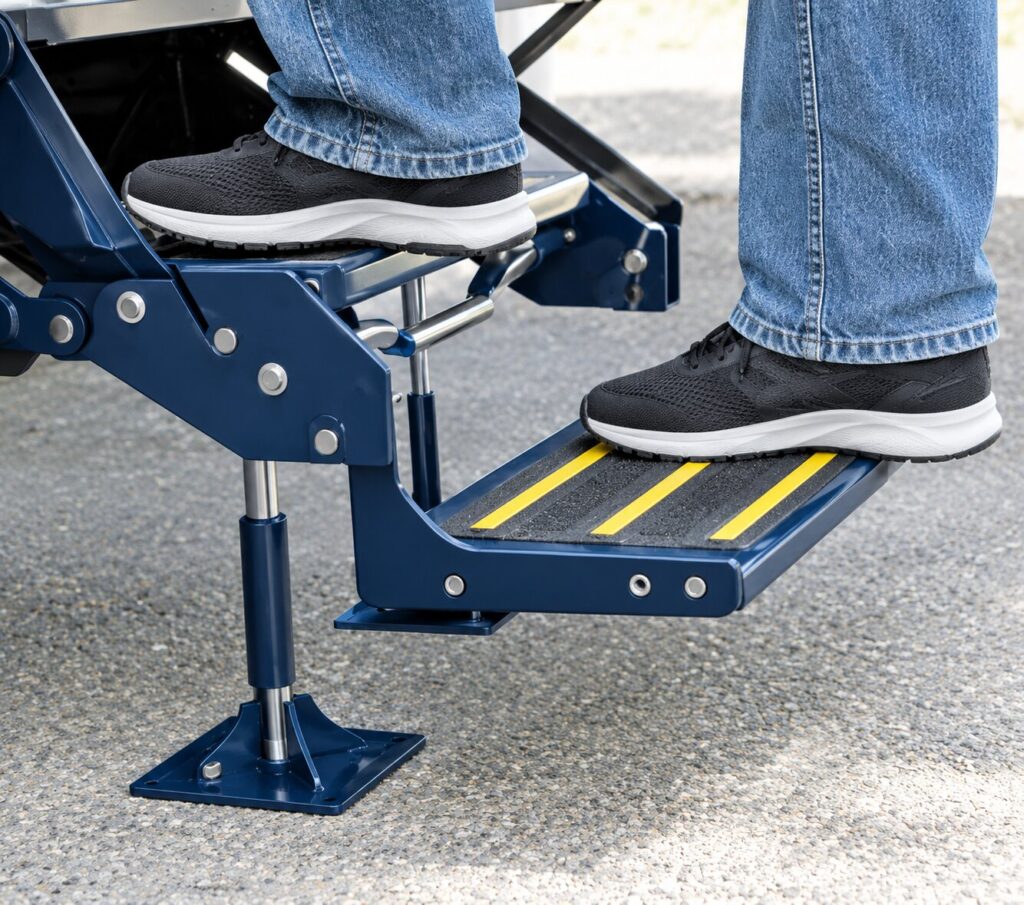
Your RV’s entry steps can experience a surprising amount of movement every time someone climbs into or out of the camper.
An RV step brace provides additional support underneath the steps and can help reduce movement and flexing.
The accessory described in the original article is an adjustable stand positioned underneath the RV step assembly. Because RVs sit at different heights, adjustable versions can be useful for finding a suitable fit.
The highlighted brace is available in different size ranges, allowing RV owners to choose a version based on the distance between the ground and the step.
A step brace can be worth considering if:
- Your RV steps move noticeably when used.
- The steps feel less stable than you’d like.
- You want additional support under the entry steps.
- You regularly have several people entering and leaving the RV.
- Your campsite setup leaves the steps relatively high above the ground.
Before using a brace, make sure it is properly positioned and adjusted so that it supports the step without creating an unstable or uneven surface.
19. RV Wheel Covers
Read Customer Reviews on Amazon
Your RV tires spend a lot of time exposed to the weather, especially when the vehicle is parked for extended periods.
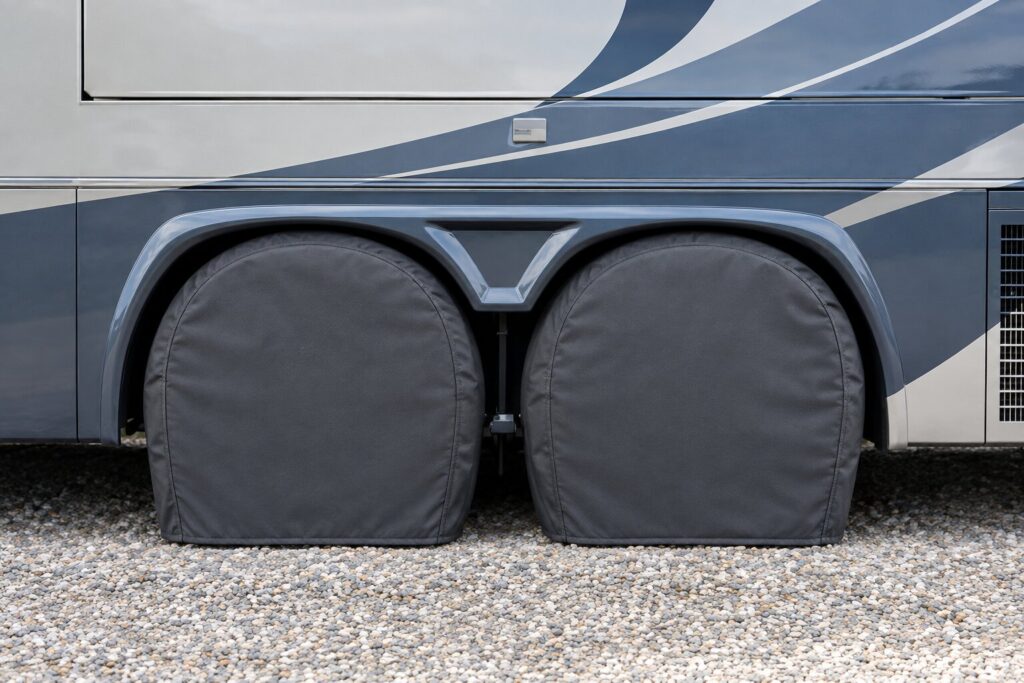
One concern mentioned in the source is UV exposure from sunlight. Long-term exposure to sunlight can contribute to deterioration of tire sidewalls, which is one reason some RV owners use protective wheel covers when their RV is parked.
Wheel covers fit over the tires and provide a physical barrier between the tire surface and direct sunlight.
When buying wheel covers, don’t simply choose a set based on appearance. Measure your tires first and select a cover designed for the correct wheel and tire dimensions.
Things to consider include:
- Tire diameter.
- Tire width.
- The number of tires you need to cover.
- How securely the covers attach.
- Whether the material is suitable for outdoor use.
- How easy the covers are to install and remove.
Wheel covers are particularly useful for RVs that remain parked outdoors for long periods between trips.
Miscellaneous RV Camping Accessories
The next group of accessories isn’t limited to plumbing, leveling, or trailer setup. These are smaller camping items that can still prove useful during an RV trip.
20. Water-Resistant LED Flashlight
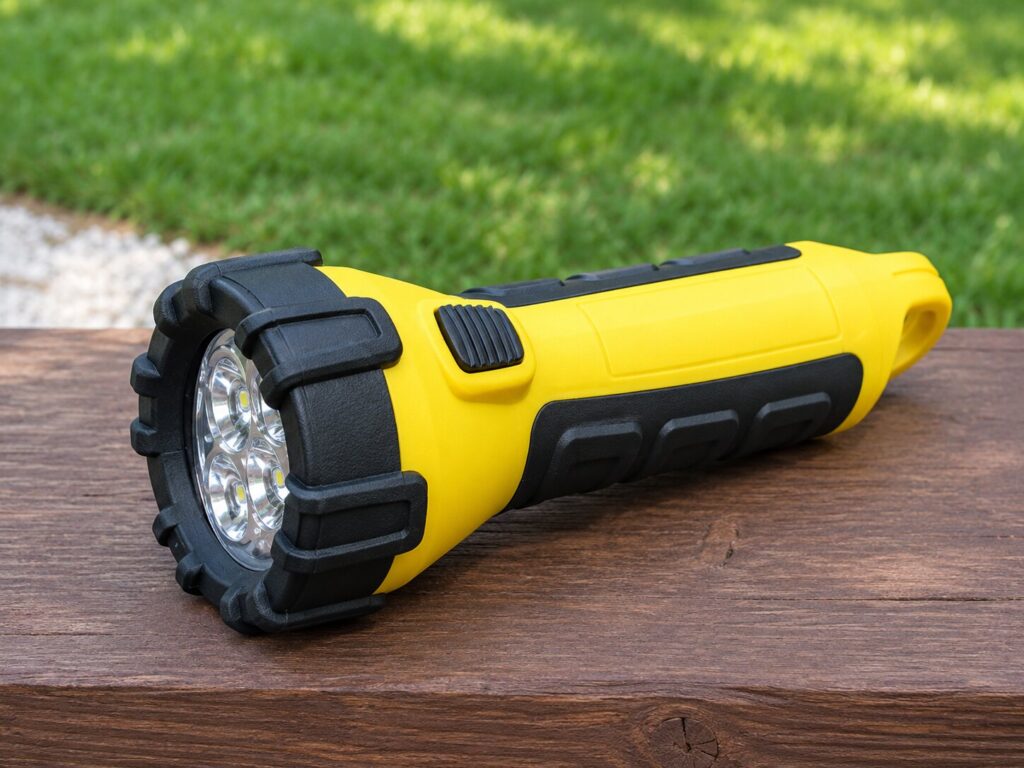
A good flashlight is one of those items you may not think about until you suddenly need one.
Camping can involve plenty of situations where extra light is useful, such as walking around the campsite after dark, checking equipment, finding something outside the RV, or dealing with an unexpected problem at night.
A floating design can be particularly useful around wet environments because accidentally dropping the flashlight doesn’t necessarily mean losing it.
A two-pack can also be convenient because you can keep one flashlight inside the RV and another in your tow vehicle.
When choosing a camping flashlight, useful features to consider include:
- Water resistance.
- Battery life.
- Brightness.
- Size and portability.
- A wrist strap, clip, or carabiner.
- Whether it can stand or hang for hands-free use.
Even if your RV has built-in lighting, keeping a separate flashlight somewhere easy to reach gives you an independent source of light.
21. Survival and Bushcraft Book
Not every useful RV accessory is a piece of hardware.
A survival or bushcraft book can be a practical addition to your camping gear, particularly for people who enjoy learning outdoor skills.
A survival guide can provide information about basic outdoor skills and give you something useful to study during your camping trips.
You can also use a book to learn one new outdoor or bushcraft skill at a time. You can che
For example, you might spend one weekend learning about:
- Basic navigation.
- Outdoor shelter techniques.
- Fire-related skills.
- Finding and managing resources.
- General wilderness preparedness.
- Basic camping problem-solving.
The goal isn’t to assume something will go wrong. Rather, having useful knowledge available can make outdoor adventures more educational and potentially more prepared.
Ready to build your outdoor skills? Check out this helpful book on Amazon and start your next adventure.
22. RV Step Rug with Wraparound Design
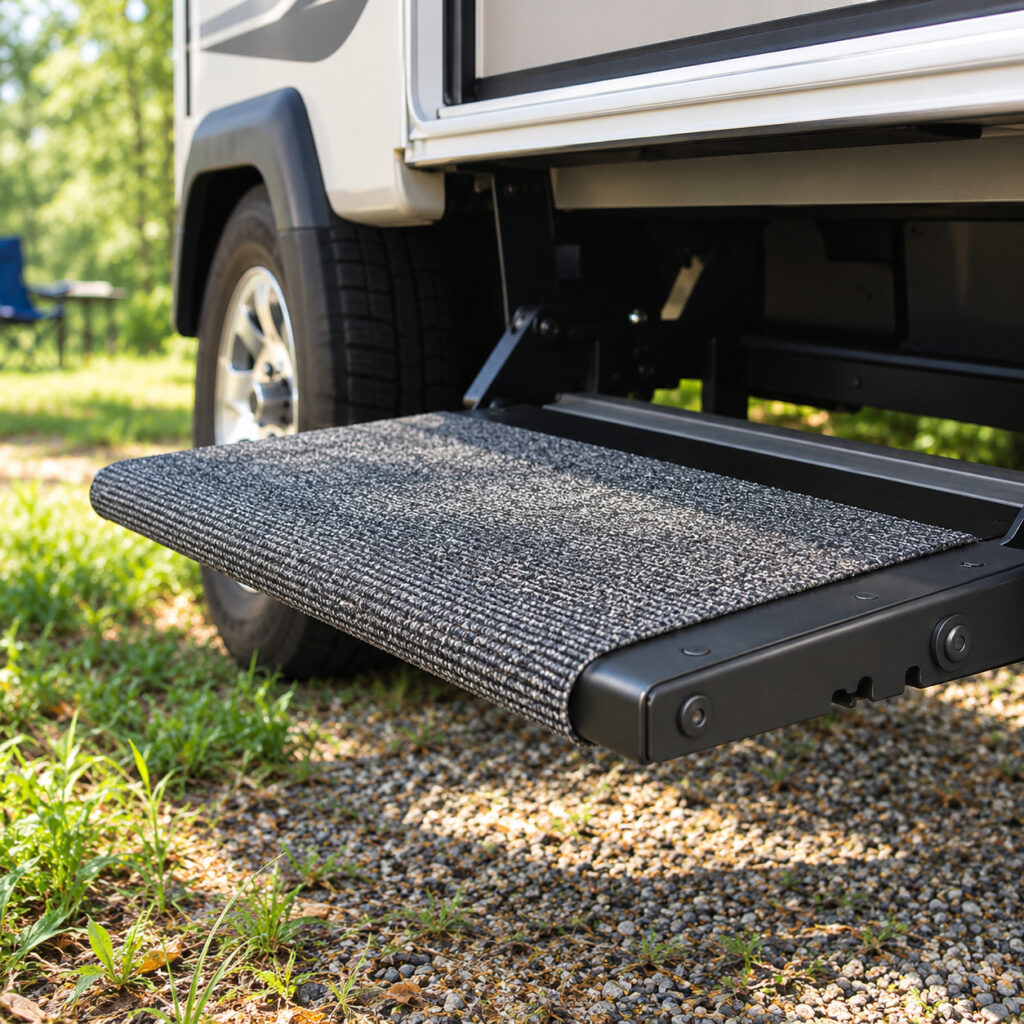
If you want to keep the inside of your RV cleaner, a Wraparound Mat for RV Steps is a simple accessory worth considering.
Every time someone enters the RV, dirt, sand, grass, and other debris can get tracked onto the steps and eventually onto the floor inside.
A wrap-around step rug is designed to cover the step and provide a textured surface that helps trap some of that dirt.
A step rug can be particularly useful when you’re camping at:
- Sandy campsites.
- Gravel campgrounds.
- Muddy areas.
- Grass-covered campsites.
- High-traffic family camping spots.
Before purchasing one, check the dimensions of your RV’s steps and make sure the rug is compatible with your particular step configuration.
23. Folding RV Stool With Adjustable Height
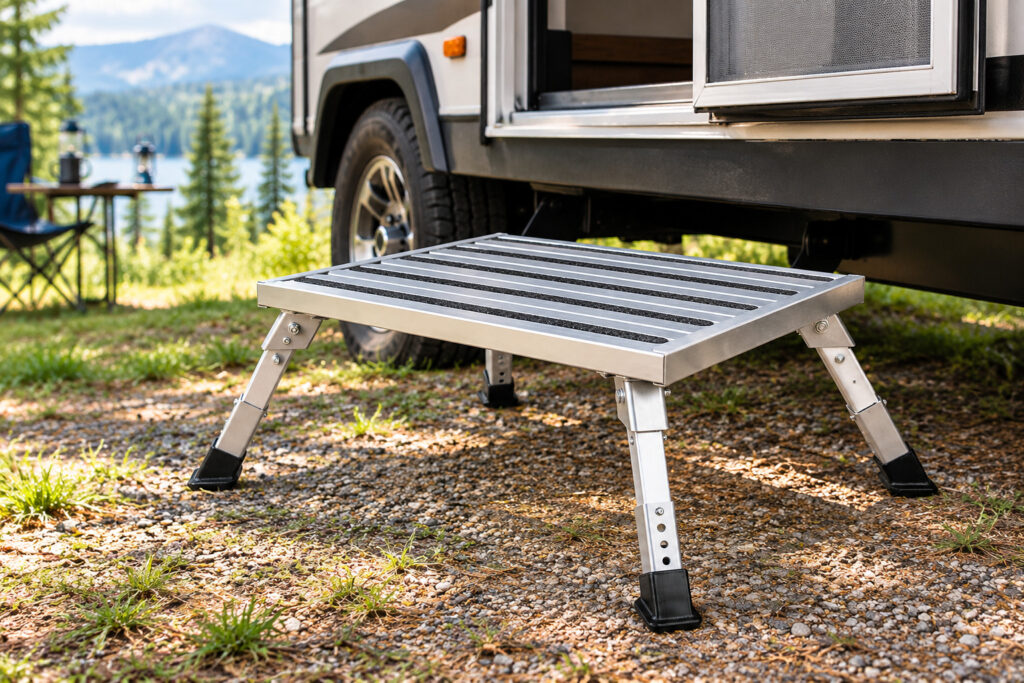
I recommend checking this step stool on Amazon if you want a sturdy adjustable RV step that’s easy to store and carry.
An adjustable folding RV stool is one of those accessories that can serve several different purposes around a campsite.
The most obvious use is as an additional step. If the lowest RV step sits relatively high above the ground, an adjustable stool can provide an intermediate step.
You can also use a folding stool to reach higher cabinets inside the RV.
Some adjustable models feature:
- A folding design.
- A non-slip platform.
- Rubber feet.
- Adjustable height.
- A carrying handle.
- Reflective elements.
- A lightweight metal construction.
The model featured in the article is designed to support substantial weight while remaining portable.
Its compact design also means you can use it outside the RV. For example, it could provide a small seat or platform around the campsite, depending on the product’s intended use and weight rating.
The biggest advantage of this type of accessory is versatility. Rather than carrying a separate item for every small task, one adjustable folding stool can potentially handle several jobs.
24. Surge Protector for RV Electrical Systems
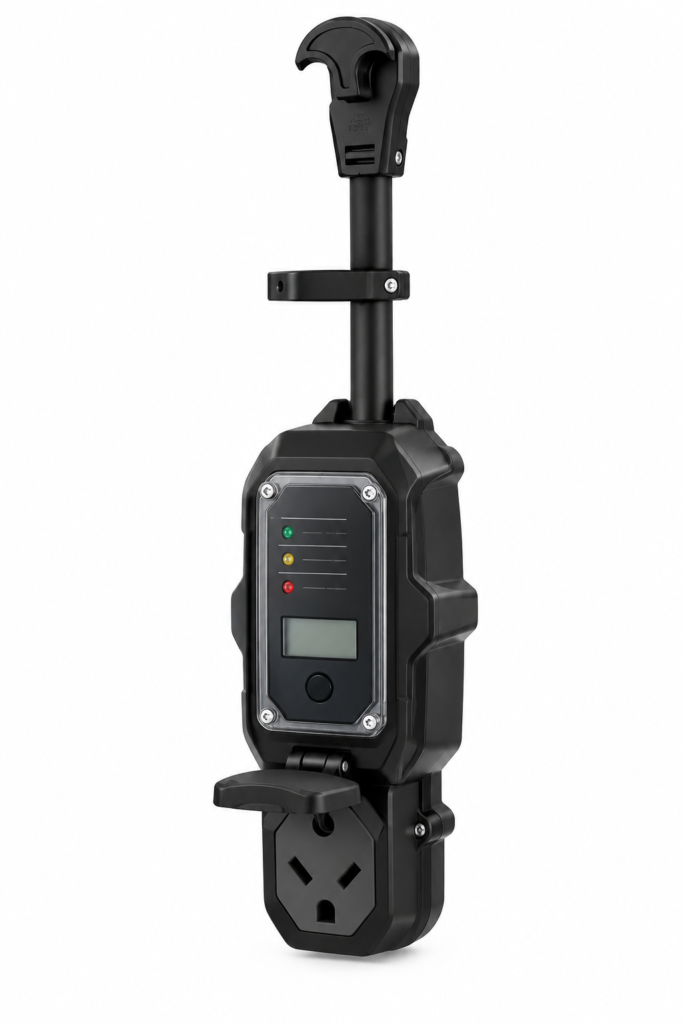
I recommend checking this Surge Guard on Amazon if you want a convenient way to monitor your RV’s power and add protection against electrical issues.
Your RV depends on electricity for many of its appliances and systems, so protecting the electrical connection at a campground is an important consideration.
A portable RV surge protector connects between the campground’s electrical pedestal and your RV’s shore-power connection.
RV surge protectors are available in different configurations, so you need to choose one that matches your RV’s electrical service.
Depending on the model, a surge protector may monitor electrical conditions and provide information about the incoming power.
When shopping for one, consider:
- Your RV’s amperage.
- Plug and receptacle compatibility.
- Surge protection specifications.
- Whether the unit provides diagnostic information.
- Weather resistance and outdoor suitability.
- How securely it connects to the electrical pedestal.
Check your RV’s electrical requirements and the manufacturer’s specifications before purchasing.
25. Portable Propane Fire Pit
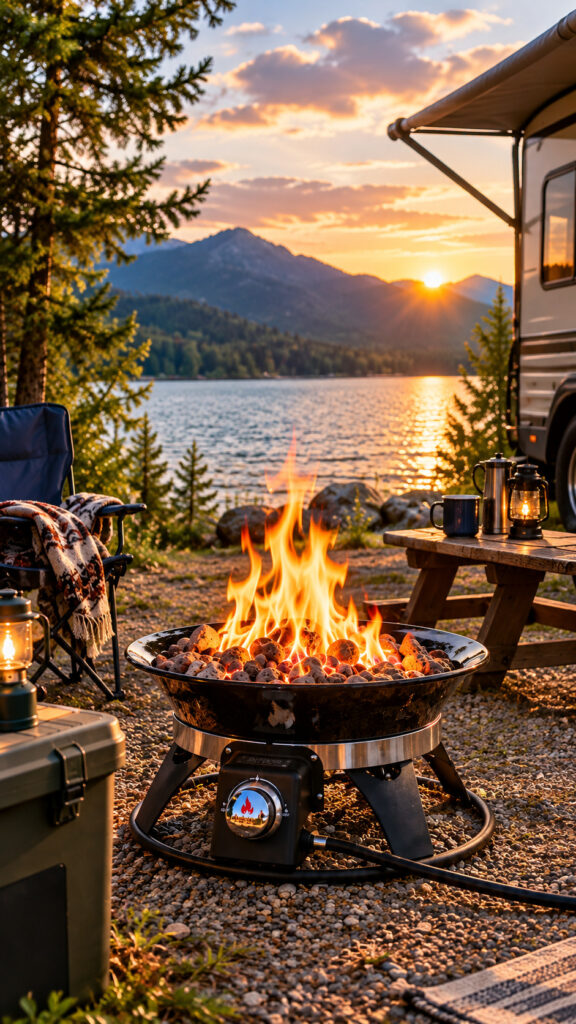
A portable fire pit can make evenings around the campsite more enjoyable, especially for RV campers who want the atmosphere of a campfire without dealing with a traditional wood fire.
One advantage is convenience. You can control the flame using the propane supply rather than dealing with wood and ashes.
A propane fire pit may also be useful in locations where traditional wood fires aren’t permitted. However, you should always verify campground and local fire restrictions before using one.
Some advantages of a portable propane fire pit include:
- Easy ignition.
- No firewood required.
- No ashes to clean up.
- Convenient flame control.
- Relatively easy storage compared with a permanent fire feature.
- Quick setup for an evening at the campsite.
Outland Living Portable Propane Fire Pit gives you a convenient way to enjoy a cozy campfire without the smoke, ash, or hassle of firewood. Its portable design and 58,000 BTU output make it a great option for RV trips, camping, patios, and outdoor gatherings.
If I were choosing a portable fire pit for RV trips, this is one I’d personally consider. Check it out on Amazon to see the current price, details, and customer reviews.
Even with propane, fire safety still matters. Keep the fire pit on an appropriate stable surface, maintain adequate clearance from the RV and other combustible materials, and follow the manufacturer’s operating instructions.
Planning to spend more time relaxing around the fire? Make sure you have the right tools with this campfire gear checklist covering essential and lesser-known campfire accessories.
26. Portable Bluetooth Speaker
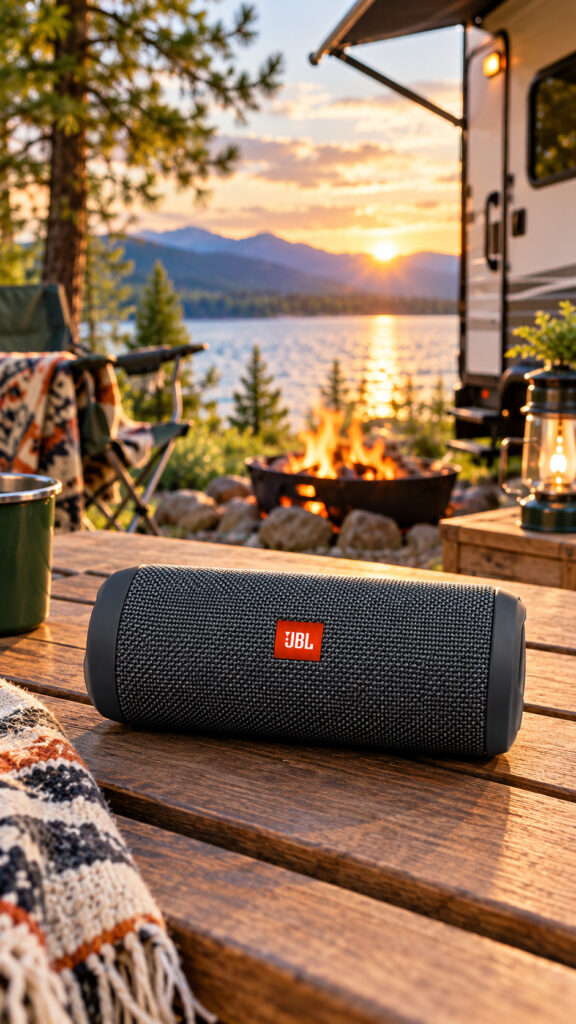
Check the Latest Price on Amazon
Music can be a nice addition to a camping trip, but campground etiquette matters.
A portable Bluetooth speaker lets you play music outside the RV without having to set up a complicated audio system.
A small Bluetooth speaker is convenient because it can connect directly to a smartphone.
Features that can make a portable speaker useful for RV camping include:
- Bluetooth connectivity.
- Compact size.
- Rechargeable battery.
- Water resistance.
- Easy portability.
- Sufficient battery life for several hours of use.
A speaker can be useful around your own campsite, but remember that you’re sharing the campground with other people. Keep the volume at a reasonable level and follow any campground quiet hours.
27. Portable Air Conditioner
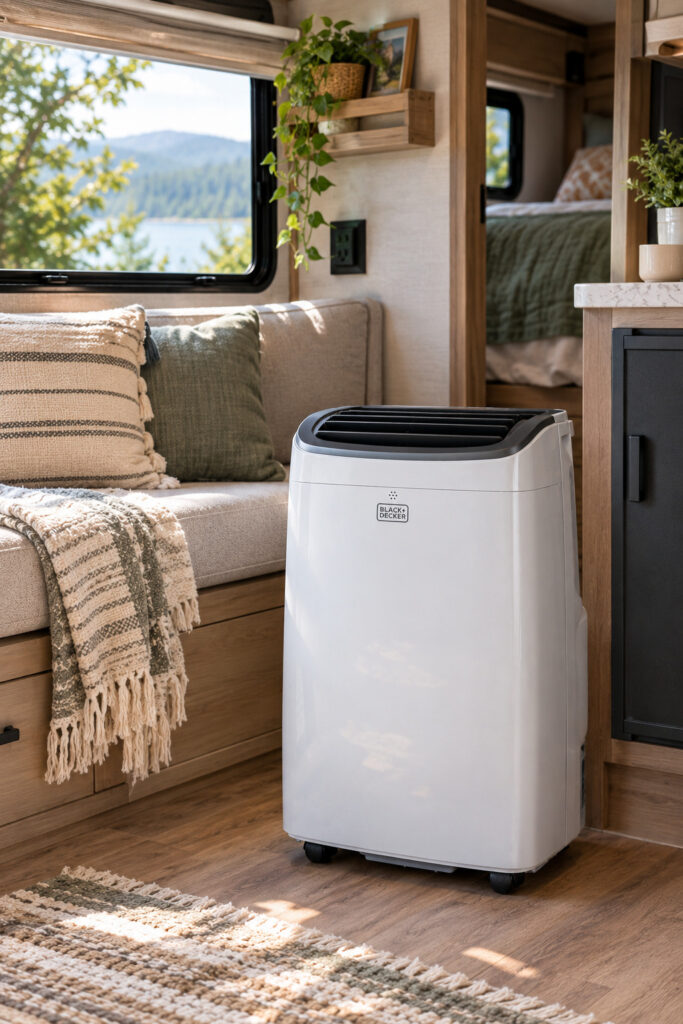
Summer camping can become uncomfortable quickly when the RV’s built-in air-conditioning system isn’t working properly—or when your RV doesn’t have a rooftop air conditioner at all.
A portable air conditioner can provide another cooling option.
Before buying a portable air conditioner for your RV, think about:
- Available floor space.
- Electrical requirements.
- Cooling capacity.
- Venting requirements.
- Where the exhaust hose can be positioned.
- Storage when the unit isn’t being used.
- Whether your campsite provides suitable shore power.
Portable AC units generally need a way to exhaust the hot air they remove from the room. Make sure you understand the installation requirements before assuming a particular model will work in your RV.
Shore power is another important consideration. A large electrical appliance can place a substantial load on an RV’s electrical system, so verify that your RV and campsite electrical connection can safely support the appliance.
If you’re looking for a portable AC that combines cooling power with everyday convenience, this one caught my attention. BLACK DECKER Portable Air Conditioner combines a 3-in-1 air conditioner, dehumidifier, and fan in one portable unit. It provides 5,500 BTU SACC cooling for rooms up to 450 sq. ft., while the Follow Me remote helps control the temperature more precisely. Casters and side handles make it easy to move between rooms, and the included window kit simplifies installation.
Check Price and Reviews on Amazon
28. Slim Single-Serve Coffee Maker
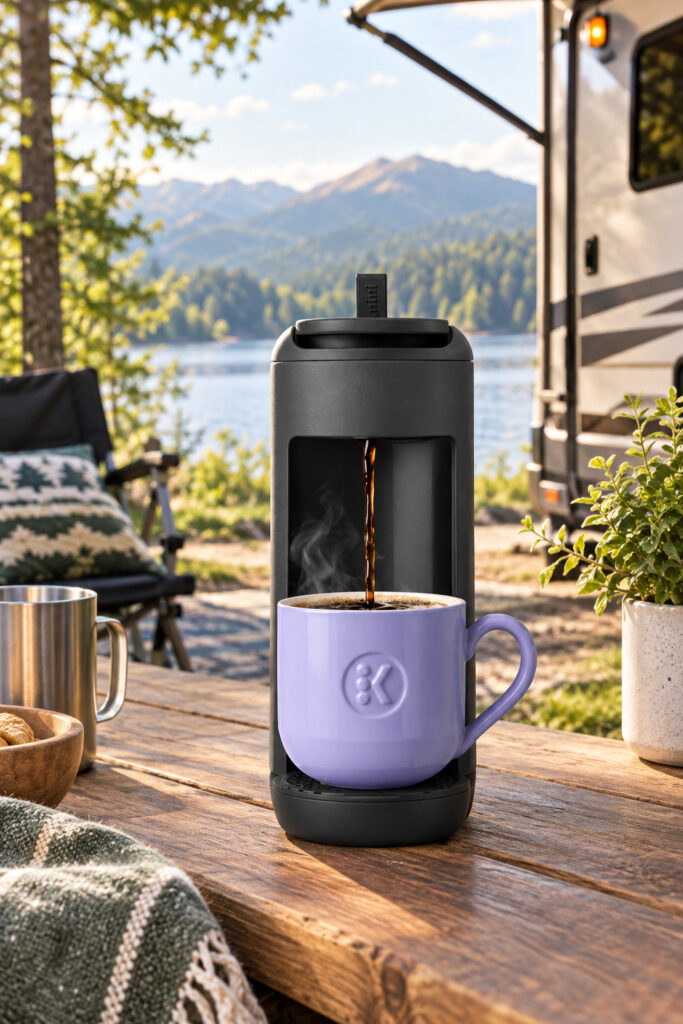
For many campers, coffee is part of the morning routine.
There are plenty of ways to make coffee while camping, including a French press, percolator, pour-over setup, or AeroPress. But if you have access to shore power and prefer the convenience of single-serve coffee, a slim coffee maker can be an attractive option.
I like the Keurig K-Mini, a compact single-serve coffee machine that uses K-Cup pods.
One of the biggest advantages for an RV is its small footprint. Counter space can be limited inside a camper, so an appliance that doesn’t occupy much room can be easier to accommodate than a full-size coffee machine.
The highlighted model is approximately 4 inches wide, making it particularly appealing for smaller RV kitchens.
A compact single-serve coffee maker can be useful if you want:
- Quick individual cups of coffee.
- Minimal counter space.
- Simple operation.
- Easy cleanup.
- A familiar coffee-making routine while traveling.
You’ll need electrical power to operate it, so it’s most convenient when you’re connected to shore power or otherwise have enough available electrical capacity.
29. Electric Water Dispenser for a 5-Gallon Water Jug
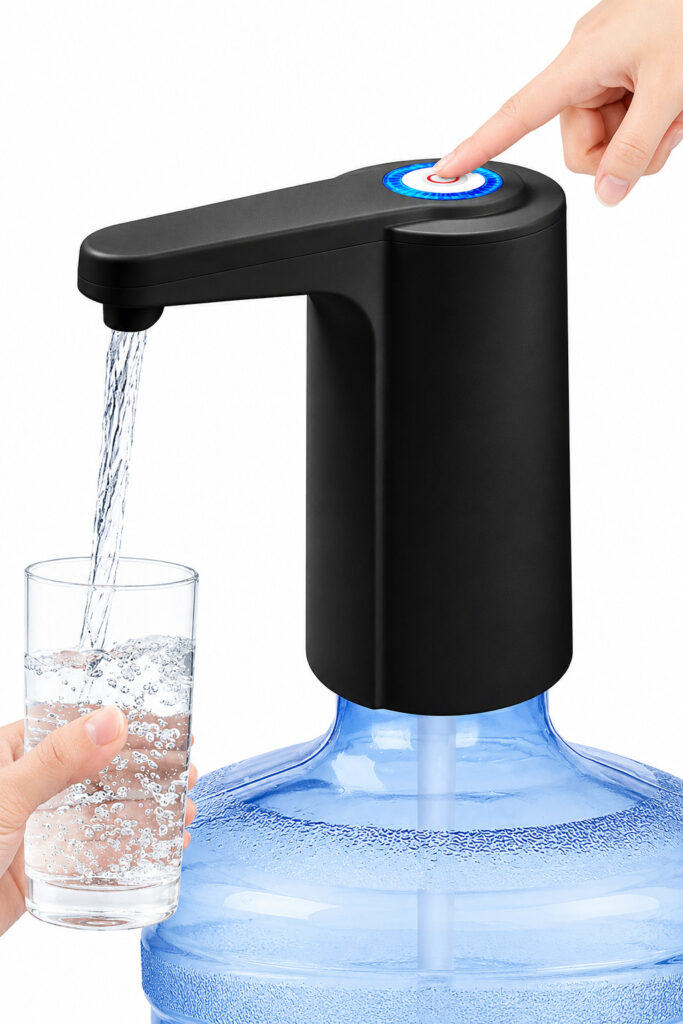
Click Here to Read More Reviews
A large 5-gallon water jug can be a convenient way to keep drinking water available while camping, but lifting or manually pumping water from the container isn’t always easy.
This can be especially convenient for anyone who has difficulty using a traditional manual pump.
Potential advantages include:
- Easy one-button operation.
- Less effort than a manual pump.
- Portable design.
- Rechargeable operation on many models.
- Convenient access to drinking water.
- Useful for large water jugs at campsites.
Before buying one, check the pump’s compatibility with your water jug and pay attention to charging requirements and cleaning instructions.
Since the device is being used with drinking water, keeping the pump and associated components clean is particularly important.
How to Choose the Right RV Accessories
There are a huge number of RV accessories available, and new products are introduced all the time. The important thing to remember is that you don’t need every accessory you see.
RV sizes and layouts vary considerably. A small pop-up camper, a travel trailer, and a large Class A motorhome can have very different equipment, storage space, and camping requirements.
That means an accessory that works well for one RV may not be appropriate for another.
Instead of trying to collect everything, consider which accessories match your particular RV and the way you normally camp.
Match Accessories to Your Camping Style
Not every accessory will suit every RV or every camper. Think about the difference between a short weekend trip and extended RV travel.
Someone who spends most weekends at established campgrounds may have different requirements from someone who spends long periods traveling between different locations.
Likewise, the accessories required by a compact camper can be very different from those used with a large motorhome.
Some campers prioritize outdoor entertainment, while others spend most of their time exploring away from the RV.
Your accessories should reflect that routine.
Before purchasing an accessory, ask yourself:
- Does my RV actually need it?
- Will it solve a problem I regularly encounter?
- Is it compatible with my RV?
- Do I have enough storage space for it?
- Will I use it often enough to justify carrying it?
These questions can help narrow down the enormous number of RV products available.
Think About RV Size
RV size is particularly important because available space varies dramatically.
A small camper has limited storage and counter space. A larger motorhome may have more room for dedicated equipment.
This affects everything from coffee makers and coolers to sewer accessories and leveling equipment.
For a smaller RV, compact and multipurpose accessories can be especially useful because every storage compartment matters.
For a larger RV, storage may be less restrictive, but compatibility with the vehicle’s systems becomes increasingly important because there may be more specialized equipment involved.
The goal isn’t to determine which RV accessories are universally necessary. The goal is to determine which accessories make sense for your particular RV.
Build Your RV Accessories Collection Gradually
You don’t have to purchase every item at once. For example, if you’re having difficulty with water hookups, begin with the relevant water accessories.
If wastewater dumping is the part of camping you find most inconvenient, look at the sewer and holding-tank accessories.
If campsite setup is your biggest frustration, look at leveling, chocking, and stabilization equipment.
Once you’ve spent more time using your RV, you’ll naturally discover which additional accessories would make your trips easier.
This approach also prevents you from filling your storage compartments with products that seemed useful when you bought them but rarely get used.
Final Selection Considerations
The original article doesn’t suggest that every item on the list is required. Instead, it presents a collection of popular RV accessories and encourages readers to determine which ones fit their own needs.
That’s an important distinction.
RV accessories can make camping more convenient, but they also take up space, add weight, and can create another item that needs to be stored, maintained, or transported.
Start with the basics that support your RV’s existing systems. Then consider the smaller convenience items that address specific problems in your camping routine.
Your ideal RV accessory kit will ultimately depend on the size of your RV, the equipment already installed, your preferred camping locations, and the activities you enjoy while traveling.
The list is therefore best used as a starting point rather than a shopping requirement.
Conclusion
The best RV accessories are ultimately the ones that solve real problems for you.
The accessories covered in this guide include everything from basic water and sewer equipment to leveling products, safety accessories, storage solutions, and camping comforts.
Some accessories are designed to make RV maintenance easier. Others help with campsite setup. And some simply make your time around the RV more enjoyable.
Before buying anything, consider your RV’s size, existing equipment, available storage, electrical and plumbing requirements, and the type of camping you normally do.
Then prioritize the accessories that address your biggest needs.
You can always add more equipment later as you discover what would make your trips easier.
Instead of trying to create the largest possible collection of RV accessories, focus on creating a useful collection that works for your RV and your camping style.
That way, every item you carry has a practical reason for being there—and your RV can remain organized, functional, and ready for the next adventure.