
Summer adventures in your RV can quickly turn uncomfortable when temperatures rise. Without proper cooling strategies, your mobile sanctuary can transform into an unbearable metal oven. Thankfully, with the right techniques and tools, you can maintain a comfortable temperature inside your RV even during the hottest months.
Contents
- 1 Preventing Heat Buildup in Your RV: Ultimate Guide
- 1.1 1. Strategic Parking
- 1.2 2. Reflective Window Coverings
- 1.3 3. Regular AC Maintenance
- 1.4 4. Advanced Ventilation Strategies
- 1.5 5. Portable Cooling Options
- 1.6 6. Smart Water Cooling Techniques
- 1.7 7. Appliance Heat Reduction
- 1.8 8. Comprehensive LED Lighting
- 1.9 9. Insulation Improvements
- 1.10 10. Body Temperature Management
- 1.11 11. Solar-Powered Cooling Solutions
- 1.12 12. Smart RV Climate Control
- 1.13 13. Humidity Control
- 1.14 Preparation and Maintenance Checklist
- 1.15 Conclusion
Understanding RV Heat Dynamics
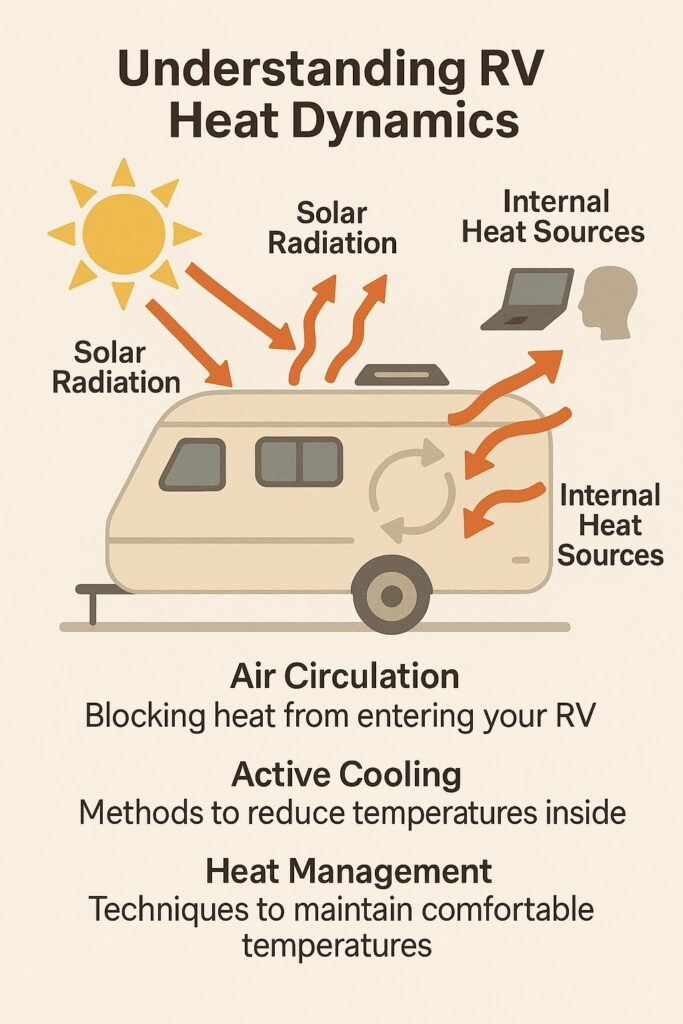
Before diving into specific cooling solutions, it’s important to understand how heat affects your RV:
- Solar Radiation – Direct sunlight hitting your RV’s exterior creates a greenhouse effect, raising internal temperatures significantly.
- Heat Transfer – Metal and fiberglass RV exteriors conduct heat efficiently, bringing outdoor temperatures inside.
- Internal Heat Sources – Appliances, electronics, and even our bodies generate heat inside the confined space.
- Air Circulation – Poor ventilation traps hot air inside, preventing cooling.
With these principles in mind, our comprehensive cooling strategy addresses three critical aspects:
- Prevention: Blocking heat from entering your RV
- Active Cooling: Methods to reduce temperatures inside
- Heat Management: Techniques to maintain comfortable temperatures
Preventing Heat Buildup in Your RV: Ultimate Guide
When temperatures rise, your RV can quickly transform from a cozy home-on-wheels to an uncomfortable hot box. Managing heat is one of the biggest challenges RV enthusiasts face during warm weather travel. The good news is that with strategic planning and some smart modifications, you can keep your mobile sanctuary cool even in scorching conditions.
1. Strategic Parking
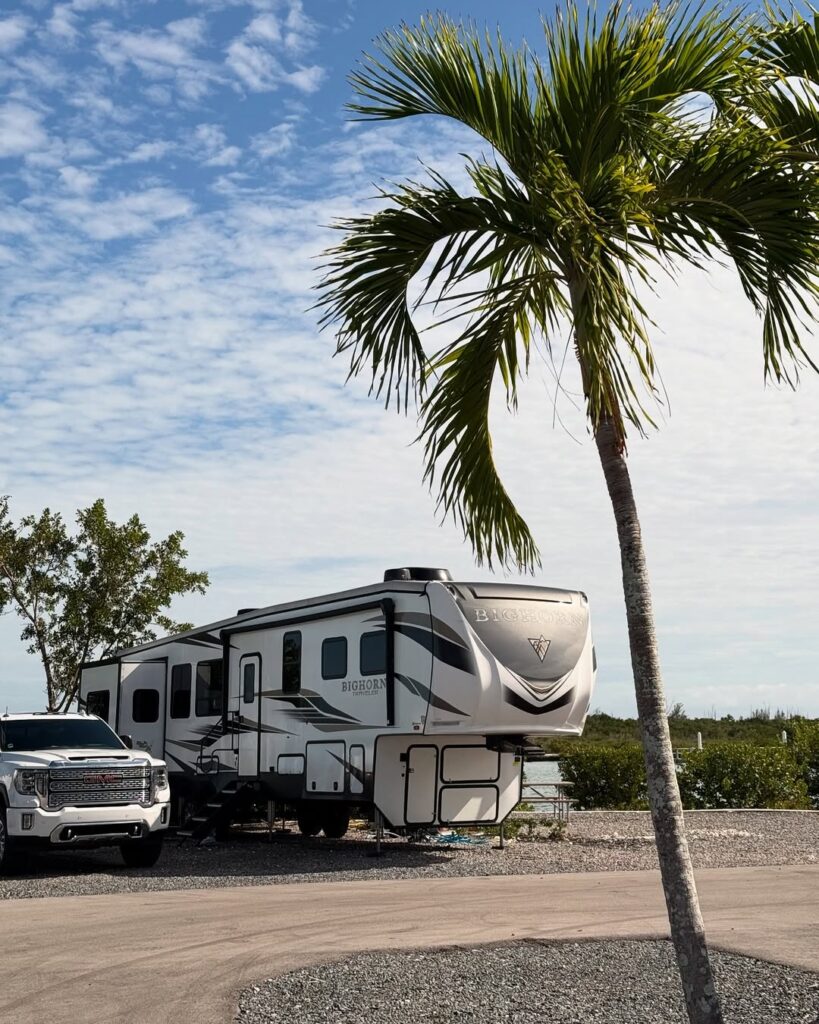
Photo Credit: @traveling_bruces
The position of your RV can dramatically affect internal temperatures. When choosing a spot, consider several important factors that can make a significant difference in your comfort level.
- Seek Natural Shade: Park under large trees when possible, especially on the side where afternoon sun hits hardest.
- Orientation Matters: Position your RV with the smallest surface area (usually the front) facing the afternoon sun.
- Research Campgrounds: Use satellite imagery from Google Maps to identify shaded sites before booking.
- Consider Wind Direction: A site with natural breeze can enhance cooling effect and air circulation.
2. Reflective Window Coverings
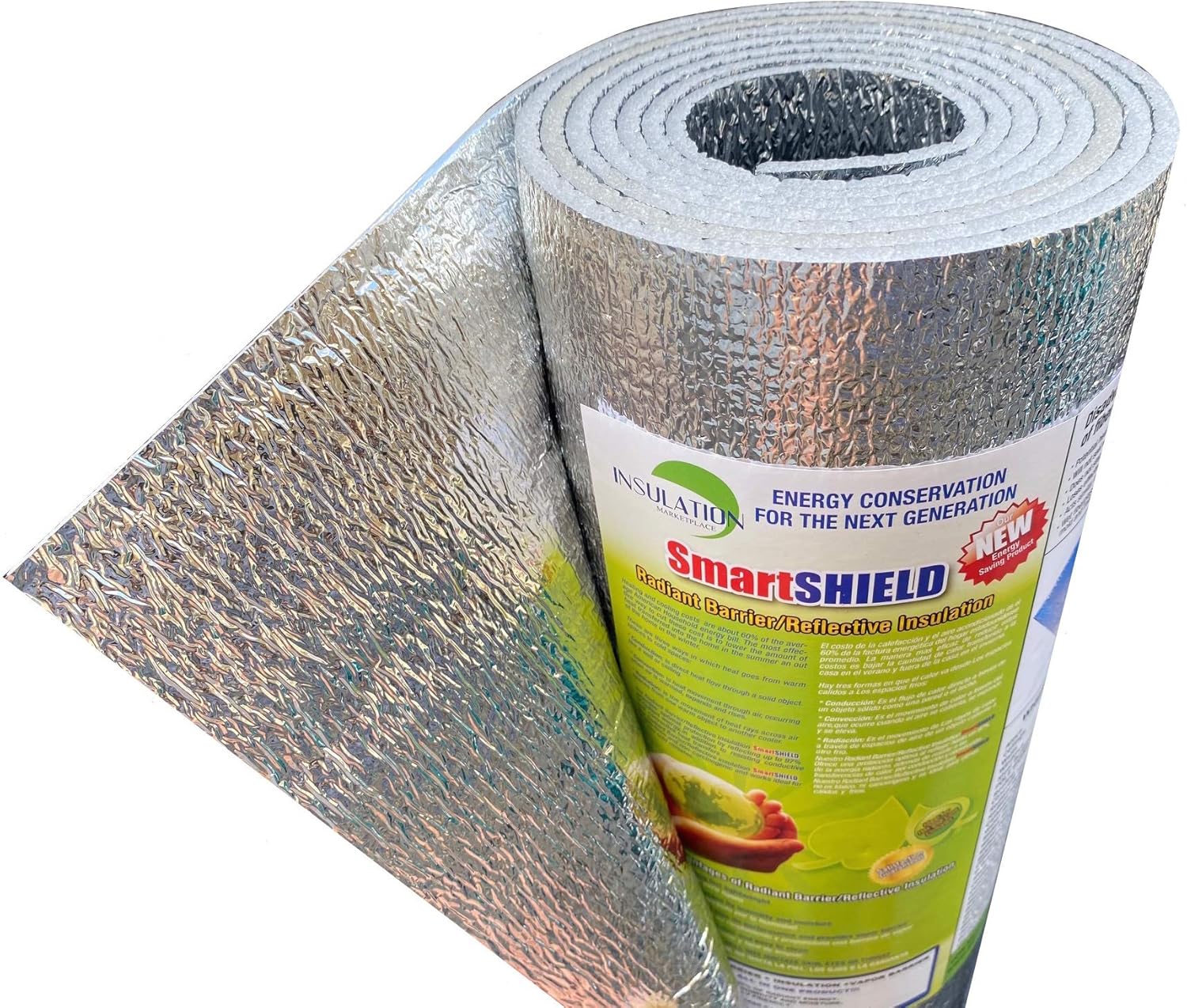

Windows are the primary entry point for solar heat. Effective window protection can significantly reduce interior temperatures and help maintain comfort during hot days.
- External Reflective Covers: These reflect sunlight before it reaches the glass, significantly reducing heat transfer.
- Thermal Curtains: Heavy, insulated curtains create an additional barrier against heat.
- DIY Solution: Emergency thermal blankets (mylar) secured outside windows can reflect up to 90% of solar radiation.
3. Regular AC Maintenance
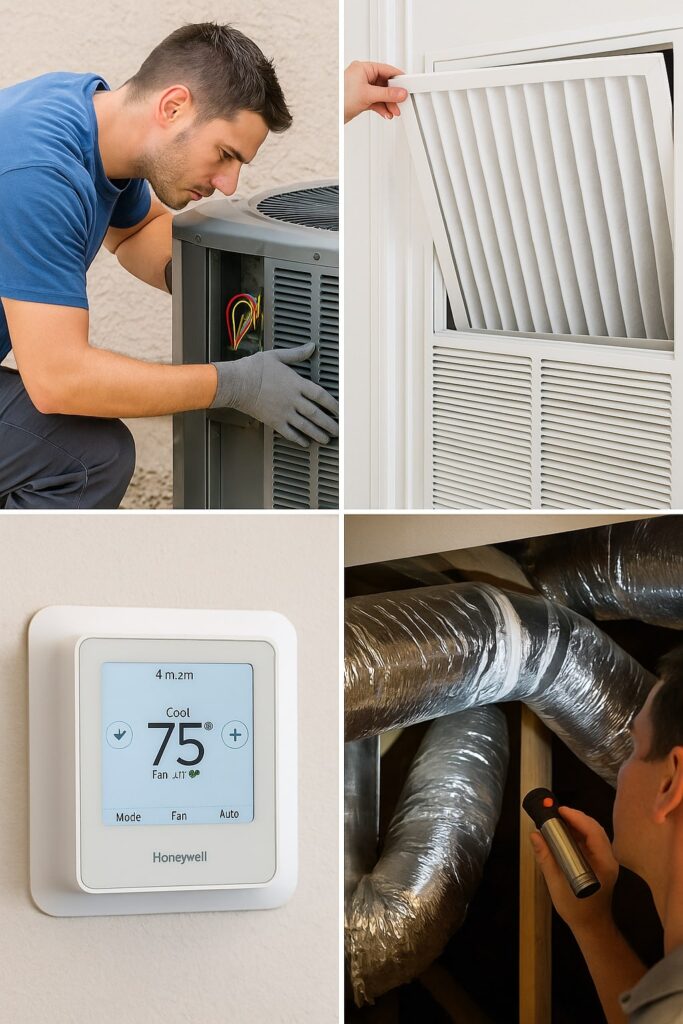
Your air conditioning system is your primary defense against heat, so keeping it in optimal condition is essential for effective cooling.
- Regular Maintenance: Have your AC serviced annually to maintain optimal performance.
- Clean Filters and Vents: Dirty filters can reduce efficiency by up to 15%. Clean monthly during heavy use.
- AC Soft Start: Install a soft start device to run your AC on lower amperage power sources.
- Smart Thermostat: Replace standard thermostats with programmable options to optimize cooling cycles.
- Duct Inspection: Ensure all ducts are properly sealed and optimized for airflow.
4. Advanced Ventilation Strategies
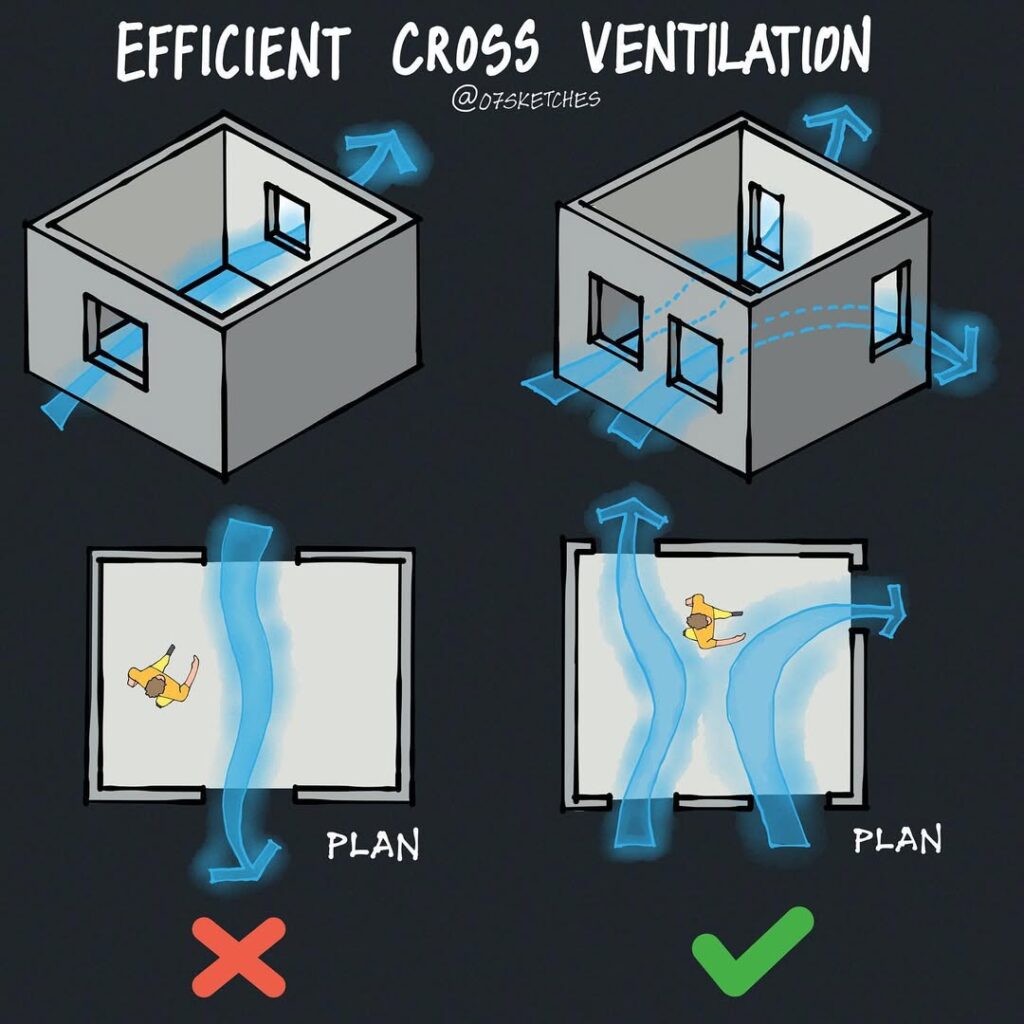
Photo Credit: @07sketches
Creating proper airflow is crucial for maintaining comfortable temperatures, especially when you can’t run your AC continuously.
- High-Performance Roof Fans: Upgrade to reversible models with multiple speeds and rain sensors.
- Cross-Ventilation Techniques: Open windows on opposite sides of your RV to create natural airflow.
- Hot Air Extraction: Run ceiling fans in exhaust mode during the day to pull hot air out.
- Cool Air Intake: Position fans to draw air from the shadiest, coolest side of your RV.
- Nighttime Air Exchange: Completely exchange indoor air with cooler outdoor air in the evening.
5. Portable Cooling Options
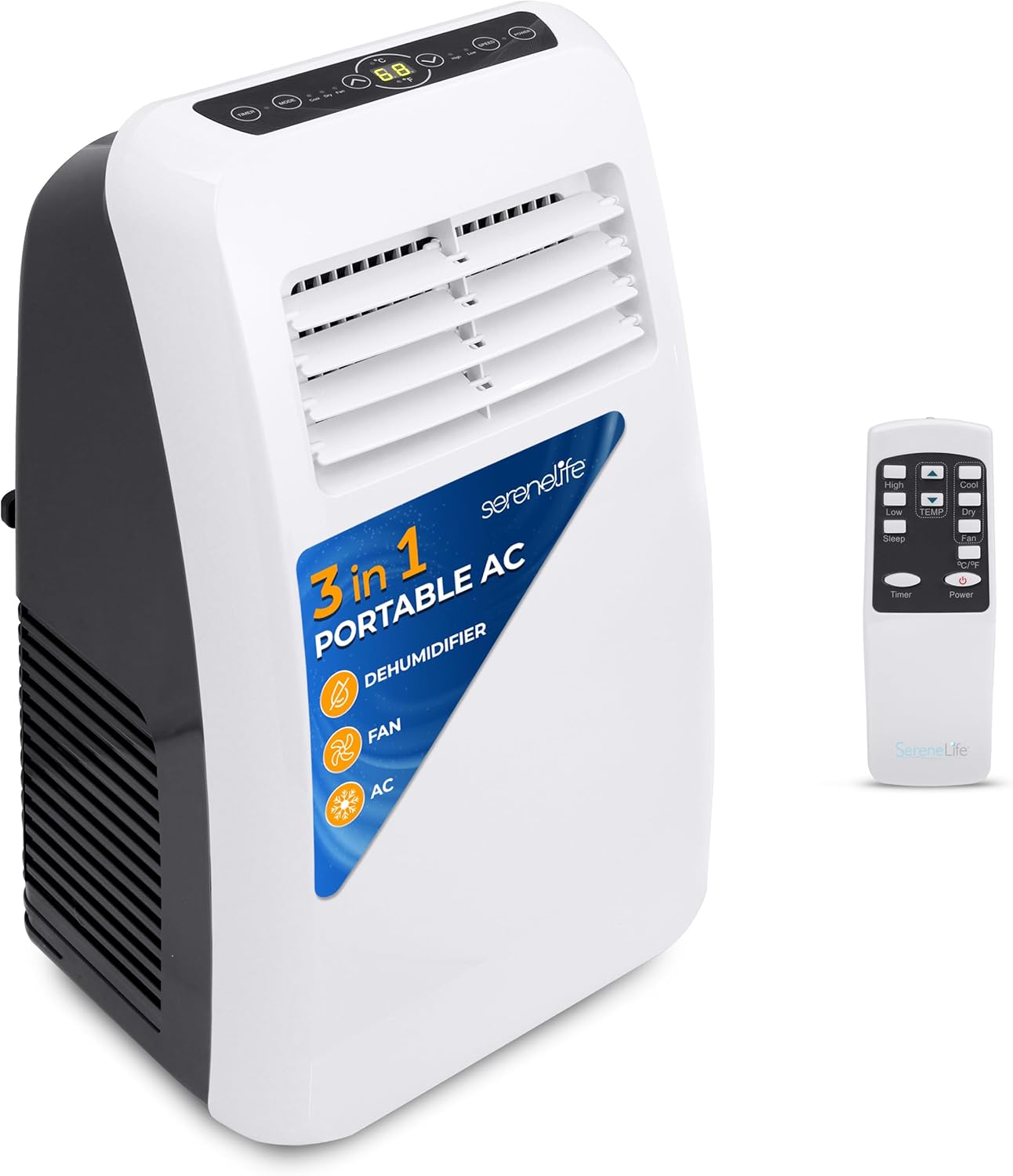
Beyond built-in systems, these portable solutions offer flexibility for targeted cooling where you need it most.
- USB-Rechargeable Personal Fans: Position near seating areas and beds for targeted cooling.
- Evaporative Coolers: Ideal for dry climates, these use water evaporation to cool air.
- Ice-Enhanced Fan Cooling: Place a bowl of ice in front of fans to cool the air flow.
- Battery-Operated Misting Fans: Combine airflow with fine water mist for enhanced cooling.
- Portable Air Conditioners: For stationary RVing, these units can supplement or replace rooftop ACs.
6. Smart Water Cooling Techniques
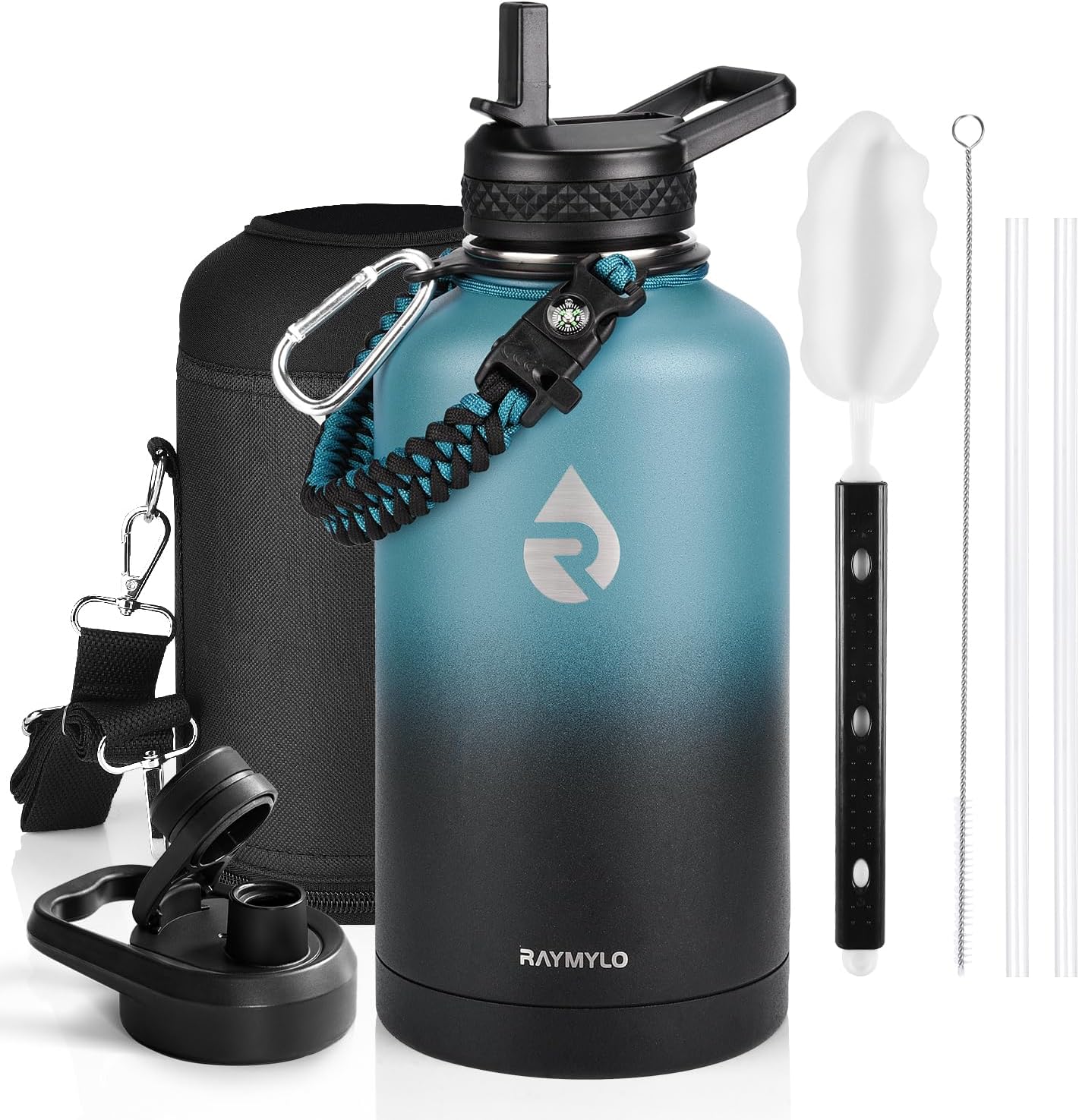
Water is remarkably effective for cooling and can be utilized in various simple yet effective ways.
- Damp Cloth Method: Hang damp (not dripping) towels in windows where breeze enters your RV.
- Body Cooling Wraps: Neck cooling wraps provide personal relief without cooling the entire space.
- Strategic Water Spraying: Occasionally spray the roof and exterior walls with water on extremely hot days.
- Cold Water Bottles: Place frozen water bottles in strategic locations to cool small areas.
7. Appliance Heat Reduction
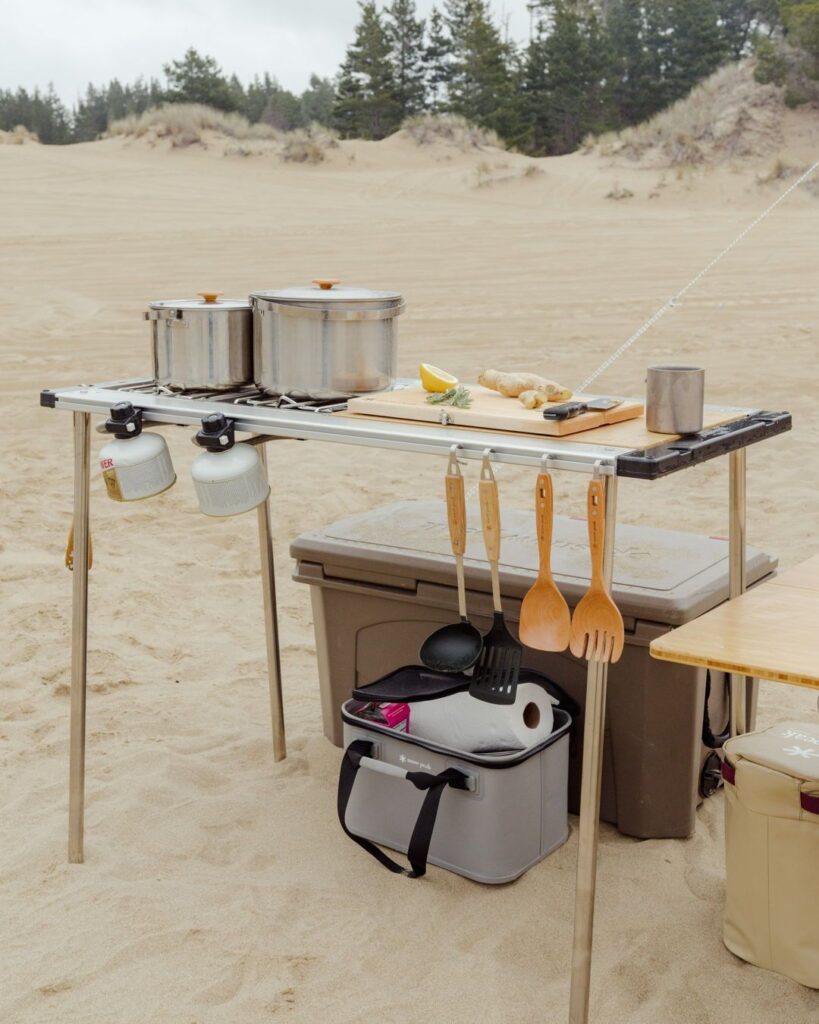
Photo Credit: @snowpeakbrooklyn
Many RV appliances generate significant heat. Managing them wisely can help maintain cooler interior temperatures.
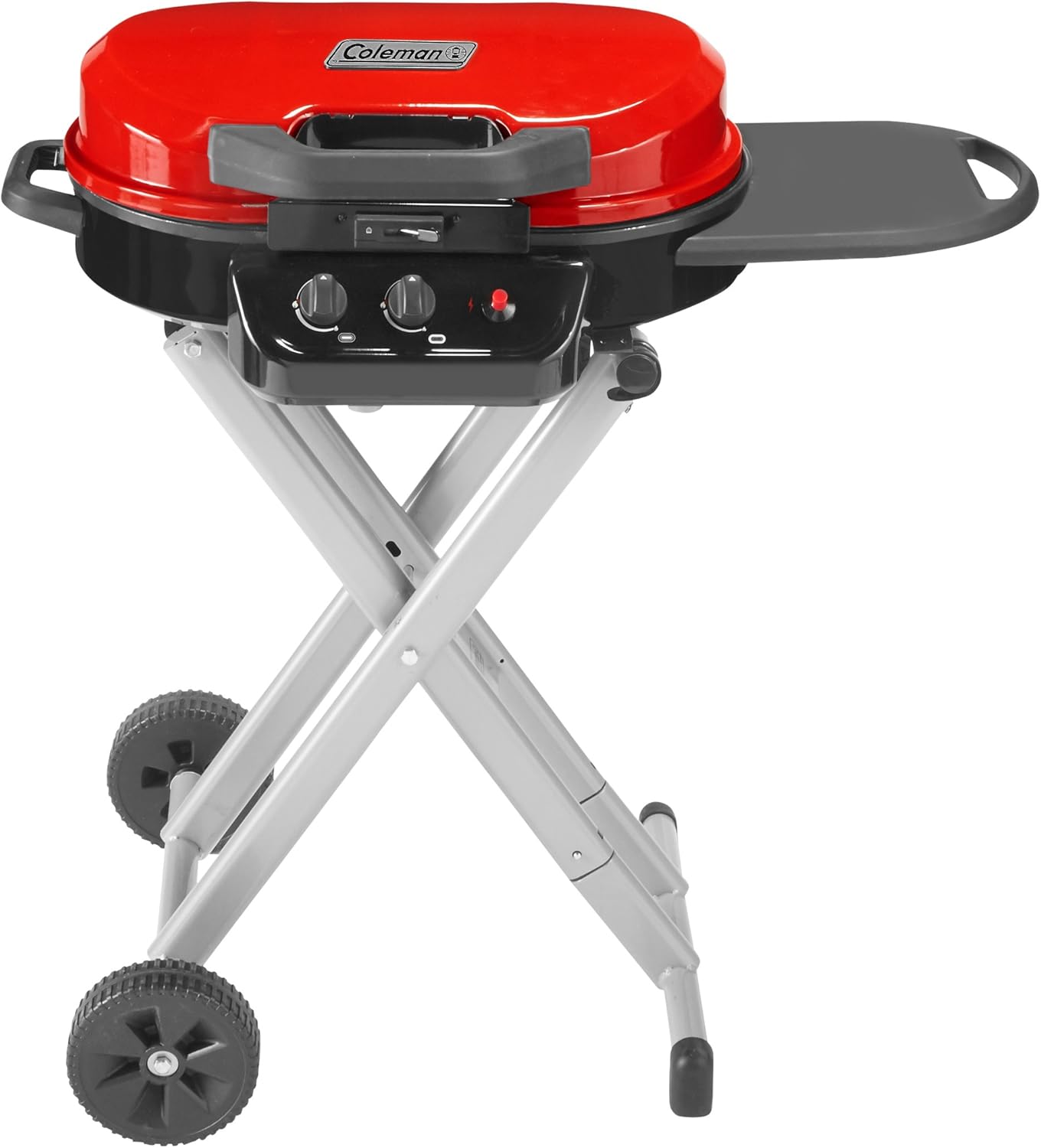
- Outdoor Cooking: Use outdoor kitchens, portable grills, or campfires instead of indoor cooking.
- Meal Planning: Prepare no-cook meals like salads and sandwiches during peak heat hours.
- Microwave Alternatives: Use microwaves instead of ovens when possible, as they generate less heat.
- Propane Refrigeration Management: Ensure proper ventilation around refrigerator vents to prevent heat buildup.
- Evening Appliance Use: Run dishwashers, washers, and other heat-generating appliances after dark.
8. Comprehensive LED Lighting
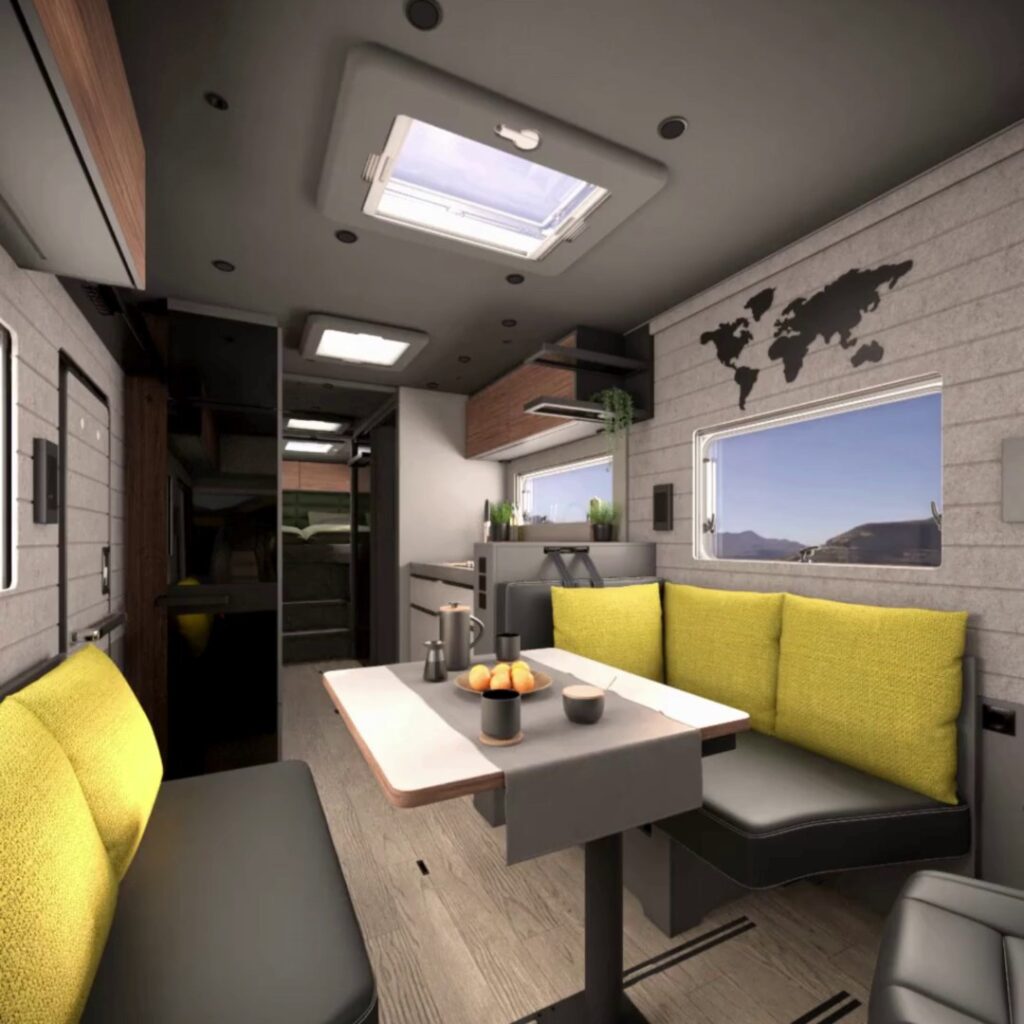
Photo Credit: @niesmannbischoff
Incandescent bulbs are small heaters that also produce light, making LED conversions an important cooling strategy.
- Complete LED Conversion: Replace all interior bulbs with LED alternatives that produce minimal heat.
- Strategic Lighting: Use only necessary lights, especially during daytime hours.
- Natural Light Management: Use natural light when possible, but be aware of solar heat gain through windows.
- LED Fixture Upgrades: Consider replacing entire fixtures for improved efficiency and better light distribution.
9. Insulation Improvements
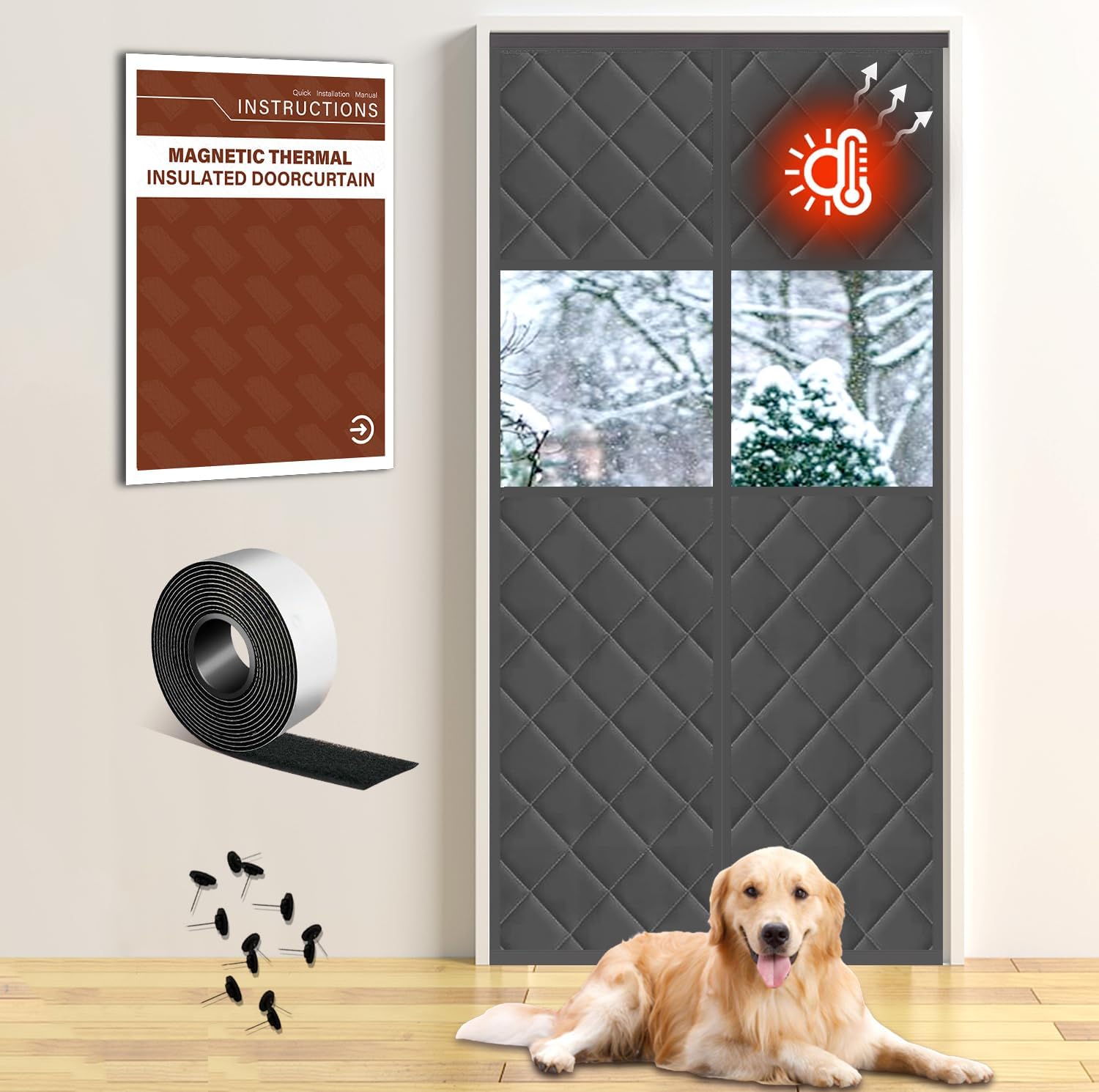
Better insulation helps in both hot and cold weather, creating a more comfortable living environment year-round.
- Weatherstripping Reinforcement: Check and replace weatherstripping around doors and windows.
- Foam Board Additions: Add thin foam board insulation to walls, under beds, and in storage areas.
- Thermal Curtain Dividers: Install thermal curtains between living areas to create cooling zones.
- Floor Insulation: Add rugs with insulating backing to reduce heat transfer through the floor.
- Window Film Application: Apply heat-reducing window film that blocks UV rays while maintaining visibility.
10. Body Temperature Management
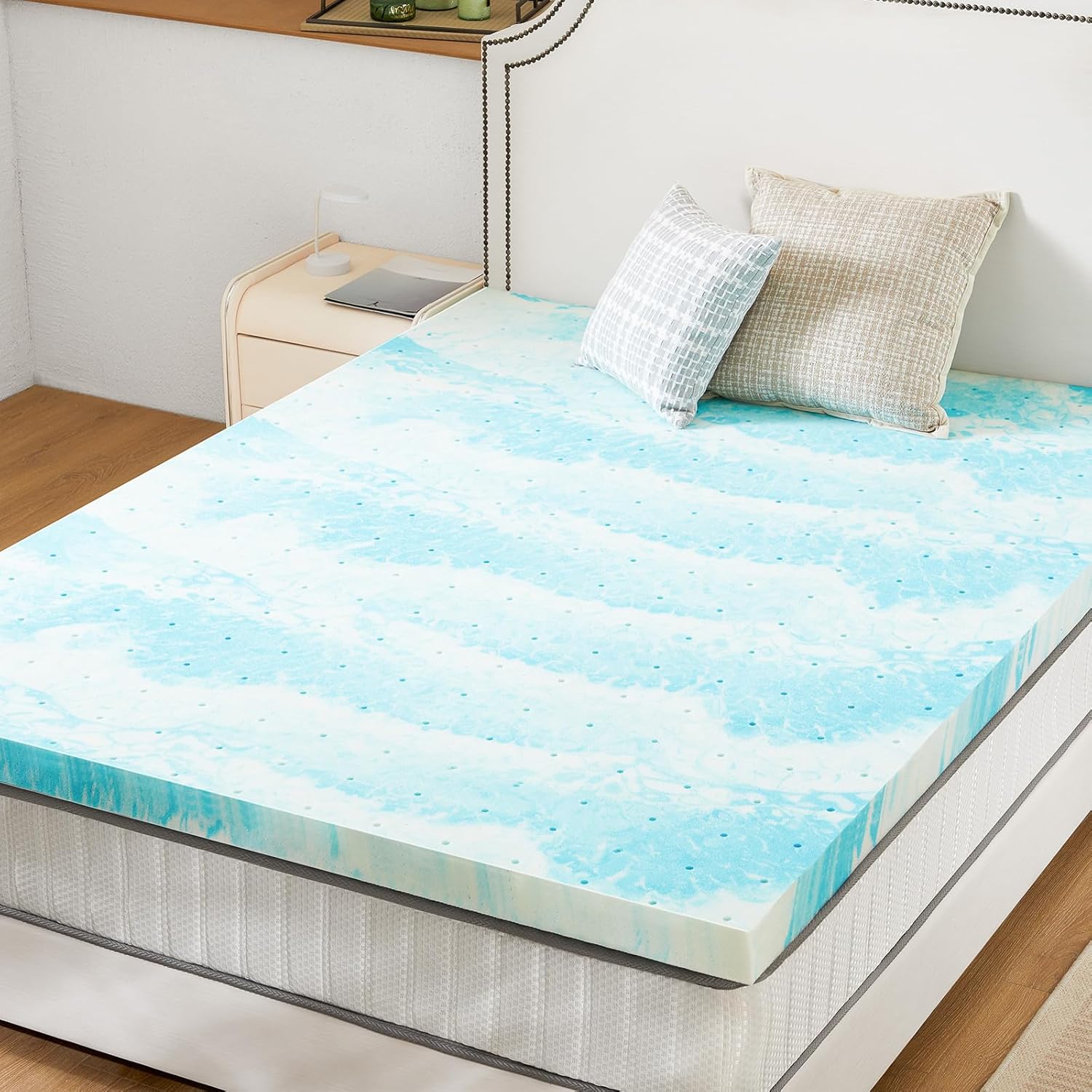
Sometimes cooling yourself is more efficient than cooling the entire RV, especially when power is limited.
- Cooling Mattress Toppers: Gel-infused or phase-change material toppers regulate sleep temperature.
- Moisture-Wicking Bedding: Specialized sheets and pillowcases improve comfort in hot weather.
- Personal Cooling Products: Cooling towels, wristbands, and vests provide targeted relief.
- Hydration Station: Set up a dedicated area with ice water and electrolyte drinks to prevent dehydration.
11. Solar-Powered Cooling Solutions
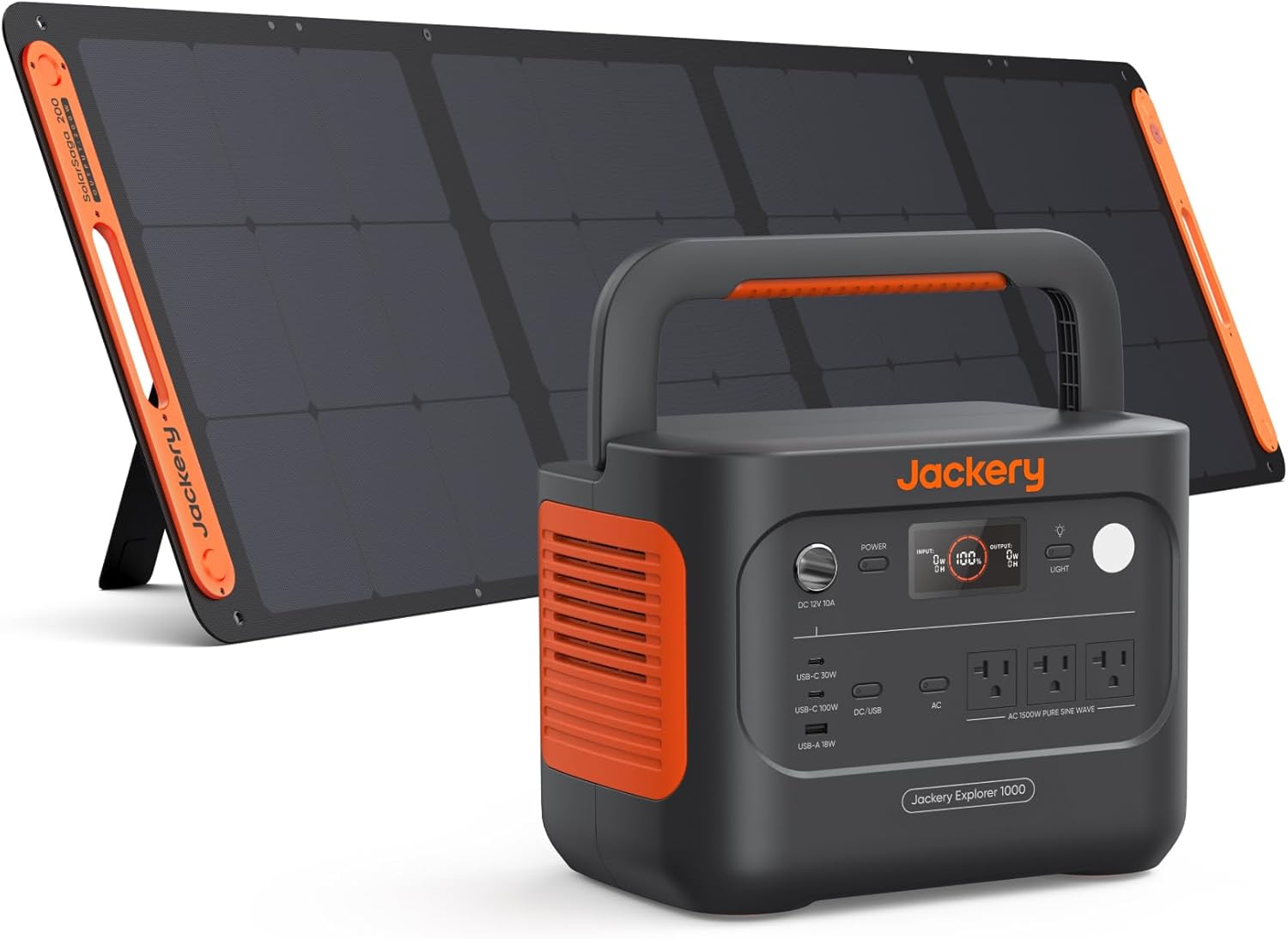
Harness the sun to keep cool through renewable energy solutions that work even when off-grid.
- Solar-Powered Fans: Install fans that run directly off solar panels, increasing airflow on the sunniest (and hottest) days.
- Solar Generators: Use portable solar generators to power cooling equipment without draining your RV batteries.
- Solar Reflective Panels: Deploy reflective panels that double as shade and power generators.
- Battery Bank Expansion: Increase your battery capacity to run cooling equipment longer without shore power.
12. Smart RV Climate Control
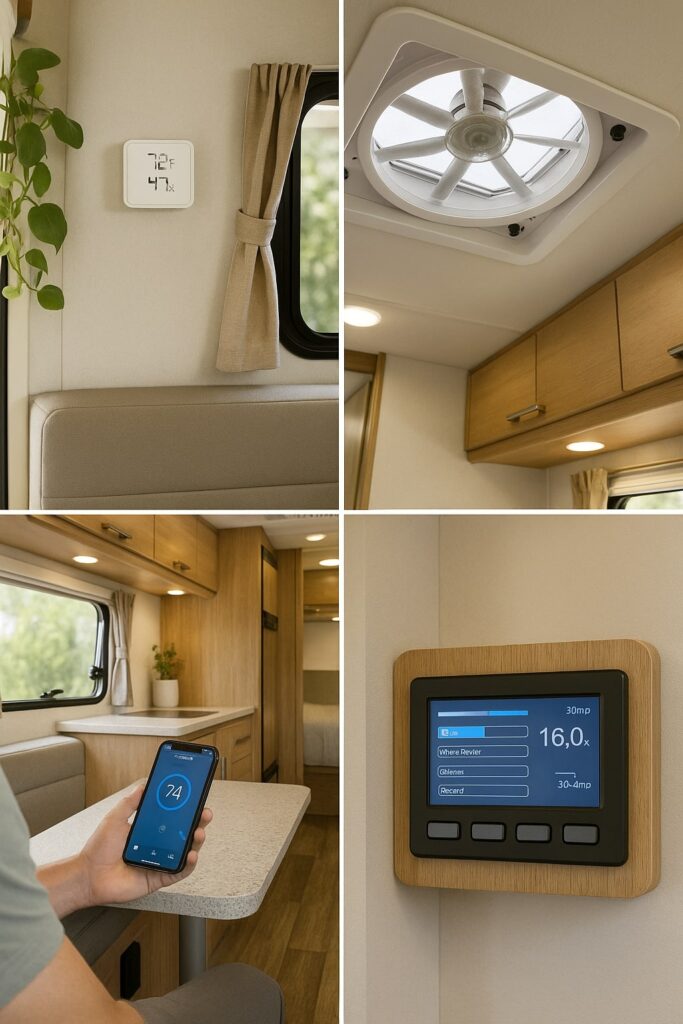
Technology can significantly improve your cooling efficiency through automated systems and remote monitoring.
- Temperature Monitoring Systems: Install wireless sensors to track temperature in different RV zones.
- Automated Ventilation Controls: Program fans and vents to operate based on internal and external temperatures.
- Remote Climate Control: Use smartphone apps to control your RV’s cooling systems while away.
- Smart Power Management: Automatically prioritize cooling systems when running on limited power.
13. Humidity Control
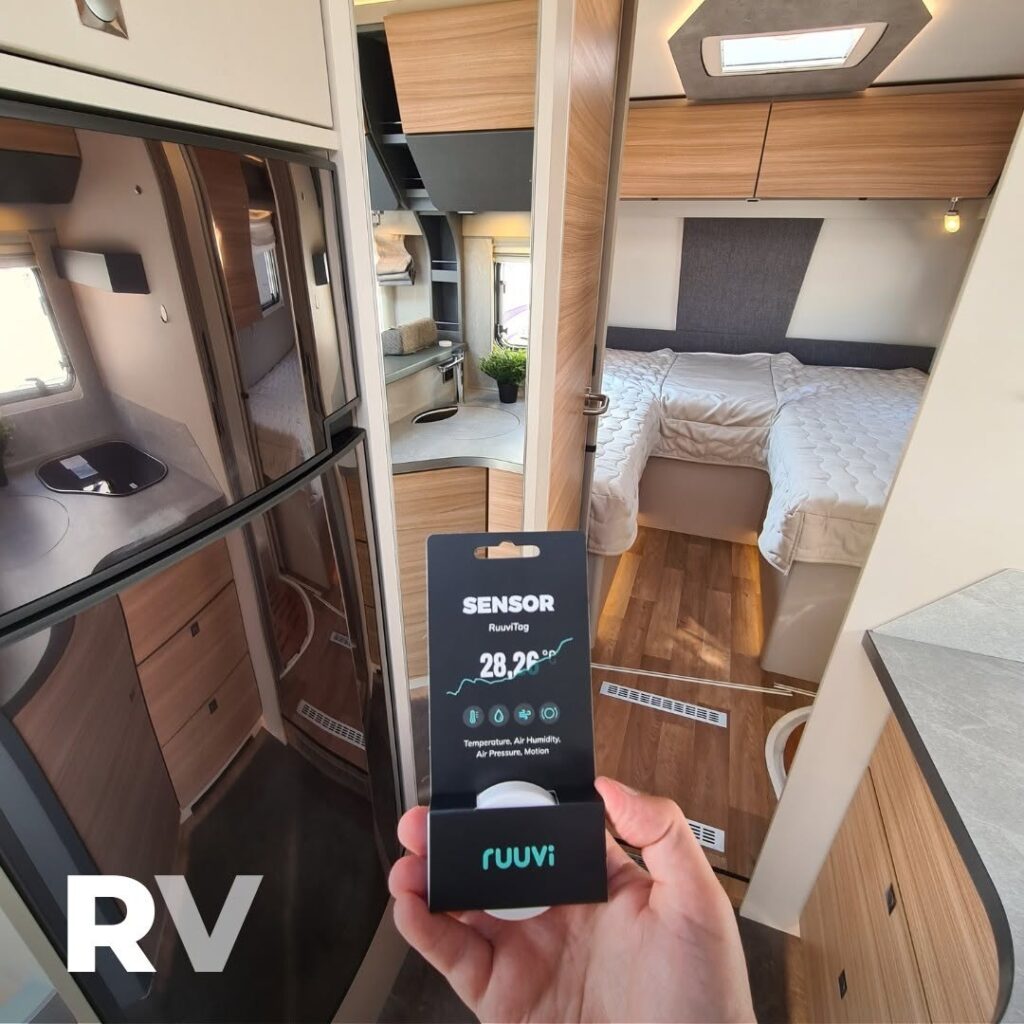
Photo Credit: @ruuvicom
Managing humidity is as important as managing temperature, particularly in coastal or tropical environments.
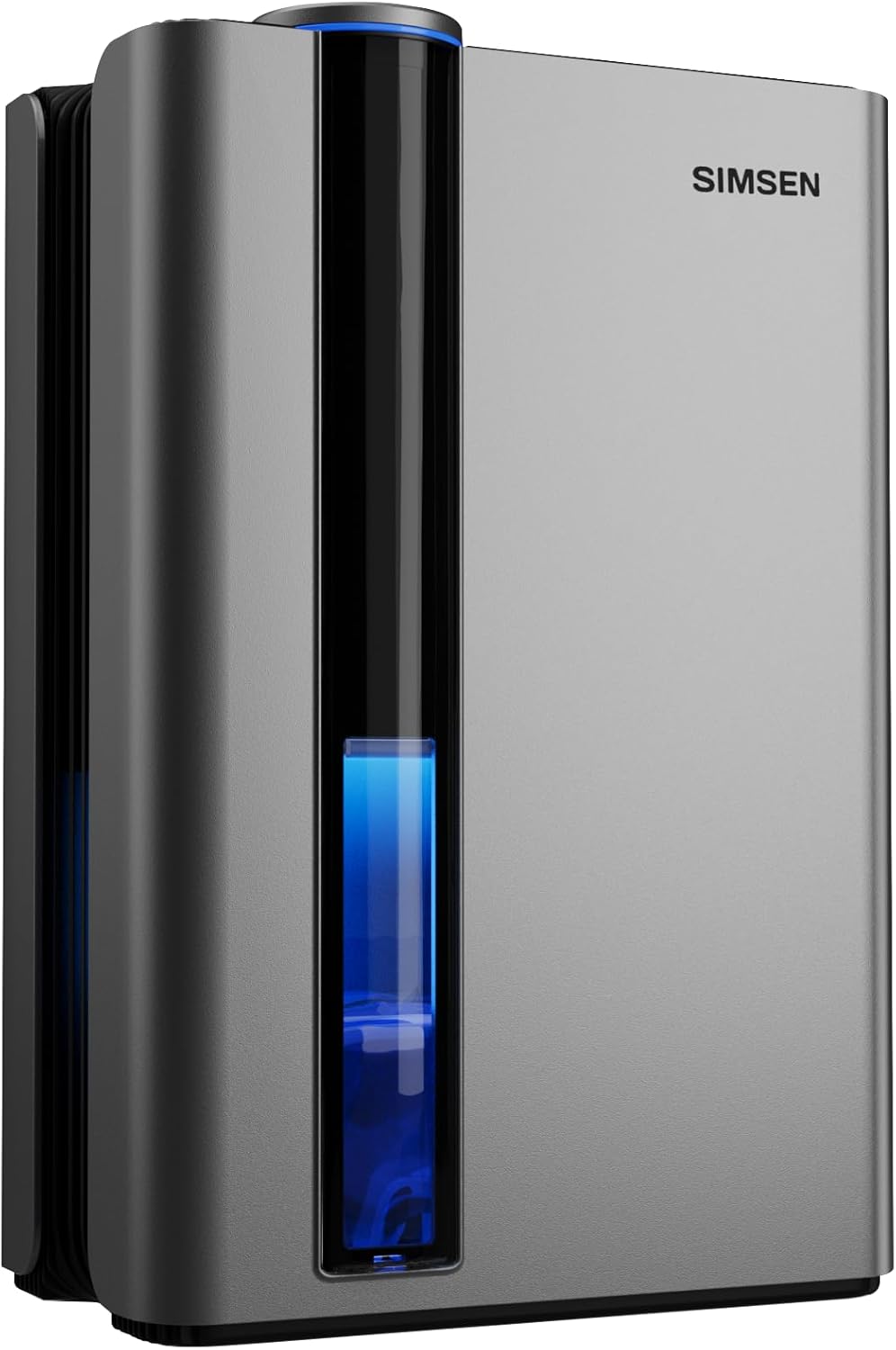
- Dehumidifiers: In humid climates, removing moisture makes the air feel cooler.
- Humidity Monitors: Track indoor humidity levels to optimize comfort.
- Desiccant Products: Place moisture-absorbing products in cabinets and closed spaces.
- Ventilation Timing: Adjust ventilation based on outdoor humidity levels.
By implementing these strategies, you can significantly improve your RV’s comfort level during hot weather, making your travels more enjoyable regardless of the temperature outside.
Check out top-rated dehumidifiers and monitors on Amazon
Preparation and Maintenance Checklist
To ensure your RV stays cool all summer, follow this maintenance schedule:
Pre-Summer Preparation:
- ✓ Clean and service AC units
- ✓ Check and repair roof seals
- ✓ Apply reflective roof coating if needed
- ✓ Install window coverings and awning shades
- ✓ Test and upgrade ventilation fans
Weekly Maintenance:
- ✓ Clean AC filters
- ✓ Check refrigerator vents for obstructions
- ✓ Inspect awnings and shades for damage
- ✓ Test vent fans for proper operation
Daily Practices:
- ✓ Adjust window coverings as the sun moves
- ✓ Open/close windows based on outside temperature
- ✓ Exchange air during coolest parts of the day
- ✓ Monitor indoor temperature and humidity
Conclusion
Keeping your RV cool during summer doesn’t require expensive equipment or complex modifications. By combining preventative measures, active cooling techniques, and smart heat management, you can enjoy comfortable temperatures even during the hottest months.
Remember that different cooling strategies work better in different climates—dry heat calls for evaporative solutions, while humid conditions require dehumidification and air conditioning. Experiment with these methods to find the perfect combination for your specific RV and travel destinations.
With these 25 expert cooling strategies, you’ll transform your RV from a sweltering metal box into a cool, comfortable oasis for summer adventures. Stay cool and enjoy the journey!