
Living life on the road brings incredible freedom, but it also presents unique challenges that stationary homeowners never face. Among these challenges, organizing your RV pantry stands as one of the most critical yet often overlooked aspects of successful mobile living. Unlike traditional home kitchens with generous cabinet space and stable foundations, RV pantries demand strategic thinking, creative solutions, and a deep understanding of how constant movement affects food storage.
The difference between a chaotic, stressful RV kitchen and a smoothly functioning culinary space often comes down to one factor: intelligent pantry organization. When your pantry works efficiently, meal preparation becomes a joy rather than a frustration, food waste decreases dramatically, and the psychological stress of travel diminishes significantly. Whether you’re embarking on weekend adventures or embracing full-time RV living, mastering pantry organization will transform your mobile experience.
Contents
- 1 The Hidden Challenges of RV Pantry Management
- 2 The Science of Space Maximization in Mobile Environments
- 3 Essential Container Selection and Food Preservation
- 4 Strategic Repackaging for Maximum Efficiency
- 5 Climate Control and Food Safety in Mobile Environments
- 6 Technology Integration for Smart Pantry Management
- 7 Specialized Organization Strategies by RV Type and Lifestyle
- 8 Advanced Food Safety Protocols for Mobile Kitchens
- 9 Economic Optimization and Budget Management
- 10 Psychological and Social Benefits of Organized Living
- 11 Implementation Strategy and Continuous Improvement
- 12 Sustainable Practices and Environmental Responsibility
- 13 Advanced Troubleshooting and Problem Resolution
The Hidden Challenges of RV Pantry Management
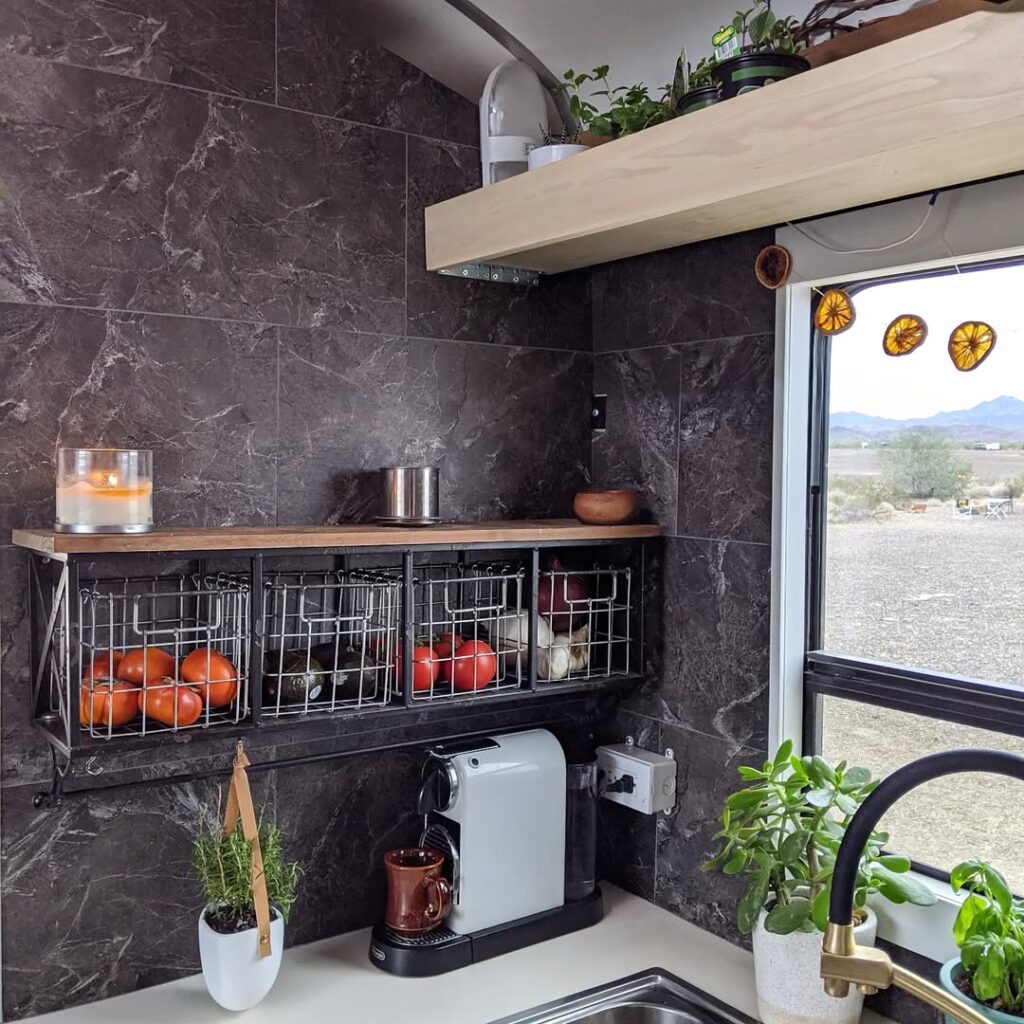
Photo Credit: @broccolibus6
RV pantries present a complex puzzle that extends far beyond simple space limitations. The constant motion of travel creates a dynamic environment where poorly secured items become projectiles, fragile containers shatter, and carefully arranged storage systems collapse into chaos. Temperature fluctuations as you travel through different climates can compromise food quality, while humidity changes threaten dry goods with spoilage.
These challenges compound when you consider the psychological aspect of RV living. A disorganized pantry creates decision fatigue, making simple meal planning feel overwhelming. When you can’t quickly locate ingredients or assess your current inventory, grocery shopping becomes guesswork, leading to duplicate purchases and wasted money. The stress of constantly searching for items in cramped quarters can turn cooking from a pleasurable activity into a source of frustration.
Understanding these unique constraints is the first step toward creating a pantry system that not only functions but thrives in the mobile environment. Success requires moving beyond traditional home organization principles and embracing strategies specifically designed for life on the road.
The Science of Space Maximization in Mobile Environments
Effective RV pantry organization begins with understanding spatial relationships and movement dynamics. Every cubic inch of storage space must serve multiple purposes while remaining easily accessible during meal preparation. This principle, known as spatial efficiency optimization, involves analyzing your pantry’s three-dimensional space and creating storage solutions that maximize both vertical and horizontal capacity.
Vertical Integration Strategies
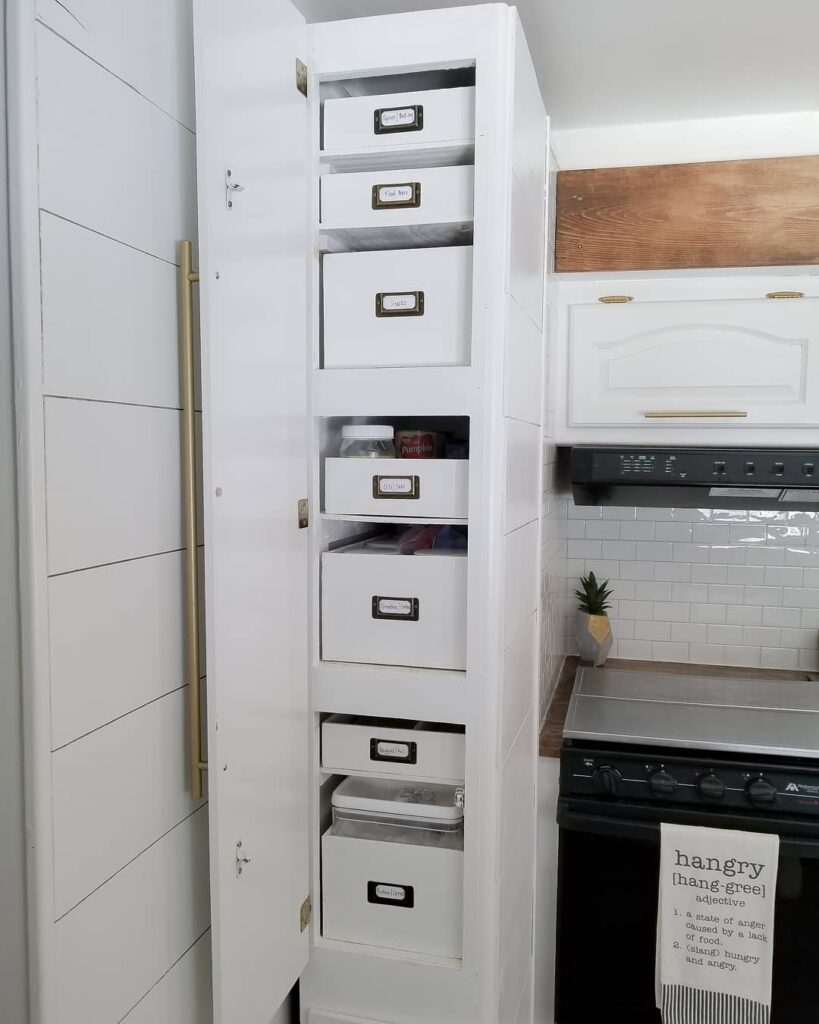
Photo Credit: @wilsongrandadventures
The most underutilized space in most RV pantries exists in the vertical realm. Traditional shelving often leaves several inches of wasted space between shelf levels, space that can be reclaimed through strategic organization. Implementing adjustable shelf risers allows you to create custom storage heights that perfectly accommodate your specific containers and food items.
Consider installing tension rod systems that create instant dividers, transforming single large shelves into multiple organized zones. These systems work particularly well for storing lightweight items like snack packages, spice containers, and boxed goods that might otherwise create unstable stacks.
Dynamic Storage Solutions
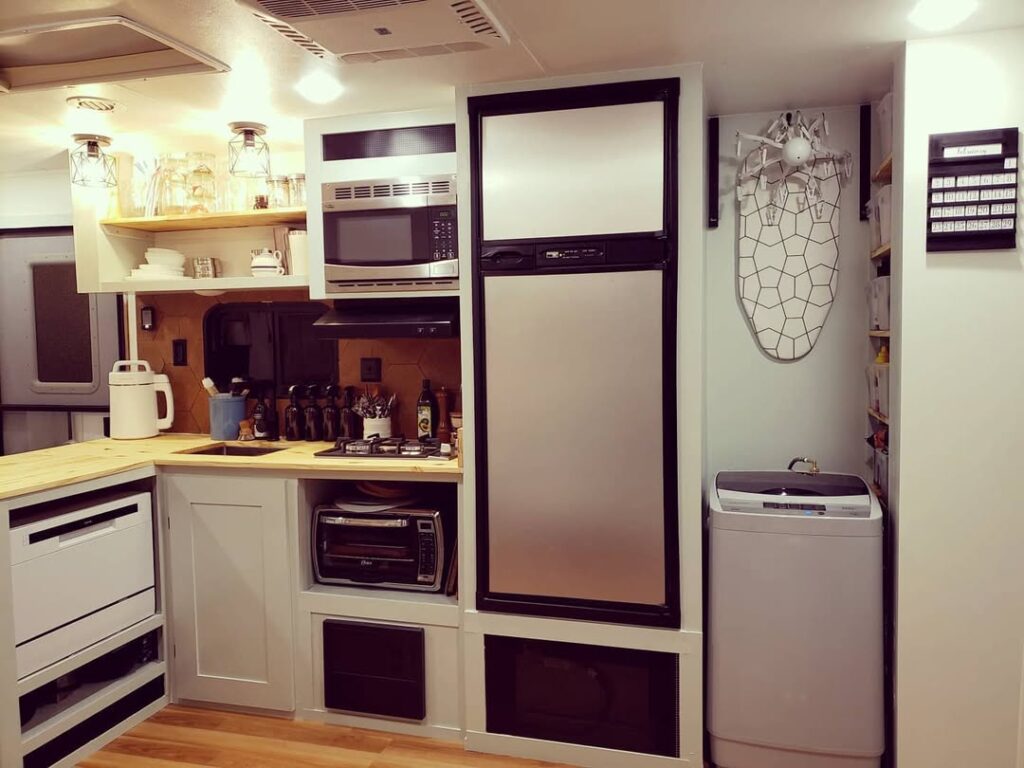
Photo Credit: @franklytonya
The key to successful RV pantry organization lies in creating storage solutions that adapt to changing needs. Modular container systems allow you to reconfigure your storage based on current inventory, seasonal changes, or evolving dietary preferences. These systems typically feature uniform dimensions that stack efficiently while providing the flexibility to separate or combine units as needed.
Sliding drawer systems maximize accessibility in deep cabinets, eliminating the frustration of items becoming lost in back corners. These systems work particularly well in lower cabinets where bending and reaching become physically challenging during meal preparation.
Essential Container Selection and Food Preservation
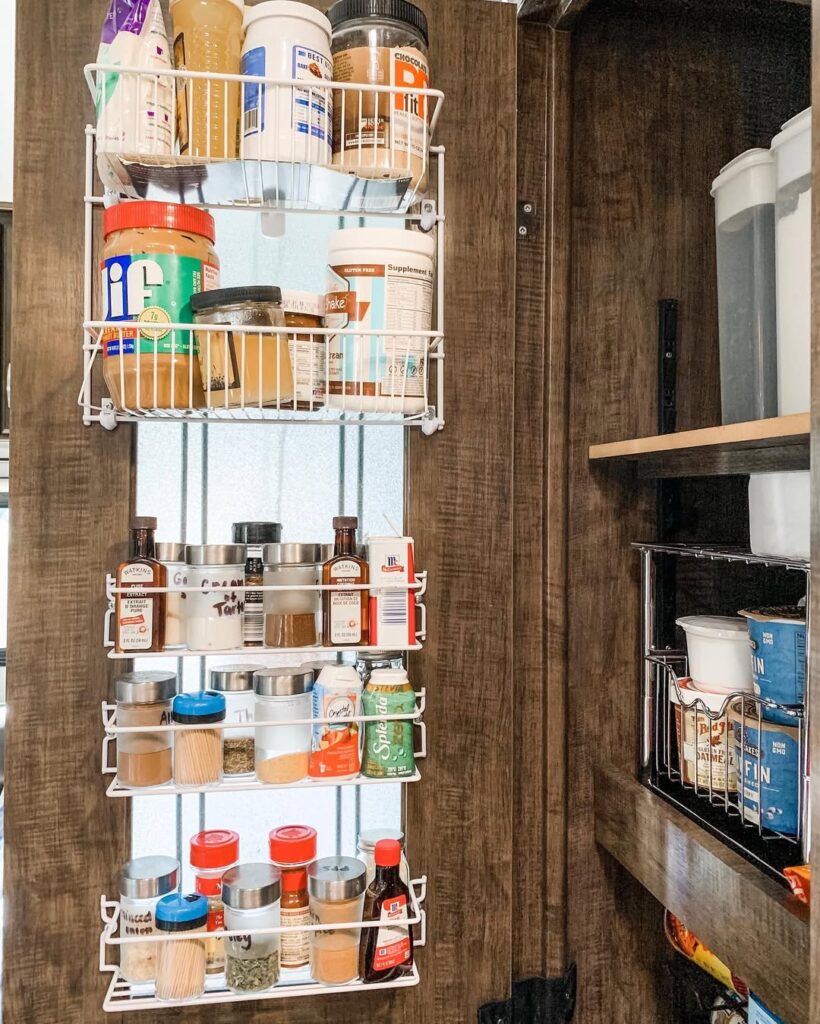
Photo Credit: @our.humbills.homeonwheels
The foundation of any successful RV pantry lies in choosing appropriate storage containers that withstand the rigors of mobile living while preserving food quality. Standard kitchen containers often fail in RV environments due to inadequate sealing, poor stackability, or materials that crack under stress.
Material Science for Mobile Storage
High-density polyethylene (HDPE) containers offer superior durability and chemical resistance compared to standard plastic storage options. These containers maintain their structural integrity through temperature fluctuations and impact stress while providing excellent moisture barriers. Glass containers, while heavier, offer unmatched preservation qualities for long-term storage of oils, vinegars, and fermented foods.
Vacuum-sealed storage bags represent a revolutionary approach to space conservation, reducing storage volume by up to 75% for items like clothing, bedding, and even certain food products. However, understanding which foods benefit from vacuum sealing versus those that require air circulation is crucial for maintaining quality.
Advanced Preservation Techniques
Implementing professional food preservation methods typically used in commercial kitchens can dramatically extend the shelf life of pantry staples. Oxygen absorber packets, when properly used with airtight containers, create anaerobic environments that prevent rancidity in nuts, grains, and dried fruits. Silica gel packets control moisture levels, preventing mold growth and maintaining crispness in crackers and cereals.
Food-grade diatomaceous earth serves as a natural pest deterrent when added to flour and grain containers, providing protection without chemical additives. Bay leaves placed strategically throughout the pantry create natural insect barriers while adding subtle aromatics to stored foods.
Strategic Repackaging for Maximum Efficiency
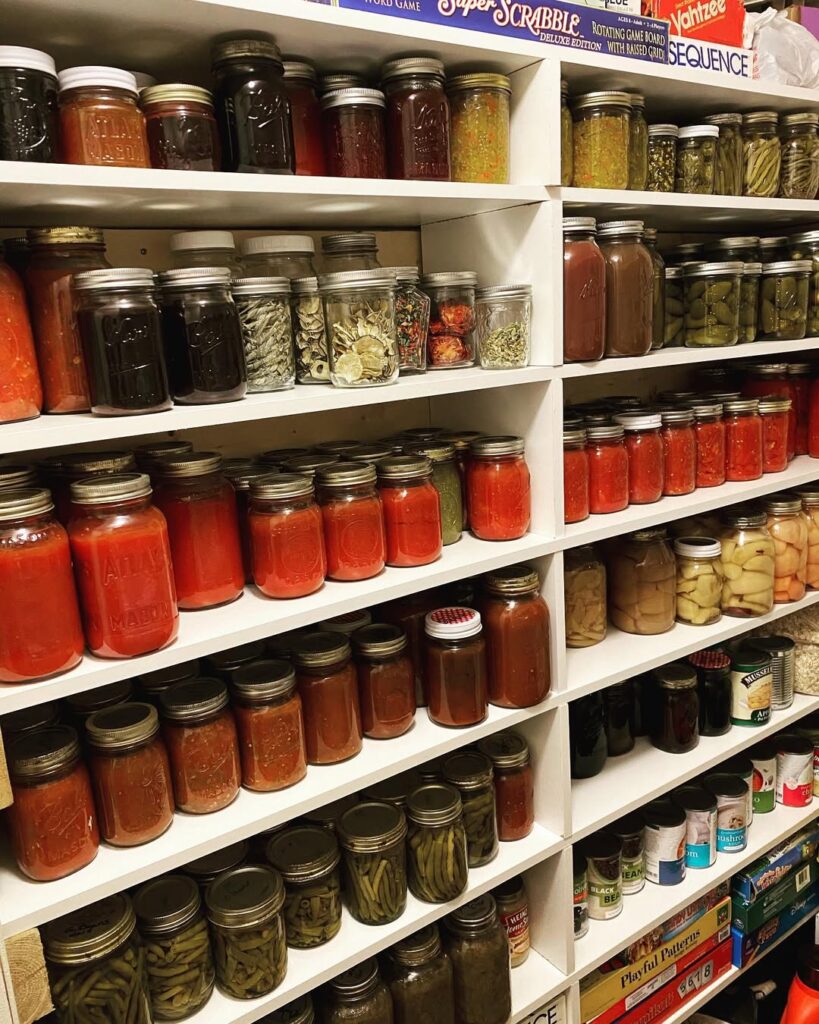
Photo Credit: @homesteadersoftennessee
The transition from manufacturer packaging to optimized storage containers represents one of the most impactful organizational strategies available to RV travelers. Original packaging often prioritizes shelf appeal and brand recognition over space efficiency or travel durability, making repackaging essential for mobile living success.
Systematic Repackaging Approaches
Developing a consistent repackaging system eliminates guesswork and creates visual harmony throughout your pantry. Establish container sizes that work synergistically, with smaller containers nesting within larger ones when empty, and all containers sharing common dimensional relationships that maximize shelf utilization.
Create a standardized labeling system that includes not only contents and expiration dates but also nutritional information, cooking instructions, and quantity measurements. This comprehensive labeling approach eliminates the need to retain original packaging for reference information.
Portion Control and Meal Planning Integration
Pre-portioning ingredients based on your most frequently prepared meals streamlines cooking processes while ensuring accurate inventory management. Create “recipe kits” by combining pre-measured dry ingredients for favorite dishes, storing them in clearly labeled containers that eliminate measuring during meal preparation.
This approach proves particularly valuable for baking enthusiasts, where precision matters significantly. Pre-mixing dry ingredients for pancakes, bread, or muffins means fresh baking becomes possible even in the smallest RV kitchens without requiring extensive ingredient assembly.
Climate Control and Food Safety in Mobile Environments
RV pantries face environmental challenges that stationary kitchens never encounter. Temperature swings from desert heat to mountain cold, humidity changes from coastal to arid climates, and constant vibration from road travel all impact food preservation and storage system integrity.
Temperature Management Strategies
Understanding thermal dynamics within your RV helps identify optimal storage locations for different food types. Areas near exterior walls experience greater temperature fluctuations, making them unsuitable for chocolate, oils, or other temperature-sensitive items. Interior locations, while more stable, may experience higher humidity levels that threaten dry goods.
Implementing thermal barriers using reflective insulation or specialized container materials can create more stable microclimates within your pantry. These barriers prove particularly valuable for protecting spices and herbs, which lose potency rapidly when exposed to heat cycling.
Humidity Control Systems
Moisture management extends beyond simple desiccant packets to include comprehensive humidity control strategies. Installing small hygrometers in key storage areas allows monitoring of moisture levels, enabling proactive intervention before condensation problems develop.
Creating dedicated dry storage zones using sealed container systems with integrated moisture control provides protection for the most vulnerable items. These zones should house items like flour, sugar, crackers, and cereals that quickly deteriorate in humid conditions.
Technology Integration for Smart Pantry Management
Modern technology offers unprecedented opportunities to optimize RV pantry organization through digital inventory management, smart storage solutions, and automated monitoring systems. These technological tools transform traditional organization methods from reactive to proactive management systems.
Digital Inventory Management
Smartphone applications designed specifically for inventory management eliminate the guesswork from grocery shopping while preventing both duplicate purchases and running out of essential items. The most effective apps offer barcode scanning capabilities, automatic expiration date tracking, and integration with popular grocery stores for seamless shopping list creation.
Advanced inventory apps can track consumption patterns, predict when items will run low based on usage history, and even suggest meal planning based on current inventory. This predictive capability proves invaluable for extended trips where resupply opportunities may be limited.
Smart Storage Monitoring
Bluetooth-enabled storage containers with built-in scales automatically track consumption and alert you when items run low. While currently limited to high-end options, these systems represent the future of automated inventory management and are beginning to appear at consumer-friendly price points.
QR code labeling systems allow detailed information storage that far exceeds traditional labels’ capacity. These codes can link to detailed nutritional information, preparation instructions, supplier information, and even photos of properly prepared dishes using the stored ingredients.
Specialized Organization Strategies by RV Type and Lifestyle
Different RV configurations and travel styles demand tailored organizational approaches. A full-time family of four traveling in a Class A motorhome faces entirely different challenges than a solo traveler in a compact van conversion. Understanding these differences enables the creation of truly optimized storage solutions.
Related Read: 69 Essential RV Organization Accessories for Maximizing Your Space
Large RV Optimization
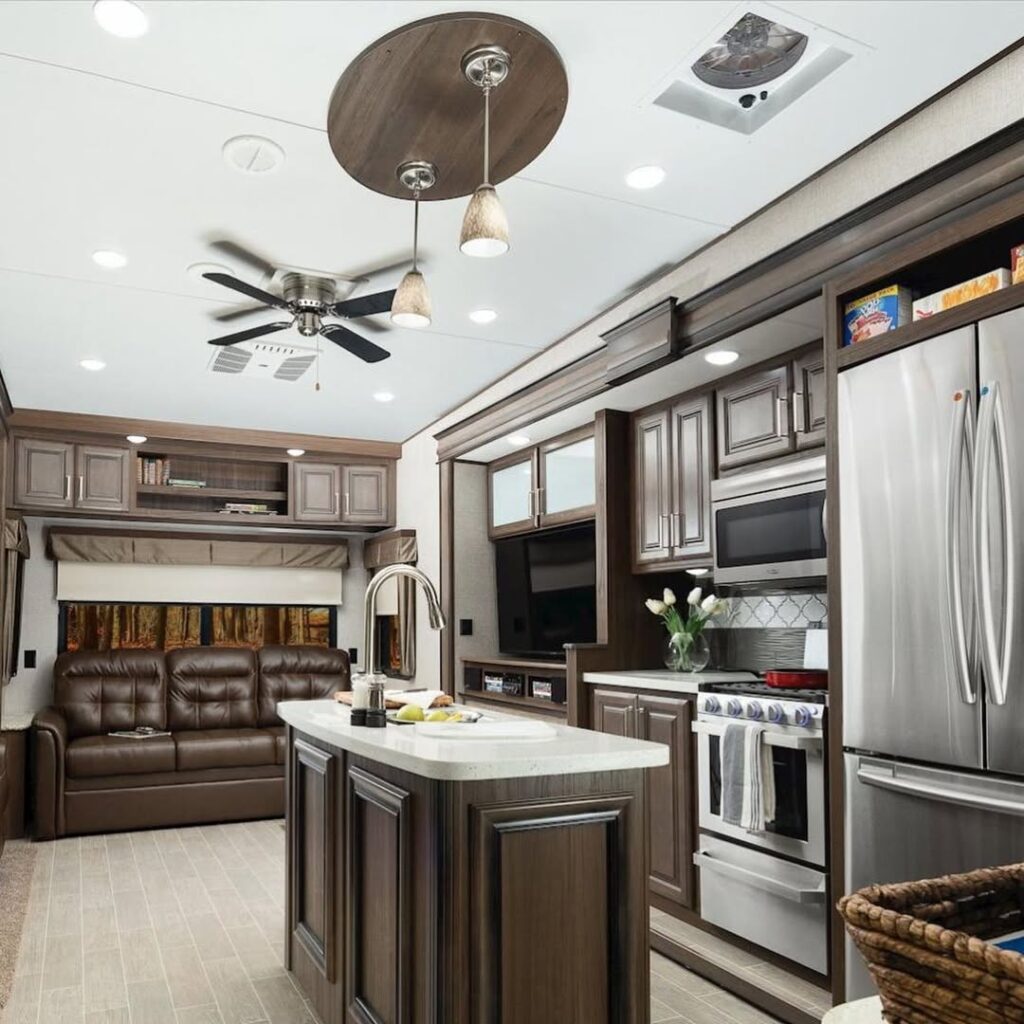
Photo Credit: @campersinnrv
Class A motorhomes and large fifth-wheel trailers offer generous storage space but present unique challenges in maintaining organization across multiple storage areas. The abundance of space can lead to purchasing excess inventory, making systematic organization crucial for preventing waste and maintaining visibility of stored items.
Implementing zone-based organization creates logical groupings that match cooking workflows. Establishing dedicated zones for baking supplies, breakfast items, dinner preparations, and snack foods reduces search time while maintaining logical storage relationships.
Compact RV Strategies
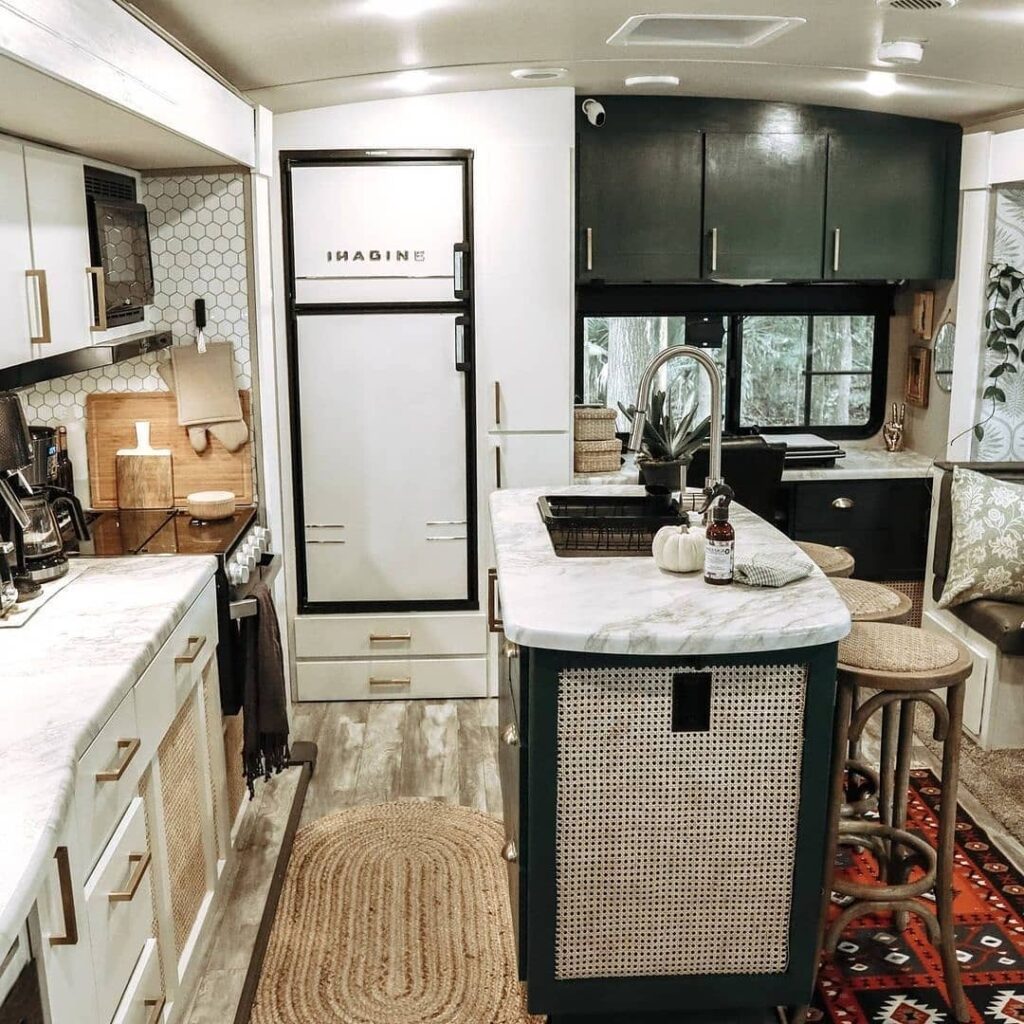
Photo Credit: @lovethatrv
Van conversions and small travel trailers require extreme efficiency where every decision impacts overall functionality. In these environments, multi-purpose items become essential, and storage solutions must integrate seamlessly with living spaces that serve multiple functions throughout the day.
Vertical storage takes on even greater importance in compact RVs, often extending to ceiling-mounted storage systems that utilize every available cubic inch. These systems must balance accessibility with safety, ensuring frequently used items remain easily reachable while rarely needed items can be stored in less convenient locations.
Seasonal Adaptation Protocols
Successful RV pantry organization adapts to seasonal changes in available ingredients, cooking preferences, and storage challenges. Summer travel often emphasizes lighter meals, fresh ingredients, and cooling foods, while winter journeys may focus on hearty soups, warming spices, and comfort foods that provide both nutrition and psychological satisfaction.
Creating seasonal storage protocols that accommodate these changing needs prevents the accumulation of inappropriate ingredients while ensuring your pantry supports your current culinary preferences. This might involve rotating spice selections, adjusting preservation methods, or temporarily reorganizing storage priorities.
Advanced Food Safety Protocols for Mobile Kitchens
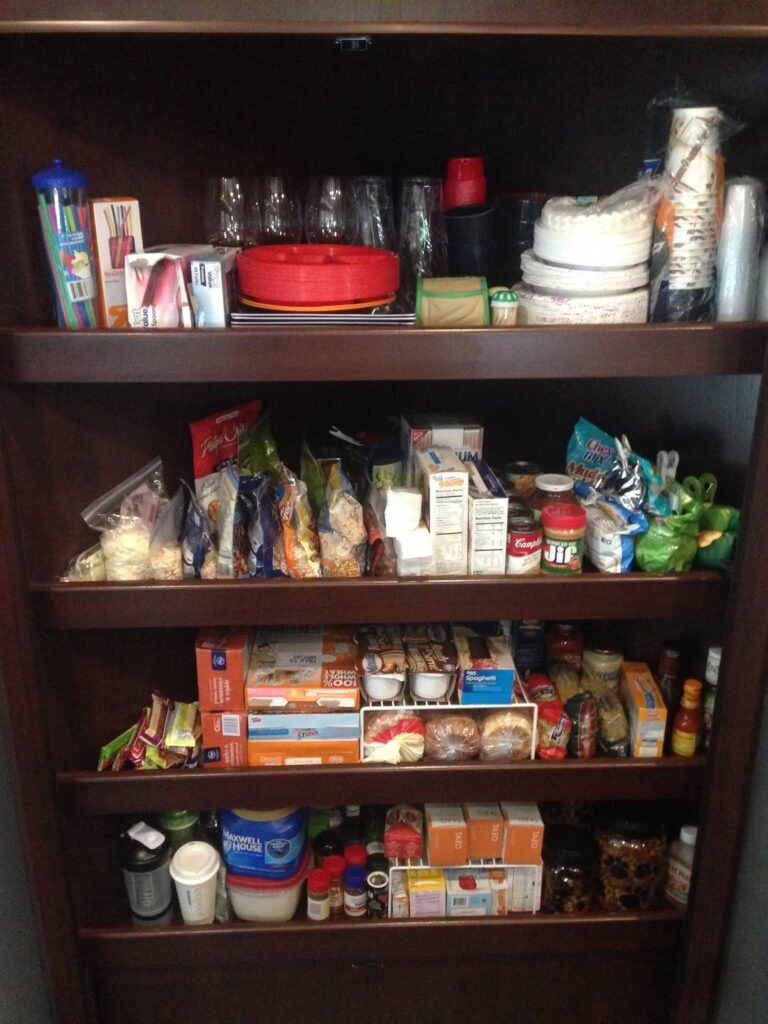
Photo Credit: @fmcarvclub
Food safety in RV environments requires heightened awareness due to factors that don’t exist in traditional kitchens. Temperature fluctuations, limited refrigeration capacity, and extended periods between grocery runs all increase food safety risks that must be actively managed through systematic approaches.
Contamination Prevention Systems
Cross-contamination poses particular risks in compact RV kitchens where preparation space is limited and storage areas may not provide adequate separation between different food types. Implementing color-coded storage systems that clearly separate raw proteins, ready-to-eat foods, and cleaning supplies prevents dangerous mixing that could lead to foodborne illness.
Establishing dedicated cutting boards, utensils, and storage containers for different food categories provides additional protection. These systems prove particularly crucial for RV travelers with food allergies or dietary restrictions where cross-contamination could have serious health consequences.
Temperature Monitoring and Control
Installing wireless temperature monitoring systems throughout your RV allows real-time tracking of storage area conditions, alerting you to potentially dangerous temperature excursions before food safety becomes compromised. These systems prove particularly valuable during extreme weather conditions or when electrical systems experience interruptions.
Understanding the concept of cumulative time-temperature exposure helps make informed decisions about food safety when refrigeration capacity is limited or unavailable. This knowledge enables safe food handling during boondocking periods or when mechanical failures occur far from repair facilities.
Economic Optimization and Budget Management
Effective pantry organization delivers significant financial benefits that extend far beyond the initial investment in storage containers and organization systems. Understanding these economic impacts helps justify the upfront costs while providing motivation for maintaining organizational systems over time.
Waste Reduction Economics
Food waste represents one of the largest controllable expenses in RV travel budgets. Organized pantries dramatically reduce waste by maintaining visibility of stored items, preventing duplicate purchases, and enabling efficient meal planning based on current inventory. The average RV family can reduce food waste by 40-60% through systematic organization, representing savings of $150-300 monthly.
Bulk purchasing becomes economically viable when proper storage systems prevent spoilage and maintain food quality over extended periods. Strategic bulk buying, combined with appropriate preservation techniques, can reduce grocery costs by 25-35% while ensuring consistent availability of preferred brands and specialty items.
Investment Recovery Analysis
Quality storage systems typically pay for themselves within 3-6 months through reduced food waste, elimination of duplicate purchases, and improved meal planning efficiency. Premium container systems may require longer recovery periods but provide superior durability and preservation capabilities that deliver long-term value.
When evaluating storage system investments, consider total cost of ownership including replacement frequency, maintenance requirements, and performance degradation over time. Higher initial investments often prove more economical when analyzed over multi-year periods typical of serious RV travelers.
Psychological and Social Benefits of Organized Living
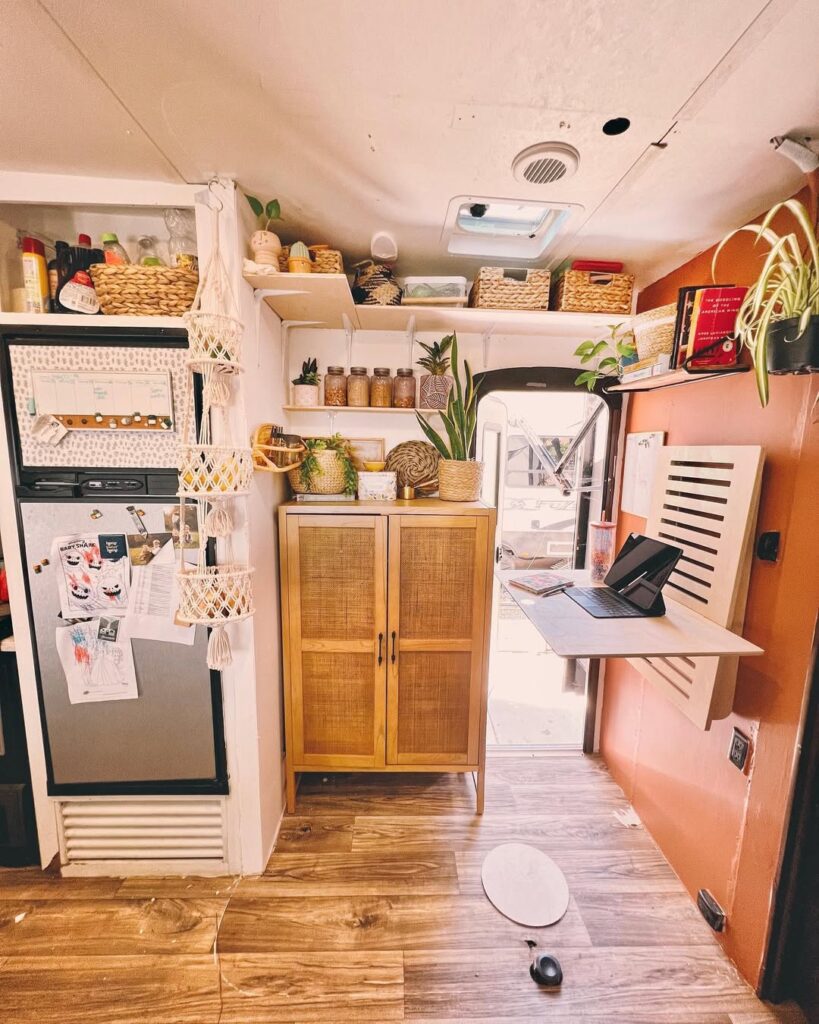
Photo Credit: @caffeinated.rv.mom
The impact of pantry organization extends far beyond functional improvements to encompass significant psychological and social benefits that enhance overall RV living experiences. Understanding these broader impacts provides additional motivation for maintaining organizational systems during challenging periods.
Stress Reduction and Mental Health
Disorganized living spaces create measurable stress responses that compound over time, particularly in confined environments typical of RV living. Organized pantries reduce decision fatigue, eliminate search frustration, and create predictable routines that provide psychological stability during the inherent uncertainty of travel.
The sense of control that comes from well-organized living spaces proves particularly valuable during challenging travel periods such as mechanical breakdowns, severe weather, or navigation difficulties. When other aspects of travel become unpredictable, maintaining organized personal spaces provides psychological anchoring that supports mental resilience.
Social and Community Benefits
Well-organized RVs facilitate social interactions by enabling confident hosting of fellow travelers for meals and gatherings. When your pantry supports efficient meal preparation, extending hospitality becomes natural rather than stressful, contributing to the vibrant social communities that characterize RV travel culture.
Sharing organizational strategies and successful storage solutions creates opportunities for knowledge exchange within RV communities, building relationships based on mutual support and practical problem-solving. These interactions often evolve into lasting friendships that span years and cross geographical boundaries.
Implementation Strategy and Continuous Improvement
Successfully implementing comprehensive pantry organization requires systematic approaches that balance immediate improvements with long-term optimization goals. Understanding implementation strategies prevents overwhelm while ensuring steady progress toward organizational objectives.
Phased Implementation Approach
Rather than attempting complete reorganization simultaneously, implement changes systematically over several weeks or months. Begin with the most impactful improvements such as container standardization and basic labeling systems, then gradually add advanced features like digital inventory management and specialized preservation techniques.
This phased approach allows time to evaluate the effectiveness of each change while maintaining functional cooking capabilities throughout the transition period. It also spreads financial investments over time, making premium storage solutions more affordable while providing opportunities to learn what works best for your specific situation.
Performance Monitoring and Adjustment
Establish measurable criteria for evaluating organizational system effectiveness, including time required for meal preparation, frequency of searching for misplaced items, and food waste quantities. Regular monitoring of these metrics provides objective feedback for system refinements and identifies areas requiring additional attention.
Creating simple feedback mechanisms such as weekly organizational reviews or monthly system assessments ensures continuous improvement while preventing gradual deterioration of organizational standards. These reviews provide opportunities to celebrate successes while identifying and addressing emerging challenges before they become major problems.
Sustainable Practices and Environmental Responsibility
Modern RV travelers increasingly recognize their responsibility to minimize environmental impact while pursuing mobile lifestyles. Pantry organization provides numerous opportunities to implement sustainable practices that reduce waste, conserve resources, and support environmental stewardship.
Packaging Reduction Strategies
Transitioning from single-use packaging to reusable storage systems dramatically reduces waste generation while often improving food preservation and storage efficiency. Quality reusable containers eliminate hundreds of disposable packages annually while providing superior protection for stored foods.
Supporting bulk purchasing from sources that offer minimal packaging or reusable containers further reduces environmental impact while often providing cost savings. Many specialty food suppliers now offer refill programs specifically designed for environmentally conscious consumers who prioritize sustainability.
Local Food System Integration
Organized pantries facilitate integration with local food systems by providing storage capabilities for fresh, seasonal ingredients that may not be available in processed, packaged forms. This capability enables support for local farmers and producers while often providing superior nutritional value and flavor compared to heavily processed alternatives.
Understanding preservation techniques for fresh, local ingredients extends the benefits of local food system participation beyond immediate consumption, allowing travelers to enjoy regional specialties throughout their journeys while reducing dependence on industrial food production systems.
Advanced Troubleshooting and Problem Resolution
Even well-designed organizational systems occasionally face challenges that require systematic problem-solving approaches. Understanding common failure modes and their solutions prevents minor issues from becoming major disruptions to RV living comfort and efficiency.
System Failure Analysis
When organizational systems fail, the root cause often involves mismatched expectations between system capabilities and actual usage patterns. Analyzing usage data and failure patterns typically reveals specific areas where systems require modification rather than complete replacement.
Common failure points include inadequate container sizing for actual purchasing patterns, insufficient accessibility for frequently used items, and preservation methods that don’t match local climate conditions. Identifying these specific issues enables targeted solutions that restore system functionality without requiring complete reorganization.
Adaptive Problem Solving
Successful RV travelers develop adaptive problem-solving skills that enable rapid system modifications when circumstances change. This might involve seasonal adjustments for different climates, temporary modifications for extended boondocking periods, or emergency protocols for equipment failures.
Building flexibility into organizational systems from the beginning enables these adaptations without compromising overall system integrity. Modular approaches that allow component substitution or reconfiguration prove particularly valuable for travelers who encounter diverse conditions throughout their journeys.
Mastering RV pantry organization represents far more than simple storage optimization—it’s about creating a foundation for successful mobile living that supports both practical needs and personal well-being. The strategies outlined in this comprehensive guide provide frameworks for developing personalized solutions that adapt to individual circumstances while addressing the universal challenges of life on the road.
The journey toward pantry mastery requires patience, experimentation, and willingness to continuously refine your approaches based on real-world experience. What works perfectly in one situation may require modification as circumstances change, but the underlying principles of systematic organization, strategic storage, and continuous improvement remain constant.
Your investment in comprehensive pantry organization will pay dividends not only in improved functionality and reduced costs but also in enhanced quality of life that makes RV travel more enjoyable, less stressful, and ultimately more sustainable over the long term. The freedom to travel confidently, knowing that your mobile kitchen supports rather than hinders your adventures, represents one of the most valuable investments you can make in your RV lifestyle.
How often should I reorganize my RV pantry?
The frequency of pantry reorganization depends on your travel intensity and lifestyle patterns. For active travelers, conduct a thorough organizational review every 2-3 months to address wear patterns and seasonal changes. After each significant trip, perform minor adjustments to secure loose items, rotate stock, and eliminate expired products. Full-time RVers may need monthly deep organization sessions, while weekend warriors can often extend the interval to quarterly reviews. The key is maintaining consistency rather than waiting for chaos to develop.
What’s the most important aspect of RV pantry organization?
Flexibility stands as the cornerstone of successful RV pantry management. Unlike stationary kitchens, your mobile pantry must accommodate constantly changing conditions including varying climates, different grocery availability, evolving dietary preferences, and mechanical constraints. The most effective systems feature modular components that can be reconfigured quickly, storage solutions that adapt to different food quantities, and organizational methods that remain functional whether you’re boondocking in remote areas or staying in full-hookup campgrounds.
How can I prevent food spoilage during long trips?
Preventing food spoilage requires a multi-layered approach combining proper storage techniques, environmental control, and systematic monitoring. Invest in high-quality airtight containers with reliable sealing mechanisms, implement preservation methods such as vacuum sealing for dry goods and moisture control packets for humidity-sensitive items. Establish a strict first-in-first-out rotation system, monitor storage area temperatures with digital thermometers, and conduct weekly inventory checks to identify items approaching expiration. Additionally, learn to recognize early spoilage signs and adjust your purchasing patterns based on actual consumption rates rather than optimistic projections.
Pro Tip: Joining established RV communities through forums, social media groups, and local meetups creates invaluable knowledge-sharing networks where experienced travelers freely share organizational innovations, product recommendations, and troubleshooting solutions. These communities often provide real-world testing feedback on storage products and techniques, helping you avoid costly mistakes while discovering proven solutions that might take years to develop independently.
Final Invitation
Your RV pantry is more than just a storage space—it’s the heart of your mobile kitchen. Approach its organization with creativity, patience, and a sense of adventure!