
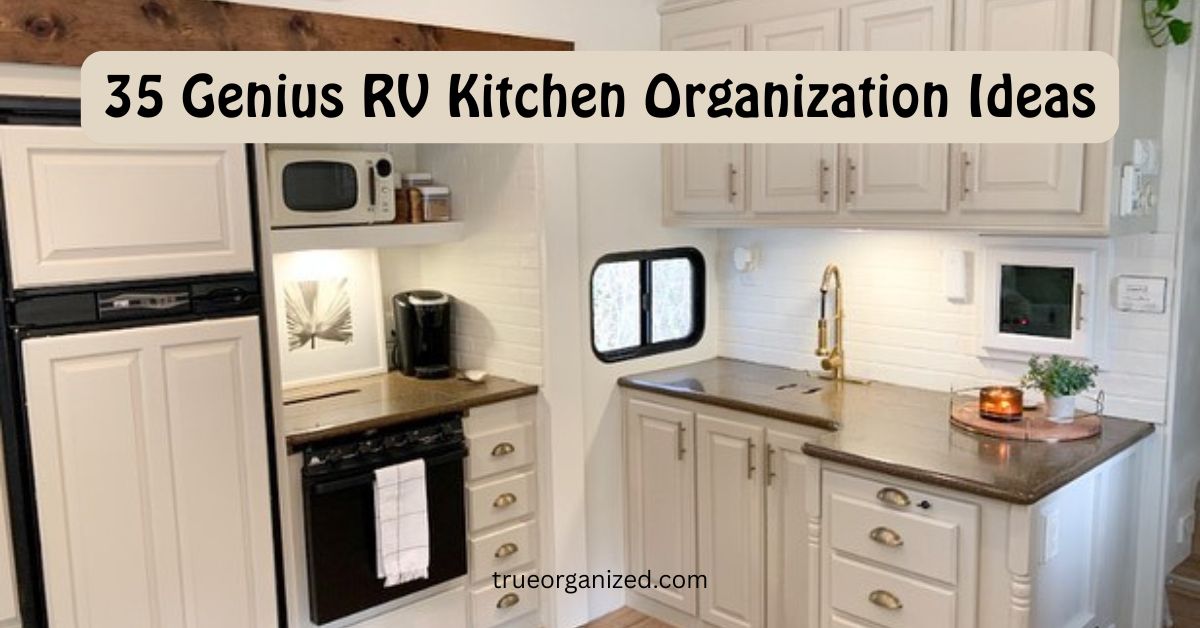
Are you struggling to make the most of your cramped RV kitchen? Finding yourself constantly shuffling items around just to prepare a simple meal? You’re not alone. The limited space in an RV kitchen presents unique challenges that require creative solutions.
In this comprehensive guide, I’ll explore 35 innovative RV kitchen organization ideas that go beyond basic storage solutions. We’ll not only cover essential products but also provide practical implementation strategies, budget-friendly alternatives, and organization systems that work specifically for mobile living.
Contents
- 1 Understanding Your RV Kitchen Challenges
- 2 How to Approach RV Kitchen Organization
- 3 Maximizing Counter Space
- 4 Smart Cabinet Organization
- 5 Refrigerator Organization For The Road
- 6 Advanced Pantry Organization
- 7 Innovative Sink Area Organization
- 8 Innovative Wall and Ceiling Storage
- 9 Smart Kitchen Gear for Small Spaces
- 10 Meal Planning and Shopping Strategies for RV Kitchens
- 11 Conclusion
Understanding Your RV Kitchen Challenges
Before diving into solutions, it’s important to understand the unique challenges of an RV kitchen:
- Limited counter space – Most RVs offer minimal food prep areas
- Restricted storage capacity – Cabinets are smaller and fewer than in standard homes
- Motion considerations – Items must stay secure while the vehicle is in motion
- Weight distribution – Heavy items need strategic placement
- Multi-functional needs – Each space often serves multiple purposes
The key to successful RV kitchen organization isn’t just finding places to put things—it’s creating systems that make your daily cooking routine efficient and enjoyable, regardless of your camping style.
How to Approach RV Kitchen Organization
Whether you’re a weekend warrior or full-time RVer, your organization approach should consider:
- Your cooking habits – Do you prepare elaborate meals or keep it simple?
- Trip duration – Weekend trips require different setups than extended travel
- Number of people – Cooking for more people requires additional planning
- Available space – Each RV model offers different kitchen configurations
With these considerations in mind, let’s explore practical organization solutions categorized by kitchen zones.
Maximizing Counter Space
1. Multi-Purpose Sink Covers


A sink cover is essential for creating additional prep space, but not all covers are created equal. Look for options with these features:
- Built-in cutting board surface – For food preparation
- Heat-resistant materials – To place hot pans when needed
- Proper fit – Custom-sized for your specific sink model
- Drain access – Some models feature a small opening for water drainage
Pro tip: Choose a sink cover with non-slip feet or edges to prevent sliding during meal preparation.
2. Collapsible Kitchen Accessories
The beauty of collapsible items is they provide full functionality when needed, then compact down when not in use.
- Collapsible dish drainer – Expand when washing dishes, collapse for storage
- Foldable cutting boards – Full-size for prep, fold to 1/3 the size for storage
- Collapsible measuring cups – Compress flat when not in use
- Silicone collapsible funnels – Essential for filling containers without spills
Budget tip: While specialized RV collapsibles can be expensive, many affordable options are available at stores like TJ Maxx, Marshall’s, and HomeGoods.
3. RV Stove Covers with Multiple Functions
While basic stove covers create more counter space, multi-functional covers offer more value:
- Tempered glass covers – Heat-resistant, easy to clean, and allow visibility to the stove
- Hinged covers – Access one burner without removing the entire cover
- Integrated spice racks – Some models include vertical storage along the back
- Heat-resistant trivets – Use as hot pads when cooking
Safety note: Always ensure stove covers are completely removed and burners are cool before cooking. Never place flammable covers on hot burners.
4. Customizable Countertop Extensions
For RVs with limited counter space, consider these extension options:
- Flip-down counter extensions – Wall-mounted surfaces that fold up when not in use
- Pull-out cutting boards – Hidden beneath existing countertops
- Window-mounted shelves – Utilize window space for additional surfaces
- Wheel well covers – Transform unused spaces into functional surfaces
DIY idea: Create a custom-sized cutting board that fits over your stovetop, with notches to keep it in place, using food-safe wood and mineral oil finish.
Smart Cabinet Organization
5. Adjustable Cabinet Shelving Systems
Most RV cabinets waste vertical space. Maximize every inch with:
- Expandable shelf dividers – Create customized shelf heights
- Tension rod shelving – Use tension rods to create additional horizontal shelves
- Under-shelf baskets – Hang from existing shelves to double storage space
- Cabinet shelf risers – Create multiple levels within the same shelf
Measurement tip: Before purchasing any shelf organizers, measure both cabinet dimensions and the items you plan to store to ensure proper fit.
6. Vertical Storage Solutions for Cookware
Instead of stacking pots and pans (which wastes space and creates noise while driving), organize them vertically:
- Adjustable pan organizers – Store pans and lids on their sides
- Cabinet door-mounted lid holders – Free up shelf space by storing lids vertically
- File organizers – Repurpose office supplies to hold cutting boards and baking sheets
- Vertical tension rod dividers – Create slots for storing pans upright
Pro tip: Place a small piece of felt or rubber between stacked cookware to prevent scratching and reduce noise during travel.
7. Advanced Cabinet Door Utilization
The inside of cabinet doors offers valuable yet often overlooked storage space:
- Slim spice racks – Mount narrow shelves for spice storage
- Magazine holder hacks – Attach to hold plastic wrap, aluminum foil, and parchment paper
- Custom measurement charts – Adhere common conversion charts for quick reference
- Hooks and hanging systems – Store frequently used utensils
Space-saving hack: Use adhesive magnetic strips inside cabinet doors to hold metal lids, preventing them from sliding around during travel.
8. Strategic Drawer Organization
Maximize drawer space with these specialized organizers:
- Expandable utensil trays – Adjust to fit your specific drawer dimensions
- Bamboo drawer dividers – Create custom compartments for various items
- Drawer liner grippers – Prevent items from sliding during travel
- Stacking drawer organizers – Create multiple levels within deep drawers
Travel tip: Before hitting the road, place a sheet of non-slip liner over organized drawers to keep everything in place during transit.
9. Corner Cabinet Solutions
Corner cabinets often become wasted space in RVs due to difficult access:
- Lazy Susan turntables – Multi-level rotating organizers for easy access
- Pull-out corner systems – Hardware that brings items from the depths to the front
- Stackable corner shelves – Utilize vertical space in corner cabinets
- Angled drawer organizers – Designed specifically for odd-shaped spaces
Organization principle: Store frequently used items at the front of corner cabinets and rarely used items in the hard-to-reach back areas.
Refrigerator Organization For The Road
10. RV Refrigerator Stabilization Systems
RV refrigerators present unique challenges because items shift during travel. Prevent food chaos with:
- Double bar refrigerator tension rods – Create horizontal barriers that prevent items from moving
- Adjustable refrigerator dividers – Custom compartments that maintain organization
- Non-slip refrigerator liners – Provide grip to prevent sliding bottles and containers
- Refrigerator door organizers – Secure items that would otherwise shift in door compartments
Temperature management tip: Place a small battery-operated thermometer in your RV refrigerator to monitor temperature consistency, especially during hot weather travel.
11. Space-Optimizing Refrigerator Containers
Standard home refrigerator containers waste valuable space in compact RV fridges:
- Stackable square containers – Maximize space compared to round containers
- Collapsible silicone food storage – Full-size when needed, compact when empty
- Magnetic storage containers – Attach to metal surfaces in the refrigerator
- Slim beverage organizers – Store drinks on their sides to utilize vertical space
Food safety tip: Use erasable food storage labels to mark dates on leftovers—crucial in an RV where limited refrigerator space means food needs to be managed efficiently.
12. Creative Refrigerator Zones
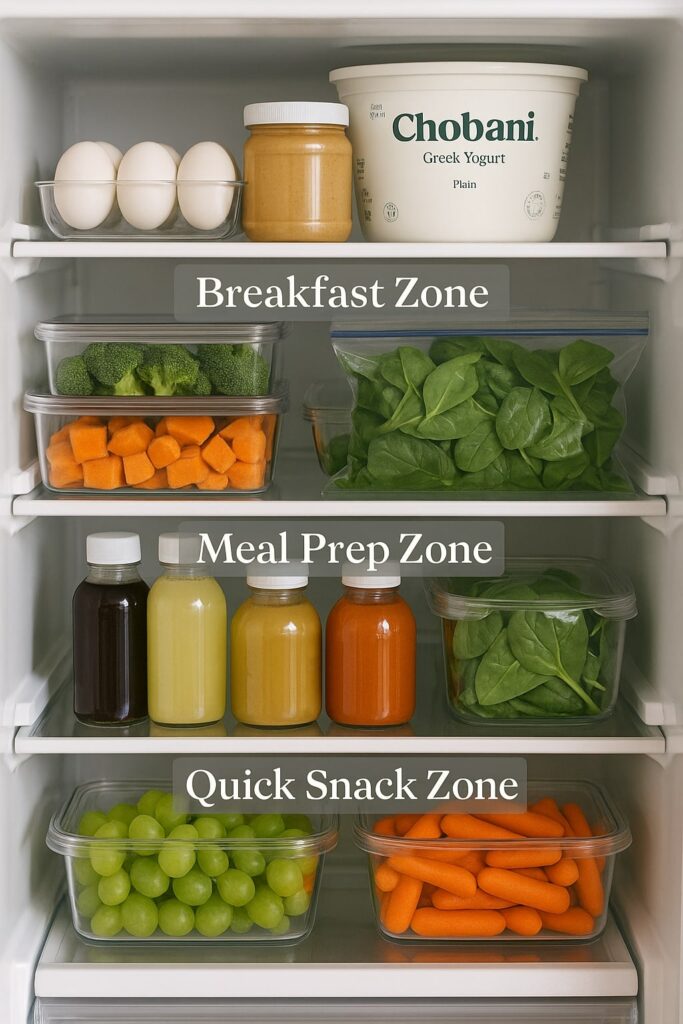
Create dedicated zones in your refrigerator to maximize organization:
- Breakfast zone – Keep morning essentials together
- Meal prep zone – Store ingredients for planned meals together
- Beverage zone – Dedicate space specifically for drinks
- Quick snack zone – Easy access to healthy grab-and-go options
Efficiency hack: Pre-cut vegetables and store in vertical containers with a little water at the bottom to maintain freshness while saving space.
Advanced Pantry Organization
13. Tiered Pantry Systems
Transform flat pantry shelves into multi-level storage with:
- Expandable tiered organizers – Add levels to existing shelves
- Stackable can organizers – Store canned goods efficiently with first-in, first-out access
- Hanging basket systems – Utilize vertical space between shelves
- Pull-out pantry drawers – Maximize deep cabinet space with full-extension sliders
Related Read: Mastering RV Pantry Organization: 7 Genius Space-Saving Strategies
Organization principle: Store heavier items on lower shelves for stability during travel and to prevent items falling during sudden stops.
14. Travel-Proof Food Storage
Prevent pantry chaos during travel with:
- Airtight containers with secure lids – Transfer dry goods from original packaging
- Tension rod barriers – Create horizontal guards to prevent items from falling
- Non-slip shelf liners – Provide friction to reduce sliding
- Cabinet door latches – Ensure doors remain closed during transit
Budget alternative: Repurpose plastic takeout containers with secure lids for storing dry goods like rice, pasta, and beans—free and effective.
Related Read: 15 Genius RV Food Storage Hacks to Maximize Space
15. Specialized Pantry Categories
Create these specialized zones in your RV pantry for maximum efficiency:
- Quick meal zone – Store easy-to-prepare items together
- Baking essentials – Keep flour, sugar, and baking supplies in one area
- Snack station – Dedicated space for grab-and-go items
- Backup supplies – Reserve space for extra staples
Labeling tip: Use clear labels on containers and zones—this helps everyone in the RV know where items belong, making it easier to maintain organization.
16. Vacuum-Sealed Storage Solutions
Dramatically reduce the space needed for certain foods with vacuum sealing:
- Handheld vacuum sealers – More compact than counter models
- Reusable vacuum seal bags – More environmentally friendly than disposable options
- Nested container systems – Stack efficiently after air removal
- Vacuum-sealed meal kits – Prepare ingredients for planned meals in advance
Space-saving calculation: Vacuum sealing can reduce storage volume by up to 75% for appropriate foods—crucial in limited RV pantry space.
17. Magnetic Spice Organizations
Spice bottles consume valuable cabinet space. Reclaim that space with:
- Magnetic spice tins – Attach to any metal surface in your kitchen
- Under-cabinet magnetic strips – Install beneath cabinets for easy spice access
- Magnetic spice grinders – Fresh-ground spices without the bulk of traditional bottles
- Tiered magnetic spice racks – Install on refrigerator sides or metal backsplashes
Travel consideration: Ensure magnetic attachments are strong enough to hold during travel—test by driving on bumpy roads before fully implementing.
Innovative Sink Area Organization
18. Multi-Functional Dish Drying Solutions
RV sinks require specialized drying systems that conserve space:
- Over-the-sink dish racks – Utilize vertical space without consuming counter area
- Rollable dish drying mats – Unroll when needed, store compactly when not in use
- Collapsible dish drainers – Full-size for use, compact for storage
- Sink-mounted utensil holders – Attach to sink edges to dry utensils vertically
Water conservation tip: Place a small basin in your sink while washing dishes to collect gray water that can be reused for plants or other non-potable purposes.
19. Under-Sink Organization Systems
The area beneath an RV sink typically houses plumbing but can be maximized with:
- Custom-fit sliding drawers – Work around pipes while maximizing accessibility
- Tension rod utility racks – Hang spray bottles from adjustable rods
- Stacking caddy systems – Create multiple levels of storage
- Door-mounted cleaning supply organizers – Free up floor space for larger items
Leak protection strategy: Place a shallow plastic tray under cleaning supplies to catch any leaks that might occur during transit.
20. Sink Cover Work Stations
Beyond basic sink covers, create functional workstations with:
- Integrated cutting board and colander systems – Wash and prep in one area
- Multi-level sink covers – Different heights for various functions
- Sink covers with containment edges – Prevent liquids and food from spilling
- Sink covers with integrated utensil storage – Keep tools within easy reach
Space-saving technique: Choose a sink cover that can double as a serving tray for outdoor dining, eliminating the need for separate items.
Innovative Wall and Ceiling Storage
21. Ceiling-Mounted Storage Systems
Look up to find valuable storage space in your RV kitchen:
- Hanging produce hammocks – Store fruits and vegetables in breathable nets
- Ceiling-mounted pot racks – Keep cookware accessible yet out of the way
- Hanging herb gardens – Grow fresh herbs without using counter space
- Retractable ceiling storage – Lower when needed, raise when not in use
Installation tip: Always secure ceiling-mounted storage to structural elements, not just the decorative ceiling panels.
22. Backsplash Organization Systems
Kitchen backsplashes offer vertical storage opportunities:
- Rail systems with removable hooks – Adjust as needs change
- Magnetic knife strips – Keep knives accessible yet safe
- Pegboard backsplash panels – Highly customizable storage for utensils and tools
- Slim wall-mounted baskets – Perfect for spices or frequently used items
Multi-purpose solution: Install a removable backsplash panel that doubles as a message center using chalkboard or whiteboard material.
23. Window Space Utilization
Windows provide abundant natural light but can also offer storage potential:
- Tension rod plant shelves – Grow herbs in the window without permanent fixtures
- Suction cup storage hooks – Temporary hanging storage that leaves no marks
- Window sill extenders – Expand narrow sills into functional shelves
- Light-filtering storage pockets – Fabric organizers that still allow light to enter
Dual-purpose idea: Create window coverings with built-in pockets for small kitchen items, providing both privacy and storage.
24. Door and End Cabinet Panel Organization
Utilize the often-overlooked sides of cabinets and doors:
- Full-length door organizers – Maximize vertical space
- Cabinet end panel hook systems – Perfect for hanging lighter cookware
- Slim slide-out pantries – Install between refrigerator and wall
- Decorative yet functional hanging systems – Combine aesthetics with utility
Visual hack: Use coordinating containers and organizers on visible surfaces to maintain a cohesive, uncluttered appearance.
25. Multi-Zoned Wall Organization
Create dedicated wall zones for different kitchen functions:
- Coffee/tea station – Hang mugs, store supplies, and mount equipment
- Recipe and meal planning center – Display current recipes and shopping lists
- Quick grab essentials – Frequently used tools within easy reach
- Kitchen command center – Combine calendar, shopping list, and meal plan
Flexibility tip: Use removable command hooks and strips for wall organization to easily reconfigure as your needs change throughout your travels.
Smart Kitchen Gear for Small Spaces
26. Space-Saving Appliances
Choose appliances designed specifically for compact living:
- Multi-function cookers – Beyond the Instant Pot, look for models with air fryer, slow cooker, and rice cooker functions
- Nesting cookware with removable handles – Full functionality without the storage bulk
- Collapsible silicone kitchenware – Kettles, mixing bowls, and measuring cups that flatten when not in use
- Portable induction cooktops – Use outside to keep heat out of your RV and expand cooking options
Energy efficiency recommendation: Look for 12V or dual-voltage appliances that can run on battery power when boondocking.
Related Read: 69 Essential RV Organization Accessories for Maximizing Your Space
27. Stackable Food Storage Systems
Uniform, stackable food storage containers maximize limited cabinet space:
- Square nesting container sets – More efficient than round containers
- Vacuum-seal containers – Preserve food freshness while minimizing volume
- Interlocking storage systems – Containers that lock together to prevent shifting
- Modular systems with interchangeable lids – Fewer lids to store and lose
Organization strategy: Store container lids vertically in a plate rack or magazine holder to prevent lost lids and wasted space.
28. Multi-Use Kitchen Tools
Every item in an RV kitchen should earn its space by serving multiple functions:
- 7-in-1 kitchen gadgets – Tools that combine multiple functions in one device
- Silicone baking mats – Double as counter protection, placemats, and non-slip surfaces
- Convertible cookware – Pots that become serving dishes, lids that become pans
- Nesting measuring tools – Complete sets that stack within themselves
Minimalist approach: Before adding any new kitchen tool, ask yourself if it performs at least two essential functions—if not, it likely doesn’t deserve precious RV kitchen space.
Meal Planning and Shopping Strategies for RV Kitchens
29. Space-Conscious Meal Planning
Efficient RV kitchen organization begins before you shop:
- One-pot meal planning – Reduce cookware needs with simplified recipes
- Ingredient overlap planning – Use the same ingredients across multiple meals
- Just-right quantity shopping – Buy exactly what you need to avoid excess
- Storage-first meal selection – Choose meals based on required storage space
Digital resource: Create a digital cookbook of RV-friendly recipes categorized by required cooking equipment and storage needs.
30. Zone-Based Shopping Organization
Organize groceries by storage zones before even loading them into your RV:
- Color-coded shopping bags – Designate bags for refrigerator, freezer, and pantry items
- Pre-portioned ingredient prep – Minimize packaging and prepare ingredients before storage
- Shop-to-store container transfer – Move items directly from shopping bags to final containers
- Shopping list organized by RV storage zones – Make lists based on where items will be stored
Efficiency hack: Take photos of your organized RV kitchen before shopping trips to remember exactly what spaces are available.
31. Inventory Management Systems
Maintain perfect awareness of what you have and where it’s stored:
- Digital inventory apps – Track food items with expiration dates
- Visual inventory charts – Quick-reference guides to cabinet contents
- Meal kit organization – Group ingredients for planned meals together
- Consumption tracking – Monitor how quickly supplies are used for better future planning
Paper alternative: Keep a simple magnetic notepad on your refrigerator to track items as they’re used up.
32. RV-Specific Food Storage Techniques
Adapt food storage for the unique challenges of RV living:
- Vacuum sealed meal components – Prepare proteins and freeze flat for space efficiency
- Dehydrated ingredient substitution – Replace bulky fresh ingredients when appropriate
- Strategic freezer tetris – Freeze liquids in stackable containers, not bags
- Fresh food preservation strategies – Specialized produce containers with ventilation
Food safety tip: Keep a refrigerator thermometer visible at all times, as RV refrigerators can fluctuate significantly with outside temperatures and driving conditions.
33. Travel Day Systems
Develop special organization for travel days:
- Accessible snack station – Easy-to-reach foods that don’t require stopping
- Quick-setup first night meal kit – Have everything ready for that first evening
- Secure-and-go checklist – Systematic approach to securing all kitchen items
- Pre-travel refrigerator organization – Special arrangement for items most likely to shift
Experience-based advice: Keep a dedicated “arrival meal kit” with easy-to-prepare food for your first night at a new location when you don’t want to set up the full kitchen.
34. Maintenance and Cleaning Organization
Keep cleaning supplies organized for maximum efficiency:
- Multi-surface RV-safe cleaners – Reduce the number of products needed
- Hanging cleaning tool storage – Keep brushes and tools accessible
- Magnetic or suction cleaning caddy – Move where needed, store securely
- Compact cleaning tool sets – Specialized tools that nest together
Environmentally friendly approach: Use refillable cleaning bottles with concentrate to minimize packaging waste and storage space.
35. Seasonal Reorganization Strategy
Adapt your kitchen organization to your travel seasons:
- Winter cooking configuration – Emphasize baking supplies and comfort food ingredients
- Summer setup – Prioritize outdoor cooking equipment and cold food preparation
- Shoulder season flexibility – Modular systems that adapt to changing needs
- Destination-specific organization – Adjust based on where you’ll be traveling
Adaptability principle: The most successful RV kitchen organization systems evolve over time—schedule quarterly reassessments to optimize your setup.
Conclusion
Creating an organized RV kitchen isn’t about implementing every idea at once—it’s about selecting the strategies that work for your specific:
- RV layout and storage configuration
- Cooking preferences and habits
- Travel style and duration
- Personal organization tendencies
Start with addressing your biggest pain points, implement solutions incrementally, and adjust as you learn what works best for your mobile lifestyle. Remember that RV kitchen organization is an ongoing process that evolves with your travels.
With these 35 strategies, you’re now equipped to transform your tiny RV kitchen from a frustrating space into an efficient cooking command center that makes meal preparation a joy rather than a chore—no matter where the road takes you.
What’s your biggest RV kitchen organization challenge? Share in the comments below!