
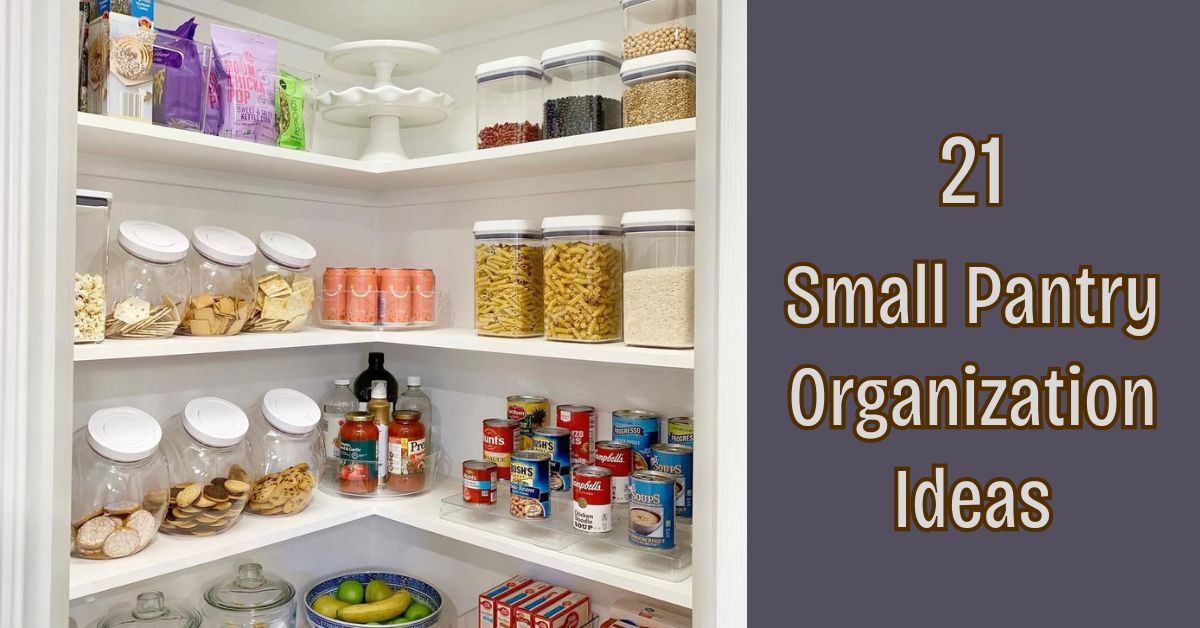
A small pantry may seem like a challenge to organize, but with a few clever strategies, you can transform it into an efficient and aesthetically pleasing space. The key is to optimize every inch of available space while maintaining functionality. Whether you’re managing a compact kitchen or simply want to make better use of your pantry, this guide will provide expert tips and innovative ideas to keep your pantry neat, accessible, and organized.
Key Benefits of Organizing Your Pantry
Before diving into the organization strategies, let’s highlight some key benefits of having a well-organized pantry:
- Maximizes Storage: A well-organized pantry uses vertical and horizontal space effectively, making room for more items.
- Saves Time: With a clear layout, you can easily access what you need without rummaging through clutter.
- Prevents Waste: An organized pantry makes it easier to keep track of expiration dates and prevent food waste.
- Reduces Stress: A clutter-free pantry creates a calm and efficient environment for meal prep and shopping.
1. Incorporate Adjustable Shelves for Versatility
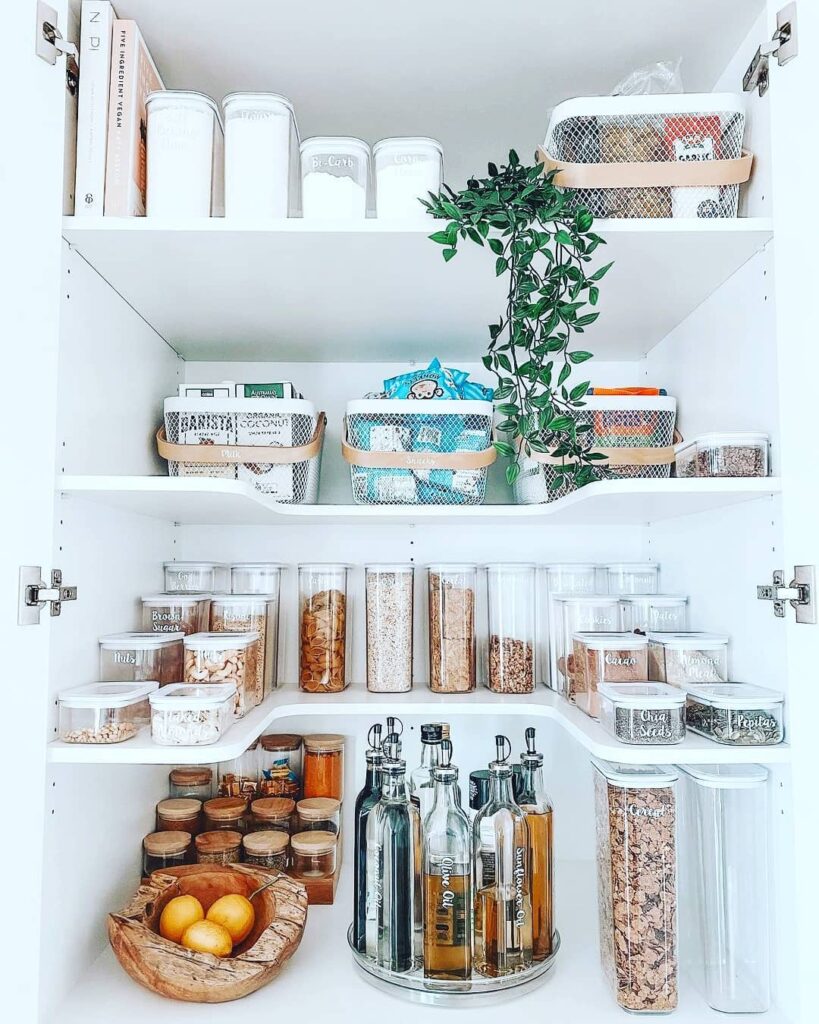
Photo Credit: @homganize
One of the first things to consider when organizing your pantry is how adjustable your shelves are. The flexibility to adjust the height of shelves allows you to accommodate a variety of items, from tall jars to short spice containers.
Why Adjustable Shelves?
- Maximize Vertical Space: Use the height of your pantry by placing shelves at varying heights to fit different items.
- Customizable for Changing Needs: Over time, your pantry needs may change. Adjustable shelves allow you to reorganize without replacing the entire system.
Expert Tip:
If possible, install adjustable shelving units with brackets that can be moved to create more space as needed. This allows you to store taller items like cereal boxes or canned goods in a way that maximizes accessibility.
2. Clear Containers for Visibility and Cohesion
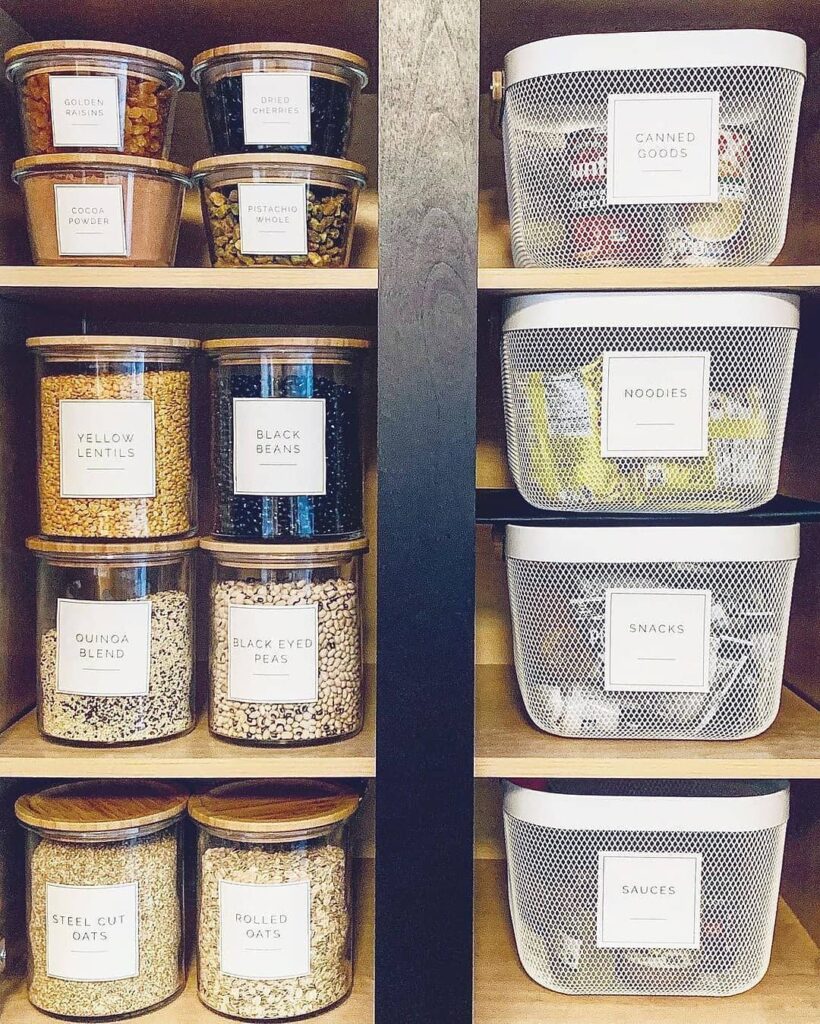
Photo Credit: @homganize
Clear storage bins are a must for any well-organized pantry. Whether you’re storing dry goods, snacks, or baking ingredients, clear containers offer several benefits:
Benefits of Clear Containers:
- Easy Identification: You can quickly identify the contents of each container without opening it.
- Consistency in Appearance: Clear containers give your pantry a uniform, cohesive look, making it feel less cluttered.
- Reduces Overbuying: With clear containers, you’ll always be able to see how much of each item you have, reducing the chance of buying duplicates.
Expert Tip:
Consider decanting pantry staples like flour, sugar, and rice into clear glass or plastic containers. Write the expiration date on the back of the container to keep track of shelf life.
3. Optimize Shelf Space with Stackable Bins and Drawers
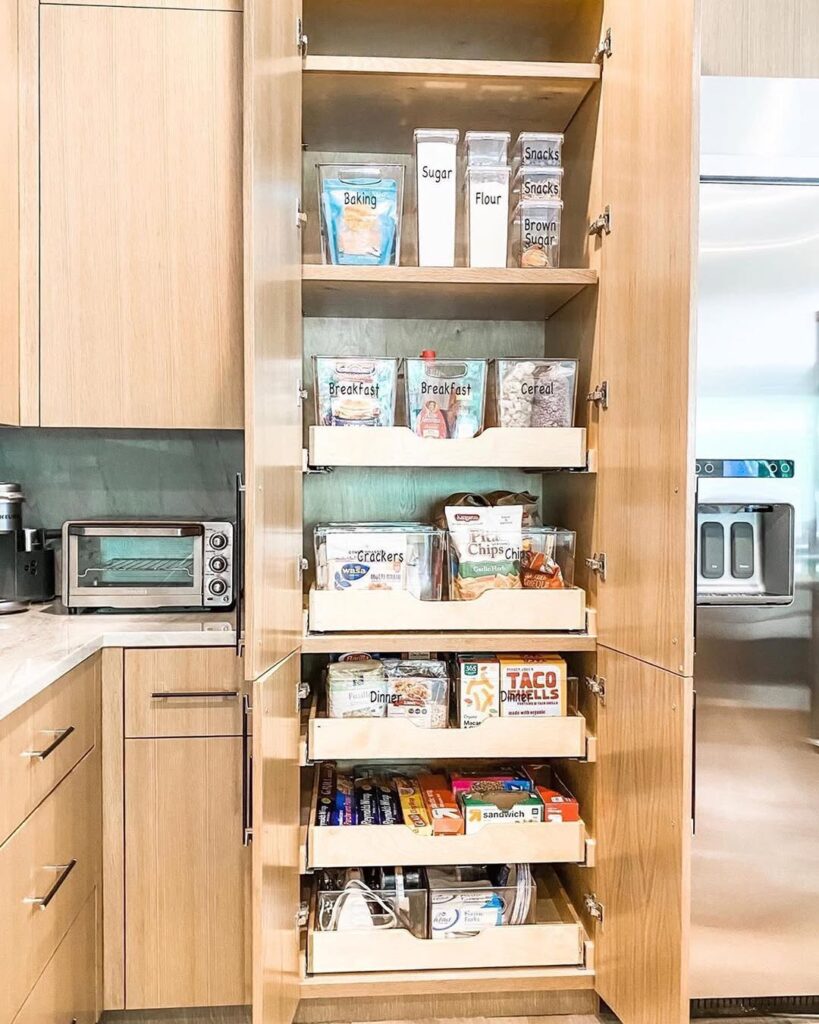
Photo Credit: @lanalamaison
Maximizing your shelf space is essential, especially in a small pantry. Stackable bins and drawers help you take advantage of unused vertical space and organize smaller items that tend to get lost.
Benefits of Stackable Bins:
- Maximizes Vertical Space: By stacking bins, you can store more items without wasting space.
- Keeps Items Grouped: Stackable bins help to group like items together, making it easier to find and access them.
Expert Tip:
Use stackable bins for things like canned goods, snacks, and baking supplies. Choose transparent bins so you can easily see the contents.
4. Use Pull-Out or Sliding Shelves for Easy Access
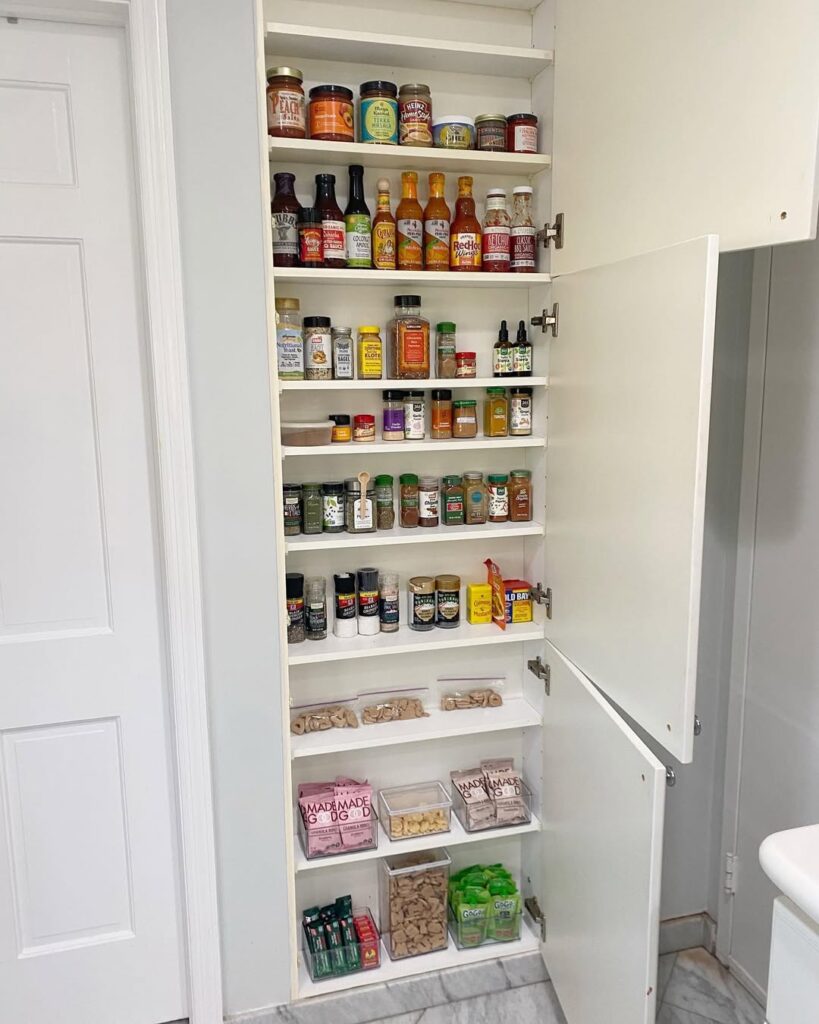
Photo Credit: @claritythroughorganization
Reaching the back of your pantry can be a hassle, especially when items get pushed to the back. Installing pull-out or sliding shelves is an excellent solution to this problem.
Benefits of Pull-Out Shelves:
- Maximized Visibility: Pull-out shelves allow you to access everything in your pantry without having to bend or stretch.
- Customizable Layout: You can tailor the depth of pull-out shelves to fit your pantry’s specific dimensions.
Expert Tip:
Consider installing pull-out shelves for deep pantries where items are difficult to reach. These can be retrofitted onto existing shelving units or custom built.
5. Install Over-the-Door Organizers for Extra Storage
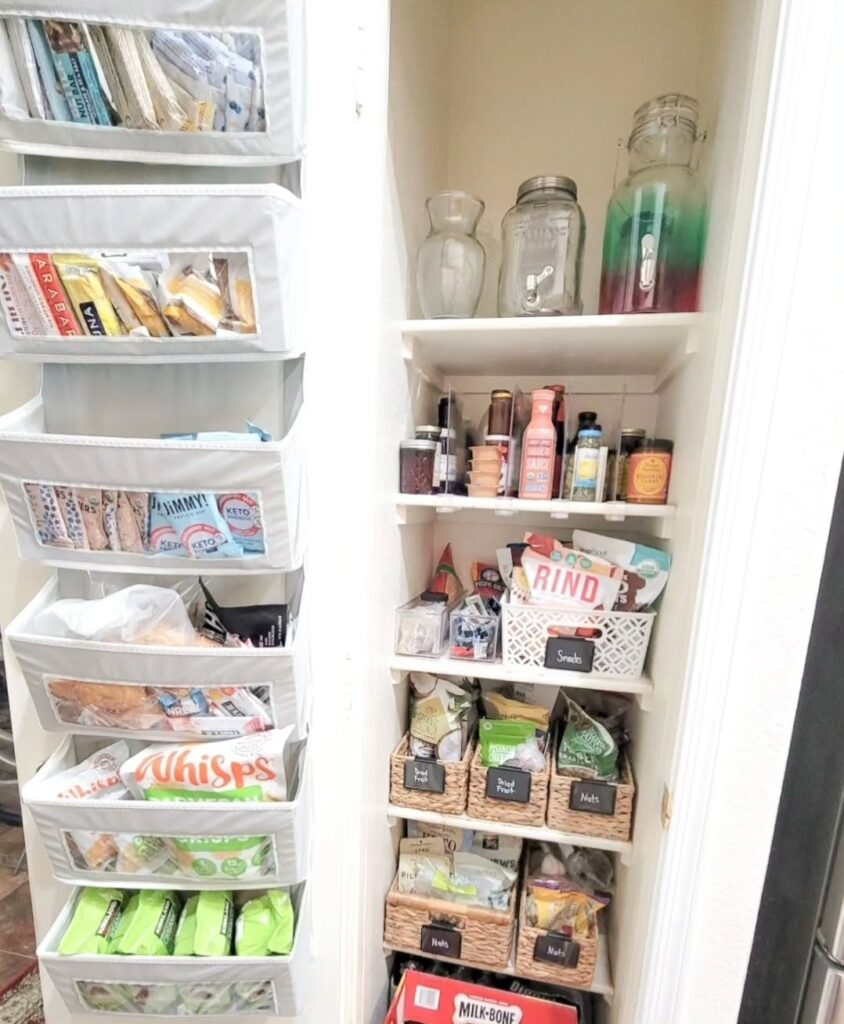
Photo Credit: @azorganizeher
One often overlooked space in a pantry is the inside of the door. Over-the-door organizers are a fantastic way to add storage without taking up any additional floor space.
Benefits of Over-the-Door Organizers:
- Utilizes Unused Space: The back of the pantry door offers valuable storage real estate.
- Perfect for Small Items: These organizers are ideal for holding spices, oils, or even packaged snacks.
Expert Tip:
Use slim, adjustable over-the-door racks for spices or canned goods. If your pantry door has limited clearance, choose a low-profile design that can fit between the door and the frame.
6. Keep Frequently Used Items Accessible
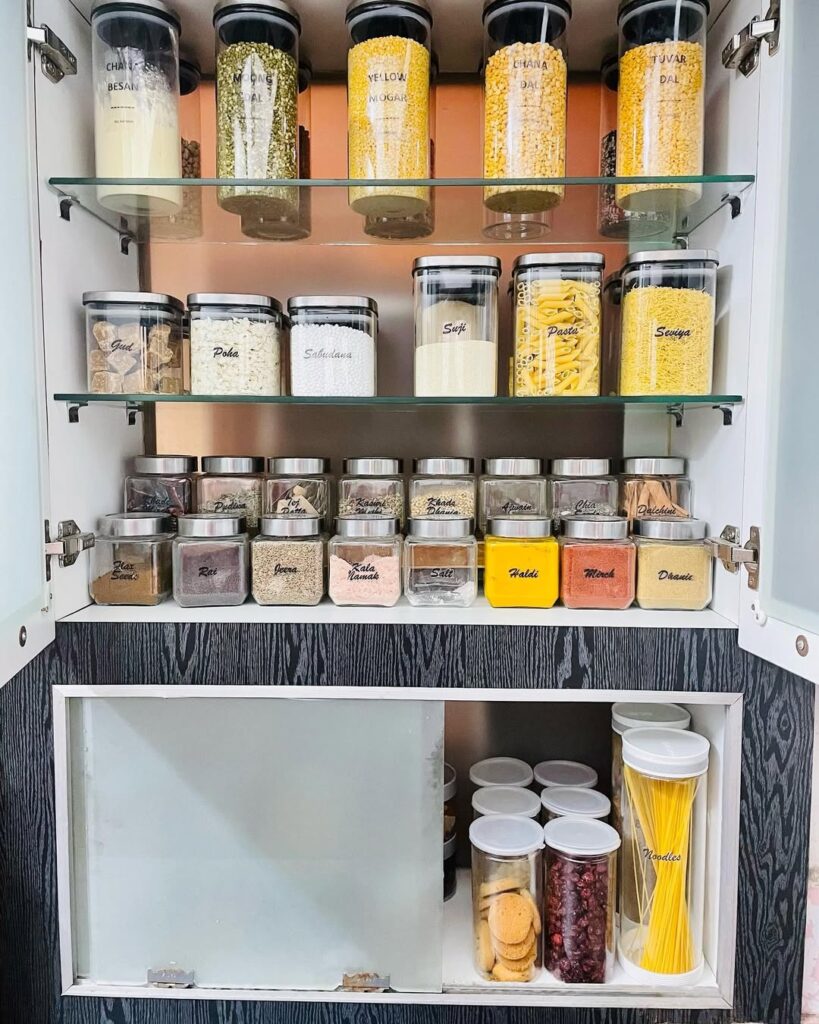
Photo Credit: @homedecorbyapoorva
To optimize the flow of your pantry, it’s important to store frequently used items at eye level or within easy reach. This saves time and effort during meal prep.
Why Accessibility Matters:
- Time-Saving: By storing everyday essentials in easy-to-reach areas, you reduce the time spent searching for items.
- Encourages Healthy Eating: Keeping healthy snacks or ingredients within sight can encourage healthier eating habits.
Expert Tip:
Dedicate a section of your pantry to frequently used items like snacks, bread, and sauces. Group them together so you can grab what you need quickly without disrupting the entire pantry.
7. Categorize Your Pantry Items for Simplicity
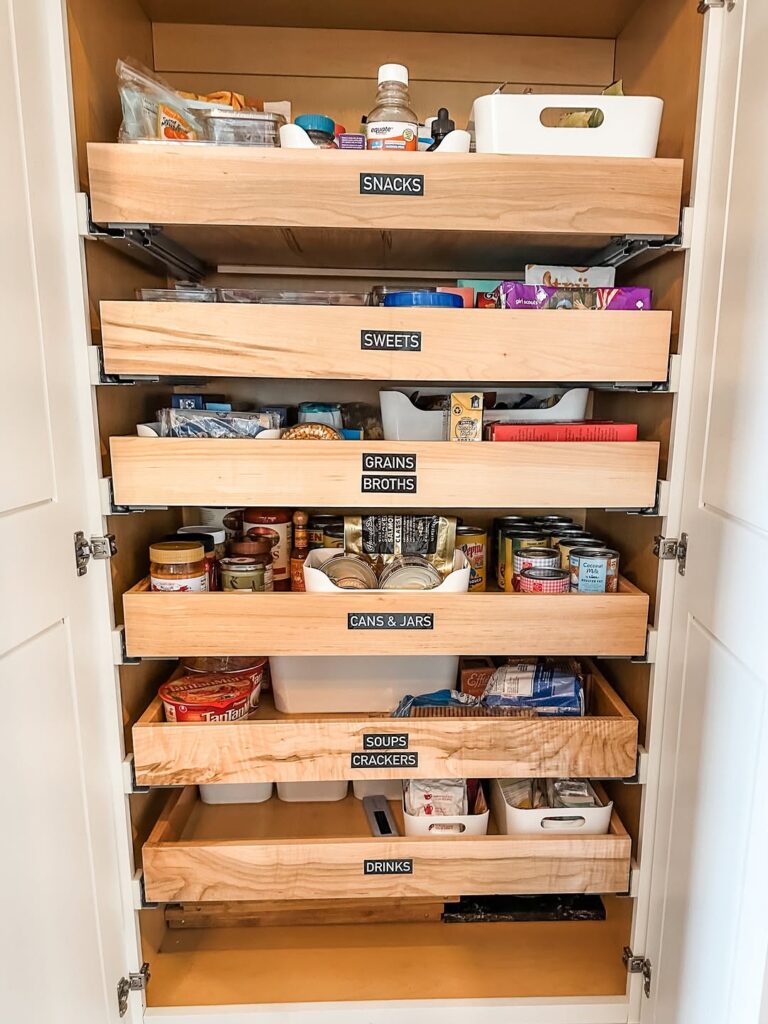
Photo Credit: @hellosimplified
Sorting your pantry into clear categories is one of the best ways to keep things organized. By grouping similar items together, you reduce clutter and make it easier to find what you’re looking for.
Popular Pantry Categories:
- Baking Ingredients: Flours, sugars, baking soda, etc.
- Snacks: Chips, granola bars, nuts, etc.
- Canned Goods: Vegetables, soups, beans, etc.
- Spices and Seasonings: Herbs, spices, salt, pepper, etc.
- Dry Goods: Pasta, rice, oats, etc.
Benefits of Categorizing:
- Improved Efficiency: You’ll be able to find what you need quickly without searching through a cluttered pantry.
- Better Meal Planning: With everything grouped together, you can easily see what you have, which makes meal planning much simpler.
Expert Tip:
If you have limited shelf space, consider organizing by meal types (e.g., “Breakfast”, “Lunch”, “Dinner”) or cooking methods (e.g., “Baking”, “Grilling”). This method works especially well for households with specific meal preferences.
8. Label Everything for Clarity and Precision
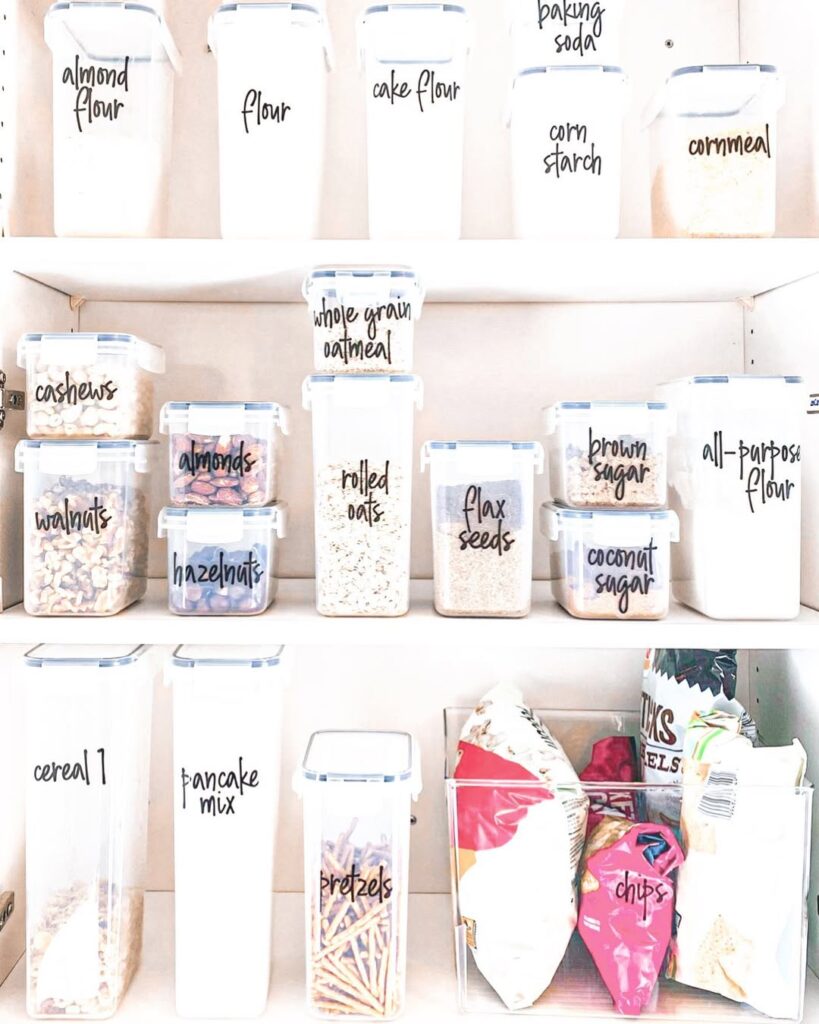
Photo Credit: @blossomyourhometaina
Labels play an important role in keeping your pantry organized. While it’s not necessary to label every single item, labeling key pantry staples can save time and prevent confusion.
Benefits of Labeling:
- Prevents Mistakes: Labeling helps to avoid mix-ups, especially with similar-looking items (like sugar vs. flour).
- Easy to Replenish: When items are labeled, you’ll know exactly what you need to restock.
Expert Tip:
Use durable, wipeable labels so you can easily adjust them as your pantry inventory changes. Label clear containers, jars, or bins with both the product name and the expiration date for extra convenience.
9. Use Drawer Dividers for Smaller Items
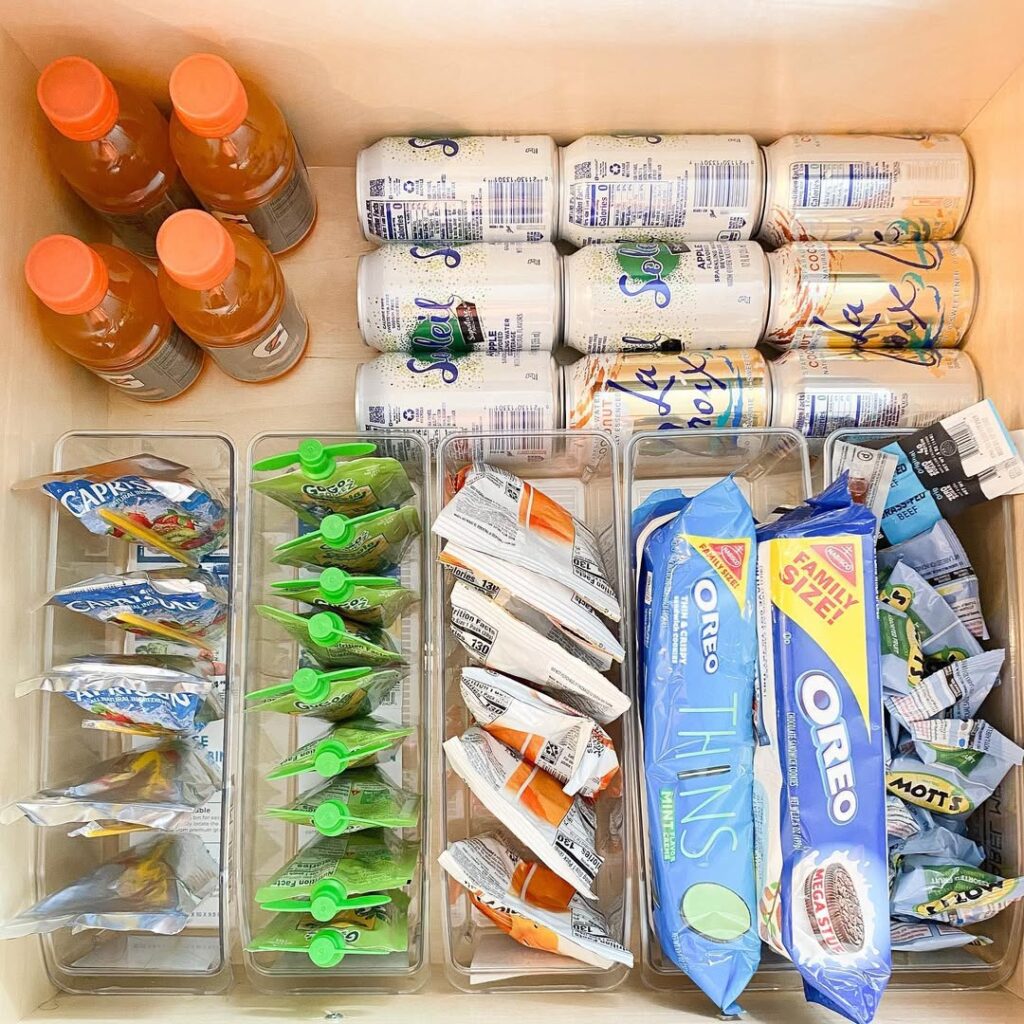
Photo Credit: @topshelforganizers
If your pantry includes drawers or shelves with smaller items, drawer dividers are an excellent solution. These dividers will keep everything in place and prevent items from shifting around.
Why Drawer Dividers Are Essential:
- Prevents Clutter: Smaller pantry items like tea bags, breakfast bars, and spices tend to get lost or mixed together. Dividers keep everything neat and accessible.
- Customizable: You can adjust dividers to fit different sizes of items, from small packets to larger boxes.
Expert Tip:
Consider adjustable drawer dividers for a custom fit. Use these for small, often-used items like sweeteners, condiments, or snack packets.
10. Stack Canned Goods Strategically
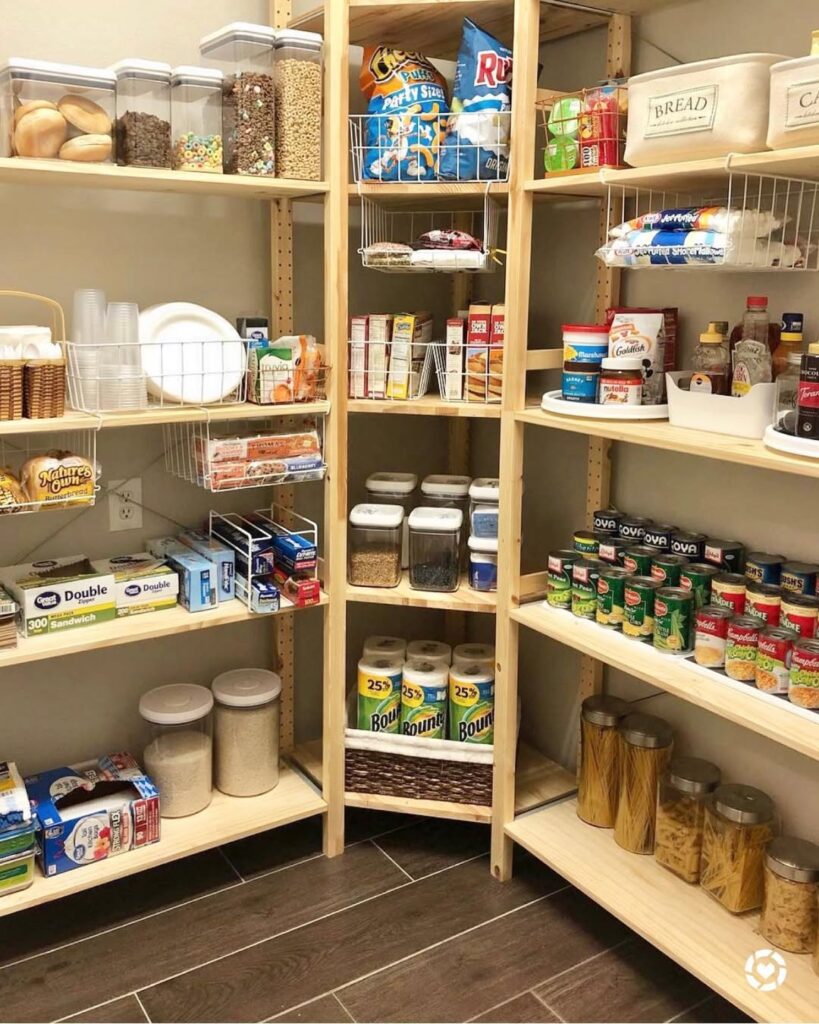
Photo Credit: @homebysandra.k
If you don’t have adjustable shelves but still need to store a lot of canned goods, stacking is a practical solution. While stacking can save space, it’s important to do it correctly to avoid accidents and ensure easy access.
Benefits of Stacking Canned Goods:
- Maximizes Shelf Space: Stacking items can help you fit more in your pantry without wasting space.
- Prevents Clutter: Neatly stacked cans keep the pantry organized and easier to navigate.
Expert Tip:
Stack canned goods at eye level or below to prevent the risk of cans falling when you reach for them. Use risers or stackable shelves to make it easier to organize and see everything in your pantry.
11. Use Turntables for Easy Access to Tall Items
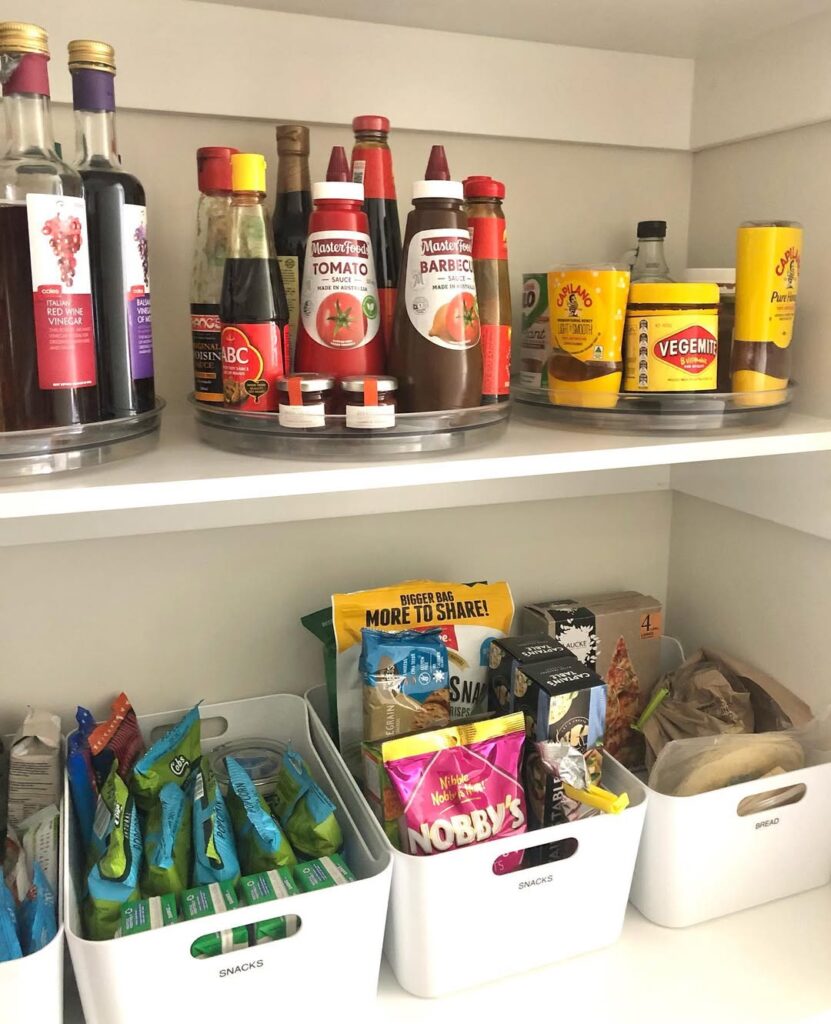
Photo Credit: @interiororganisation
A small pantry often means limited space, which can lead to items being shoved to the back. A lazy Susan or turntable is a great solution to ensure that every item is easily accessible.
Benefits of Turntables:
- Maximizes Visibility: Turntables allow you to see and access all items, including those stored in the back.
- Ideal for Tall Items: Perfect for storing oils, sauces, and spices, which often get hidden at the back of the pantry.
Expert Tip:
Use separate turntables for different categories of items. For example, one turntable for oils and vinegars and another for canned goods or condiments.
12. Install Pull-Out Trash Bins for Easy Waste Management
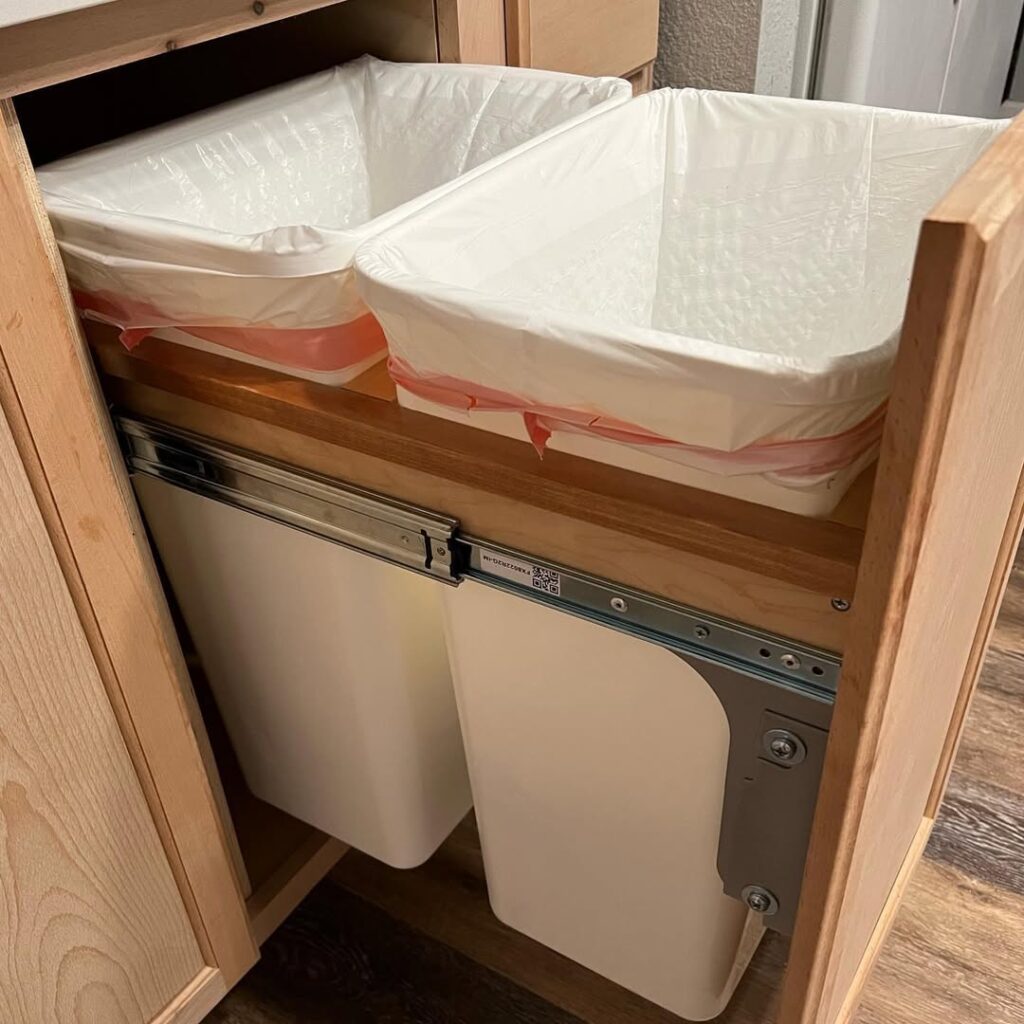
Photo Credit: @stunningmisadventures
Managing waste in a small pantry can be tricky, but with the right system in place, you can keep it neat and hygienic. Pull-out trash bins help you manage packaging and other waste without taking up valuable space.
Benefits of Pull-Out Trash Bins:
- Discreet: Keeps trash out of sight and minimizes clutter in the pantry.
- Convenient: Easy access for quick disposal while prepping food.
Expert Tip:
Install pull-out trash bins near your pantry’s work area or near food prep zones. This will help streamline your cooking process and keep the area clean.
13. Make Use of Empty Wall Space for Additional Storage
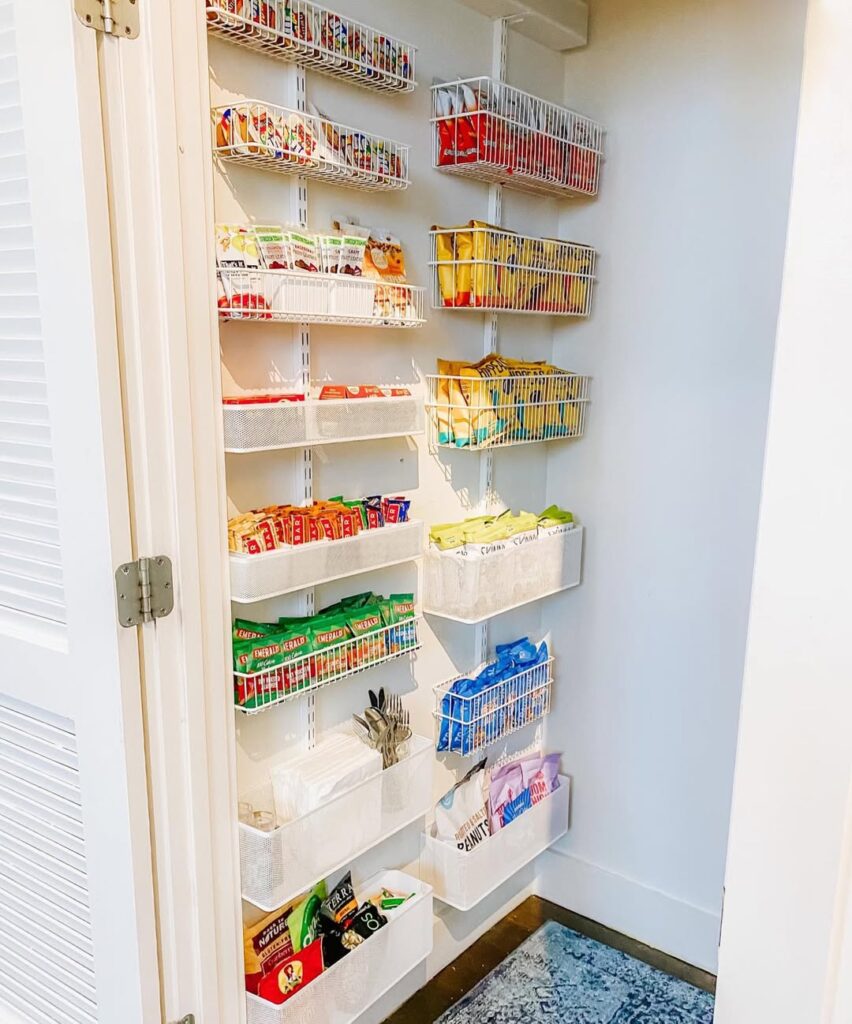
Photo Credit: @thetidyhomenashville
Sometimes, the best way to organize your pantry is by thinking outside the box. Wall-mounted racks, hooks, or shelves can add much-needed storage without using up floor space.
How to Use Wall Space:
- Wall-Mounted Spice Racks: Install a spice rack to free up shelf space.
- Hanging Baskets: Use baskets or hooks to store onions, potatoes, or other produce.
- Narrow Shelving: Install narrow shelves on the wall to hold small, frequently-used items.
Expert Tip:
Consider installing a narrow, vertical shelf near your pantry’s entrance or on unused wall space for additional storage. This makes great use of underutilized areas.
14. Use Overhead Storage for Seasonal or Less Frequently Used Items
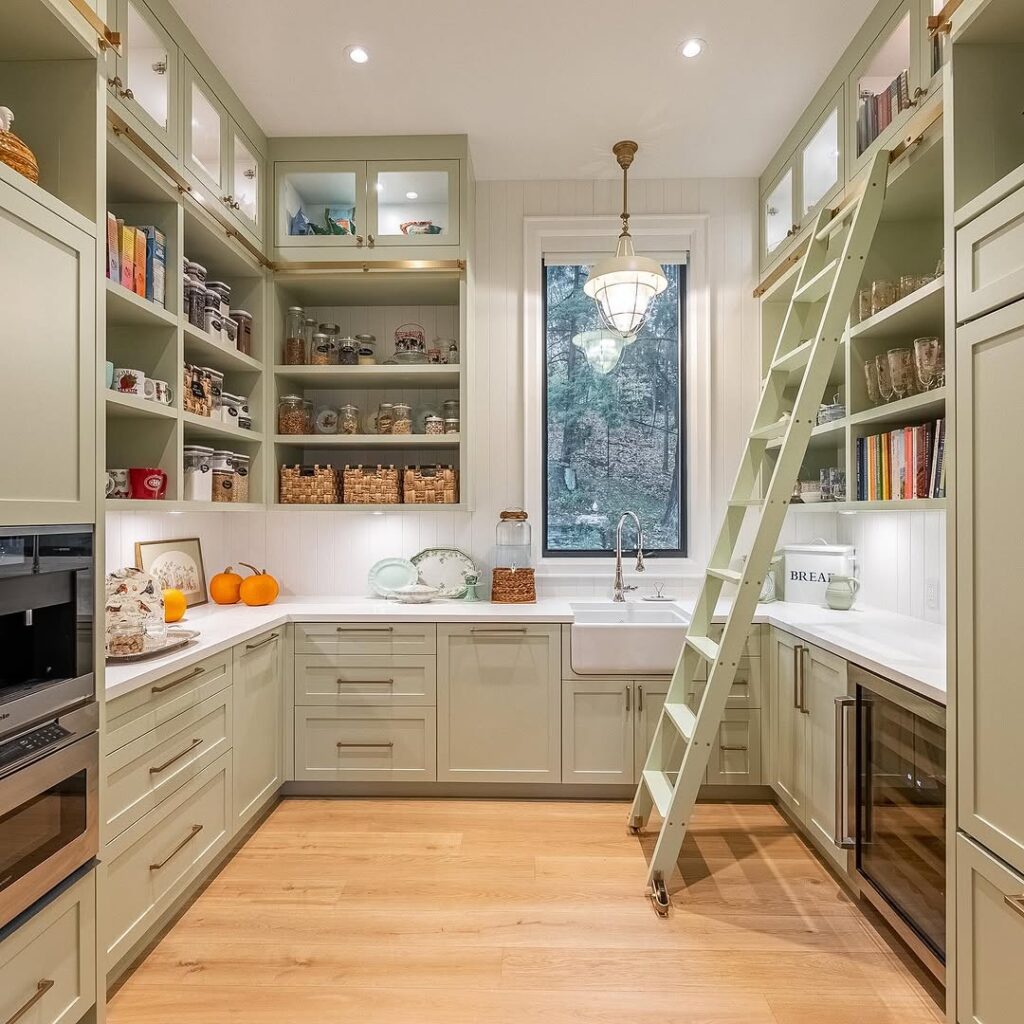
Photo Credit: @davidsmalldesigns
If your pantry has high ceilings, don’t overlook the potential of overhead storage. This area is ideal for storing items you don’t use every day but still need to keep accessible.
Benefits of Overhead Storage:
- Free Up Lower Shelves: By moving less-used items to higher shelves, you can free up valuable space at eye level for more frequently accessed items.
- Great for Bulk Items: Perfect for storing bulkier items such as large bags of flour, sugar, or pantry staples that are bought in bulk.
Expert Tip:
Store heavy or frequently used items on lower shelves, while keeping seasonal or large items in overhead storage. If the shelves are high, use a step stool or sliding ladder for easy access.
15. Declutter and Donate Items You Don’t Use
It’s easy for your pantry to become cluttered with items you no longer need or use. Regularly cleaning out your pantry is a great way to ensure it stays organized and functional.
Benefits of Decluttering:
- More Space: Removing unused or expired items frees up valuable pantry space for things you actually need.
- Prevents Overbuying: When you have a clear inventory, you’ll be less likely to buy items you already have on hand.
Expert Tip:
Make it a habit to declutter your pantry every 3-6 months. Donate non-perishable food items that are still good but no longer needed, or share them with local food banks to prevent waste.
16. Create Zones for Different Pantry Needs

Photo Credit: @talentedkitchen
Another excellent organizational strategy is to create designated zones for different types of food or pantry activities. By assigning specific sections for breakfast items, canned goods, or baking ingredients, you’ll have a clearer and more structured layout.
Benefits of Creating Zones:
- Easy to Navigate: Clearly defined zones make it easier to find specific items without searching through a chaotic pantry.
- Helps with Meal Planning: When everything is in its place, it’s easier to plan meals based on what you have.
Expert Tip:
Use baskets, bins, or labels to visually separate zones. For example, create a “Baking Zone” for all baking items, a “Snacks Zone” for chips and granola bars, and a “Canned Goods Zone” for all canned vegetables, beans, and soups.
17. Consider a Pantry Door Rack for Small Bottles or Jars
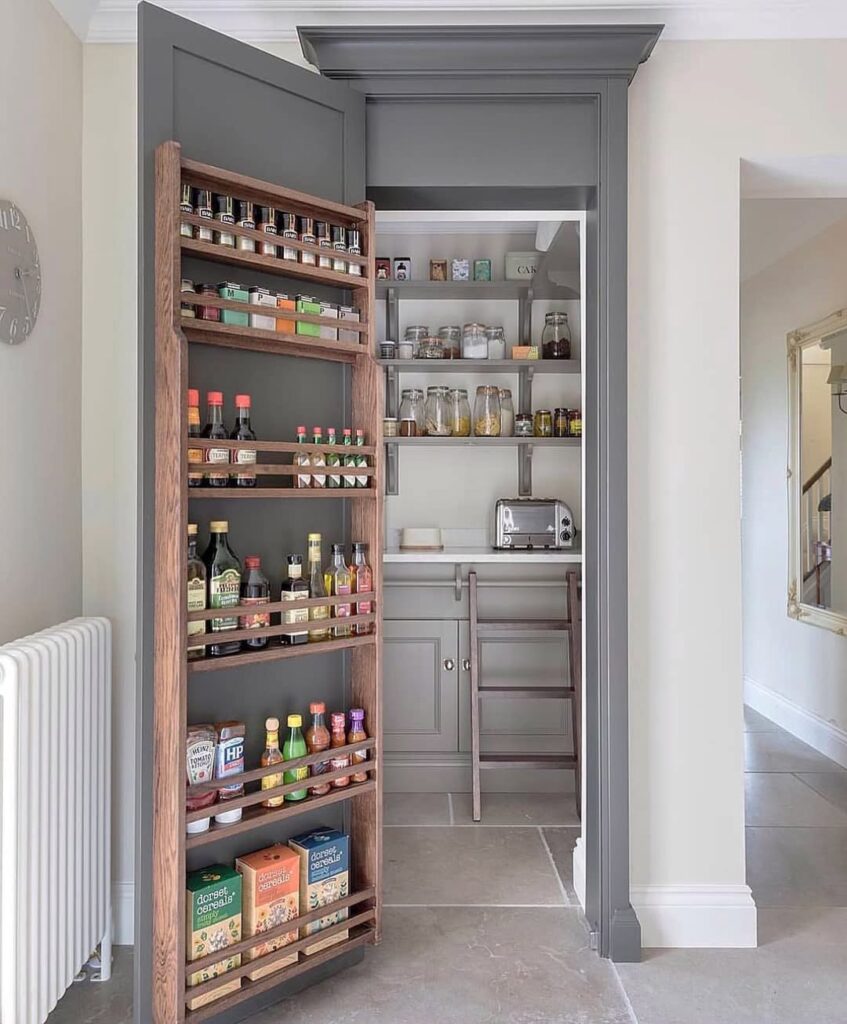
Photo Credit: @adetailedlife
If your pantry has a door with a bit of space, consider installing a slim pantry door rack. These racks are perfect for storing small bottles, jars, or even condiments that often get lost on shelves.
Benefits of a Pantry Door Rack:
- Space-Saving: The back of the door is a great way to utilize otherwise wasted space.
- Organizes Small Items: Ideal for organizing spices, oils, sauces, or even vitamins and supplements.
Expert Tip:
Choose a rack with adjustable shelves to store items of varying sizes. This allows you to store smaller bottles alongside larger jars without creating a mess.
18. Optimize Pantry Lighting for Better Visibility

Photo Credit: @riverruncoastalhomes
Good lighting can make a significant difference in a small pantry. Proper lighting helps you see the contents of your pantry clearly, making it easier to navigate and avoid purchasing duplicates.
Benefits of Good Lighting:
- Improved Visibility: You’ll be able to see everything at a glance without having to search through dark corners.
- Prevents Wasted Food: When you can see everything clearly, it’s easier to use up ingredients before they expire.
Expert Tip:
Install battery-operated LED lights under shelves or use motion-sensor lights to brighten your pantry. These lights are energy-efficient and easy to install, providing optimal visibility in small spaces.
19. Rotate Pantry Items to Keep It Fresh
To ensure your pantry stays organized and food doesn’t expire unnecessarily, implement the “First In, First Out” (FIFO) method. This involves placing older items at the front of the pantry and newer items at the back.
Benefits of FIFO:
- Prevents Waste: You’ll use older items before they expire, reducing food waste.
- Ensures Freshness: Keeps your pantry stocked with the freshest ingredients.
Expert Tip:
When you replenish your pantry, make sure to rotate items to follow the FIFO principle. This simple strategy will save you money and prevent the frustration of throwing out expired food.
20. Create a Visual Inventory System
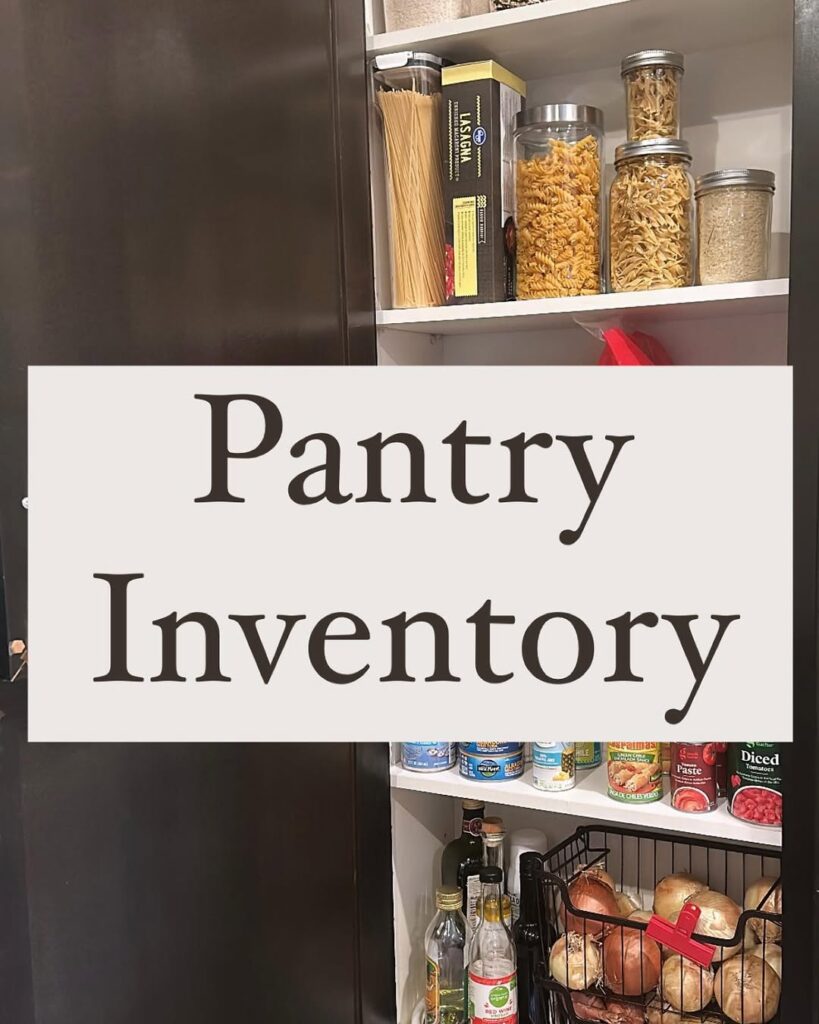
Photo Credit: @madisonkaylahartson
In a small pantry, knowing exactly what you have on hand is crucial to avoid overbuying and wasting food. A visual inventory system can help you keep track of your pantry’s contents.
Benefits of a Visual Inventory:
- Easy to Track Items: You’ll always know what’s in your pantry without having to dig through shelves.
- Prevents Overbuying: With a visual inventory, you’ll only buy what you truly need.
Expert Tip:
Use a dry-erase board or a chalkboard to create a simple inventory list. Hang it inside your pantry door or on the wall for easy access. Alternatively, use pantry inventory apps to digitally track your supplies.
21. Regularly Clean and Maintain Your Pantry
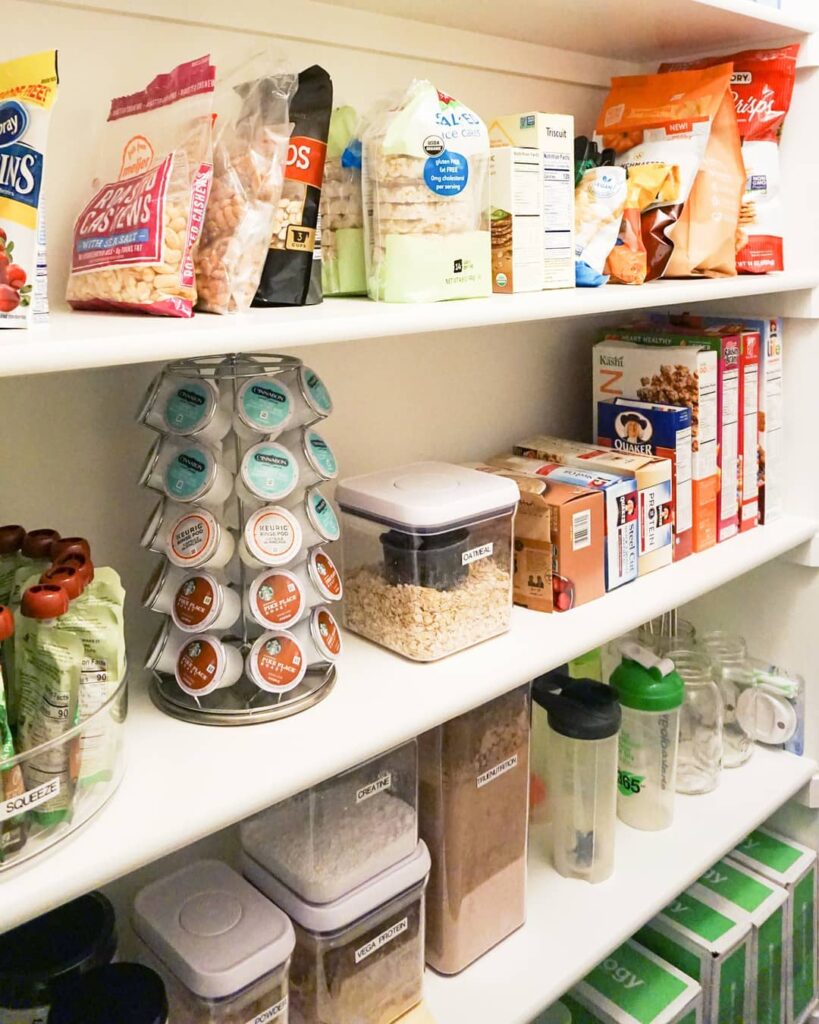
Photo Credit: @horderly
Cleaning your pantry regularly is essential to maintaining its organization. Dust, spills, and food debris can accumulate over time, leading to clutter and a less-than-ideal environment for food storage.
Benefits of Regular Cleaning:
- Hygienic Environment: Keeps your pantry clean and free of pests or contamination.
- Long-Term Organization: Maintaining cleanliness ensures that your pantry stays organized and easy to navigate.
Expert Tip:
Set aside time to clean and reorganize your pantry every few months. Wipe down shelves, vacuum the floor, and check expiration dates to keep your pantry in top condition.
FAQ
How can I organize a small pantry with limited space?
To make the most of a small pantry, use vertical space by installing adjustable shelves. Consider using clear bins, stackable drawers, and pull-out racks to optimize storage. A lazy Susan or turntable can also help with easy access to taller items.
What is the best way to store spices in a small pantry?
Opt for spice racks, drawer dividers, or magnetic spice jars to save space. You can also install a spice rack on the door or use stackable shelves to keep everything within easy reach.
What are the best pantry organization tools?
Essential pantry tools include clear bins, drawer dividers, can organizers, turntables, and pull-out racks. These help maximize space and keep everything in order.
How can I maximize storage space in a tiny pantry?
Maximize storage by using vertical shelving, over-the-door racks, and under-shelf baskets. Install sliding or pull-out shelves to eliminate hard-to-reach spaces. Keep frequently used items at eye level for easy access.
Conclusion
Organizing a small pantry doesn’t have to be a daunting task. With the right strategies, you can maximize your space, improve accessibility, and keep your pantry looking neat and functional. From using adjustable shelves and clear containers to incorporating pull-out racks and overhead storage, there are many ways to optimize your pantry. Don’t forget to regularly declutter and clean your pantry to maintain its efficiency. By following these expert tips, you’ll create a pantry that works for you and your home.