

Recreational vehicle (RV) living demands creativity, especially when it comes to kitchen storage. The compact refrigerator in most RVs presents a unique organizational puzzle that can frustrate even the most seasoned travelers. Unlike residential refrigerators, RV models are typically smaller, less feature-rich, and require a more strategic approach to maximizing their limited space.
Why RV Fridge Organization Matters?
Effective refrigerator organization is more than just a convenience—it’s a crucial aspect of RV living that impacts:
- Food Safety: Proper storage prevents cross-contamination and spoilage
- Space Efficiency: Maximizes the limited storage area available
- Meal Preparation: Reduces time spent searching for ingredients
- Travel Comfort: Minimizes food waste and reduces stress during journeys
Contents
- 1 Understanding RV Refrigerator Limitations
- 2 Preparation: The Foundation of Fridge Organization
- 3 Strategic Compartmentalization Techniques
- 4 Advanced Containment Strategies
- 5 Maximizing Efficiency: Packing and Maintenance Strategies
- 6 Maintenance and Safety: Keeping Your RV Refrigerator Clean and Reliable
- 7 Temperature Management Strategies: Consistency is Key
- 8 Emergency Preparedness: Always Have a Backup Plan
- 9 Advanced Organization Hacks and Specialized Solutions
- 10 Common Mistakes to Avoid
- 11 Expert Recommendations
- 12 Share Your RV Fridge Organization Hacks!
- 13 Further Reading
Understanding RV Refrigerator Limitations
Before diving into organization strategies, it’s essential to recognize the unique characteristics of RV refrigerators:
- Smaller Dimensions: Typically 30-40% smaller than home refrigerators
- Temperature Variability: More susceptible to temperature fluctuations
- Power Constraints: Often run on propane or battery power
- Limited Shelving: Fewer compartments and adjustment options
Types of RV Refrigerators
RV owners typically encounter three main refrigerator types:
| Refrigerator Type | Power Source | Pros | Cons |
| Absorption Fridges | Propane/Electric | Silent operation, no moving parts | Less cooling efficiency, sensitive to leveling |
| Compressor Fridges | 12V DC/Shore Power | Better cooling, more consistent | Higher power consumption, potential noise |
| Residential-Style Fridges | Shore Power | Large capacity, familiar design | Requires consistent electricity, heavier |
Preparation: The Foundation of Fridge Organization
Successful RV fridge organization begins before you even load your first item. Consider these critical preparatory steps:
Pre-Trip Planning
- Inventory Management: Take stock of essential items
- Meal Planning: Plan meals to minimize unnecessary food storage
- Cooling Preparation: Pre-chill your refrigerator before loading
- Temperature Monitoring: Use a reliable refrigerator thermometer
Essential Organization Tools
Before we explore specific organization techniques, invest in versatile storage solutions:
- Collapsible containers
- Stackable storage bins
- Silicone stretch lids
- Magnetic shelving clips
- Drawer dividers
- Compact lazy susans
Pro Tip: Choose lightweight, compact organizational tools that can withstand movement and potential temperature changes during travel.
Strategic Compartmentalization Techniques
Zoning Your RV Refrigerator for Maximum Efficiency
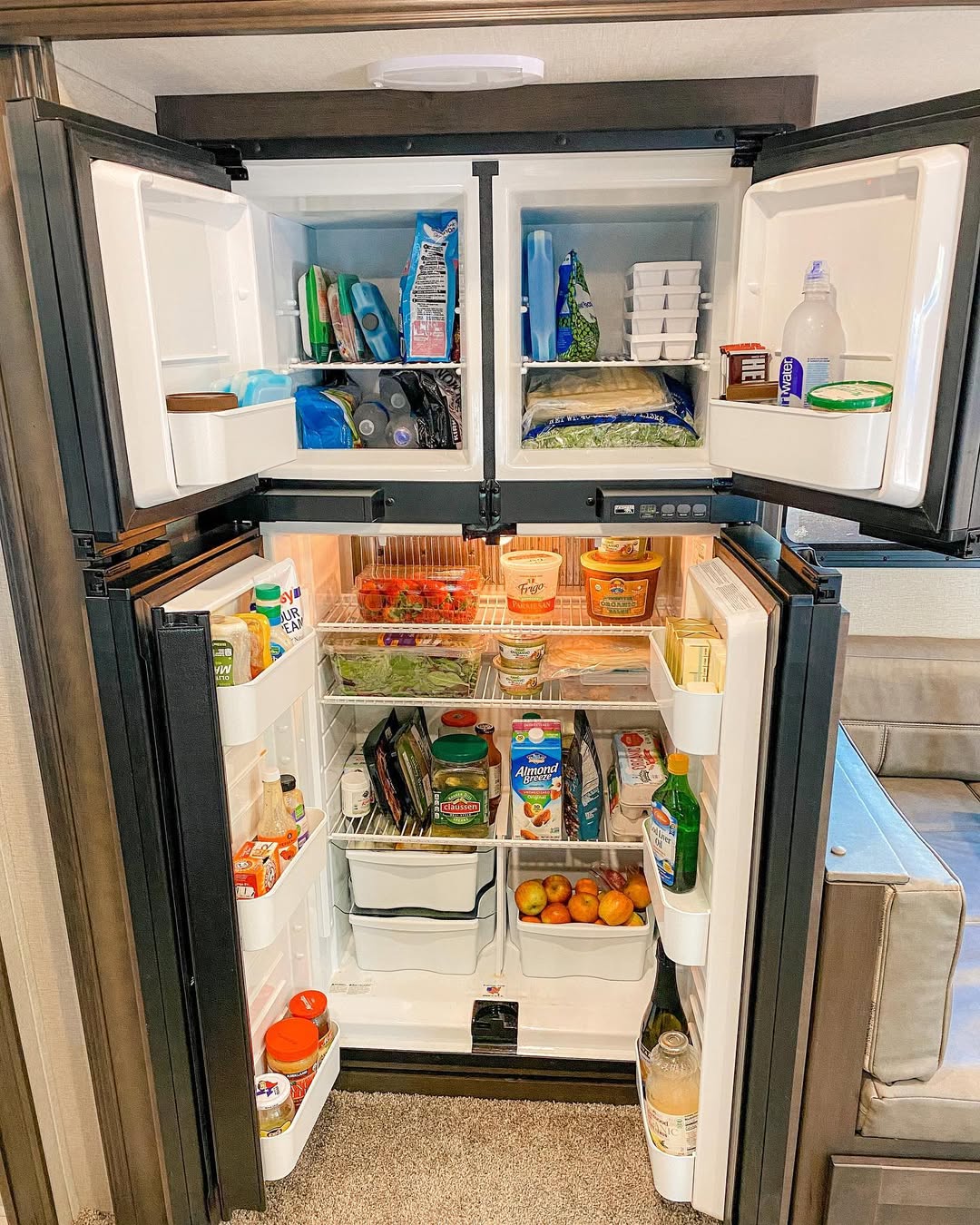
Photo Credit: @ateamfamilyadventures
When space is tight—like in an RV—organization becomes essential. One of the most effective ways to keep your RV refrigerator tidy and functional is by zoning it into specific compartments. This simple technique not only helps maximize storage space but also makes meal prep quicker and more efficient while keeping your food fresher for longer.
Why Temperature-Based Zoning Matters
Not all areas of your RV fridge are created equal. Temperature naturally varies from top to bottom, and knowing where to place certain foods based on these differences can drastically improve your food safety and organization.
Top Shelf: The Warmest Zone
The uppermost section of your RV refrigerator tends to be the warmest. While still cool, it’s not ideal for highly perishable items. Instead, reserve this shelf for foods that don’t need intense refrigeration. This includes:
- Prepared meals that just need reheating
- Leftovers from last night’s dinner
- Drinks like sodas or juice boxes
- Condiments such as ketchup, mustard, and salad dressings
Keeping these items up top helps you avoid cluttering colder areas with less temperature-sensitive foods.
Middle Shelf: The Moderate Zone
The middle shelf offers a balanced temperature—cooler than the top but not as cold as the bottom. It’s ideal for items you use frequently and want to access easily. Store things like:
- Dairy products, including milk, yogurt, and cream
- Deli meats that need to stay chilled but not frozen
- Cheeses, from blocks to slices
- Pre-cut vegetables for quick meals or snacks
This zone becomes your “grab-and-go” shelf—perfect for everyday staples.
Bottom Shelf: The Coldest Zone
At the very bottom is the coldest part of the fridge. It’s the best place to store highly perishable and raw items that require maximum refrigeration. Use this space for:
- Raw meats, including chicken, beef, and pork
- Fish and seafood that spoil quickly
- Highly perishable items like fresh berries or cream
- Sealed containers to catch any juices and prevent contamination
Storing raw foods on the lowest shelf also prevents drips from contaminating other items, adding a layer of food safety to your organization strategy.
Final Tip: Use Containers to Reinforce Your Zones
To take your zoning game even further, consider using clear, labeled bins or baskets for each shelf. This keeps like-items together, prevents small packages from sliding around during travel, and makes everything easier to find.
With a little planning and strategic compartmentalization, your RV refrigerator can stay organized no matter where the road takes you.
Advanced Containment Strategies
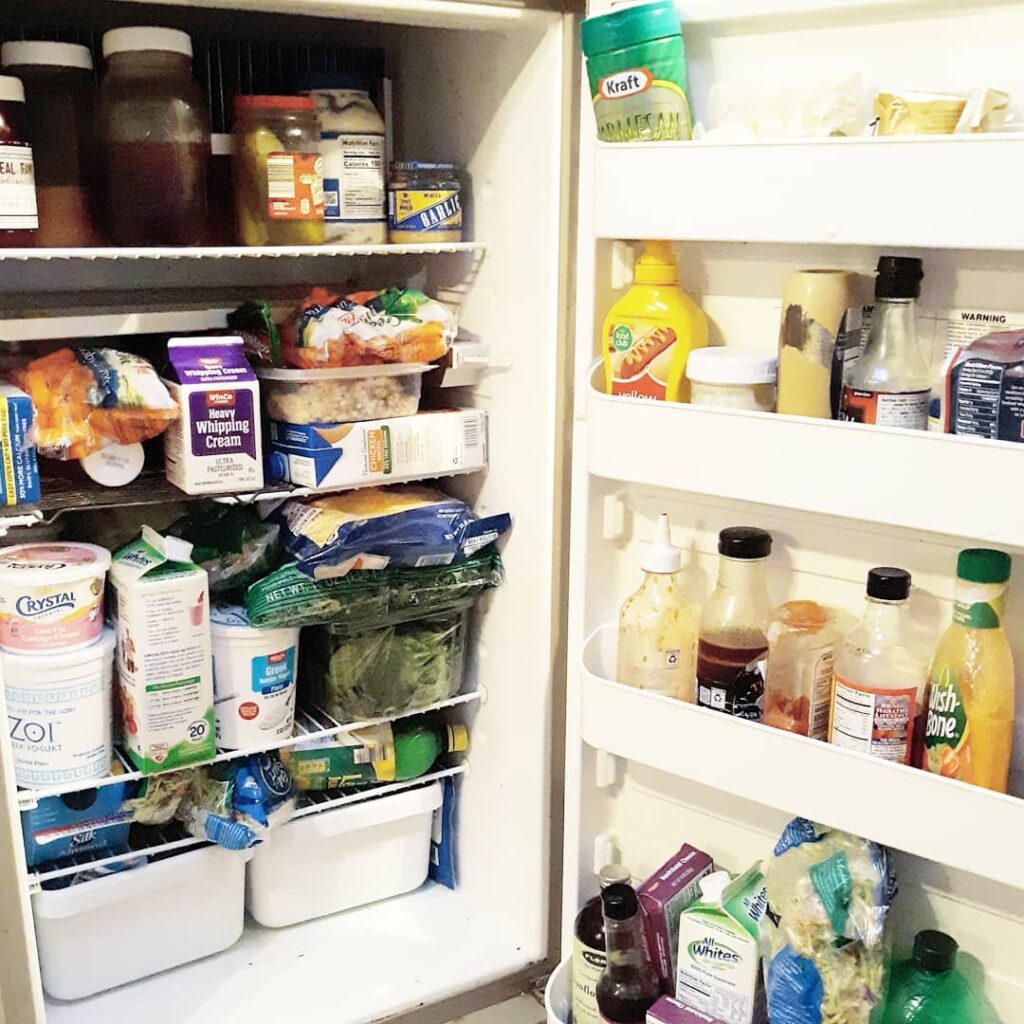
Photo Credit: @allourdays
Once you’ve zoned your RV refrigerator, the next step toward a truly organized and efficient system is using smart containment methods. Advanced storage strategies can help prevent cross-contamination, preserve freshness, and make the most of your limited space—especially when it comes to handling meat and produce.
Meat and Protein Storage: Safety First
Storing raw meat and other proteins properly is crucial in any fridge, but even more so in an RV where spills and leaks can quickly become a problem. To minimize risk and maintain a clean fridge, consider using dedicated protein containers. Choose clear, leak-proof containers with tight-sealing lids to keep everything contained. For even better organization, color-code your containers—for example, red for beef, blue for poultry, and green for seafood. Lining the bottom of each container with absorbent paper towels is a simple trick to catch any stray juices and keep things clean.
When it comes to organizing these containers, vertical storage is your friend. Store meats in sealed bags or containers that can stack upright or fit snugly on the bottom shelf. This not only conserves space but also prevents juices from dripping onto other foods. Adding a reusable silicone mat under the containers gives you an extra layer of spill protection—and makes cleanup easier if something does leak.
Produce Preservation Techniques: Keep It Fresh, Not Forgotten
Fresh produce can be tricky to store in a small RV fridge, especially since fruits and vegetables have different storage needs. One of the most effective ways to extend the life of your produce is to use moisture-controlled containers. These containers come with built-in ventilation that helps regulate humidity—essential for preventing wilting or spoilage. You’ll also want to separate ethylene-producing fruits (like apples and bananas) from sensitive vegetables, as the gas can speed up spoilage. Alternatively, use breathable produce bags that allow air circulation while keeping produce crisp.
For maximum efficiency, embrace space-saving produce strategies. Start by removing excess grocery store packaging, which only adds bulk. Then, wash and pre-cut your vegetables before storing them in the fridge. This makes meal prep easier and encourages healthier snacking. Stackable, clear containers with secure lids are perfect for organizing produce into neat, easy-to-see layers—making the most of every inch of fridge space.
Innovative Storage Solutions
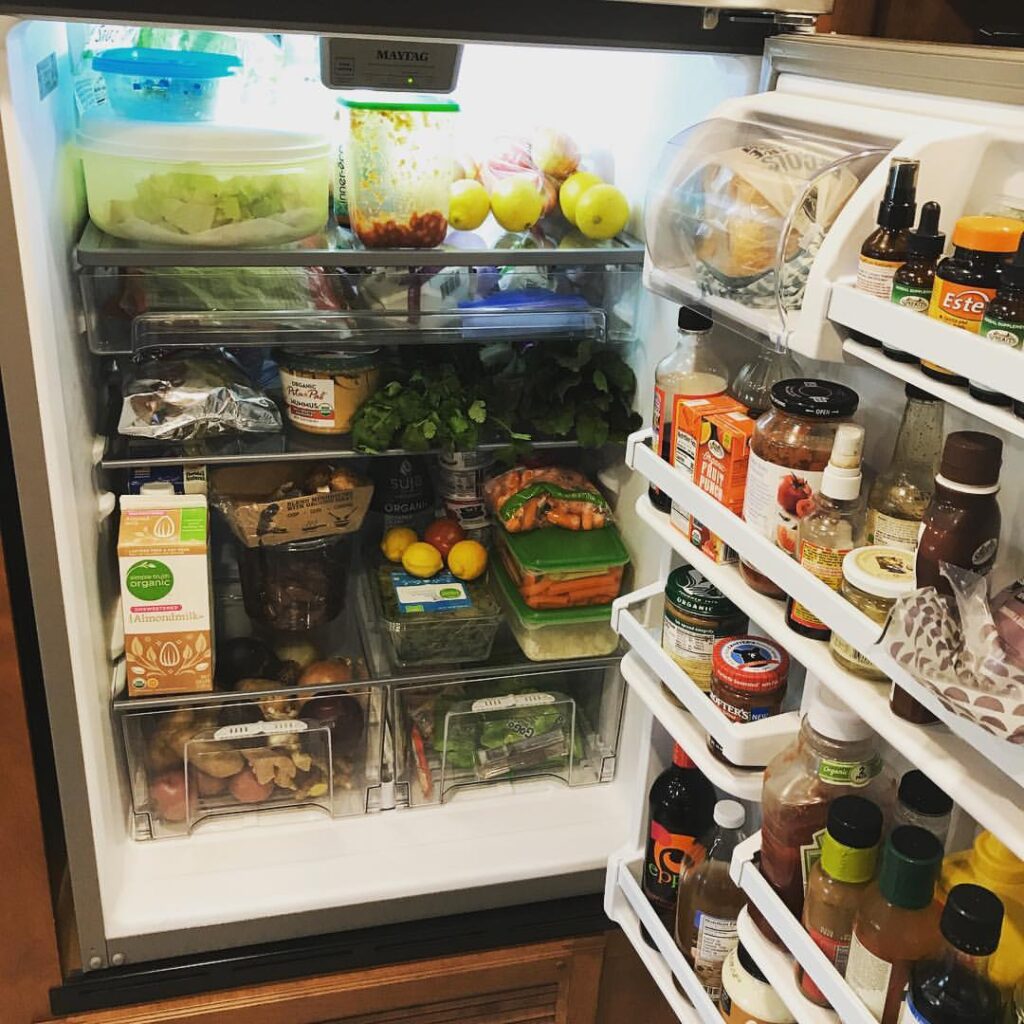
Photo Credit: @enjoythe_adventure
Multipurpose Organization Tools
| Tool | Functionality | Benefits |
| Lazy Susan | Rotational storage | Easy access to condiments and small items |
| Suction Cup Racks | Vertical space utilization | Secure storage for small jars and bottles |
| Adjustable Drawer Dividers | Customizable compartments | Prevents item movement during travel |
| Magnetic Clips | Secure lightweight items | Prevents items from shifting |
Pro Tip: Choose lightweight, compact organizational tools made from materials that can withstand temperature fluctuations and potential movement.
Custom Modification Techniques
- Refrigerator Liner Hacks
- Use non-slip mats to prevent item movement
- Choose light-colored liners to improve visibility
- Select washable, easy-to-clean materials
- Magnetic Organization
- Attach small magnetic strips inside refrigerator walls
- Hang lightweight metal containers
- Create additional vertical storage options
Technology-Enhanced Organization
Modern RV enthusiasts can leverage technology for better refrigerator management:
- Digital Inventory Apps
- Track food items
- Monitor expiration dates
- Plan meals efficiently
- Bluetooth Temperature Monitors
- Real-time temperature tracking
- Alerts for temperature fluctuations
- Ensure food safety during travel
Safety Note: Always monitor refrigerator temperature, especially during long trips or in varying climate conditions.
Maximizing Efficiency: Packing and Maintenance Strategies
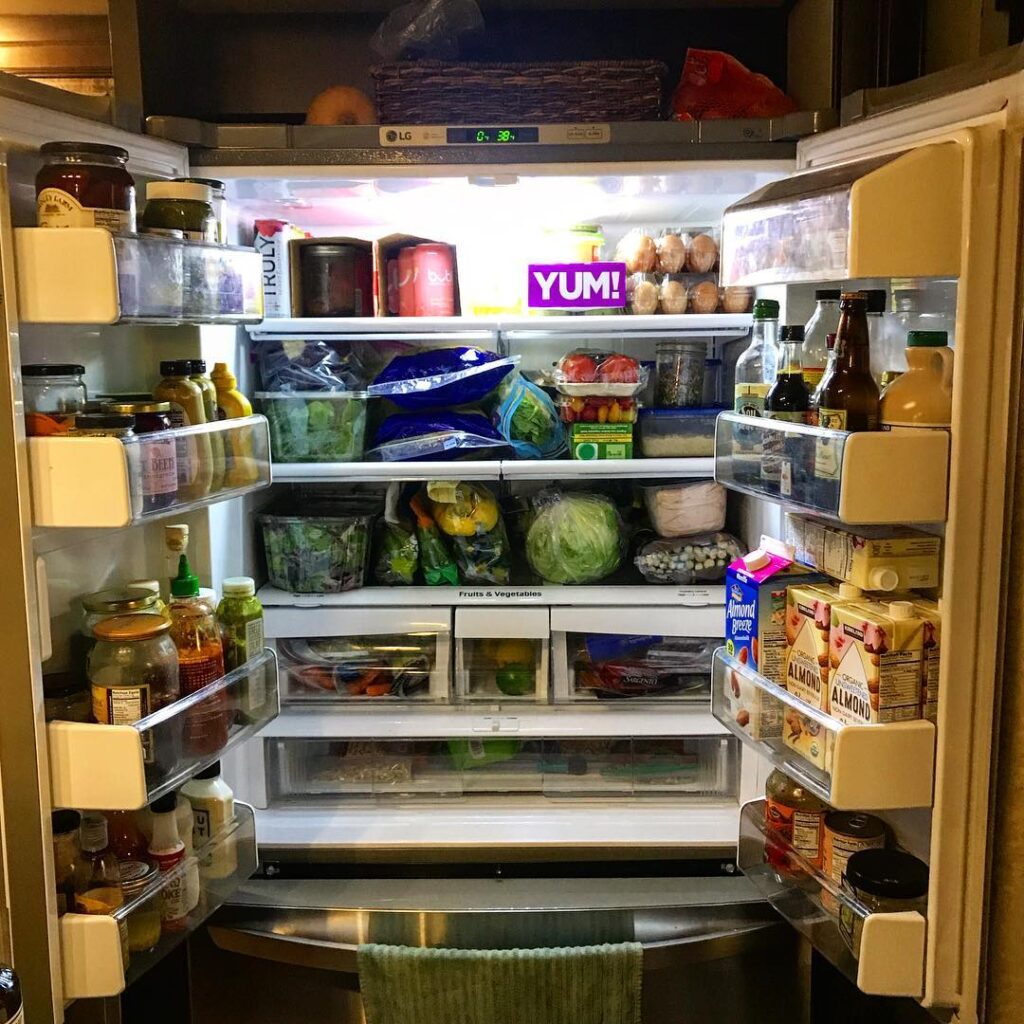
Photo Credit: @_rachbrewer_
When it comes to RV living, your refrigerator isn’t just an appliance—it’s a strategic hub for daily living. Efficient packing and consistent maintenance are key to making the most of your limited space while keeping food fresh, safe, and easy to access. With a few smart techniques, you can transform your fridge into a streamlined, high-functioning storage system.
Smart Packing Techniques: Save Space, Stay Organized
Packing your RV fridge effectively is more than just fitting everything in—it’s about creating a system that supports accessibility, prevents waste, and holds up during travel.
Core Packing Principles
Start with weight distribution. Place heavier items, like beverages or raw meats, on the bottom shelves. This not only prevents crushing more delicate foods but also helps stabilize your fridge contents while you’re on the road. For extra security, use non-slip mats between layers to minimize shifting during travel.
Next, embrace compact packaging. Grocery store packaging is bulky and inefficient, so take a few minutes to remove what you don’t need. Transfer food into vacuum-sealed bags or stackable containers to save space. You can even nest containers when possible, allowing you to maximize vertical space.
Meal Prep and Storage Optimization
A little preparation goes a long way when organizing your RV fridge. One of the best time-saving hacks is to prep before packing. Wash and chop vegetables ahead of time, and pre-portion meats and proteins into ready-to-use servings. Store everything in clear, stackable containers so you can quickly identify what’s inside without digging.
For even more efficiency, focus on multipurpose ingredient storage. Choose ingredients that can be used in a variety of meals—like grilled chicken, roasted vegetables, or cooked grains. Prepare versatile base ingredients in advance and store them in airtight containers that stack easily. This approach reduces waste and makes meal planning on the road much simpler.
Maintenance and Hygiene: Keep It Clean, Keep It Fresh
No matter how well you pack, an RV refrigerator won’t run smoothly without regular upkeep. Prioritizing cleanliness ensures your food stays safe and your fridge performs efficiently.
Weekly Cleaning Routine
Set a schedule for a simple weekly clean. Start by emptying the refrigerator completely, removing all shelves, bins, and trays. Wash each component with a mild, food-safe disinfectant and dry them thoroughly before replacing. This not only eliminates bacteria and odors but also gives you a chance to check for expired or forgotten items.
Keeping up with this routine helps extend the life of your refrigerator and prevents issues like mold, spills, and cross-contamination—especially important in a small living space like an RV.
Maintenance and Safety: Keeping Your RV Refrigerator Clean and Reliable
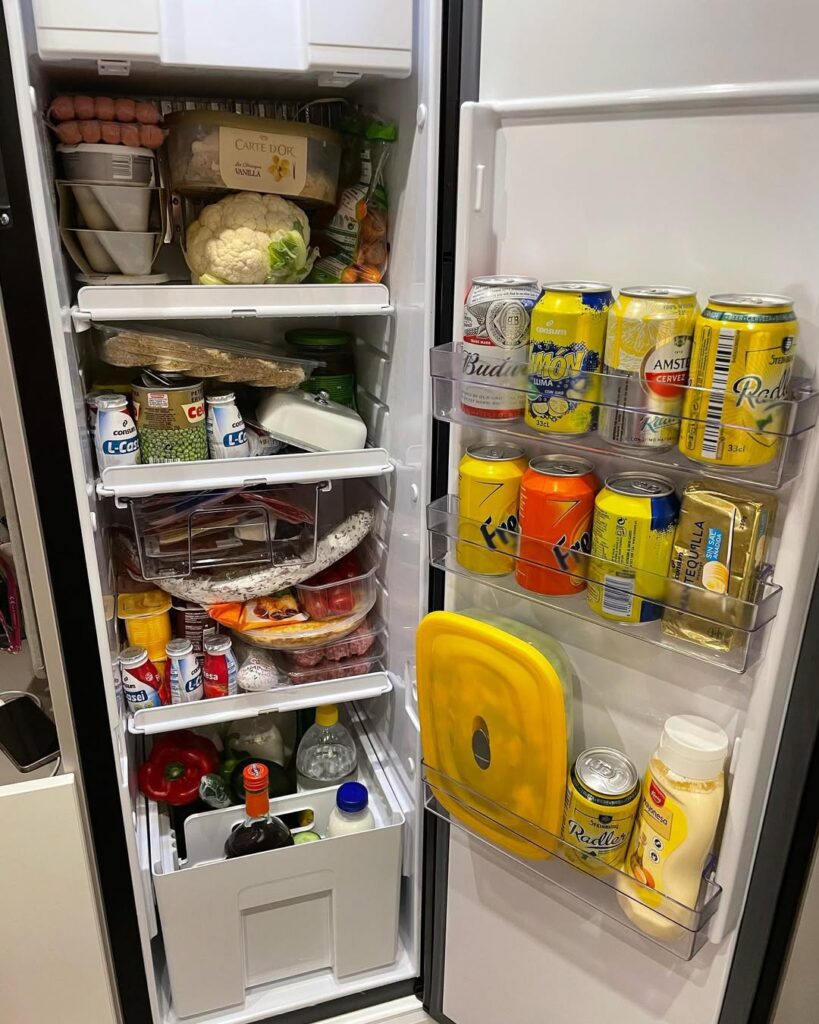
Photo Credit: @pjirsak
A well-packed RV refrigerator is only as good as the care it receives. Regular maintenance not only extends the life of your appliance but also protects your food and health. From weekly cleaning habits to emergency preparedness, here’s how to stay on top of RV fridge hygiene and functionality.
Regular Cleaning Protocols: Stay Fresh and Food-Safe
Keeping your RV fridge clean is essential for food safety and preventing odors. A simple weekly cleaning routine can make a big difference:
- Empty the refrigerator completely before starting.
- Remove all shelves and bins—most are detachable and easy to clean.
- Wipe down all interior surfaces using a mild, food-safe disinfectant.
- Dry everything thoroughly to prevent mold or mildew.
- Check for and discard expired items to avoid unnecessary clutter.
A clean fridge works more efficiently, smells better, and helps keep your food fresher for longer.
Odor Prevention and Management: Keep It Smelling Clean
Fridge odors can build up quickly in tight RV spaces. Here are proven odor-fighting methods and their effectiveness:
| Method | Effectiveness | How to Use |
|---|---|---|
| Baking Soda | High | Place an open container on a shelf |
| Activated Charcoal Bags | Moderate to High | Hang or tuck into corners of the fridge |
| Coffee Grounds | Low to Moderate | Place in a breathable cup or small container |
| White Vinegar Solution | High | Wipe surfaces down weekly for odor control |
Rotating these solutions can help maintain a fresh-smelling fridge even on long trips.
Temperature Management Strategies: Consistency is Key
Maintaining the right temperature in your RV fridge is crucial to food safety, especially when traveling through varying climates.
Monitoring and Power Use
- Use a digital thermometer to ensure your fridge stays between 37–40°F (2–4°C).
- Check temperatures regularly, especially after long drives or when parked in extreme weather.
- Minimize door openings—know what you need before opening and close it quickly.
- Use cooling packs to maintain temperature stability, especially during power fluctuations.
- Avoid overloading the refrigerator, as this restricts airflow and makes it harder to stay cool.
Climate-Based Adjustments: Adapting to the Environment
Different climates call for different fridge strategies. Here’s how to adapt:
Hot Weather Tips:
- Use reflective covers on windows to block direct sunlight.
- Improve ventilation around your refrigerator’s external vent area.
- Limit sun exposure—park in shaded areas whenever possible.
- Consider using portable coolers to handle food overflow during summer months.
Cold Weather Tips:
- Insulate the fridge compartment with insulation blankets or foam panels.
- Monitor your fridge for freezing risks, especially overnight.
- Keep the fridge slightly fuller—a full fridge retains cold more effectively.
Emergency Preparedness: Always Have a Backup Plan
Fridge malfunctions can happen, especially in remote areas. Be prepared with alternative storage solutions to prevent food loss.
Backup Storage Options:
- Portable electric coolers to act as a temporary fridge or freezer
- High-quality insulated bags for short-term storage
- Freeze-capable containers to keep items cold during outages
- Battery-powered or solar-powered coolers for emergency use
Critical Tip: Always have a backup plan in place. In case of failure, these solutions can help protect your food and your trip.
Food Safety Protocols: When in Doubt, Throw It Out
- Know your fridge’s temperature range and check it often.
- Learn the signs of food spoilage—strange odors, discoloration, or texture changes.
- Always travel with some non-perishable food in case of emergency.
- Be aware of local grocery or cold storage options along your route.
- Most importantly: when in doubt, throw it out. No meal is worth a health risk.
Advanced Organization Hacks and Specialized Solutions
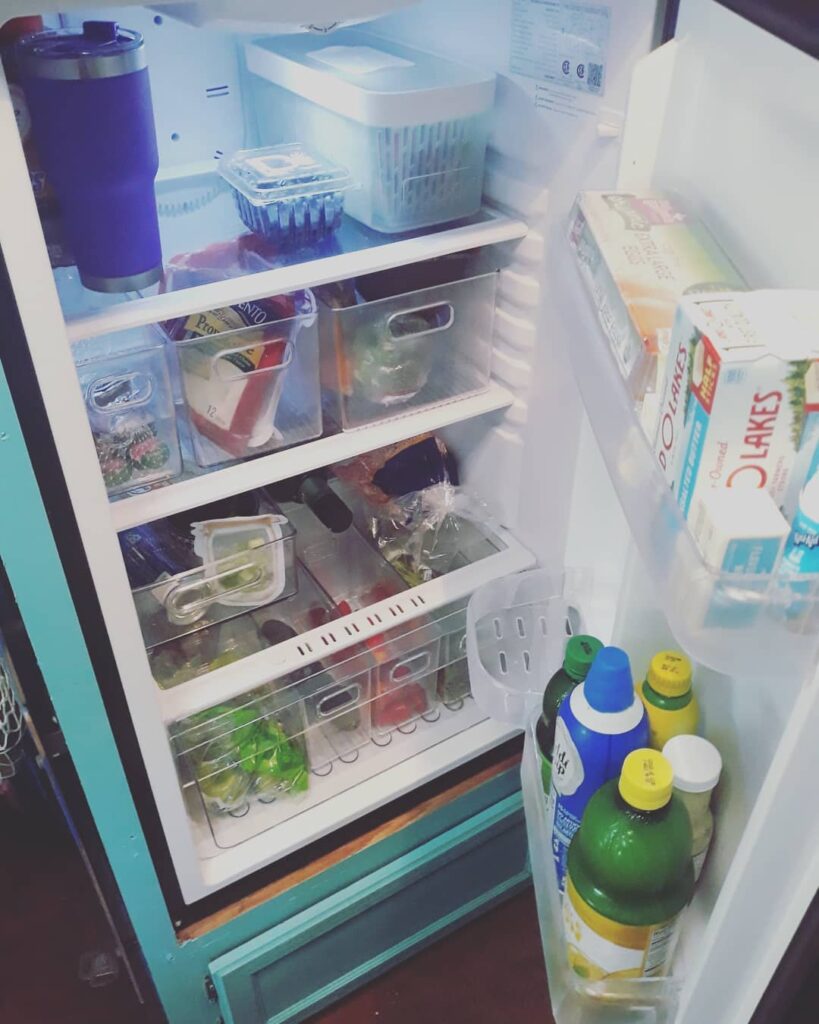
Photo Credit: @her_hellness
RV refrigerator organization goes far beyond neat stacking and food labels. To truly master your mobile kitchen, you’ll need to personalize your setup with innovations that reflect your travel habits, dietary needs, and lifestyle. From DIY hacks to smart tech and seasonal adaptations, these advanced strategies will take your RV fridge organization to the next level.
Customized Storage Innovations
Your RV refrigerator should work with your lifestyle—not against it. Customization is key.
DIY Organization Solutions
Magnetic Modifications
- Install thin magnetic strips along the fridge walls to hang lightweight items.
- Use magnetic hooks or clips to hold recipe cards, grocery lists, or snack bags.
- Ideal for travelers who love flexibility and vertical storage solutions.
Modular Container Systems
- Opt for expandable, adjustable container sets that can grow with your needs.
- Choose clear containers with secure lids for easy identification.
- Use nesting designs to maximize every square inch of space.
Technology-Integrated Organization
Smart devices aren’t just for your phone—they can transform how you manage your RV fridge.
Digital Inventory Apps
- Track what’s in your fridge in real time.
- Monitor expiration dates to reduce waste.
- Get meal-planning suggestions based on current ingredients.
- Generate dynamic shopping lists before your next grocery run.
Temperature Monitoring Technologies
- Use Bluetooth-enabled fridge thermometers to monitor temps remotely.
- Install wireless alert systems for temperature fluctuations.
- Invest in smart sensors with mobile app integration for full control on the go.
Specialty Storage for Different RV Lifestyles
Your fridge organization should reflect the way you travel and eat.
Dietary Considerations
| Diet Type | Storage Strategy | Special Considerations |
|---|---|---|
| Vegetarian/Vegan | Create dedicated produce zones | More space for fresh vegetables, less meat storage |
| Keto/Low-Carb | Prioritize protein and fat compartments | Keep cold zones clear for perishables like meats, dairy |
| Gluten-Free | Separate containment areas | Avoid cross-contamination from gluten-based items |
| Meal Prep Enthusiasts | Portion-controlled, stackable containers | Uniform sizes help with space and time efficiency |
Travel-Specific Needs
Weekend Warriors
- Stick to compact, grab-and-go containers.
- Use minimal ingredient storage focused on convenience.
- Set up quick-access snack zones near the fridge door.
Full-Time RVers
- Invest in larger, more comprehensive systems.
- Organize for bulk storage of staples.
- Use inventory tracking tools for seamless meal planning.
Sustainable Storage Practices
Go green while staying organized with smart, eco-conscious choices.
Reusable Storage Solutions
- Try silicone stretch lids to replace cling film.
- Use glass containers with bamboo lids for durability and aesthetics.
- Choose washable, food-safe storage bags instead of plastic ones.
Waste Reduction Techniques
- Vacuum seal leftovers to extend shelf life.
- Plan meals carefully to reduce excess.
- Compost organic waste when possible.
- Avoid buying items with single-use packaging when alternatives exist.
Seasonal Adaptation Strategies
Your storage setup should shift with the seasons.
Summer Travel Tips
- Increase use of cooling packs and breathable containers.
- Focus on fresh produce and hydration-friendly snacks.
- Avoid overfilling to allow for air circulation.
- Park in shaded areas and use window reflectors to reduce interior heat.
Winter Travel Tips
- Add insulation layers inside and around the fridge compartment.
- Keep the fridge slightly fuller—cold mass maintains temperature better.
- Shift toward non-perishable and preserved items.
- Keep an emergency heat source in case of freezing conditions.
Cost-Effective Organization
You don’t need fancy gear to stay organized.
Budget-Friendly Hacks
- Repurpose household items like baskets, jars, and bins.
- Shop for containers at dollar stores or thrift shops.
- Use DIY dividers or labels to create order on a budget.
Invest Where It Counts
- Choose durable, multi-use containers that last.
- Prioritize functionality over aesthetics—though both is a bonus.
- Remember: good organization saves money by reducing waste and avoiding duplicate purchases.
Money-Saving Tip: Creativity often beats expensive gadgets. Many effective solutions can be crafted from items you already own!
The Psychological Benefits of Organization
An organized RV fridge isn’t just practical—it’s powerful.
- Reduces daily decision fatigue
- Minimizes mealtime stress
- Creates a sense of routine and comfort
- Enhances the overall travel experience
Mindful Insight: Your RV refrigerator is more than just cold storage—it’s the center of your mobile kitchen. Keeping it organized brings peace of mind and a touch of home wherever the road takes you.
Common Mistakes to Avoid
Even the best intentions can go sideways. Watch out for these fridge organization pitfalls:
- Overloading the refrigerator (prevents proper air circulation)
- Skipping regular cleanings, leading to spills and odors
- Neglecting temperature management, risking food spoilage
- Using the wrong containers (e.g., non-sealed or non-stackable)
- Lack of meal planning, which causes waste and disorganization
Expert Recommendations
From seasoned RVers and mobile living pros, here are tried-and-true tips:
- Invest in quality, multi-purpose containers
- Always prioritize food safety over convenience
- Create a system tailored to your specific habits and diet
- Stay flexible and experimental—your needs may evolve
- Treat your RV refrigerator as a dynamic part of your mobile kitchen
Final Thoughts
RV refrigerator organization is more than a task—it’s an opportunity to bring peace, order, and joy to your travel lifestyle. By applying strategic systems and personalized solutions, you turn a small, cold box into the heart of your culinary adventures.
Remember: Organization isn’t a one-size-fits-all process. What works for one traveler may not work for another. The key is to experiment, adapt, and evolve with each trip.
Let’s learn from each other! We want to hear from you:
- What creative organization methods have you discovered?
- What challenges have you overcome in your RV fridge setup?
- Got a game-changing tip? Share it in the comments!
Your insights could help fellow RVers make their travels smoother and their meals even better.
Further Reading
Looking for more tips on organized RV living?
- Mastering RV Pantry Organization: 7 Genius Space-Saving Strategies
- 69 Essential RV Organization Accessories for Maximizing Your Space
- How to Keep Your RV Cool: 25 Expert Tricks for Summer Comfort
- 35 Genius RV Kitchen Organization Hacks for Tiny Spaces
Disclaimer: Always follow food safety best practices, manufacturer guidelines, and specific recommendations for your RV model when implementing storage strategies.