
The space beneath your kitchen sink represents one of the most underutilized yet problematic storage areas in most homes. This awkward, pipe-filled cabinet often becomes a chaotic dumping ground for cleaning supplies, dish soap, sponges, and random household items that somehow migrate there over time. However, with strategic planning and the right organizational approach, this challenging space can become a highly functional storage powerhouse that supports your daily kitchen routines.
Unlike other kitchen cabinets with their predictable rectangular interiors, under-sink storage presents unique obstacles that require creative solutions. The presence of plumbing pipes, garbage disposals, water shut-off valves, and potential moisture issues creates a complex three-dimensional puzzle that standard organization methods simply cannot address effectively.
Contents
Understanding Your Under-Sink Environment
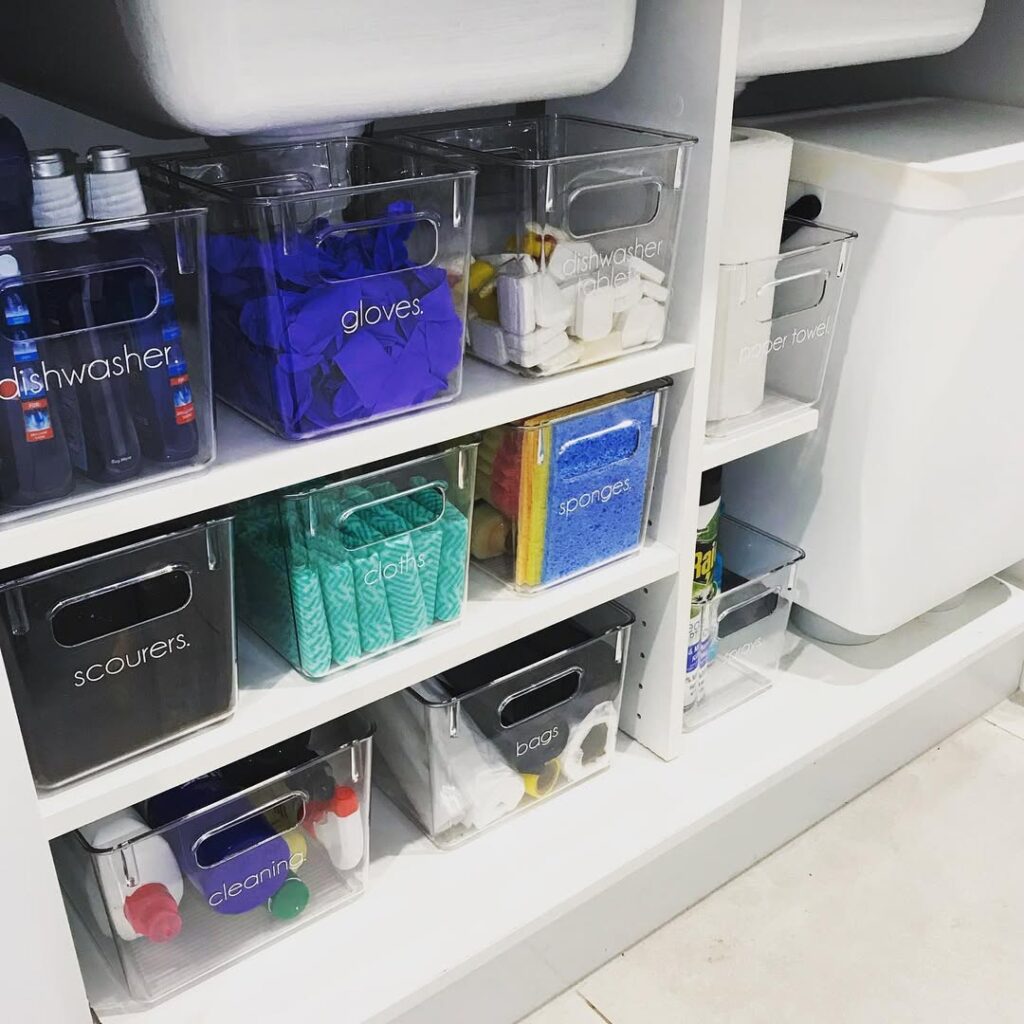
Photo Credit: @fromhousetohome
Before diving into organization strategies, it’s crucial to understand the unique characteristics of this space. Most under-sink cabinets measure between 24 to 36 inches in width, with depths ranging from 20 to 24 inches. However, the usable space is significantly reduced by plumbing fixtures, which typically consume 30-40% of the available area.
The environment under your kitchen sink is also prone to higher humidity levels due to potential minor leaks, condensation from pipes, and proximity to the dishwasher. This moisture-rich environment can damage certain materials and create ideal conditions for mold and mildew growth, making material selection for organizational products particularly important.
Temperature fluctuations are another consideration, as hot water pipes can create warm zones that may affect stored items, particularly cleaning products that contain temperature-sensitive ingredients. Understanding these environmental factors is essential for creating a long-lasting organizational system.
Safety First – Creating a Secure Under-Sink Environment
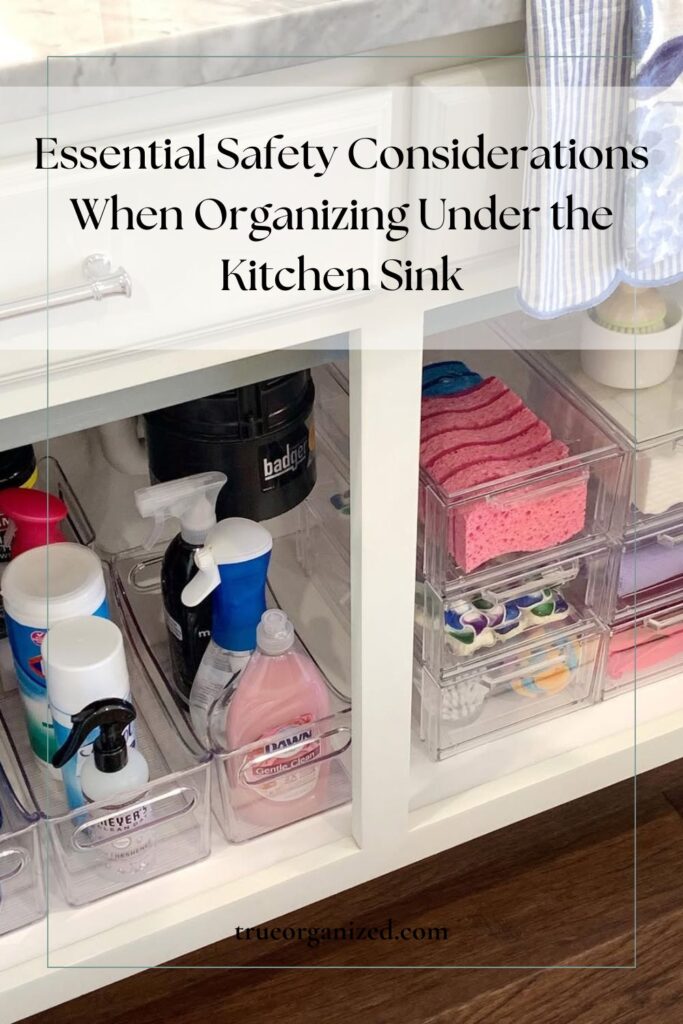
Essential Safety Considerations
Safety should be your primary concern when organizing under the kitchen sink, especially in households with children or pets. This area typically houses the most concentrated collection of potentially hazardous chemicals in your home, making proper safety protocols non-negotiable.
Child-Proofing Strategies:
- Install magnetic cabinet locks that are invisible when closed but provide secure protection
- Use safety latches with adjustable tension for cabinets that adults access frequently
- Consider a lockable storage box within the cabinet for the most dangerous chemicals
- Place all cleaning products on higher shelves or in elevated organizers, keeping safer items like sponges and dish soap at lower levels
Chemical Storage Safety: Never store cleaning products in unmarked containers or transfer them to food containers, as this creates serious poisoning risks. Maintain original labels and safety information, and store products upright to prevent leaks. Keep incompatible chemicals separated – for example, never store bleach-based products near ammonia-based cleaners, as accidental mixing can create dangerous gases.
Leak Prevention and Detection: Install a leak detection mat or sensor under your sink that can alert you to water issues before they cause damage. These smart devices can send notifications to your phone and help prevent costly water damage to your organized storage system.
The Pre-Organization Assessment
Before purchasing any organizational products, conduct a thorough assessment of your under-sink area using this systematic approach:
Measurement Protocol:
- Measure width, depth, and height at multiple points, as cabinets are rarely perfectly square
- Document pipe locations and their dimensions, including how far they protrude into the space
- Note the swing radius of cabinet doors to ensure organizers won’t interfere with closing
- Identify any electrical outlets, switches, or garbage disposal switches that could limit storage options
Infrastructure Evaluation: Check for signs of previous water damage, such as warped cabinet floors, water stains, or musty odors. Address any moisture issues before implementing your organization system. Inspect pipe connections for minor leaks that could worsen over time and damage your storage solutions.
Current Inventory Analysis: Categorize everything currently stored under your sink into these groups:
- Daily Use Items: Dish soap, sponges, hand towels
- Weekly Cleaning Supplies: All-purpose cleaners, glass cleaners, disinfectants
- Occasional Deep-Cleaning Products: Specialty cleaners, polishes, degreasers
- Rarely Used Items: Seasonal cleaners, backup supplies, specialty tools
- Misplaced Items: Things that don’t belong in the kitchen at all
This categorization will inform your organization strategy and help determine storage priorities.
The Strategic Organization Framework
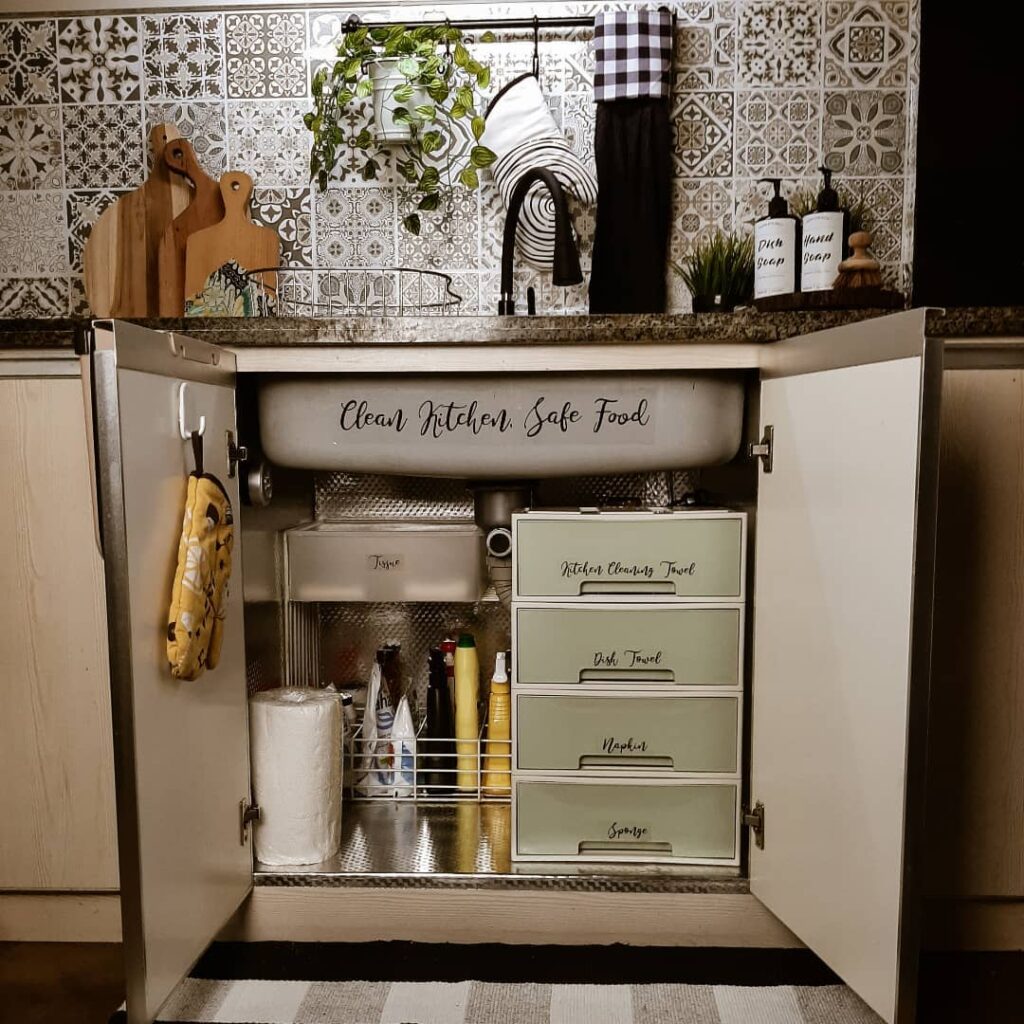
Photo Credit: @ranadaglowinghome
The 7-Step REFRESH Method
Building upon traditional organization approaches, the REFRESH method provides a comprehensive framework specifically designed for under-sink challenges:
R – REMOVE Everything Completely Empty the entire cabinet, including removing any existing shelf liners or organizers. This complete clearing allows you to see the full potential of the space and identify any hidden issues like water damage or accumulated debris.
E – EVALUATE and Categorize Sort items into five distinct categories:
- Keep & Use Regularly: Items accessed weekly or more
- Keep & Use Occasionally: Monthly or seasonal items
- Relocate: Items that belong elsewhere in the home
- Donate/Gift: Usable items you no longer need
- Dispose: Expired, damaged, or hazardous items requiring special disposal
F – FIX Any Issues Address infrastructure problems before organizing. This includes:
- Repairing minor leaks or loose connections
- Installing proper cabinet lighting for better visibility
- Adding shelf liner to protect against future spills
- Treating any mold or mildew issues with appropriate cleaners
R – REDESIGN the Layout Create zones based on function and frequency of use:
- Prime Zone: Front and center for daily items like dish soap and sponges
- Secondary Zone: Side areas for weekly cleaning supplies
- Storage Zone: Back areas and upper levels for backup supplies and occasional-use items
- Utility Zone: Areas around pipes reserved for items that can accommodate irregular shapes
E – EQUIP with Proper Storage Solutions Select organizers based on your specific measurements and needs:
Storage SolutionBest ForDimensions to ConsiderPrice RangeStackable Clear DrawersSmall items, easy visibilityHeight clearance around pipes$15-30 per setPull-Out Sliding BasketsHeavy bottles, easy accessDoor swing clearance$25-60 eachLazy Susan TurntablesCorner access, bottle storageDiameter vs. pipe interference$20-45Over-the-Pipe ShelvingMaximizing vertical spacePipe diameter and positioning$30-80Door-Mounted OrganizersLightweight frequently-used itemsDoor thickness and swing space$10-35
S – SYSTEMATIZE Placement Implement the “Golden Triangle” principle: place your most frequently used items (dish soap, sponges, hand towels) in an easily accessible triangle formation. Store heavier items on lower levels to prevent tipping, and ensure tall bottles won’t interfere with pipe access for maintenance.
H – HABIT Formation and Maintenance Establish a “one in, one out” policy to prevent accumulation. Create a monthly maintenance schedule to check for leaks, clean organizers, and rotate supplies. Post a simple inventory list inside the cabinet door to help family members maintain the system.
Advanced Space Maximization Techniques
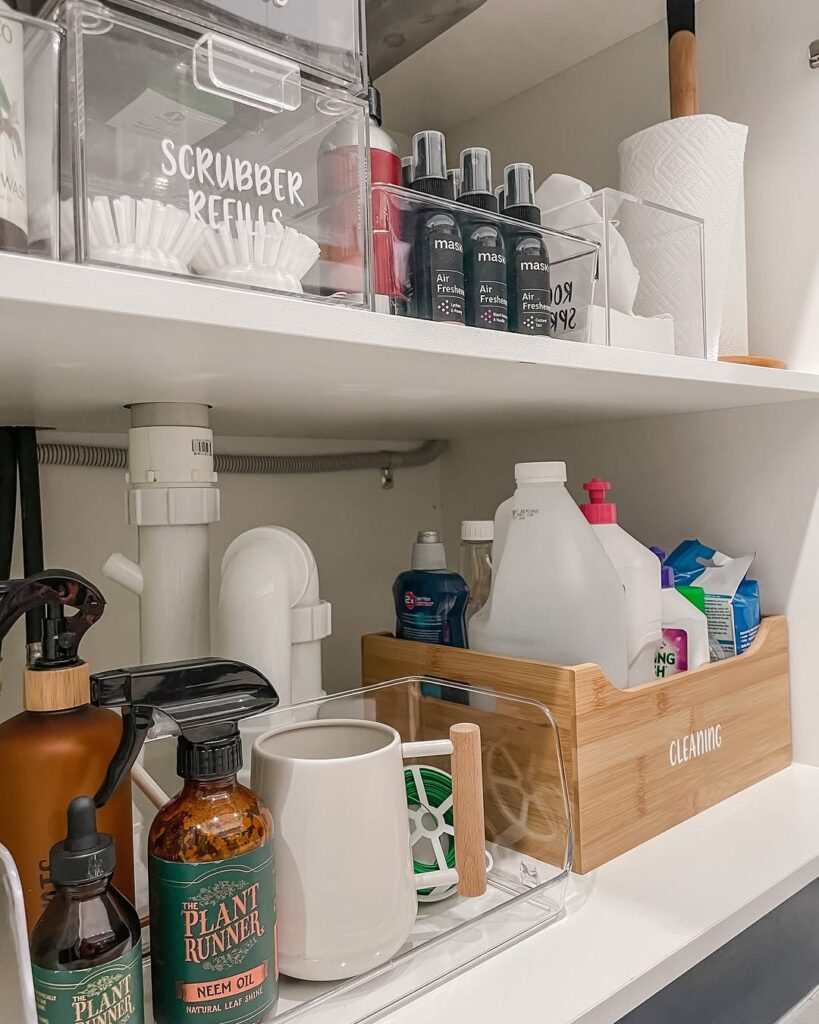
Photo Credit: @smithies_home
Vertical Space Optimization: Most under-sink cabinets waste 40-60% of their vertical space. Combat this with:
- Adjustable shelf inserts that work around pipes
- Stackable bins with secure interlocking systems
- Hanging organizers that suspend from the cabinet ceiling
- Telescoping shelves that extend around plumbing obstacles
Hidden Storage Opportunities:
- Install narrow pull-out drawers in the toe-kick space below the cabinet
- Use magnetic strips on the interior cabinet sides for metal tools
- Add hooks or small baskets to the underside of the sink basin itself
- Create a sliding panel system that moves laterally to access items behind pipes
Product Selection and Smart Shopping Guide
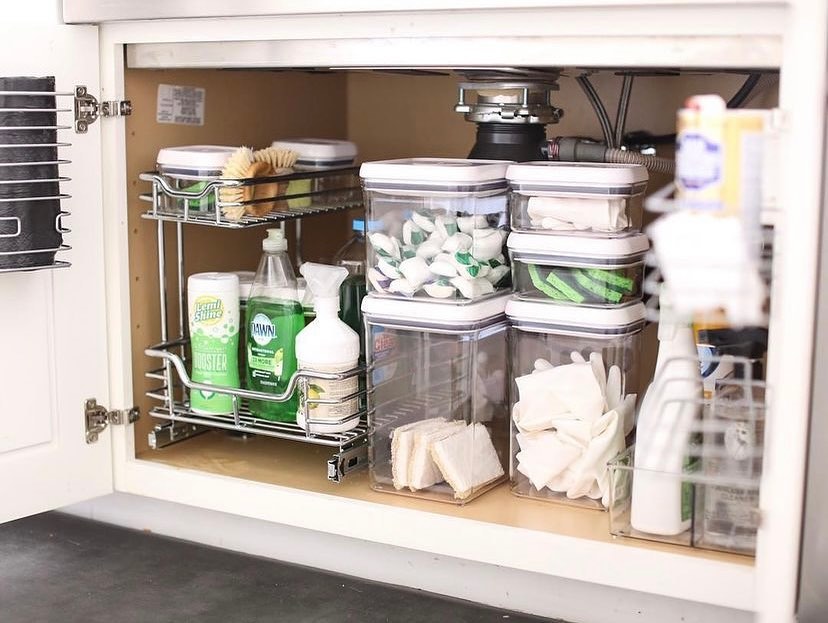
Photo Credit: @the_organized_kitchen
Essential Organization Products by Category
Multi-Level Storage Systems: The key to under-sink success lies in creating multiple storage levels that work harmoniously. Consider these proven combinations:
Stackable Drawer Systems:
- Clear Plastic Drawers: Ideal for visibility and easy cleaning, typically measuring 6″H x 12″W x 14″D
- Wire Mesh Drawers: Better ventilation for damp items, allows air circulation to prevent mold
- Bamboo Drawer Organizers: Eco-friendly option with natural antimicrobial properties
Pull-Out Solutions: Sliding baskets and drawers transform hard-to-reach spaces into accessible storage. Look for full-extension slides that allow complete access to stored items. Heavy-duty options can support up to 35 pounds, perfect for storing large cleaning product bottles.
Rotating Storage Options: Lazy Susans aren’t just for corner cabinets. Under-sink turntables come in various configurations:
- Two-Tier Models: Maximize vertical space while maintaining easy access
- Kidney-Shaped Designs: Specifically contoured to fit around standard plumbing
- Divided Turntables: Feature built-in compartments to prevent bottles from sliding
DIY Solutions for Budget-Conscious Organizers
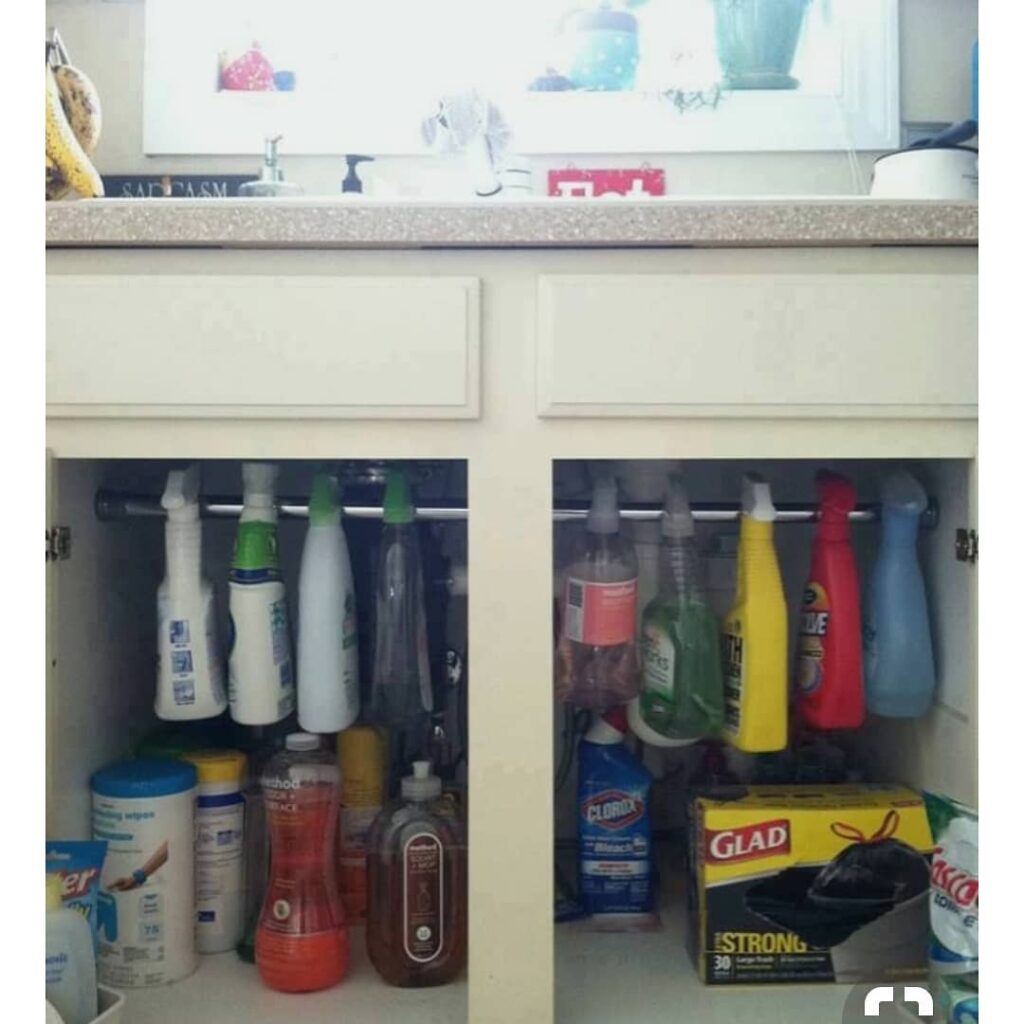
Photo Credit: @absolutelyjamaican
Tension Rod Organizers: Install adjustable tension rods vertically between the cabinet floor and ceiling to create hanging storage for spray bottles. This costs under $10 and utilizes otherwise wasted space around pipes.
PVC Pipe Storage Systems: Cut 4-inch diameter PVC pipes into various lengths to create custom storage tubes for long-handled brushes, rolled towels, or paper towel storage. Sand the edges smooth and add decorative contact paper for a finished look.
Magnetic Solutions: Attach magnetic strips to the interior cabinet walls to hold metal cleaning tools, measuring spoons, or small containers. Use strong neodymium magnets with adhesive backing for maximum holding power.
Repurposed Containers:
- Large yogurt containers: Perfect for storing sponges and scrub brushes
- Cereal boxes: Cut down and cover with contact paper for custom-sized organizers
- Shoe boxes: Ideal for creating divided storage compartments
Smart Shopping Strategies
Measurement-First Approach: Never shop for under-sink organizers without precise measurements. Create a simple template using cardboard that shows your cabinet’s dimensions and pipe locations. This prevents costly returns and ensures perfect fits.
Quality Investment Priorities: Spend more on items that will see daily use and less on occasional-use storage. Invest in high-quality pull-out drawers and lazy Susans, but save money on simple bins for backup supplies.
Seasonal Shopping Opportunities:
- January: Post-holiday sales on storage containers
- Spring: Back-to-school organization sales
- Fall: End-of-summer clearances on outdoor storage that works well indoors
Inventory Management Systems
The Two-Deep Rule: Never store more than two of any cleaning product to prevent hoarding and ensure product freshness. Cleaning products have expiration dates, and older supplies become less effective.
Color-Coded Organization: Assign specific colors to different categories:
- Blue containers: Daily-use items
- Green containers: Eco-friendly or natural products
- Red containers: Hazardous or strong chemicals (stored highest)
- Clear containers: Items that need visual inventory monitoring
Digital Inventory Tracking: Use a smartphone app or simple spreadsheet to track:
- Product expiration dates
- Quantity on hand
- Replacement frequency
- Cost per unit for budget planning
Automatic Replenishment Systems: Set up subscription deliveries for frequently used items like dish soap and sponges. This prevents emergency shopping trips and ensures you always have essentials on hand.
Maintenance, Troubleshooting, and Long-Term Success
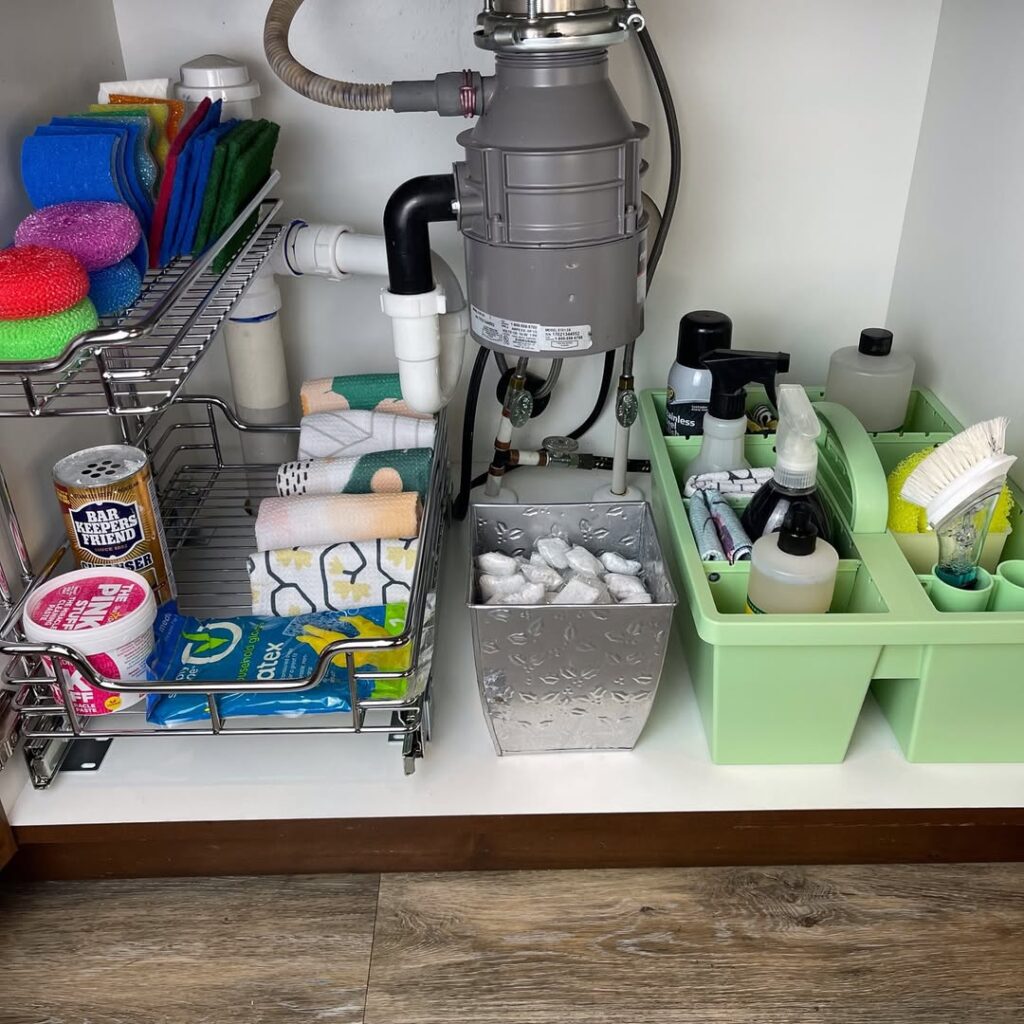
Photo Credit: @kootookitlady
Monthly Maintenance Protocol
The 15-Minute Monthly Check: Schedule a brief monthly inspection to maintain your organized system and catch problems early:
- Week 1: Check for leaks around pipes and clean any water spots immediately
- Week 2: Rotate cleaning supplies, moving older products to the front for first use
- Week 3: Wipe down all organizers and check for signs of wear or damage
- Week 4: Assess inventory levels and create shopping lists for needed replacements
Deep Cleaning Quarterly: Every three months, remove all items and thoroughly clean the cabinet interior with a disinfectant solution. This prevents odor buildup and maintains a hygienic storage environment.
Common Problems and Solutions
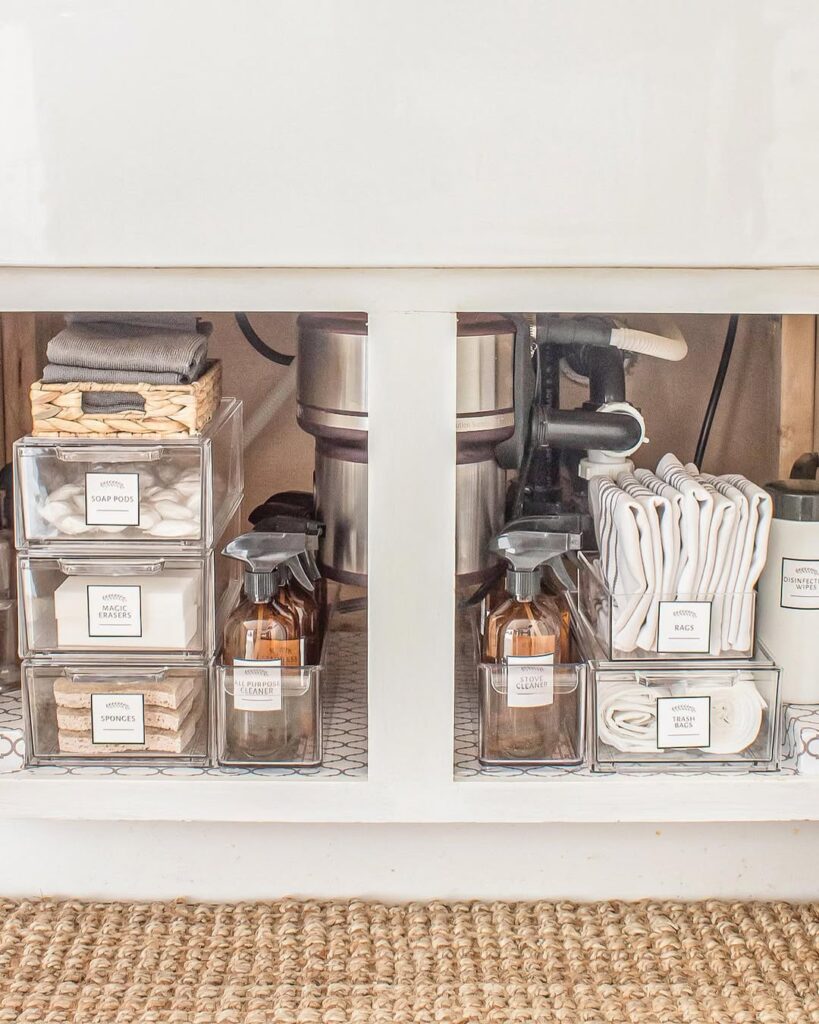
Photo Credit: @simplybeautifulbyangela
Problem: Organizers Keep Sliding Around
- Solution: Apply furniture pads or rubber drawer liner to the cabinet bottom
- Prevention: Choose organizers with non-slip bases or add adhesive strips
Problem: Bottles Fall Over Frequently
- Solution: Use dividers or individual compartments sized for your specific bottles
- Alternative: Install a rail system along shelves to prevent rolling
Problem: Difficult Access to Items in Back
- Solution: Implement a tiered system where taller items are stored behind shorter ones
- Upgrade Option: Install pull-out drawers that bring back items forward automatically
Problem: Moisture Damage to Organizers
- Solution: Choose moisture-resistant materials like sealed plastic or coated wire
- Prevention: Install a small moisture absorber or improve ventilation
Seasonal Adjustments and Adaptations
Spring Refresh:
- Rotate out heavy-duty winter cleaners for lighter, fresh-scented options
- Add outdoor-safe cleaners for patio furniture and grills
- Introduce plant care supplies if you’ll be caring for indoor plants
Summer Modifications:
- Include insect control products and outdoor entertaining supplies
- Store extra ice packs or cooling towels for hot weather activities
- Add quick-clean solutions for frequent entertaining
Fall Preparation:
- Introduce holiday baking supplies organization
- Add seasonal scents like cinnamon or apple-based cleaners
- Prepare for increased indoor time with deeper cleaning supplies
Winter Adaptations:
- Include salt stain removers and winter boot care products
- Add moisture absorbers to combat increased humidity from heating systems
- Store emergency candles or flashlights in easily accessible spots
Future-Proofing Your Organization System
Adaptable Storage Solutions: Choose modular organizers that can be reconfigured as your needs change. Adjustable shelving and stackable components allow for easy modifications without complete system overhauls.
Technology Integration: Consider smart solutions for the future:
- Motion-sensor LED strips for hands-free lighting
- Smart leak detectors with phone notifications
- Inventory tracking apps with barcode scanning capabilities
Family System Training: Create a simple reference guide with photos showing where each category belongs. This helps family members maintain the system and reduces the likelihood of disorganization over time.
Measuring Success and ROI
Time Savings Metrics: Track how much time you save with an organized system:
- Before: Average 3-5 minutes searching for cleaning supplies
- After: Average 30 seconds to locate needed items
- Monthly time savings: Approximately 2-3 hours
Cost Benefits:
- Reduced duplicate purchases due to better inventory visibility
- Extended product life through proper storage conditions
- Decreased waste from expired or damaged products
Quality of Life Improvements:
- Reduced stress from clutter and disorganization
- Increased efficiency in daily cleaning routines
- Enhanced safety through proper chemical storage
Conclusion: Your Organized Under-Sink Success
Transforming your under-kitchen-sink storage from chaos to organized efficiency requires initial investment of time and resources, but the long-term benefits far outweigh the costs. By implementing the REFRESH method, choosing appropriate storage solutions, and maintaining consistent organization habits, you’ll create a functional space that supports your daily routines while ensuring safety and accessibility.
Remember that organization is not a one-time project but an ongoing process. Your needs will evolve, products will change, and your system should adapt accordingly. The key to long-term success lies in choosing flexible solutions and maintaining regular review schedules.
Start with one small section if the entire project feels overwhelming. Even organizing just the daily-use items can provide immediate benefits and motivation to tackle the complete transformation. Your future self will thank you every time you effortlessly locate exactly what you need in seconds rather than minutes.
Take Action Today: Begin by implementing the measurement and assessment phase this weekend. With proper planning and the right approach, your under-sink cabinet can become one of the most efficiently organized spaces in your entire home.